



How to Secure an Emergency Business Loan After Bank Rejection?
For over 20 years in entrepreneurship finance, I've witnessed the gut-wrenching moment when a business owner receives that dreaded bank rejection letter. It’s a moment that can feel like a punch to the gut, especially when your business is facing an urgent financial need. Many assume that a 'no' from a traditional bank means the end of the road, but I'm here to tell you that this simply isn't true.
The reality is, traditional banks operate under stringent regulations and risk assessment models that often make them ill-suited for the agility and unique circumstances of an emergency business loan, particularly for small to medium-sized enterprises. Their rejection isn't necessarily a judgment on your business's viability, but rather a reflection of their specific lending criteria.
In this definitive guide, I will walk you through a clear, actionable framework designed to help you navigate the post-rejection landscape. We’ll explore the underlying reasons for bank denials, uncover a wealth of alternative funding sources, and equip you with the strategies needed to secure the emergency capital your business desperately needs. This isn't just theory; these are insights forged from years of helping entrepreneurs like you turn setbacks into comebacks.
Understanding Why Banks Say 'No' – And What It Means
When a bank rejects your loan application, it's easy to fall into despair. However, understanding the 'why' behind their decision is the first critical step toward securing an emergency business loan after bank rejection. Banks are inherently risk-averse institutions, and their lending decisions are based on a combination of factors designed to protect their assets.
Common Bank Rejection Reasons
From my experience, several key issues frequently lead to bank loan rejections:
- Poor Credit Score: Both personal and business credit scores are heavily scrutinized. A low score signals higher risk.
- Insufficient Collateral: Banks often require assets to secure a loan, especially for larger amounts. If you lack adequate collateral, they may decline.
- Inconsistent or Insufficient Revenue: Banks look for stable, predictable cash flow to ensure repayment. Startups or businesses with volatile income often struggle.
- Time in Business: Many traditional banks prefer businesses with a proven track record, typically two or more years, making it difficult for newer ventures.
- High Debt-to-Income Ratio: If your business already carries significant debt relative to its income, banks see this as a red flag.
- Incomplete or Inaccurate Application: Simple errors or missing documents can lead to an immediate rejection.
Don't Take It Personally – It's Policy
It's vital to remember that a bank's rejection is rarely personal. It's a procedural decision based on their strict lending policies and risk appetite. These policies are often designed for a broad range of businesses, and yours might simply not fit their specific mold at this particular moment, especially when time is of the essence for an emergency loan. As Harvard Business Review often highlights, understanding the bank's perspective can empower you to look for alternatives rather than giving up.
Expert Insight: "A bank's 'no' isn't a dead end; it's a redirection. Their risk assessment models are rigid, but the financial landscape is vast. Your task is to find a lender whose criteria align with your current business reality, especially when you need to know how to secure an emergency business loan after bank rejection."
Your Immediate Next Steps After a Bank Rejection
The moment you receive a bank rejection, don't panic. Instead, take a deep breath and immediately pivot to a strategic response. Your ability to act swiftly and intelligently will significantly impact your chances of securing alternative funding.
Actionable Steps to Take Right Away:
- Request Specific Feedback: Don't just accept the rejection. Contact the loan officer and politely ask for the exact reasons for denial. Understanding the specific deficiencies in your application or business profile is crucial for addressing them or finding lenders with different criteria.
- Review Your Original Application: Go through every detail of your loan application with a fine-tooth comb. Were there any errors, omissions, or misrepresentations? Even minor mistakes can be grounds for rejection.
- Assess Your Current Financial Health: Before approaching other lenders, get a brutally honest assessment of your business's current financial standing. This includes:
- Up-to-date cash flow statements
- Profit and loss statements
- Balance sheets
- Accounts receivable and payable aging reports
This self-assessment will highlight your strengths and weaknesses, allowing you to present your business more effectively to alternative lenders.
- Understand Your Credit Reports: Obtain copies of your business and personal credit reports. Check for inaccuracies and understand what potential lenders will see. Dispute any errors immediately.
To help you with a quick self-assessment, consider this checklist:
| Area | Self-Assessment | Rating |
|---|---|---|
| Cash Flow Stability | Consistent positive flow for last 6 months? | High/Medium/Low |
| Credit Score | Above 650 (personal) / 140 (Paydex)? | High/Medium/Low |
| Time in Business | Operating for 12+ months? | High/Medium/Low |
| Collateral Available | Accounts receivable, equipment, real estate? | Yes/No |
| Debt-to-Income Ratio | Manageable and trending down? | High/Medium/Low |
Exploring Alternative Lenders: Your Lifeline Beyond Traditional Banks
The good news is that the financial landscape has evolved dramatically. A bank rejection no longer means you're out of options. The rise of alternative lending platforms has created a vibrant ecosystem of non-traditional financing solutions, many of which are specifically designed for businesses that don't fit the rigid criteria of conventional banks. This is where you truly learn how to secure an emergency business loan after bank rejection.

Online Lenders and FinTech Platforms
These are often your fastest route to an emergency loan. Online lenders leverage technology to streamline the application and approval process, often providing funds within days, sometimes even hours. They typically have more flexible underwriting criteria, focusing less on perfect credit and more on your business's cash flow and revenue.
- Pros: Speed, convenience, less stringent credit requirements, variety of products.
- Cons: Can have higher interest rates than traditional bank loans.
Microloans and Community Development Financial Institutions (CDFIs)
For smaller emergency needs, microloans offered by non-profit organizations or CDFIs can be an excellent option. These institutions are often focused on community development and supporting underserved businesses. They provide smaller loan amounts, often with more favorable terms and personalized support.
- Pros: Lower interest rates, business support, focus on community impact.
- Cons: Smaller loan amounts, may have specific eligibility criteria based on location or business type.
Asset-Based Lending and Invoice Factoring
If your business has valuable assets or a strong book of accounts receivable, these options can provide immediate liquidity without relying heavily on your credit score.
- Asset-Based Lending (ABL): Uses your business's assets (like inventory, equipment, or real estate) as collateral for a loan. This can be a viable option if you have significant tangible assets.
- Invoice Factoring: You sell your outstanding invoices to a third-party factor at a discount. The factor then collects payment from your customers. This provides immediate cash flow based on your sales, not your creditworthiness.
According to a Deloitte study on alternative lending, these non-bank options are growing rapidly, filling critical gaps left by traditional financial institutions.
Crafting a Compelling Case: What Alternative Lenders Look For
Even with alternative lenders, you still need to present your business in the best possible light. The key difference is what they prioritize. While banks focus on stability and historical performance, many alternative lenders are more interested in your business's current health, future potential, and ability to repay.
Focus on Cash Flow, Not Just Credit
Many online and non-traditional lenders place a much greater emphasis on your business's cash flow. They want to see consistent, predictable revenue that demonstrates your ability to service the debt. Be prepared to provide detailed bank statements for the last 3-12 months, showcasing your daily and monthly inflows and outflows.
The Power of a Strong Business Plan (Even for Emergency Loans)
While you might be in a hurry, a concise yet compelling business plan is invaluable. It doesn't need to be 50 pages long, but it should clearly articulate:
- What your business does.
- Your target market.
- Your competitive advantage.
- How the emergency funds will be used.
- Your repayment strategy, backed by realistic financial projections.
This demonstrates foresight and a clear path forward, building trust with potential lenders.
Demonstrating Your Ability to Repay
This is paramount. Lenders, regardless of type, want confidence that they will get their money back. Be explicit about your repayment strategy. If the emergency loan is for inventory, show projected sales. If it's for equipment, demonstrate how it will increase efficiency and revenue. Quantify everything where possible.
Case Study: How 'Bright Ideas Innovations' Secured Funding After Bank Denial
Bright Ideas Innovations, a mid-sized design firm, faced an unexpected server malfunction that threatened to halt operations. Their application for an emergency line of credit was rejected by their traditional bank due to a recent dip in profitability (a temporary project delay). Desperate, the owner, Sarah, followed my advice. She immediately compiled 6 months of robust cash flow data, showcasing strong recurring client contracts despite the temporary dip. She also prepared a concise plan detailing how the emergency funds would replace the servers, prevent client churn, and restore profitability within 30 days. Approaching an online lender specializing in technology businesses, Sarah secured a short-term loan within 48 hours. The lender prioritized her strong client base and clear repayment strategy over the temporary dip in bank-focused profitability metrics. This allowed Bright Ideas to quickly resolve their issue and continue operations, proving that knowing how to secure an emergency business loan after bank rejection is about strategic targeting.
Specific Emergency Loan Products and How to Access Them
Understanding the types of emergency loan products available is key to targeting the right lenders. Each product has its own characteristics, pros, and cons.
Short-Term Loans and Merchant Cash Advances (MCAs)
- Short-Term Loans: These are typically repaid within 3 to 18 months, often with daily or weekly payments. They are faster to obtain than traditional loans and are often approved based on revenue rather than solely credit score.
- Merchant Cash Advances (MCAs): An MCA is not technically a loan but an advance on your future credit card sales. The provider gives you a lump sum, and in return, takes a percentage of your daily credit card sales until the advance is repaid. They are very fast and accessible, even for businesses with poor credit, but often come with higher costs.
Business Lines of Credit
While often harder to get in an emergency if not pre-approved, a business line of credit offers flexibility. You can draw funds as needed, up to a certain limit, and only pay interest on the amount you've used. If you have any existing relationships that could offer one, it's worth exploring.
SBA Disaster Loans
In specific circumstances, such as declared natural disasters, the U.S. Small Business Administration (SBA) offers low-interest disaster loans. While not for every emergency, it's a vital resource if your business is impacted by a qualifying event. You can find more information on the official SBA website.
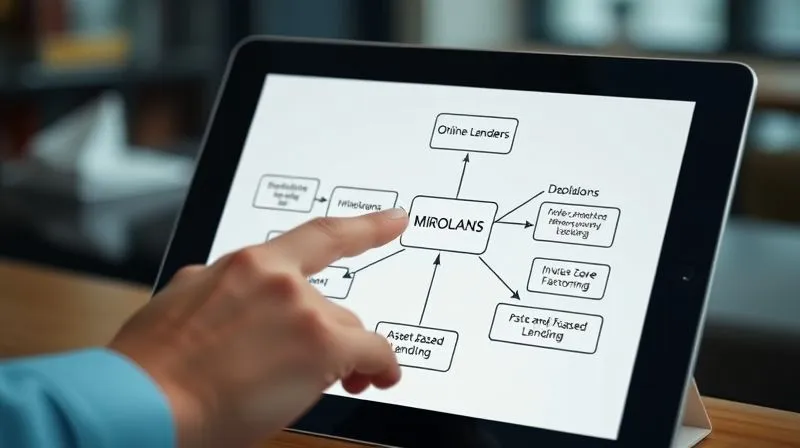
Here’s a quick comparison of common emergency funding options:
| Loan Type | Speed | Credit Focus | Typical APR | Best For |
|---|---|---|---|---|
| Short-Term Loan | Fast (days) | Revenue/Cash Flow | 20-100%+ | Quick capital for immediate needs |
| Merchant Cash Advance | Very Fast (hours-days) | Credit Card Sales | 40-200%+ | Businesses with high credit card transactions |
| Invoice Factoring | Fast (days) | Customer Creditworthiness | 1-3% per month (fee) | Businesses with slow-paying invoices |
| Microloan (CDFIs) | Medium (weeks) | Business Plan/Impact | 5-15% | Smaller needs, underserved businesses |
Leveraging Your Network and Personal Assets (When Necessary)
When traditional and even some alternative avenues are exhausted, or if you need extremely rapid cash, don't overlook your immediate network and personal resources. These options come with their own set of considerations and risks, but they can be crucial lifelines.
Friends, Family, and Angel Investors
Approaching friends or family for a loan can be sensitive, but if managed professionally, it can provide quick, flexible capital. Always put the terms in writing, just as you would with a bank, to avoid misunderstandings. For larger sums, or if your emergency is also an opportunity, seeking out angel investors might be an option, though this typically involves giving up equity and a longer process than a pure emergency loan.
Personal Guarantees and Collateral (Understanding the Risks)
Many alternative lenders may still require a personal guarantee, meaning you are personally liable for the business debt if the business defaults. While this increases your risk, it can also significantly improve your chances of approval. Additionally, if your business owns valuable assets (like real estate, machinery, or even high-value inventory), these can be used as collateral to secure a loan. Be fully aware of the implications of pledging personal or business assets, as failure to repay could lead to their forfeiture.

Expert Insight: "Leveraging personal assets or asking loved ones for help should always be a carefully considered last resort. Ensure you have a clear repayment plan and open communication to protect both your business and your relationships."
Building Resilience: Future-Proofing Your Business for Financial Shocks
While this guide focuses on how to secure an emergency business loan after bank rejection, my ultimate goal for every entrepreneur is to build a business resilient enough to withstand future shocks. Proactive financial planning is the best defense against unforeseen emergencies.
Establishing an Emergency Fund
Just as individuals need an emergency fund, so do businesses. Aim to build up a cash reserve equivalent to 3-6 months of operating expenses. This buffer can absorb unexpected costs, cover temporary revenue dips, and prevent the need for costly emergency loans.
Diversifying Funding Sources
Don't put all your eggs in one basket. Cultivate relationships with multiple financial institutions and be aware of various funding options, even when you don't immediately need them. This might include a pre-approved line of credit, a strong relationship with an online lender, or even having a robust credit card strategy for short-term needs.
Regular Financial Health Checks
Make it a habit to regularly review your financial statements, monitor key performance indicators (KPIs), and project cash flow. Early detection of potential issues allows for proactive solutions, preventing minor problems from escalating into major emergencies that necessitate urgent loans. Investopedia provides excellent resources on conducting financial health checks.

Frequently Asked Questions (FAQ)
Can I apply for multiple emergency loans simultaneously? While technically possible, I generally advise against applying for many loans at once. Each application can result in a 'hard inquiry' on your credit report, which can temporarily lower your credit score. It's better to target a few lenders that best fit your profile after careful research and apply strategically.
How does a bank rejection impact my credit score for future applications? A single bank rejection itself doesn't directly harm your credit score. However, the hard inquiry associated with the application will cause a slight, temporary dip. Multiple hard inquiries in a short period can be more impactful. The underlying reasons for the rejection (e.g., poor credit) are what truly affect future applications.
What if I have bad personal credit but a good business? This is a common scenario. While traditional banks heavily weigh personal credit, many alternative lenders, especially those offering merchant cash advances or invoice factoring, focus more on your business's revenue and cash flow. Some online lenders also specialize in bad credit business loans, albeit often at higher interest rates.
Are emergency business loans always high-interest? Not always, but they often are. The speed and flexibility associated with emergency funding, particularly from alternative lenders, typically come with a higher cost of capital compared to traditional, long-term bank loans. The interest rate or factor rate will depend on your business's risk profile, the loan product, and the lender. It's crucial to compare terms carefully.
What documents do I typically need for alternative lenders? While less stringent than banks, alternative lenders will still require documentation. Expect to provide:
- Business bank statements (3-12 months)
- Profit & Loss statements
- Balance sheets
- Tax returns (business and sometimes personal)
- Business license and registration documents
- Driver's license or personal ID
The exact requirements vary by lender and loan type.
Key Takeaways and Final Thoughts
Experiencing a bank rejection for an emergency business loan can be incredibly disheartening, but it is by no means the end of your financial options. As an experienced industry specialist, I've seen countless entrepreneurs successfully navigate this challenge by understanding the landscape and acting strategically.
- Understand the 'Why': Don't dwell on the rejection; learn from it by seeking specific feedback.
- Explore Alternatives: The world of online lenders, CDFIs, and asset-based financing offers numerous pathways.
- Focus on Cash Flow: Many alternative lenders prioritize your business's current revenue and ability to repay.
- Be Prepared: Even for emergency loans, a clear plan for usage and repayment is crucial.
- Build Resilience: Proactive financial planning, emergency funds, and diversified funding sources are your best long-term defense.
Your entrepreneurial journey is defined by your ability to adapt and overcome. A bank's 'no' is merely a detour, not a roadblock. By leveraging the insights and strategies shared in this guide on how to secure an emergency business loan after bank rejection, you can confidently pursue the funding your business needs to not only survive but thrive. Stay persistent, stay informed, and always remember that solutions are often found just beyond the most obvious paths.
Recommended Reading
- 7 Strategic Pivots for Real Estate Development in Recession
- 7 Pillars: Selecting Institutional Crypto Exchanges to Minimize Risk
- Mitigate Executive LTC Impact: 7 Strategies to Safeguard Your Business
- Unlock the Power: Best Ways to Ethically Invest in Community Development?
- 7 Ways Life Insurance Funds Your Business Buy-Sell Agreement





Comments
Leave a comment below. Your email will not be published. Required fields marked with *