



How to Pivot Real Estate Development Plans During an Economic Recession?
For over two decades in the dynamic world of real estate development, I've witnessed firsthand the cyclical nature of markets – the booms, the busts, and the unexpected curveballs. Navigating an economic recession isn't just about survival; it's about strategic foresight, adaptability, and the courage to pivot when conventional wisdom suggests otherwise. I've seen countless developers make the mistake of clinging to outdated plans, only to be swept away by the tide.
The pain point for many in our industry during such times is the paralysis of indecision, the fear of losing prior investments, or the sheer overwhelm of shifting market demands. Projects that once seemed like sure bets suddenly face insurmountable hurdles, from financing drying up to consumer demand evaporating. It's a challenging period that tests the mettle of even the most seasoned professionals.
This article isn't just another theoretical guide; it's a distillation of lessons learned in the trenches, offering actionable frameworks, real-world insights, and expert strategies to not only safeguard your existing real estate development plans but to identify new opportunities and emerge stronger on the other side. We'll explore practical steps, from rigorous market re-evaluation to innovative financing, designed to help you pivot effectively and thrive.
Understanding the Recessionary Landscape: A Developer's Imperative
Before any pivot can be effective, we must first deeply understand the terrain we're operating in. A recession is not a monolithic event; it has distinct characteristics that impact different real estate sectors in varied ways. In my experience, the developers who flourish are those who conduct a brutal, honest assessment of the new economic reality.
Rigorous Market Re-evaluation and Demand Forecasting
The first step is always to go back to basics: market analysis. The assumptions that underpinned your initial development plans are likely obsolete. You need fresh data, not just general economic indicators, but highly granular, local market intelligence.
- Demographic Shifts: Are populations moving? Are certain income brackets more affected?
- Employment Trends: Which industries are shrinking or growing in your target area? This directly impacts housing and commercial demand.
- Consumer Spending Habits: Discretionary spending often plummets, affecting retail and luxury residential.
- Rental vs. Ownership Dynamics: Recessions often shift demand towards rental properties as homeownership becomes less accessible or desirable.
According to a recent report by PwC and the Urban Land Institute, economic uncertainty often accelerates pre-existing trends, meaning areas with strong underlying fundamentals might weather the storm better, while weaker markets face amplified challenges. Identifying these shifts early is paramount.

Proactive Risk Assessment and Scenario Planning
Once you understand the market, it's time to stress-test your projects. This isn't about fear-mongering; it's about building resilience. I always advise my clients to develop multiple scenarios: best-case (unlikely but possible), base-case (most probable), and worst-case (what if everything goes wrong?).
“In real estate development, hope is not a strategy. Data-driven scenario planning is your most potent defense against economic shocks.”
For each scenario, quantify the impact on:
- Projected Revenue: What happens if rental rates drop by 10%, or sales prices by 15%?
- Construction Costs: Are supply chains disrupted? Are material costs fluctuating wildly?
- Financing Costs: How do interest rate hikes or tighter lending standards affect your debt service?
- Timeline Delays: What if permits take longer, or construction slows due to labor shortages?
This exercise reveals vulnerabilities and helps you pre-plan responses, moving from reactive panic to proactive problem-solving.
Re-evaluating Project Viability and Capital Allocation
With a clearer understanding of the risks, the next critical step is to take a hard look at your existing project pipeline. Not all projects will be equally viable in a recession, and some may need to be shelved or significantly altered.
Financial Modeling for a New Reality
Your original pro forma models are likely based on pre-recession assumptions. It's time to build new ones, incorporating the updated market data and risk scenarios. Focus on:
- Cash Flow Projections: In a downturn, cash is king. How long can your project sustain negative cash flow?
- Return on Investment (ROI) & Internal Rate of Return (IRR): Are your target returns still achievable? What's the new breakeven point?
- Debt Service Coverage Ratio (DSCR): Lenders will scrutinize this even more closely.
- Sensitivity Analysis: How sensitive are your returns to changes in rent, occupancy, or interest rates?
Optimizing Costs and Value Engineering
Every dollar counts. This is the time to ruthlessly scrutinize every line item in your budget. Value engineering isn't just about cutting costs; it's about maintaining value while reducing expenditure. This might involve:
- Revisiting architectural designs to simplify construction without compromising functionality.
- Exploring alternative, more cost-effective materials or construction methods.
- Negotiating harder with contractors and suppliers, leveraging the potential slowdown in their own pipelines.
- Phasing development to align with market demand, reducing initial capital outlay.
| Project Phase | Pre-Recession Budget | Recession-Adjusted Budget | Savings Opportunity |
|---|---|---|---|
| Pre-Development | $1.5M | $1.2M | 20% |
| Land Acquisition | $10M | $8M | 20% |
| Construction (Shell) | $25M | $22M | 12% |
| Interiors/Finishes | $8M | $7M | 12.5% |
| Marketing/Leasing | $1M | $0.8M | 20% |
Shifting Market Focus: Identifying Niche Opportunities
While some sectors struggle, others emerge as resilient or even thrive during a recession. This is where strategic pivoting truly comes into play. It requires creativity and a willingness to explore outside your traditional comfort zone.
Adaptive Reuse and Repurposing Distressed Assets
One of the most compelling pivots I've seen is the transformation of underperforming or vacant properties into something new and in-demand. Think about:
- Converting office space to residential: With remote work trends, many cities have surplus office space.
- Repurposing retail into last-mile logistics: E-commerce growth remains strong, even in a downturn.
- Transforming hotels into affordable housing or student accommodation: Especially in urban cores.
This approach often comes with lower acquisition costs and faster time to market, as the existing structure provides a head start. It's a sustainable and often community-friendly approach to development.

Targeting Recession-Resilient Sectors
Certain real estate sectors tend to be more robust during economic downturns. These include:
- Affordable Housing: Demand for affordable living options often increases.
- Life Sciences & Healthcare: Driven by demographic trends and ongoing innovation, these sectors often remain strong.
- Data Centers: The digital economy's reliance on data storage continues to grow.
- Industrial & Logistics: E-commerce and supply chain re-shoring fuel demand for warehouses and distribution centers.
Case Study: Phoenix Development's Strategic Shift
Phoenix Development, a mid-sized firm I advised during the 2008 financial crisis, initially focused on luxury condos. As the market collapsed, their pipeline stalled. Instead of folding, they strategically pivoted. They acquired a distressed, partially completed office building in a secondary market at a significant discount. Recognizing the growing need for medical office space in that area, they redesigned the interior for healthcare tenants, offering flexible lease terms and state-of-the-art facilities. Within two years, the building was fully leased, providing a stable income stream that allowed them to weather the storm and eventually return to their core business stronger. This demonstrated an astute understanding of 'How to pivot real estate development plans during an economic recession?'.
Optimizing Project Management and Supply Chain Resilience
Even the most brilliant pivot can be undermined by inefficient execution. A recession demands heightened vigilance in project management and a proactive approach to supply chain vulnerabilities.
Streamlining Project Timelines and Milestones
Time is money, especially when capital is scarce. Delays can be catastrophic. Implement stringent project management methodologies:
- Agile Development: Break down large projects into smaller, manageable sprints.
- Critical Path Analysis: Identify and closely monitor activities that, if delayed, will push back the entire project.
- Regular Reviews: Hold weekly or bi-weekly progress meetings to identify and resolve bottlenecks immediately.
- Incentivize Early Completion: Consider bonuses for contractors who deliver ahead of schedule, balanced with penalties for delays.
Building a Resilient Supply Chain
Global events have repeatedly highlighted the fragility of supply chains. As Forbes contributor Sarah E. Needleman notes, diversifying suppliers and building redundancy are no longer luxuries but necessities. Here's how to build resilience:
- Diversify Suppliers: Avoid single points of failure. Have backup suppliers for critical materials, both domestically and internationally.
- Inventory Management: Balance just-in-time efficiency with strategic stockpiling of long-lead-time or volatile-priced materials.
- Local Sourcing: Prioritize local suppliers where feasible to reduce transportation risks and support local economies.
- Transparency and Communication: Foster strong relationships with your suppliers. Understand their challenges and communicate your needs clearly.
- Contingency Contracts: Include clauses in supplier contracts that address delays, price fluctuations, and alternative sourcing.
A robust supply chain ensures that even when external shocks hit, your project can continue moving forward without significant disruption or cost overruns.
Leveraging Technology for Agility and Data-Driven Decisions
The digital transformation of real estate, or PropTech, is no longer a futuristic concept; it's a present-day necessity, especially when faced with the complexities of 'How to pivot real estate development plans during an economic recession?'. Technology offers unparalleled tools for efficiency, insight, and competitive advantage.
PropTech for Enhanced Efficiency and Cost Control
Embrace technologies that can streamline operations and reduce waste:
- Building Information Modeling (BIM): Improves collaboration, reduces errors, and optimizes material use.
- Construction Management Software: Centralizes project data, tracks progress, manages budgets, and facilitates communication.
- IoT and Sensors: Monitor site conditions, equipment performance, and energy consumption to identify inefficiencies.
These tools provide real-time data, allowing for quicker adjustments and more informed decisions, which is crucial when market conditions are in flux.
Predictive Analytics for Market Insight
Beyond traditional market research, predictive analytics can offer a competitive edge:
- AI-Powered Demand Forecasting: Analyze vast datasets (demographics, economic indicators, social media trends) to predict future demand for specific property types and locations with greater accuracy.
- Risk Modeling: Use machine learning to identify potential project risks based on historical data and current economic signals.
- Optimal Pricing Strategies: Determine the most effective sales or rental pricing by analyzing supply, demand, and competitor data.
| Technology Category | Example Tools | Key Benefit in Recession |
|---|---|---|
| Project Management | Procore, Autodesk Construction Cloud | Centralized data, reduced errors, faster decision-making |
| Market Analysis | CoStar, Reonomy (with AI layers) | Predictive insights, identifying niche opportunities |
| Financial Modeling | Argus Enterprise, Excel (advanced) | Dynamic scenario planning, cash flow optimization |
| Construction Efficiency | BIM 360, Drone Mapping | Waste reduction, progress tracking, safety |
Navigating Financing and Investor Relations in Volatile Times
Securing and maintaining financing is often the biggest hurdle during a recession. Lenders become more risk-averse, and traditional capital sources may dry up. This requires a proactive and transparent approach to both financing and investor relations.
Creative Financing Solutions
Traditional bank loans might be harder to come by. Explore alternative avenues:
- Private Equity & Debt Funds: These groups often have capital specifically earmarked for distressed assets or counter-cyclical investments.
- Mezzanine Financing: A hybrid of debt and equity, it can bridge gaps but comes with higher costs.
- Joint Ventures: Partner with well-capitalized entities to share risk and leverage their financial strength.
- Government Programs: Look for stimulus packages, tax incentives, or grants aimed at specific development types (e.g., affordable housing, sustainable projects).
As Harvard Business Review often highlights, successful leaders during crises are those who creatively leverage all available resources, including unconventional financing structures.
Transparent Investor Communication
Your existing and potential investors need constant reassurance and clear communication. Don't hide bad news; present it with a plan for mitigation.
- Regular Updates: Even if there's no major news, a brief update on market conditions, project status, and your strategic adjustments builds trust.
- Honest Assessment of Risks: Acknowledge the challenges but emphasize your proactive measures.
- Revised Projections: Present updated financial models and explain the rationale behind any changes in expected returns or timelines.
- Align on New Strategies: Ensure investors understand and ideally support your pivot. Their buy-in is crucial.

Building Strategic Partnerships and Collaborative Ventures
In tough times, isolation can be a killer. Collaboration, on the other hand, can unlock new opportunities, share burdens, and leverage diverse strengths. This is a critical aspect of 'How to pivot real estate development plans during an economic recession?'.
The Power of Joint Ventures (JVs)
JVs allow you to pool resources, expertise, and capital. Consider partnering with:
- Landowners: Who might be open to creative deal structures like equity participation instead of an upfront cash sale.
- Experienced Developers: Who have a track record in the specific niche you're pivoting towards (e.g., affordable housing, industrial).
- Institutional Investors: Who can provide significant capital and patience, especially for long-term projects.
- Public Sector Entities: For projects that align with community development goals, potentially unlocking incentives or land access.
A report by Deloitte on real estate trends often emphasizes the increasing importance of strategic alliances in navigating complex market environments, especially during periods of economic uncertainty.
Cultivating Strong Relationships with Stakeholders
Beyond formal partnerships, nurturing relationships with all stakeholders is vital:
- Government Officials & Regulators: Delays in permitting can be costly. Maintain open lines of communication.
- Local Communities: Ensure your pivot aligns with community needs and gain their support.
- Contractors & Suppliers: They are your boots on the ground. Treat them as partners, not just vendors.
These relationships can provide critical insights, smooth out potential roadblocks, and even open doors to unforeseen opportunities.
Developing an Exit Strategy and Contingency Planning
No project lasts forever, and even in a recession, you need a clear path to monetization or divestment. Furthermore, having detailed contingency plans for unforeseen events is non-negotiable.
Flexible Exit Strategies
Your original exit strategy might no longer be feasible. Be prepared to adapt:
- Phased Exits: Instead of selling an entire development at once, consider selling in smaller, more manageable phases.
- Hold Strategy: If market conditions are severely depressed, holding the asset and operating it as a rental property until recovery might be the best option, provided cash flow supports it.
- Partial Sales: Sell a portion of the project to a new partner or investor to de-risk and recoup some capital.
- Sale-Leaseback: For commercial properties, this can free up capital while maintaining operational control.
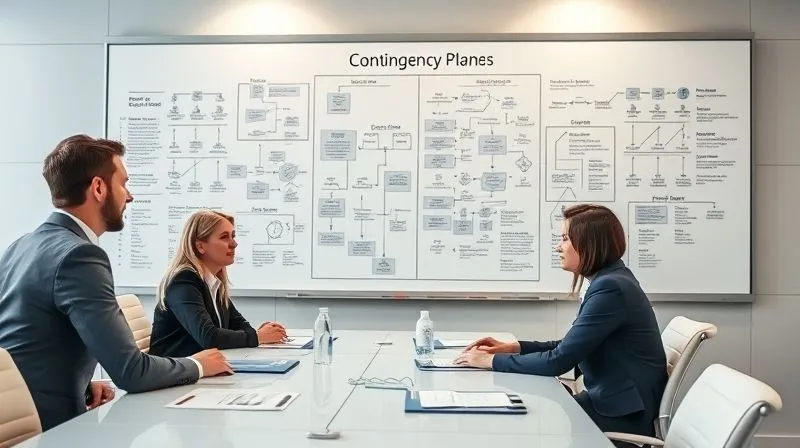
Comprehensive Contingency Planning
What if your pivot doesn't work as planned? What if the recession deepens? Good developers have backup plans for their backup plans. This includes:
- Financial Backstops: Access to lines of credit, reserves, or standby equity commitments.
- Legal Counsel: Understand your contractual obligations and potential liabilities in various scenarios.
- Operational Flexibility: The ability to quickly scale up or down construction, staffing, or marketing efforts.
- Market Trigger Points: Define specific market conditions (e.g., vacancy rates, interest rate thresholds) that would trigger a pre-defined contingency action.
Frequently Asked Questions (FAQ)
What's the most critical first step when facing a recession in real estate development? The absolute first step is a brutal and honest re-evaluation of your existing market assumptions and project pro formas. Your pre-recession data is likely obsolete. Conduct fresh, granular market analysis, stress-test your financials under various recessionary scenarios, and understand your project's true viability in the new economic landscape. Without this foundational understanding, any pivot will be based on flawed premises.
How can I convince investors to support a pivot that changes the original project vision? Transparency and data are key. Present a clear, data-backed rationale for the pivot, outlining the risks of continuing the original plan versus the opportunities and revised projections of the new direction. Show how the pivot mitigates risk, preserves capital, or identifies new, more resilient revenue streams. Engage them early, listen to their concerns, and demonstrate your expert leadership in navigating the crisis.
Is it better to halt a project entirely or try to push through during a deep recession? There's no single answer, as it depends entirely on the project's specifics, your financial strength, and the market's outlook. Halting can incur significant costs (demobilization, carrying costs), but pushing through with a failing concept can lead to even greater losses. A strategic pivot, as discussed, aims to find a viable middle ground. If a pivot isn't feasible, and losses are projected to be extreme, a temporary halt or even a strategic divestment might be the less damaging option. Always compare the cost of completion versus the cost of halting/selling.
What role does sustainability play in pivoting real estate development during a recession? Sustainability, far from being a luxury, becomes an even stronger value proposition. Green buildings often have lower operating costs (energy, water), which is attractive to tenants and buyers during economic hardship. Furthermore, projects with strong ESG (Environmental, Social, Governance) credentials can attract impact investors who are often more patient and resilient through downturns. Integrating sustainable practices can enhance long-term value and market appeal, making it a smart pivot.
How do interest rate hikes specifically impact my ability to pivot? Rising interest rates directly increase your borrowing costs, making debt more expensive and potentially eroding project profitability. This impacts your ability to secure new financing for a pivot, and also increases the cost of carrying existing debt. It necessitates a sharper focus on cash flow, shorter development cycles, and potentially seeking equity partners to reduce reliance on high-cost debt. Interest rate sensitivity must be a core component of your revised financial modeling.
Key Takeaways and Final Thoughts
Navigating a recession in real estate development is undoubtedly challenging, but it's also a period ripe with opportunity for those willing to adapt. The ability to ask 'How to pivot real estate development plans during an economic recession?' and then execute on that answer is what separates resilient developers from those who fall by the wayside. Here are the critical takeaways:
- Embrace Data & Re-evaluate Relentlessly: Your old assumptions are dead. Base decisions on fresh, granular market insights.
- Stress-Test Everything: Financial models, timelines, and supply chains must be robust enough to withstand significant shocks.
- Seek Niche Opportunities: Distressed assets, adaptive reuse, and recession-resilient sectors can offer new growth avenues.
- Optimize & Control: Ruthlessly manage costs, streamline project management, and build supply chain resilience.
- Leverage Technology: Use PropTech for efficiency, insights, and data-driven decision-making.
- Forge Strong Relationships: Creative financing, transparent investor communication, and strategic partnerships are your lifelines.
- Plan for Contingencies: Always have a flexible exit strategy and detailed backup plans.
As an industry veteran, I can assure you that economic cycles are inevitable. What truly defines a successful developer isn't avoiding the downturns, but how skillfully they navigate them. By embracing these strategic pivots, you're not just surviving; you're actively positioning your real estate development plans for future growth, building a more resilient and adaptable enterprise for whatever the market throws your way.
Recommended Reading
- Unlock Your Financial Future: How to Understand Sections of Your Annual Credit Report
- 7 Advanced Strategies to Defer Capital Gains on High-Growth Assets
- How Do Insurance Agents Find New Clients Now? The 2024 Guide
- Missed Scholarship Deadlines? 7 Steps for Promising Students to Recover
- Scale Smart: 7 Strategies to Balance Aggressive Growth & Profit Margins





Comments
Leave a comment below. Your email will not be published. Required fields marked with *