



How to Reconcile Conflicting Global Economic Forecasts for Portfolio Success
For over two decades in the global finance arena, I've witnessed firsthand the dizzying array of economic forecasts that flood the market. From bullish pronouncements to dire warnings, the sheer volume and often contradictory nature of these predictions can paralyze even the most seasoned investor. It's a common mistake to chase the latest headline, leading to reactive decisions that erode long-term value.
The fundamental problem isn't the existence of conflicting forecasts; it's the lack of a structured approach to interpret and integrate them into a cohesive investment strategy. Many investors feel overwhelmed, unsure which 'expert' to trust, or how to translate abstract macroeconomic predictions into concrete portfolio adjustments. This uncertainty often leads to inaction, or worse, impulsive moves based on fear or greed, rather than informed analysis.
In this definitive guide, I will share the frameworks and battle-tested strategies I've developed and refined over my career to help you cut through the noise. You'll learn how to systematically evaluate disparate forecasts, identify underlying drivers, and construct a resilient portfolio that thrives amidst global economic volatility. We'll move beyond simply observing the data to actively utilizing it to your advantage, ensuring your investment decisions are grounded in robust analysis, not speculation.
Understanding the Roots of Divergence: Why Forecasts Conflict
Before we can reconcile conflicting forecasts, we must first understand why they diverge so wildly. It's not always about incompetence; often, it's about differing methodologies, data interpretations, and underlying assumptions. As a veteran in this field, I've seen that the primary drivers of conflicting economic forecasts typically fall into a few key categories.
Different Models and Methodologies
Economists employ a vast array of models, from econometric regressions to dynamic stochastic general equilibrium (DSGE) models. Each model has its strengths and weaknesses, and its suitability depends on the specific economic question being asked. For instance, a model focusing on consumer spending might yield different inflation predictions than one prioritizing supply-chain disruptions. It's crucial to recognize that no single model captures the entirety of economic complexity.
Varying Interpretations of Data
Even with the same raw data, economists can draw different conclusions. Is a slight uptick in unemployment a blip or the start of a trend? Does a rise in commodity prices signal demand strength or supply constraint? These interpretations are often subjective and influenced by an economist's school of thought or prior beliefs. Think of it like looking at the same Rorschach test – different people see different things.
Diverse Underlying Assumptions
This is perhaps the most significant source of divergence. Forecasts are built on assumptions about future policy decisions, geopolitical stability, technological advancements, and consumer behavior. One forecast might assume aggressive central bank tightening, while another assumes a more dovish stance. These assumptions, often unstated or buried deep within reports, fundamentally alter the projected outcomes.
"The art of economic forecasting lies not in predicting the future perfectly, but in understanding the range of plausible futures and preparing for them."
Geopolitical and Black Swan Events
The global economy is an interconnected web, constantly susceptible to shocks. Geopolitical tensions, natural disasters, or unprecedented events like a pandemic can rapidly invalidate even the most meticulously crafted forecasts. These 'black swan' events are inherently unpredictable, forcing economists to constantly revise their outlooks, leading to further divergence.

Strategy 1: Identify and Categorize Forecasts by Core Tenet
The first step in reconciling conflicting forecasts is to stop viewing them as an undifferentiated mass. Instead, categorize them based on their fundamental assumptions and core tenets. This allows you to understand the 'teams' of thought and why they hold their positions.
Actionable Steps for Categorization:
- Identify Key Variables: Determine the 3-5 most critical economic variables for your portfolio (e.g., inflation, interest rates, GDP growth, currency strength, corporate earnings).
- Group by Macro Outlook: Read a diverse set of forecasts from different institutions (e.g., IMF, World Bank, major investment banks, independent research firms). Group them into broad categories:
- Optimists/Growth Hawks: Those expecting strong growth, moderate inflation, and stable markets.
- Pessimists/Recession Bears: Those predicting slowdowns, recessions, high inflation, or market corrections.
- Muddle-Through/Stagflationists: Those expecting slow growth, persistent inflation, and higher unemployment.
- Uncover Underlying Assumptions: For each group, identify their core assumptions. Are they betting on a quick resolution to supply chain issues? Do they foresee aggressive monetary policy? Are they focused on consumer resilience or corporate deleveraging?
- Note Methodological Differences: Some forecasts might rely heavily on survey data, others on hard economic indicators, and some on proprietary models. Understanding these differences helps you weigh their conclusions.
This systematic approach helps you map the intellectual landscape, revealing not just *what* different experts believe, but *why* they believe it. It's like understanding the different political parties before trying to predict an election outcome.
| Forecast Source | Core Tenet | Key Assumptions | Key Risks |
|---|---|---|---|
| IMF | Moderate Global Recovery | Easing supply chains, stable energy prices, gradual rate hikes | Geopolitical shocks, persistent inflation |
| Major Investment Bank A | Recession Imminent | Aggressive central bank tightening, consumer deleveraging, geopolitical instability | Policy missteps, credit crunch |
| Independent Research Firm B | Stagflationary Environment | Persistent wage-price spiral, energy scarcity, fiscal drag | Deep recession, social unrest |
Strategy 2: Focus on the Drivers, Not Just the Outcomes
One of the biggest mistakes I see investors make is fixating solely on the headline forecast – "GDP will be X%" or "Inflation will hit Y%". While these numbers are important, the real insight lies in understanding the underlying drivers and mechanisms that are expected to lead to those outcomes. This is where you gain a deeper, more actionable understanding.
Deconstructing Forecasts:
- Identify Causal Chains: Instead of just noting an inflation forecast, ask: What is expected to *cause* that inflation? Is it demand-pull, cost-push, or a combination? What are the specific links in the chain (e.g., wage growth > higher consumer spending > inflation)?
- Evaluate the Strength of the Drivers: How robust are the arguments for these drivers? Are they based on historical correlations, current trends, or speculative future events? A forecast predicting a recession based on an inverted yield curve has a stronger historical backing than one based purely on sentiment.
- Look for Points of Consensus on Drivers: Even when headline forecasts differ, there might be surprising consensus on certain underlying drivers. For example, most economists might agree that central bank policy will tighten, even if they disagree on the *magnitude* or *impact* of that tightening. These points of consensus can be powerful signals.
By shifting your focus to the 'why' behind the 'what', you develop a more nuanced understanding. This allows you to form your own informed opinion, rather than blindly accepting one forecast over another. You're essentially building a mental model of the economy based on the strongest arguments available.
According to the IMF's World Economic Outlook, "Global economic activity is showing signs of resilience, and inflation is declining, but growth remains slow and divergences are widening." This highlights the complexity and the need to look beyond single indicators, focusing on the interplay of factors.Strategy 3: Develop a "Scenario Planning" Mindset
In a world of constant uncertainty, relying on a single 'base case' forecast is a recipe for disappointment. The most effective approach, in my experience, is to embrace scenario planning. This involves constructing a few plausible future economic environments and understanding how your portfolio would perform under each.
Building Your Scenarios:
- Define 2-3 Plausible Scenarios: Based on your categorization (Strategy 1) and driver analysis (Strategy 2), articulate 2-3 distinct, but plausible, economic futures. Don't go overboard; too many scenarios lead to paralysis.
- Scenario A (Base Case): What you consider most likely, integrating elements from the most robust forecasts.
- Scenario B (Optimistic/Upside): What if things go better than expected? What would drive that?
- Scenario C (Pessimistic/Downside): What if things go worse? What are the catalysts for that?
- Map Portfolio Performance to Each Scenario: For each scenario, consider how different asset classes (equities, bonds, real estate, commodities, alternative investments) would likely perform. Which sectors would thrive? Which would suffer?
- Identify "No-Regrets" Moves: Look for investment decisions that make sense across *all* plausible scenarios. These are often related to diversification, liquidity, and maintaining a long-term perspective.
- Define Trigger Points: What economic data or events would signal a shift from one scenario to another? This allows you to be proactive, rather than reactive, in adjusting your portfolio.
Case Study: "Global Horizon Capital" Navigates Energy Shocks
Global Horizon Capital, a mid-sized asset management firm, faced a dilemma when conflicting forecasts emerged regarding future energy prices. One camp predicted sustained high prices due to geopolitical tensions and underinvestment in traditional energy. Another foresaw a rapid decline driven by accelerated renewable adoption and a global economic slowdown. Instead of picking one, their lead strategist, Sarah, developed three scenarios: "Persistent Energy Inflation," "Green Transition Acceleration," and "Global Recession & Demand Collapse." For each, she analyzed sector performance, commodity prices, and currency impacts. This led them to increase exposure to energy-efficient technologies (a "no-regrets" move), hedge a portion of their commodity exposure, and identify specific economic indicators that would signal which scenario was unfolding. This proactive approach allowed them to pivot swiftly and protect client assets when the "Persistent Energy Inflation" scenario played out for longer than initially anticipated by many, while still being prepared for the green transition.
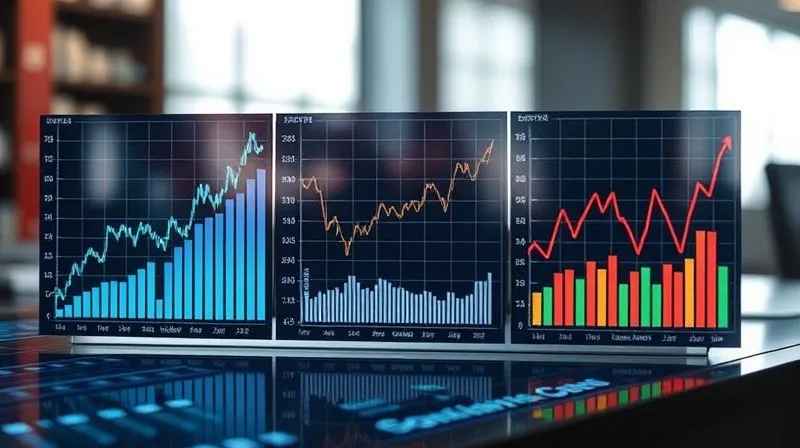
Strategy 4: Embrace Diversification and "Anti-Fragile" Asset Allocation
One of the most powerful tools against the uncertainty of conflicting forecasts is robust diversification. This isn't just about spreading your investments across different stocks and bonds; it's about building an "anti-fragile" portfolio that can not only withstand shocks but potentially benefit from volatility. As Nassim Nicholas Taleb famously wrote, "Some things benefit from shocks; they thrive and grow when exposed to volatility, randomness, disorder, and stressors and love adventure, risk, and uncertainty."
Pillars of Anti-Fragile Asset Allocation:
- Broad Asset Class Diversification: Beyond traditional equities and fixed income, consider real assets (real estate, commodities), alternative investments (private equity, hedge funds, managed futures), and even digital assets for truly diversified exposure. Each asset class reacts differently to economic conditions.
- Geographic Diversification: If one region faces a downturn, others might be thriving. Don't put all your eggs in one country's economic basket. Emerging markets, for instance, often have different economic cycles than developed ones.
- Sectoral Diversification: Within equities, ensure you're not overly concentrated in a few sectors. Technology might thrive in a growth scenario, while consumer staples or healthcare might be more resilient in a downturn.
- Currency Diversification: Holding assets denominated in different currencies can provide a hedge against domestic currency depreciation or strengthen your purchasing power if other currencies appreciate.
- Dynamic Allocation: This isn't a "set it and forget it" approach. Regularly review your asset allocation in light of evolving economic data and your scenario analysis. Be prepared to rebalance or make tactical shifts when your trigger points are met.
By constructing a portfolio that is inherently resilient to a wide range of outcomes, you minimize the impact of any single forecast proving dramatically wrong. This approach acknowledges that predicting the future with perfect accuracy is impossible, and instead focuses on building strength through diversity.
Central bank policy decisions, like those from the Federal Reserve, are critical drivers of market sentiment and economic direction. Understanding their forward guidance, even when ambiguous, is key to assessing future scenarios.Strategy 5: Prioritize "Leading Indicators" and Be Wary of "Lagging Indicators"
In my experience, one of the most effective ways to reconcile conflicting forecasts is to develop a keen eye for leading economic indicators. These are data points that tend to change *before* the broader economy shifts, offering clues about future direction. Conversely, many commonly cited statistics are lagging indicators, telling you what has *already* happened, which is less useful for forward-looking portfolio decisions.
Key Leading Indicators to Monitor:
- Yield Curve: An inverted yield curve (short-term treasury yields higher than long-term) has historically been a strong predictor of recessions.
- Manufacturing New Orders (e.g., ISM New Orders): A decline here often signals a future slowdown in industrial production.
- Building Permits: A decrease suggests future weakness in construction and related industries.
- Consumer Confidence Indexes (e.g., Conference Board, University of Michigan): A sharp drop can precede a reduction in consumer spending.
- Stock Market Performance: Often considered a leading indicator, as investors price in future expectations.
- Commodity Prices (especially industrial metals like copper): Can signal future industrial demand.
Why Lagging Indicators Can Be Misleading:
Indicators like unemployment rates, GDP figures, and corporate earnings (after they are released) tell you about the past. While essential for historical analysis, they can be misleading for making *future* investment decisions. By the time these numbers confirm a trend, the market has often already moved. Focusing on leading indicators allows you to anticipate shifts and adjust your portfolio proactively, rather than reactively.
"Don't just read the headlines; understand the data points that create them. The market discounts the future, and so should your analysis."
By prioritizing these forward-looking signals, you equip yourself with the ability to discern which forecasts align more closely with the emerging reality. This doesn't mean ignoring lagging indicators entirely, but rather understanding their place in the economic narrative.
The National Bureau of Economic Research (NBER) is the official arbiter of U.S. business cycles, providing valuable historical context for understanding economic expansions and contractions, though their declarations are often lagging.Frequently Asked Questions (FAQ)
Question: How can a retail investor realistically access the same quality of economic forecasts as institutional investors? While institutional investors have access to proprietary research, a wealth of high-quality economic forecasts is publicly available. Reputable sources include the IMF, World Bank, OECD, major central banks (Federal Reserve, ECB), and even the economic research divisions of large investment banks often publish summaries. Financial news outlets like Bloomberg, Reuters, Wall Street Journal, and Financial Times aggregate and interpret these. The key is to seek out a diverse range of sources rather than relying on just one, and critically evaluate their methodologies and assumptions, as discussed in Strategy 1.
Question: Is it better to be conservative and assume the worst-case scenario from conflicting forecasts? Not necessarily. While prudence is wise, always assuming the worst can lead to missed opportunities and underperformance over the long term. A better approach is scenario planning (Strategy 3), which involves preparing for a range of plausible outcomes, including optimistic and pessimistic ones. This allows for a more balanced risk-reward profile, where you're protected against severe downturns but also positioned to benefit from upside potential. It's about resilience, not just defense.
Question: How often should I review and adjust my portfolio based on new economic forecasts? The frequency of review depends on your investment horizon and risk tolerance. For long-term strategic asset allocation, annual or semi-annual reviews are typically sufficient, unless there's a significant, unexpected economic shock. For tactical adjustments based on shorter-term economic shifts, quarterly reviews or even more frequent monitoring of leading indicators might be appropriate. The goal isn't constant churning, but informed, deliberate adjustments when your predefined trigger points (from scenario planning) are met. Avoid making impulsive decisions based on daily news cycles.
Question: What role does "common sense" play when reconciling highly technical economic forecasts? Common sense, or practical intuition, plays a crucial role. While economic models are complex, they are ultimately trying to describe human behavior and resource allocation. If a highly technical forecast seems to defy basic logic or contradicts observable real-world trends (e.g., predicting booming consumer spending during a period of mass layoffs), it warrants extra scrutiny. Use your practical understanding of how businesses operate, how consumers react, and how geopolitics influence markets to sanity-check the more arcane predictions. It's about combining quantitative rigor with qualitative wisdom.
Question: Can I use AI tools to help reconcile these forecasts? Yes, AI and machine learning are increasingly valuable. They can process vast amounts of economic data, identify patterns, and even generate their own forecasts. Some AI platforms can synthesize information from multiple sources, highlight discrepancies, and even perform sentiment analysis on economic reports. However, AI is a tool, not a replacement for human judgment. It can help you identify trends and potential biases, but the ultimate decision-making, especially regarding the nuanced interpretations of underlying assumptions and geopolitical risks, still requires your experienced hand. Use AI to augment your analysis, not automate your wisdom.
Key Takeaways and Final Thoughts
- Don't Chase Headlines: Resist the urge to react to every new forecast. Instead, adopt a structured, analytical approach.
- Understand the "Why": Focus on the underlying drivers and assumptions of forecasts, not just their headline numbers.
- Embrace Scenario Planning: Prepare for multiple plausible economic futures, rather than betting on a single outcome.
- Build an Anti-Fragile Portfolio: Diversify broadly across asset classes, geographies, and sectors to enhance resilience.
- Prioritize Leading Indicators: Use forward-looking data to anticipate shifts and make proactive adjustments.
Reconciling conflicting global economic forecasts for your portfolio is not about finding the 'one true prediction.' It's about building a robust framework for understanding the economic landscape, anticipating a range of possibilities, and constructing a resilient portfolio that can weather storms and capture opportunities. By adopting these strategies, you move from being a passive observer to an active, informed investor, capable of navigating the complexities of the global economy with confidence and clarity. Your journey to long-term portfolio success hinges on your ability to make sense of uncertainty, and I'm confident these insights will empower you to do just that.
Recommended Reading
- Is the Debt Snowball Method Right for Your Finances? The Ultimate Guide
- 7 Steps: How to Protect Business Assets During Personal Debt Crisis?
- Automate Claims: Cut Fraud Losses by 40% (Proven Strategies)
- Unlock Business Capital: How to Expedite Your Luxury Home Sale
- The Ultimate Guide: How Much Emergency Fund for Home Repairs Do You Really Need?





Comments
Leave a comment below. Your email will not be published. Required fields marked with *