



What to do when scaling costs exceed revenue growth for a startup?
For over two decades in the vibrant, yet often unforgiving, world of startup finance and entrepreneurship, I've observed a recurring, almost tragic, pattern: brilliant ideas with immense potential falter not due to lack of innovation, but due to a fundamental misstep in financial strategy. I've personally advised founders who, in their fervent pursuit of rapid growth, inadvertently built a spending machine that outpaced their revenue generation, leading to a precarious situation.
This isn't just a financial hiccup; it's an existential threat. It's the moment when the exhilarating climb of scaling turns into a terrifying descent, threatening to burn through precious capital and ultimately extinguish the startup's flame. The problem isn't always obvious either; it often lurks beneath layers of impressive user acquisition numbers or market share gains, only revealing itself when the cash reserves dwindle faster than anticipated.
In this definitive guide, I will share the actionable frameworks, real-world case studies, and expert insights I've gathered over years of working with both thriving and struggling startups. We'll delve into precise strategies to diagnose the problem, implement surgical cost optimizations, accelerate sustainable revenue, and ultimately answer the critical question: What to do when scaling costs exceed revenue growth for a startup?
Understand the Root Cause: Beyond the Surface-Level Numbers
When you first notice that your scaling costs are outpacing revenue growth, the immediate reaction is often panic. However, a knee-jerk reaction of slashing budgets indiscriminately can be more damaging than the problem itself. The first, and most crucial, step is to deeply understand the root causes. This means going far beyond a simple P&L statement to analyze the intricate dance between your investments and their returns.
The Paradox of Growth: When More Means Less
It might sound counterintuitive, but rapid growth can sometimes be a direct contributor to financial instability. This is the paradox of growth: every new customer, every expanded market, every additional team member, while seemingly positive, often comes with an associated cost. If these costs aren't managed meticulously and their return isn't realized efficiently, growth becomes a liability, not an asset.
"Growth for the sake of growth is the ideology of the cancer cell." - Edward Abbey. This holds true for startups; unchecked expansion without a clear path to profitability is a dangerous game. Your goal is smart, sustainable growth, not just growth at any cost.
I've witnessed startups celebrate achieving a certain user milestone, only to realize that the cost of acquiring and serving those users far exceeded the lifetime value they brought. This is a classic symptom of scaling costs exceeding revenue growth.
Identifying Your Leaky Buckets: Where Are Funds Really Going?
To truly address the problem, you need to conduct a forensic audit of your spending. This isn't about blaming departments; it's about understanding the efficiency of every dollar spent. Think of your startup's finances as a complex plumbing system. Somewhere, there are leaky buckets draining your resources.
- Categorize All Expenses: Go beyond general categories. Break down marketing into channels (PPC, social, content), operations into specific software, infrastructure, and personnel costs, and R&D into specific project allocations.
- Map Costs to Value Creation: For each significant expense, ask: What direct value does this create for our customers or our business? Is it contributing to revenue, retention, or critical innovation? If the answer is vague, it's a potential leaky bucket.
- Analyze Unit Economics: This is paramount. What is your Customer Acquisition Cost (CAC)? What is the Lifetime Value (LTV) of a customer? How do your production costs scale with each unit sold or service delivered? A healthy startup consistently maintains LTV > CAC, ideally by a factor of 3x or more.
- Review Vendor Contracts: Often, legacy contracts for software, services, or even office space go unexamined. Are you still using all features? Can you negotiate better terms?
- Identify Hidden Costs: Don't forget the 'soft' costs like employee turnover, inefficient processes leading to wasted time, or missed opportunities due to poor data.
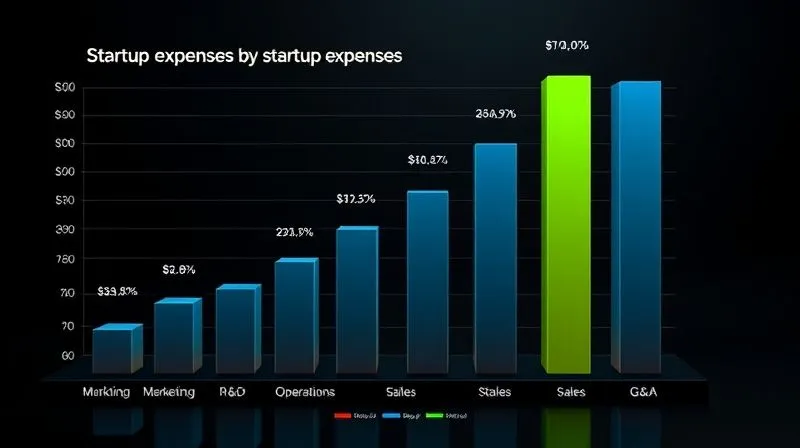
Strategic Cost Optimization: Cutting Smart, Not Blind
Once you've identified where your money is going and the efficiency of that spend, the next step is strategic cost optimization. This isn't about slashing budgets randomly, which can cripple essential functions and morale. It's about surgical precision – identifying areas where spend isn't delivering adequate ROI and reallocating or reducing it without compromising core value propositions or future growth potential.
Re-evaluating Marketing Spend: ROI, Not Just Reach
Marketing is often the first area founders look to cut, and for good reason: it's a significant expenditure. However, the key is to optimize, not eliminate. Focus ruthlessly on channels and campaigns that demonstrate a clear, positive return on investment (ROI) and a healthy LTV:CAC ratio. If you're spending heavily on a channel that brings in low-quality leads or customers with short lifespans, that's a prime candidate for reduction or complete overhaul.
- Audit Every Channel: Review performance data for every marketing channel over the last 6-12 months. Which channels have the highest CAC? Which deliver the highest LTV?
- Optimize Underperformers: For channels with acceptable but not stellar performance, test new creatives, targeting, or bidding strategies. Small adjustments can yield significant improvements.
- Pause or Eliminate Laggards: Be brave. If a channel consistently underperforms and doesn't align with strategic goals (e.g., brand awareness vs. direct conversions), reallocate its budget to proven winners or save it.
- Focus on Organic Growth: Double down on SEO, content marketing, and community building. While slower, these often yield higher LTV customers at a lower long-term cost.
According to a Harvard Business Review article on growth strategy, focusing on profitable customers and channels is far more critical than simply expanding market share at any cost. This is especially true when scaling costs exceed revenue growth.
Operational Efficiencies: Streamlining for Leaner Growth
Operational costs encompass everything from software subscriptions and cloud infrastructure to logistics and administrative overhead. These costs can balloon quietly, especially as processes are patched together during rapid scaling. Now is the time to streamline.
| Operational Area | Current Spend ($/month) | Optimized Spend ($/month) | Savings (%) |
|---|---|---|---|
| Cloud Infrastructure | 15,000 | 10,500 | 30% |
| SaaS Subscriptions | 8,000 | 6,000 | 25% |
| Logistics/Shipping | 12,000 | 10,200 | 15% |
| Administrative Overhead | 7,000 | 5,600 | 20% |
This table illustrates a common scenario. By meticulously reviewing each operational area, significant savings can be identified without hindering performance. For example, negotiating better terms with cloud providers, consolidating redundant SaaS tools, or optimizing shipping routes can lead to substantial reductions.
Staffing & Talent: The Human Capital Equation
Your team is your greatest asset, but also your largest expense. When scaling costs exceed revenue growth, it's critical to ensure every hire is impactful and every role is optimized. This doesn't mean layoffs are the first answer, but rather a re-evaluation of team structure, productivity, and future hiring plans.
Case Study: InnovateTech's Productivity Turnaround
InnovateTech, a Series A SaaS startup, found itself in this very predicament. Their engineering team had grown rapidly to 40 people, but product velocity wasn't keeping pace, and project delays were common. The cost per engineer was high, yet output was stagnant. Instead of immediate layoffs, I advised them to implement a three-pronged strategy:
- Process Optimization: They adopted Agile methodologies more rigorously, focusing on smaller, more frequent sprints and clearer project ownership.
- Skill Gap Analysis: Identified key areas where specific training could boost overall team efficiency, rather than hiring new specialists.
- Strategic Automation: Invested in tools to automate repetitive tasks for their QA and DevOps teams, freeing up engineers for higher-value work.
Within six months, InnovateTech saw a 25% increase in product feature delivery per quarter without adding a single new engineer. They also reduced their reliance on expensive contractors by 40%. This proactive approach averted a potential cash crunch and demonstrated that optimizing existing talent can be more effective than simply cutting headcount.
Revenue Acceleration Strategies: Fueling Growth Organically
While cost optimization is critical, it's only one side of the coin. To truly escape the trap of scaling costs exceeding revenue growth, you must simultaneously focus on accelerating revenue in a sustainable, capital-efficient manner. This means moving beyond just acquiring new customers and looking at the entire customer lifecycle and potential new avenues for value creation.
Optimizing Pricing Models: Are You Undervaluing Your Product?
Many startups, especially in competitive markets, default to underpricing their offerings, fearing they'll lose customers. However, a well-thought-out pricing strategy can significantly boost revenue without a proportional increase in costs. It’s not about being the cheapest; it's about reflecting the true value you provide.
- Value-Based Pricing: Understand the quantifiable value your product delivers to customers. Price accordingly, rather than solely based on competitor pricing or cost-plus models.
- Tiered Pricing: Offer different tiers that cater to various customer segments and their needs. This allows you to capture more revenue from high-value customers while still serving smaller ones.
- Freemium to Premium Conversion: If you have a freemium model, analyze your conversion rates. Are you effectively demonstrating the value of your premium features? Experiment with different upgrade incentives.
- Add-ons and Bundling: Can you offer additional services or bundle existing features in a way that increases the perceived value and allows for higher pricing?
According to research by Forbes Finance Council, even a small increase in pricing, when justified by value, can have a disproportionately positive impact on profitability compared to an equivalent increase in sales volume or reduction in costs.
Customer Retention & Expansion: The Gold Mine You Already Own
Acquiring new customers is expensive. Retaining and growing existing customers is often far more cost-effective and a powerful lever when scaling costs exceed revenue growth. A 5% increase in customer retention can increase company revenue by 25-95%, according to Bain & Company.
- Enhance Customer Success: Invest in proactive customer success initiatives. Happy customers stay longer and are more likely to upgrade or refer others.
- Upselling & Cross-selling: Identify opportunities to offer existing customers higher-tier plans or complementary products/services that genuinely add value.
- Feedback Loops: Actively solicit and act on customer feedback. This not only improves your product but also builds loyalty and reduces churn.
- Community Building: Foster a strong community around your product. Engaged users become advocates and provide invaluable insights.

Exploring New Revenue Streams: Diversification with Focus
While optimizing existing revenue is paramount, strategically exploring new, capital-efficient revenue streams can provide additional stability. This isn't about chasing every shiny new object, but identifying synergistic opportunities.
- Complementary Services: Can you offer consulting, training, or implementation services related to your core product?
- Partnerships: Collaborate with other businesses whose offerings complement yours, potentially leading to joint ventures, referral fees, or co-marketing.
- Premium Content/Data: If you generate unique data or have deep expertise, consider offering premium reports, webinars, or access to exclusive insights.
- API Monetization: If your product has a robust API, consider offering tiered access for developers or partners.
The key here is to pilot these new streams with minimal initial investment, testing their viability before committing significant resources. The goal is to find avenues that leverage your existing assets and expertise without diverting critical focus from your core business.
Strengthening Financial Resilience: Beyond Day-to-Day Operations
Addressing immediate cost imbalances is crucial, but a truly resilient startup needs robust financial planning and communication strategies. Building financial resilience means having a clear understanding of your cash position, future funding needs, and how to effectively communicate your challenges and solutions to stakeholders.
Cash Flow Management: Your Startup's Lifeblood
Profitability is important, but cash flow is king, especially for a startup. You can be profitable on paper but run out of cash if your receivables are slow and your payables are fast. When scaling costs exceed revenue growth, meticulous cash flow forecasting becomes non-negotiable.
- Detailed Forecasts: Create 12-18 month rolling cash flow forecasts, updated weekly or bi-weekly. Include best-case, worst-case, and most-likely scenarios.
- Manage Receivables & Payables: Implement stricter terms for invoicing and collections. Negotiate longer payment terms with your vendors where possible.
- Establish a Cash Reserve: Aim for at least 3-6 months of operating expenses in reserve. This buffer is critical for navigating unexpected challenges.
- Monitor Burn Rate: Keep a close eye on your net burn rate (cash spent minus cash generated). Understand how quickly you're consuming your capital.
"Cash flow is more important than my mother." - This humorous, yet stark, quote attributed to numerous entrepreneurs highlights the absolute criticality of cash flow for a startup's survival. Without it, even the most innovative ideas wither.
A robust cash flow management system allows you to anticipate potential shortfalls long before they become crises, giving you time to implement corrective actions.
Investor Relations & Funding: Communicating Your Path to Profitability
If you're venture-backed, your investors are key stakeholders. Transparency, even when facing challenges like scaling costs exceeding revenue growth, is paramount. They’ve invested in your vision, and they need to trust your ability to navigate rough waters.
- Proactive Communication: Don't wait for things to get dire. Schedule regular, honest updates with your investors.
- Data-Driven Reporting: Present the problem with clear data. Show how scaling costs have outpaced revenue, but also present your detailed plan for correction.
- Demonstrate a Path to Profitability: Investors want to see a credible plan for achieving sustainable profitability, even if it means a temporary slowdown in hyper-growth.
- Seek Advice, Not Just Money: Leverage your investors' experience and network. They often have seen similar challenges and can offer valuable insights or connections.
Open communication builds trust and can turn potential adversaries into powerful allies, especially if you need to raise additional capital or extend your runway. Demonstrating a clear understanding of your financial situation and a concrete plan to address it is far more reassuring than vague optimism.
Inc.com emphasizes the importance of transparent investor relations, especially during difficult periods, as it solidifies long-term partnerships.Implementing a Culture of Financial Acumen and Accountability
Ultimately, financial health isn't solely the CEO's responsibility. For a startup to truly thrive and avoid situations where scaling costs exceed revenue growth, financial acumen needs to be ingrained in the company culture. Every team member, to some degree, should understand how their actions impact the bottom line.
Educating Your Team: Empowering Smart Decisions
Many employees, particularly in non-finance roles, may not fully grasp the financial implications of their day-to-day decisions. Providing basic financial education and transparency can empower them to make more cost-conscious choices.
- Share Key Metrics: Regularly share high-level financial metrics (e.g., burn rate, LTV:CAC, revenue goals) with the entire company. Explain what they mean and why they matter.
- Departmental Budgets & Accountability: Give department heads more ownership over their budgets, coupled with clear accountability for meeting financial targets.
- Training Workshops: Offer optional workshops on financial literacy, explaining concepts like ROI, unit economics, and cash flow in an accessible way.
- Celebrate Efficiencies: Recognize and reward teams or individuals who identify and implement cost-saving measures or revenue-generating ideas.
| Metric | Why it matters | Team Impact |
|---|---|---|
| Customer Acquisition Cost (CAC) | Measures efficiency of customer acquisition efforts. | Marketing, Sales |
| Lifetime Value (LTV) | Indicates long-term revenue from a customer. | Product, Customer Success, Marketing |
| Gross Margin | Profitability after direct costs of goods/services. | Product, Operations |
| Burn Rate | How quickly cash is being spent; impacts runway. | All departments (indirectly) |
By making these metrics transparent and explaining their relevance, you transform a potentially daunting financial problem into a shared challenge that everyone can contribute to solving.
Regular Review Cycles: Adaptability is Key
The startup landscape is constantly evolving, and your financial strategy must be agile. Establishing regular, comprehensive review cycles ensures you can adapt quickly when new challenges arise or when scaling costs exceed revenue growth again in the future.
- Monthly Financial Deep Dives: Beyond regular reporting, dedicate time each month for leadership to deep dive into financial performance, comparing actuals against forecasts.
- Quarterly Strategic Reviews: Every quarter, revisit your overall strategy. Are your current investments still aligned with your long-term vision and financial goals? Be prepared to pivot if necessary.
- Scenario Planning: Regularly engage in 'what-if' scenarios. What if sales drop by 10%? What if a key investor pulls out? How would you respond financially?
- Post-Mortems: When a project or initiative doesn't yield the expected financial results, conduct a thorough post-mortem to learn from it and apply those lessons to future decisions.

This continuous cycle of planning, execution, review, and adaptation is the hallmark of financially resilient startups. It allows you to not only survive periods when scaling costs exceed revenue growth but to emerge stronger and more strategically sound.
Frequently Asked Questions (FAQ)
Q: How quickly should I expect to see results from cost-cutting measures? A: The timeline for seeing results can vary significantly depending on the nature of the cuts. Operational efficiencies like software consolidation or renegotiating vendor contracts can yield immediate savings (within 1-3 months). Re-optimizing marketing spend might show initial improvements in CAC within 3-6 months, with LTV improvements taking longer. Major strategic shifts, like product pivots or significant team restructuring, could take 6-12 months to show their full impact. Patience and consistent monitoring are crucial.
Q: What's the biggest mistake startups make when trying to fix this problem? A: The biggest mistake is making indiscriminate, panic-driven cuts without a deep understanding of the underlying causes or the strategic implications. Slashing budgets for critical functions like R&D, essential marketing, or customer support can severely damage your product, brand, and long-term growth potential. Another common error is focusing solely on cost-cutting and neglecting simultaneous revenue acceleration strategies. A balanced approach is always more effective.
Q: Should I prioritize cost-cutting or revenue growth when facing this challenge? A: You must prioritize both simultaneously, but the emphasis might shift based on your immediate runway. If your cash runway is critically short (e.g., less than 3 months), aggressive, smart cost-cutting might be the immediate priority to buy time. However, even then, you should never lose sight of revenue generation. For a healthier runway, a balanced approach where you surgically cut inefficient costs while aggressively pursuing profitable revenue streams is ideal. Think of it as rebalancing, not just cutting.
Q: How do I communicate these changes to my team and investors without causing panic? A: Transparency, empathy, and a clear action plan are key. For your team, explain the "why" behind the changes – that it's about building a stronger, more sustainable company, not about failure. Emphasize that difficult decisions are being made thoughtfully. For investors, present the problem with data, outline your comprehensive strategy (cost optimization + revenue acceleration), and show a clear path to improved financial health. Frame it as a strategic recalibration, not a crisis.
Q: When is it time to consider external financial advisory or fractional CFO services? A: It's time when internal resources lack the specific expertise or bandwidth to conduct the deep financial analysis and strategic planning required. If your team is overwhelmed, if you lack a dedicated finance leader, or if you need an objective, experienced perspective to navigate complex financial restructuring or fundraising, bringing in external expertise can be invaluable. They can offer fresh insights, implement best practices, and guide you through difficult decisions.
Key Takeaways and Final Thoughts
Navigating the treacherous waters where scaling costs exceed revenue growth for a startup is one of the most significant challenges an entrepreneur can face. However, it's not an insurmountable one. It demands courage, clear-headed analysis, and decisive action, but it's also an opportunity to build a more resilient, efficient, and ultimately, more successful business.
- Diagnose Deeply: Don't just treat symptoms. Understand the root causes of your cost-revenue imbalance through forensic analysis and unit economics.
- Optimize Smart, Not Blind: Implement surgical cost reductions that preserve or enhance your core value proposition and future growth.
- Accelerate Profitably: Focus on capital-efficient revenue growth through pricing optimization, customer retention, and strategic new streams.
- Strengthen Resilience: Master cash flow, build strong investor relations, and plan for future scenarios.
- Cultivate Acumen: Empower your entire team with financial understanding and accountability.
Remember, this period of intense scrutiny and strategic recalibration can forge the foundational strength your startup needs for long-term success. Embrace the challenge, apply these frameworks diligently, and you won't just survive – you'll thrive, emerging as a leaner, smarter, and more sustainable enterprise ready to truly conquer your market.

Recommended Reading
- 7 Proven Strategies: How to Reduce Unexpected Campus Living Costs
- Unlock Financial Freedom: Your Ultimate Guide to a Sustainable Student Budget
- Budget Travel Insurance: 5 Ways to Protect Your Business Gear Abroad
- 7 Pillars: Preventing Smart Contract Exploits in Blockchain Finance
- 7 Proven Strategies: Overcoming Client Denial in Severe Debt Management





Comments
Leave a comment below. Your email will not be published. Required fields marked with *