


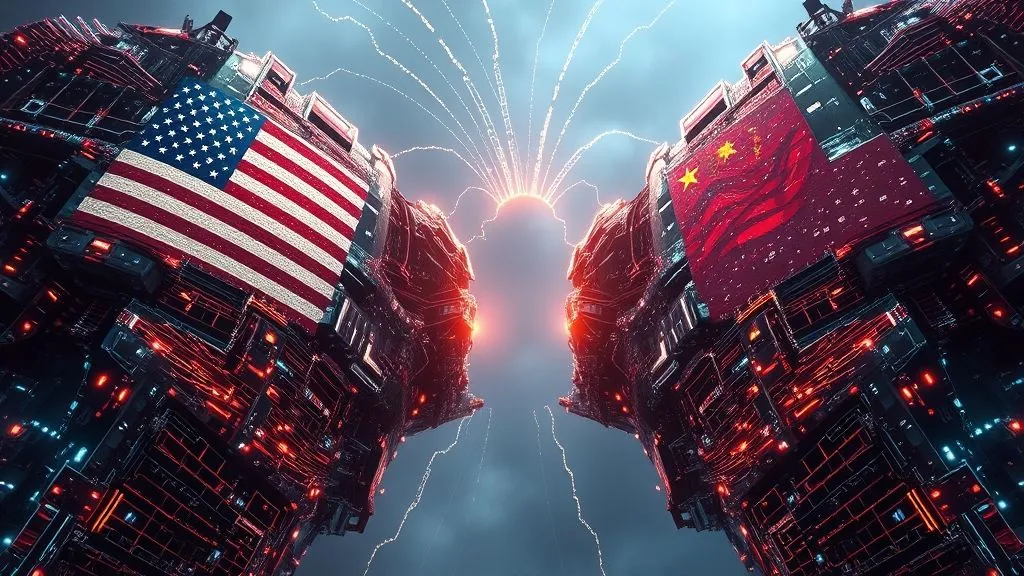
For instance, the semiconductor industry, a lynchpin of modern technology, is seeing immense investment in **re-shoring** initiatives in the US and Europe. Building a new state-of-the-art fabrication plant, or "fab," can cost upwards of $20 billion and takes years. These costs are ultimately absorbed by consumers through higher prices for electronic goods.
The promise of frictionless global commerce is giving way to a more localized, strategically de-risked approach. This isn't just about security; it's about the very definition of economic resilience in a contested world.Another significant long-term consequence is an **innovation drag**. For decades, the free flow of ideas, talent, and capital across borders accelerated technological progress. Decoupling introduces barriers, leading to duplicated research efforts and potentially divergent technological standards. Consider the potential for two distinct technological ecosystems to emerge:
- US-aligned ecosystem: Focused on Western standards, supply chains, and regulatory frameworks.
- China-aligned ecosystem: Developed around Chinese domestic standards, supply chains, and a distinct digital infrastructure.
We are seeing higher **input costs** across various sectors. For example, a company that once sourced a crucial component from a highly efficient Chinese factory might now need to procure it from a more expensive, less optimized supplier in a "friendly" nation. This isn't just a short-term blip; it represents a structural increase in the cost of doing business globally.
Furthermore, the decoupling forces companies into difficult strategic choices, particularly those with significant market presence in both the US and China. They may be compelled to develop **dual product lines** or even separate corporate structures, adding immense operational complexity and reducing profit margins. This is a practical, actionable challenge that many multinational CEOs are grappling with right now. The long-term impact also extends to **developing nations**. They face the unenviable choice of aligning with one tech bloc or the other, potentially limiting their access to capital, technology, or markets from the opposing side. This can exacerbate existing inequalities and create new dependencies. In essence, the long-term economic impact of US-China tech decoupling is a transition from a world optimized for efficiency to one optimized for **resilience and national security**. While this shift may offer some benefits in terms of reduced geopolitical vulnerability and the re-shoring of critical industries, it comes at a significant cost: slower global growth, higher prices, and a more fragmented, less innovative technological landscape.Understanding the Genesis: Why US-China Tech Decoupling is Occurring
The tech decoupling between the United States and China isn't a sudden phenomenon; rather, it's the culmination of deeply entrenched strategic divergences that have intensified over the past decade. In my experience, attributing it to a single cause is a common mistake; it's a multi-layered issue driven by a confluence of national security, economic competition, and ideological factors.
At its core, the genesis lies in escalating **national security concerns** from the U.S. perspective. Washington increasingly views certain Chinese technologies not merely as commercial products but as potential vectors for espionage, data exfiltration, or military advantage. This shift became particularly pronounced with the rise of 5G infrastructure and advanced semiconductors.
For instance, the U.S. government's actions against Huawei were not solely about market competition. They were fundamentally rooted in fears that Huawei's deep integration into global communication networks could grant the Chinese state unprecedented access to sensitive data, effectively creating a **backdoor risk** for intelligence gathering.
"The lines between economic competition and national security have blurred irrevocably in the tech sector. What was once purely a commercial race is now seen through the lens of strategic vulnerability and geopolitical power."
Another pivotal driver is the fierce **economic competition and intellectual property (IP) disputes**. For years, the U.S. has accused China of widespread IP theft, forced technology transfers, and employing state-backed subsidies to unfairly bolster its domestic tech champions. This has fostered a perception that China's economic ascent in tech was not always on a level playing field.
China's ambitious "Made in China 2025" industrial policy, aiming for self-sufficiency in critical high-tech sectors, further solidified U.S. resolve to curb China's technological advancement. This policy, while framed domestically as development, was interpreted externally as a direct challenge to U.S. global technological leadership and an intent to dominate key industries.
The fragility of global supply chains, starkly exposed by the COVID-19 pandemic, also played a significant role. The over-reliance on a single geographic region for critical components, particularly semiconductors, highlighted profound **supply chain vulnerabilities**. This realization spurred a bipartisan push in the U.S. to onshore or "friend-shore" production, reducing dependence on China.
Furthermore, **ideological differences and data governance philosophies** contribute significantly to the rift. The U.S. and its allies operate under principles of open internet, data privacy, and democratic values, which often clash with China's state-centric approach to data control, surveillance, and internet censorship. This divergence creates fundamental incompatibility in how technology should be developed and deployed globally.
From China's vantage point, the decoupling is also a validation of its long-held ambition for **technological sovereignty**. Facing U.S. export controls and sanctions, Beijing has accelerated its efforts to develop indigenous capabilities in areas like advanced chips, operating systems, and AI. This is not merely a reaction but an inherent strategic goal to reduce its reliance on foreign technology.
In essence, the genesis of US-China tech decoupling is a complex interplay of a rising power challenging an established one, each driven by its own national interests, security imperatives, and deeply held beliefs about the future of technology and global order.
Trade Flows and Bilateral Relationships
The immediate impact of US-China tech decoupling on global trade flows is far more nuanced than a simple reduction in volume. In my experience, it's a strategic rerouting, where the nature of goods traded – particularly in critical technology sectors – undergoes a profound transformation. We are witnessing a shift from purely cost-driven decisions to those heavily influenced by national security and geopolitical alignment. This reorientation is most evident in the restructuring of global supply chains. Companies are increasingly prioritizing **resilience** and **friend-shoring** over pure efficiency. For instance, the US CHIPS Act and similar initiatives in Europe are clear signals that governments are willing to subsidize domestic or allied production to reduce reliance on potentially adversarial nations for critical components like semiconductors. This isn't just about tariffs; it's about embedding security into the supply chain's DNA. A common mistake I see is viewing this solely as a bilateral issue between Washington and Beijing. The reality is that third-party nations are significantly impacted, often becoming beneficiaries of **trade diversion**. Countries like Vietnam, Mexico, and India are seeing increased foreign direct investment and manufacturing activity as companies seek to diversify their production bases away from China, thus altering existing trade corridors and creating new ones. The economic implications inevitably spill over into the realm of bilateral relationships, profoundly reshaping diplomatic landscapes. Trade policy is increasingly being leveraged as an instrument of foreign policy, where access to markets or advanced technology becomes a powerful bargaining chip. This shift compels nations to re-evaluate their alliances and strategic partnerships, often leading to the formation of new **geo-economic blocs** centered around shared technological and political values."The long-term economic impact isn't just about who buys what from whom, but about the fundamental re-architecture of trust and interdependence in the global economy."Consider the semiconductor industry as a prime example. US export controls on advanced chip manufacturing equipment to China have forced companies like ASML, a Dutch lithography giant, to operate under a bifurcated market reality. Their ability to sell certain high-end machines to Chinese customers is now restricted, compelling them to adapt their business models and R&D focus based on geopolitical directives, directly impacting their bilateral trade relationships and global market strategy. The most significant long-term consequence, in my estimation, will be the emergence of distinct technological ecosystems and standards. This could lead to a world where different regions operate on incompatible digital infrastructure, from 5G networks to AI platforms, raising transaction costs, hindering innovation through reduced collaboration, and potentially fragmenting the global digital economy. This is a move away from the single, integrated global market that characterized the late 20th and early 21st centuries. For businesses and policymakers alike, navigating this new landscape demands an unprecedented level of strategic foresight and adaptability. It requires:
- **Diversification of Sourcing:** Moving beyond single-source dependencies, even if it means higher initial costs.
- **Geopolitical Risk Assessment:** Integrating geopolitical analysis directly into supply chain and market entry strategies.
- **Engagement with New Partners:** Proactively building relationships with emerging manufacturing hubs and technological allies.
- **Advocacy for Open Standards (where possible):** Working to prevent complete fragmentation of global technological norms.
Human Capital and Talent Migration
In my experience, few aspects of US-China tech decoupling are as profoundly disruptive and complex as its impact on **human capital and talent migration**. This isn't merely about individuals moving; it's a fundamental reshaping of global innovation pipelines and the very fabric of scientific collaboration. We're observing a significant shift that carries both strategic opportunities and considerable risks for all parties involved. A common mistake I see is underestimating the psychological element at play. Heightened geopolitical tensions and increased scrutiny create an environment of uncertainty for researchers, engineers, and entrepreneurs, regardless of their origin. This often leads to a re-evaluation of career trajectories and geographic preferences, sometimes away from traditional innovation hubs. For decades, the free flow of talent, particularly from China to the United States for advanced education and research, served as a powerful engine for global innovation. This exchange fostered a vibrant intellectual ecosystem, enriching both nations through knowledge transfer and cross-cultural collaboration. The current decoupling disrupts this symbiotic relationship, forcing a re-evaluation of long-standing pathways. From my vantage point, the initial impact manifests as a **"push" factor** for Chinese talent in the US, driven by visa restrictions, perceived hostility, and a sense of limited career progression. Simultaneously, China is actively implementing **"pull" factors**, such as attractive research grants, state-backed innovation initiatives, and a burgeoning domestic tech sector, to entice these individuals to return. This dynamic creates a powerful, albeit often forced, reverse brain drain.The true economic impact of tech decoupling on human capital is not just about who leaves or who stays, but about the fragmentation of intellectual networks, the duplication of R&D efforts, and the potential for a global slowdown in foundational scientific breakthroughs. This is a long-term cost that is difficult to quantify but impossible to ignore.The consequences for innovation ecosystems are profound. When top-tier researchers and engineers are constrained from collaborating across borders, the cross-pollination of ideas slows, and the pace of discovery can decelerate. This is particularly true in highly specialized fields like advanced semiconductors, artificial intelligence, and biotechnology, where global expertise is paramount. Both the US and China risk developing parallel, less efficient innovation tracks. We are also witnessing the emergence of **third-country talent hubs**, as highly skilled individuals seek stable and attractive environments outside the direct US-China rivalry. Nations and regions are strategically positioning themselves to capture this migrating talent. Consider these emerging destinations and their potential roles: * **Singapore and UAE:** Offering attractive incentives, robust infrastructure, and a neutral political stance, they are becoming magnets for tech entrepreneurs and researchers from both sides. * **Europe (e.g., Netherlands, Germany, UK):** With strong existing R&D capabilities and a commitment to open science, these countries present viable alternatives for specialized talent, particularly in fields like semiconductor manufacturing and quantum computing. * **Canada and Australia:** These nations often provide more accessible immigration pathways for skilled workers and researchers, benefiting from a perceived stability and quality of life. The long-term economic impact includes a heightened **global talent war**. Countries and corporations will increasingly compete aggressively for a finite pool of highly specialized individuals, driving up salaries and R&D costs. This competition extends beyond direct recruitment, influencing educational policies and national strategies for STEM talent development. The goal is to cultivate, attract, and retain the best minds, even if it means significant investment. Ultimately, the decoupling necessitates a strategic rethinking of talent development and retention policies in both the US and China. For the US, this means re-evaluating immigration policies to ensure it remains a premier destination for global talent, not just from traditional sources. For China, it involves building a domestic environment that fosters truly world-class, independent research and innovation, beyond just attracting returnees. Both nations must adapt to a new reality where talent flows are no longer a given but a contested resource.
Case Study: Regional Shifts in Global Semiconductor Manufacturing
The global semiconductor industry, long characterized by its highly concentrated supply chain, is undergoing a profound transformation. In my experience, the US-China tech decoupling has acted as a powerful accelerant, prompting a strategic re-evaluation of where chips are designed, manufactured, and assembled. For decades, the vast majority of advanced chip manufacturing has been concentrated in East Asia, particularly in Taiwan and South Korea. This efficiency-driven model, while incredibly effective, proved fragile in the face of geopolitical tensions and unforeseen disruptions like the COVID-19 pandemic. A common mistake I see in analyses is underestimating the sheer scale and complexity of shifting this industrial base. It's not merely about building new factories; it's about replicating an entire ecosystem of suppliers, talent, and specialized infrastructure."The aspiration for semiconductor self-sufficiency is understandable, but the reality is a multi-trillion dollar, multi-decade endeavor that will fundamentally reshape global industrial geography, not just for chips, but for every sector reliant on them."The United States, for instance, has launched aggressive initiatives to bring advanced manufacturing back onshore. The **CHIPS and Science Act** earmarks over $50 billion in subsidies and tax credits, directly incentivizing companies to build new fabrication plants (fabs) within its borders. We are already seeing tangible results. Intel is constructing mega-fabs in Arizona and Ohio, while TSMC and Samsung are investing tens of billions in new facilities in Arizona and Texas, respectively. These moves represent a significant, albeit costly, commitment to **reshoring** critical production. However, the challenges are immense. The cost of building and operating a fab in the US can be 30-50% higher than in Asia, largely due to labor costs, regulatory burdens, and the nascent local supply chain. Attracting and training the vast pool of highly specialized talent required is also a formidable hurdle. Europe is pursuing a similar strategy with the **European Chips Act**, aiming to double its share of global chip production to 20% by 2030. This initiative focuses on both advanced process technologies and automotive-grade semiconductors, a strong suit for European industry. Germany, in particular, is emerging as a key hub, with Intel planning a massive fab complex in Magdeburg and TSMC establishing a new plant in Dresden alongside partners like Bosch and Infineon. This regional clustering aims to recreate a self-sustaining ecosystem. Beyond the traditional semiconductor powerhouses, we are witnessing a broader **diversification** effort across Asia. Japan, once a leader, is now actively luring foreign investment, with TSMC building a fab in Kumamoto, supported by Sony and Denso. India has also thrown its hat into the ring, announcing ambitious plans and significant incentives to attract semiconductor manufacturing. While still in its infancy, these efforts signal a long-term strategic intent to reduce reliance on existing hubs. Southeast Asian nations like Malaysia, Vietnam, and Singapore are also playing a crucial role, particularly in the **OSAT (Outsourced Semiconductor Assembly and Test)** segment. These countries are leveraging their existing expertise and cost advantages to expand their footprint in the semiconductor value chain. The regional shifts are not a simple zero-sum game. Instead, they indicate a move towards **"friend-shoring"** and **"multi-sourcing"** strategies, where companies and nations seek to build redundancy and resilience by diversifying their supply bases across geopolitically aligned or stable regions. In my experience, this fragmentation, while increasing supply chain resilience, will inevitably lead to higher manufacturing costs globally. These costs will eventually trickle down, potentially impacting the price of consumer electronics and the competitiveness of industries reliant on these critical components. The long-term impact will be a more distributed, albeit more expensive, global semiconductor manufacturing landscape. It's a strategic imperative for national security and economic stability, but one that comes with significant economic trade-offs that we are only just beginning to fully appreciate.
Future Trajectories: Scenarios and Strategic Responses
Predicting the future trajectory of US-China tech decoupling is less about fortune-telling and more about robust scenario planning. In my experience, the most effective approach for businesses and policymakers is to consider a range of plausible futures, not just the most obvious, and develop agile strategic responses for each. This allows for proactive adaptation rather than reactive scrambling.
A common mistake I see is focusing too narrowly on a single expected outcome. The reality is that geopolitical and economic forces are dynamic, meaning we must prepare for divergence, not just convergence, in these critical tech relationships. Let's explore the most prominent scenarios and their implications.
Scenario 1: Controlled Competition and Sector-Specific Decoupling
This scenario posits a future where decoupling is targeted and strategic, primarily focused on critical technologies deemed vital for national security or economic leadership. Think of advanced semiconductors, AI, quantum computing, and certain aspects of biotechnology. In other areas, particularly those with global public good implications like climate tech or health, a degree of cooperation might persist.
The economic impact under this scenario involves a significant push towards regionalized supply chains and 'friend-shoring' among allied nations. Companies are already investing heavily in this diversification. For instance, we're seeing major chip manufacturers like TSMC expanding fabrication plants in the US and Japan, while simultaneously maintaining significant operations in Asia.
Strategic responses for this scenario include:
- Supply Chain Resilience: Actively mapping and diversifying critical inputs, often involving dual sourcing from non-adversarial nations.
- Targeted R&D Investment: Governments and companies pouring resources into domestic or allied innovation ecosystems for specific strategic technologies.
- Multilateral Tech Alliances: Building frameworks like the Quad or AUKUS to coordinate technology development, standards, and export controls among like-minded partners.
Scenario 2: Deep Bifurcation and Parallel Ecosystems
This is a more extreme scenario, envisioning a widespread and comprehensive decoupling, leading to two distinct and largely separate technological ecosystems: one centered around the US and its allies, and another around China. This would involve differing technical standards, incompatible software platforms, and highly restricted cross-border data flows and intellectual property sharing.
The economic costs here would be substantial. We'd likely see a significant increase in production costs due to duplicated R&D efforts and loss of economies of scale. Innovation could slow as the cross-pollination of ideas, which has historically driven global tech advancement, diminishes. Market fragmentation would create significant barriers for companies trying to operate across both blocs.
In my view, deep bifurcation represents a significant drag on global economic growth, forcing companies to choose sides and potentially shrinking their addressable markets substantially. The concept of a truly globalized digital economy would be severely challenged.
Strategic responses for this scenario are more defensive and localized:
- Domestic Self-Sufficiency: Prioritizing national capabilities in critical technology sectors, even if it means higher costs or slower development initially.
- Export Control Rigor: Implementing stringent export controls on a broader range of technologies, not just those with clear military applications.
- Digital Sovereignty: Developing national or regional data governance frameworks that minimize reliance on external infrastructure or services from rival blocs.
Scenario 3: Strategic Re-engagement or De-escalation
While perhaps less likely in the immediate term, this scenario considers a future where economic pressures, new geopolitical realities, or a shift in leadership lead to a strategic de-escalation of tech tensions. This wouldn't necessarily mean a return to pre-decoupling globalization, but rather a more pragmatic, selectively re-integrated approach.
The economic impact could be a partial reversal of some decoupling costs, with renewed opportunities for efficiency gains through limited technological collaboration or market access. However, the re-alignment would be complex, requiring careful management of trust and security concerns that have already been established.
Strategic responses for this scenario demand significant agility and foresight:
- Flexible Investment Strategies: Businesses maintaining optionality in their investment decisions, ready to pivot towards re-engagement if the political climate shifts.
- Clear Guardrails for Collaboration: Governments establishing transparent rules of engagement for any renewed tech collaboration, focusing on areas of mutual benefit while protecting national interests.
- Trust-Building Measures: Diplomatic efforts aimed at rebuilding confidence and establishing new norms for technological interaction, potentially through multilateral dialogues.
Ultimately, the long-term impact of US-China tech decoupling will be shaped by how governments and businesses navigate these evolving scenarios. The successful players will be those who demonstrate not just foresight, but also the adaptability to pivot strategies as the global tech landscape continues its profound transformation.
Which countries stand to benefit from US-China tech decoupling?
The US-China tech decoupling, while often framed as a bilateral struggle, is fundamentally reshaping global supply chains and innovation ecosystems, creating significant opportunities for a diverse set of countries. In my experience, this isn't merely a reshuffling; it's a structural realignment where agile nations with strategic foresight stand to gain immensely.
A primary beneficiary category comprises countries poised to become new manufacturing and assembly hubs, particularly for electronics and components. These nations offer a combination of competitive labor costs, improving infrastructure, and, crucially, a more neutral geopolitical stance, making them attractive alternatives to China.
- Vietnam: Has emerged as a top destination for electronics manufacturing, benefiting from its existing industrial base, young workforce, and government support for foreign investment. Companies like Samsung and Apple suppliers have significantly expanded operations there.
- India: With its vast domestic market and government initiatives like "Production Linked Incentive" (PLI) schemes, India is attracting investments in mobile phone manufacturing and semiconductor assembly. Its large talent pool also positions it for software and R&D growth.
- Mexico: Offers compelling advantages for "nearshoring" to the North American market, particularly in automotive electronics and general manufacturing. Proximity to the US significantly reduces logistics costs and supply chain lead times.
- Malaysia and Thailand: These Southeast Asian nations possess well-established electronics manufacturing sectors and skilled workforces, making them natural alternatives for diversified production lines.
Beyond manufacturing, countries with strong foundations in advanced technology and critical inputs are also seeing their strategic importance amplified. This includes nations capable of producing or refining semiconductors, rare earth elements, and other essential components for the digital economy.
"The 'friendshoring' phenomenon isn't just about political alignment; it's a calculated risk management strategy. Companies are seeking stability and predictability, and that often means moving production to geographies with shared values or strong trade ties."
Consider the semiconductor industry, a cornerstone of modern technology. While Taiwan remains dominant, the decoupling is spurring significant investment and strategic interest in other players.
- South Korea: Home to giants like Samsung and SK Hynix, South Korea is a critical player in memory chips and foundry services. Increased US and European collaboration aims to bolster these supply lines further.
- Japan: With its prowess in semiconductor materials, equipment, and specialty components, Japan is seeing renewed investment in domestic chip manufacturing, often in partnership with global leaders like TSMC.
- European Union (especially Germany, Netherlands): Countries like the Netherlands, with ASML's indispensable lithography technology, and Germany, with its automotive and industrial tech base, are pushing for greater domestic chip production capacity under the European Chips Act.
Furthermore, nations rich in critical minerals essential for high-tech manufacturing, from electric vehicles to advanced computing, are experiencing a surge in demand and strategic partnerships. Australia, for example, is a major supplier of lithium and rare earths, while countries in Africa hold significant cobalt reserves.
Finally, the decoupling is creating new avenues for countries specializing in software development, AI, and cybersecurity. As tech ecosystems diverge, the demand for independent, secure, and innovative software solutions grows exponentially.
- Canada: A hub for AI research and development, attracting significant investment and talent, particularly in fields like machine learning and autonomous systems.
- Israel: Continues to be a global leader in cybersecurity, enterprise software, and innovation, offering robust solutions for companies seeking to secure their digital infrastructure amidst heightened geopolitical risks.
- Ireland and the UK: Strong financial technology (fintech) and enterprise software sectors position them to capture new business as companies seek diverse software partners.
A common mistake I see is assuming these benefits are passively acquired. For countries to truly capitalize, they must actively invest in infrastructure, cultivate a skilled workforce, offer attractive regulatory environments, and forge robust trade agreements. It's a race for relevance, and only the most prepared will secure a lasting advantage.
How does tech decoupling affect consumers globally?
The most immediate and tangible impact of US-China tech decoupling on consumers globally is a discernible shift in pricing and product availability. In my experience, these are often the first signals that geopolitical tensions are translating into everyday economic realities for households, affecting everything from smartphones to smart home devices.
At its core, decoupling introduces significant inefficiencies into previously optimized global supply chains. When companies are forced to duplicate manufacturing facilities or source components from less efficient, politically "safe" alternatives, these additional costs are inevitably passed on.
Consider the semiconductor industry, a prime battleground. If chip manufacturers must build parallel, separate fabrication plants for different markets, the immense capital expenditure and operational redundancy translate directly into higher unit costs for everything from advanced computing to basic consumer electronics. This isn't just theoretical; we've already seen this pressure build.
Beyond price, consumers face a substantial erosion of choice and a slowdown in the pace of innovation. A common mistake I see is underestimating how much cross-pollination of ideas and competitive pressure from a truly global market drives rapid technological advancement.
When major tech ecosystems fragment, as we're increasingly observing, consumers in different regions might find themselves locked into specific platforms with fewer competing alternatives. This can lead to less incentive for companies to innovate aggressively, as their market is somewhat captive rather than globally contested.
Imagine a world where your smartphone apps, operating systems, and even hardware components are designed within distinct, often incompatible "walled gardens." This is the future decoupling risks creating, moving away from the more open, interconnected digital landscape consumers have grown accustomed to.
This fragmentation isn't just an inconvenience; it can mean different user experiences, reduced compatibility between devices from various brands, and even the inability to access certain services depending on your geographic location and the prevailing tech ecosystem there. Your digital life becomes more segmented and less seamless.
Another critical, albeit less visible, impact touches upon data privacy and digital security. As national digital borders solidify, different regulatory frameworks for data collection, storage, and usage will emerge, creating a complex patchwork of compliance requirements.
For consumers, this could mean varying levels of data protection depending on where their data is stored and by whom, or even the necessity of using region-specific versions of global services with distinct privacy policies. It adds a layer of complexity to understanding who has access to your personal information and under what terms.
Finally, there's a potential long-term impact on product quality and performance. If companies are restricted from sourcing the best-in-class components or talent due to geopolitical constraints, the quality of end products for consumers could subtly decline over time across different regions.
This isn't about immediate breakdowns, but a gradual divergence where products in one decoupled ecosystem might consistently outperform or offer superior features to those in another. Ultimately, the global consumer bears the cost of this geopolitical friction, paying more for potentially less advanced or less integrated technology.
Reading Recommendations:
- 7 Proven Strategies to Shield Your Business from Uninsured Lawsuit Costs
- Unlock Your Financial Security: Calculate Your Emergency Fund Goal Today!
- Unlock Affordable Adventures: How to Find Budget-Friendly Travel Insurance Plans
- Unlock Your Retirement Savings: When Can You Withdraw From Your IRA Without Penalty?
- Global Interest Rates & Inflation: The Untold Story You Must Know
Key Points and Final Thoughts
Having navigated the complexities of global economic shifts for over fifteen years, I can confidently state that the US-China tech decoupling is not a simple trade dispute; it's a fundamental re-architecture of global economic and technological interconnectedness. In my experience, many observers tend to oversimplify this as a binary choice, missing the profound, multi-layered implications that will reshape our world for decades.
One of the most critical long-term consequences is the potential for a bifurcated global tech ecosystem. We are witnessing the emergence of parallel standards, proprietary technologies, and distinct supply chains, which inevitably leads to systemic inefficiencies. This isn't just about different operating systems; it extends to foundational technologies like advanced semiconductors, AI frameworks, and next-generation communication protocols.
The fragmentation of technological standards will act as a persistent drag on global productivity growth, reminiscent of the early days of the internet before widespread interoperability. Businesses will face increased R&D costs, redundant infrastructure investments, and significant market access hurdles.
Consider the profound impact on global supply chains. A common mistake I see is assuming reshoring is a universal panacea. While it enhances national security in critical sectors, it inherently raises production costs and reduces the benefits of global specialization. We are moving from an efficiency-driven, single-source global model to a resilience-driven, multi-source regional model, often termed "friend-shoring" or "ally-shoring."
This shift has tangible economic consequences. For instance, the multi-billion dollar efforts to build new, geographically diversified semiconductor fabrication plants, while strategically sound for national interests, mean higher capital expenditure and, ultimately, higher prices for end consumers across various industries. This contributes to inflationary pressures and can dampen global consumer spending power.
From an innovation perspective, the decoupling presents a paradox. While it could spur domestic innovation within protected markets, it simultaneously limits the vital cross-pollination of ideas, talent, and capital that has historically driven rapid, transformative technological advancement. Innovation thrives on open collaboration and global competition, and erecting barriers impedes this essential exchange.
For businesses seeking to navigate this increasingly complex terrain, my advice is clear and actionable:
- Diversify Your Supply Chains: Actively map critical components and identify alternative suppliers outside of single-point-of-failure regions. This isn't solely about China; it's about building systemic resilience against geopolitical and economic shocks.
- Invest in Geopolitical Intelligence: Understand the nuances of evolving export controls, sanctions regimes, and investment restrictions. What's permissible today might be restricted tomorrow, demanding agile strategic planning and robust compliance frameworks.
- Adapt Your Market Strategy: Be prepared for the possibility of different product specifications, localized data requirements, or even entirely different product lines for distinct geopolitical blocs. Compliance and adaptation costs will rise significantly.
For policymakers, the long-term imperative is to avoid a complete descent into a zero-sum game. While national security and economic sovereignty are paramount, an overly aggressive or uncoordinated decoupling strategy risks stifling global growth, exacerbating geopolitical tensions, and potentially creating a less stable world. Dialogue, even amidst intense competition, remains crucial to manage the risks.
Finally, the impact on developing nations cannot be overstated. They face the unenviable choice of aligning with one tech ecosystem over another, potentially limiting their access to critical technologies, essential capital, or major markets. This creates a new form of digital and economic divide, further complicating their development trajectories and potentially creating new dependencies.
In essence, the US-China tech decoupling is a defining feature of the 21st-century global economy. Its long-term impact will be characterized by reduced global economic efficiency, a more complex and costly innovation landscape, and a fundamental re-drawing of the technological and geopolitical map. Adaptability, strategic foresight, and a deep understanding of interconnected risks are no longer optional but absolutely essential for survival and prosperity in this new era.





Comments
Leave a comment below. Your email will not be published. Required fields marked with *