



What are the Immediate Risks of CBDC Adoption for Global Trade Finance?
For over two decades in the intricate world of global finance and central banking, I’ve witnessed countless technological shifts promising to revolutionize the landscape. Many have delivered, others have faltered. Today, we stand at another such precipice with Central Bank Digital Currencies (CBDCs). While the allure of instant, cheaper, and more efficient cross-border payments is undeniable, my experience tells me that such transformative change rarely comes without significant, often unforeseen, immediate risks.
The current narrative around CBDCs often focuses on the utopian vision of a frictionless financial system. However, for those of us deeply entrenched in global trade finance – the lifeblood of international commerce – the adoption of CBDCs presents a complex web of challenges that could disrupt everything from liquidity management to regulatory compliance and even geopolitical stability. Ignoring these immediate risks would be akin to sailing into uncharted waters without a compass.
In this definitive guide, I will peel back the layers of promise to expose the seven most pressing, immediate risks of CBDC adoption for global trade finance. I’ll share actionable frameworks, real-world analogies, and expert insights drawn from years in the trenches, equipping you not just with knowledge, but with the strategic foresight needed to navigate this evolving digital frontier and safeguard your operations.
Understanding the CBDC Landscape: A Primer for Trade Finance
Before we delve into the risks, it’s crucial to establish a common understanding of what CBDCs are and why central banks are pursuing them. A CBDC is a digital form of a country’s fiat currency, issued and backed by its central bank. Unlike cryptocurrencies, which are decentralized and volatile, a CBDC is centralized, stable, and carries the full faith and credit of the issuing government.
Central banks are exploring CBDCs for several reasons: enhancing payment efficiency, fostering financial inclusion, bolstering monetary policy effectiveness, and maintaining monetary sovereignty in an increasingly digital world. For global trade finance, the primary attraction lies in the potential to streamline cross-border transactions, reduce costs, and accelerate settlement times, moving away from the often slow and opaque correspondent banking system.
However, this transition isn't merely a technological upgrade; it's a fundamental re-architecture of global payment rails, introducing novel complexities that demand our immediate attention and proactive risk mitigation strategies.
Risk 1: Liquidity and Capital Flow Volatility
One of the most immediate and profound risks of CBDC adoption for global trade finance lies in its potential impact on liquidity and capital flow volatility. Traditionally, commercial banks act as intermediaries, holding deposits and facilitating lending. A widely adopted CBDC, especially a retail one, could lead to significant disintermediation.
Potential for Bank Runs and Deposit Migration
Should a financial crisis loom, or even during periods of market uncertainty, individuals and corporations might prefer to hold risk-free CBDCs directly with the central bank rather than deposits with commercial banks. This ‘flight to safety’ could trigger rapid and large-scale deposit migration, severely impacting commercial banks’ funding models and their ability to extend credit – a cornerstone of trade finance. This isn't just a theoretical concern; I’ve seen how quickly capital can shift in times of panic, and CBDCs would only accelerate that.
“The speed at which capital could move from commercial banks to central bank digital currencies in a crisis scenario is a game-changer. It demands a fundamental rethink of liquidity management and financial stability frameworks for trade finance institutions.”
Furthermore, the introduction of CBDCs could alter foreign exchange (FX) market dynamics. If countries adopt CBDCs at different paces or with varying degrees of accessibility, it could create new arbitrage opportunities or exacerbate existing FX volatility, complicating hedging strategies for trade transactions. Cross-border payments, while potentially faster, could become more unpredictable in terms of underlying currency value.
Actionable Steps for Managing Liquidity Risk:
- Stress Testing Scenarios: Develop robust stress testing scenarios that model significant deposit outflows to CBDCs, assessing the impact on your institution's liquidity ratios and funding costs.
- Diversify Funding Sources: Proactively diversify funding sources beyond traditional deposits, exploring wholesale markets, securitization, and central bank liquidity facilities.
- Monitor CBDC Adoption Rates: Closely track the development and adoption rates of CBDCs in key trading partner nations to anticipate potential shifts in capital flows.

Risk 2: Cybersecurity and Data Privacy Concerns
The digitization of money on a national scale inevitably expands the attack surface for cyber threats. A central bank digital currency system, by its very nature, would become a highly attractive target for state-sponsored hackers, cybercriminals, and other malicious actors. The concentration of transactional data and value in a single, or a few interconnected, digital infrastructures represents an unprecedented honeypot.
Increased Vulnerability and Systemic Risk
A successful cyberattack on a CBDC infrastructure could not only lead to massive financial losses but also erode public trust in the entire financial system. For global trade finance, where transactions often involve multiple parties across different jurisdictions, the integrity and resilience of these digital rails are paramount. Any disruption could halt cross-border trade, cause settlement failures, and trigger systemic risk. As a report by Deloitte on CBDC security highlighted, the security architecture must be robust from day one.
Data privacy is another critical concern. While central banks promise anonymity or pseudonymity for users, the very nature of digital transactions means that an unprecedented amount of data could be generated and potentially accessed. For trade finance, this data includes sensitive commercial information, supply chain details, and proprietary business intelligence. Ensuring that this data is protected from unauthorized access, misuse, or surveillance will be a monumental challenge, especially when dealing with multiple national CBDCs with differing privacy standards.
Case Study: Cyber-Threat to Globex Trade Bank
Globex Trade Bank, a fictional but realistic global financier, had enthusiastically invested in early CBDC pilot programs, anticipating enhanced settlement speeds. However, their integration framework, while robust for traditional systems, hadn't fully accounted for the novel attack vectors specific to a distributed ledger technology (DLT) based CBDC. A sophisticated cyber-espionage group exploited a vulnerability in their API gateway connecting to a nascent inter-CBDC network, not to steal funds, but to siphon off sensitive trade data – details of high-value commodities, shipping routes, and client payment terms. This data was later used for market manipulation and competitive intelligence, costing Globex clients millions in lost contracts and severely damaging the bank's reputation. The incident underscored that CBDC security isn't just about preventing theft, but about protecting the integrity and confidentiality of the entire trade ecosystem.
Risk 3: Regulatory Arbitrage and Compliance Fragmentation
The fragmented nature of global financial regulation is a persistent challenge for trade finance. CBDCs, rather than simplifying this, could initially exacerbate it. Each nation developing its own CBDC will likely implement its unique set of regulations concerning data privacy, anti-money laundering (AML), counter-terrorist financing (CFT), and cross-border data sharing. This creates a patchwork of rules that trade finance institutions must navigate.
Navigating a Multi-Jurisdictional Minefield
Consider a multinational corporation engaging in trade across several countries, each with a distinct CBDC and regulatory framework. The compliance burden would be immense, requiring sophisticated systems to ensure adherence to multiple, potentially conflicting, legal requirements. This complexity could lead to regulatory arbitrage, where illicit actors exploit differences in national CBDC regulations to facilitate illicit financial flows, undermining the very goals of transparency and financial integrity.
The lack of a unified global standard for CBDC interoperability and regulation is a significant hurdle. Organizations like the Bank for International Settlements (BIS) are working on common principles, but widespread agreement and implementation will take time. Until then, trade finance providers face heightened risks of non-compliance, reputational damage, and hefty fines.
Key Compliance Challenges with CBDCs:
- Know Your Customer (KYC) / Anti-Money Laundering (AML): Ensuring consistent and effective KYC/AML checks across different CBDC platforms and jurisdictions.
- Data Residency and Sovereignty: Adhering to varying national laws on where transactional data can be stored and processed.
- Sanctions Screening: Implementing real-time, effective sanctions screening for CBDC transactions, which might be pseudo-anonymous.
| Jurisdiction | AML/CFT Approach | Data Privacy Stance | Cross-Border Interoperability |
|---|---|---|---|
| Country A (Advanced CBDC) | Programmable, real-time transaction monitoring | Strict data localization, limited sharing | Bilateral agreements only |
| Country B (Emerging CBDC) | Traditional, post-transaction review | More flexible, subject to court order | Exploring multilateral frameworks |
| Country C (Pilot CBDC) | Hybrid, tiered identity verification | User consent-driven, anonymization tools | No active initiatives yet |
Risk 4: Operational Complexities and Infrastructure Costs
Integrating CBDCs into existing global trade finance operations is not a plug-and-play solution. It requires substantial investment in new technology infrastructure, significant operational overhauls, and a fundamental shift in how transactions are processed and reconciled. The immediate costs and complexities are considerable.
Legacy System Integration Nightmares
Most financial institutions operate with a patchwork of legacy systems, some decades old, built on different technological stacks. Integrating these with modern, often DLT-based, CBDC platforms presents a formidable challenge. Data formats, communication protocols, and security standards will need to be harmonized. This isn't just about linking systems; it's about ensuring seamless, secure, and resilient end-to-end processing across diverse technologies.
The operational risks include:
- Interoperability Issues: Difficulty in ensuring different CBDCs, and existing payment systems, can communicate and transact smoothly.
- Scalability Concerns: Ensuring CBDC infrastructures can handle the massive volume of global trade transactions, especially during peak periods.
- Talent Gap: A shortage of skilled professionals (e.g., DLT developers, cybersecurity experts, regulatory compliance specialists) who understand both traditional finance and emerging CBDC technologies.
Actionable Steps for System Readiness:
- Conduct a Technology Audit: Identify critical legacy systems that will interact with CBDC platforms and assess their readiness for integration, focusing on APIs and data exchange capabilities.
- Develop a Phased Integration Roadmap: Prioritize integration efforts, starting with pilot programs or specific corridors, rather than attempting a 'big bang' approach.
- Invest in Upskilling and Reskilling: Launch internal training programs to equip your workforce with the necessary skills in blockchain, cybersecurity, and new compliance frameworks.
- Collaborate with Fintechs: Explore partnerships with specialized fintech companies that offer expertise in DLT integration and CBDC-related solutions.
Risk 5: Geopolitical Implications and Digital Sovereignty
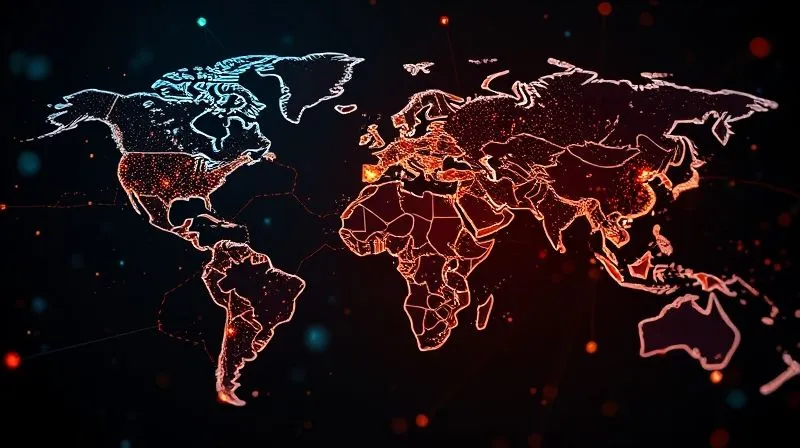
The adoption of CBDCs is not just an economic decision; it is a geopolitical one. The immediate risks here are profound, potentially reshaping global power dynamics and the very nature of international relations. The concept of 'digital sovereignty' is central to this, as nations seek to control their digital financial infrastructure and data.
Weaponization of Finance and Currency Blocs
A major concern is the potential for CBDCs to be 'weaponized' for geopolitical leverage. Nations could impose specific conditions or restrictions on the use of their CBDC, potentially making it harder for certain countries or entities to participate in global trade. This could lead to the formation of 'digital currency blocs,' where trade primarily flows between nations using compatible or politically aligned CBDCs, further fragmenting the global economy. The IMF has warned about the risks of a fragmented global payment system.
The dominance of the U.S. dollar in international trade and finance could also be challenged. If major economies develop highly efficient, interoperable CBDCs, it could reduce reliance on the dollar for cross-border transactions, impacting U.S. economic influence and the stability of the global financial system. This shift would have significant implications for trade finance institutions, necessitating a re-evaluation of currency exposure and risk management strategies.
Risk 6: Monetary Policy Transmission Challenges
Central banks rely on established channels to transmit monetary policy decisions – primarily through commercial banks. The introduction of CBDCs could significantly alter these transmission mechanisms, posing immediate challenges for monetary policy effectiveness and financial stability.
New Tools, Unforeseen Consequences
With a CBDC, central banks could directly influence the money supply and interest rates in ways previously unimaginable. For instance, they could implement negative interest rates directly on CBDC holdings, or even program expiration dates on certain digital currency units to stimulate spending. While these tools offer new avenues for policy, their precise impact on the real economy, especially on global trade and investment, is largely unknown and could lead to unintended consequences.
“The direct access a central bank gains to the economy via CBDC is a double-edged sword. While it offers unprecedented control, it also carries the risk of overshooting, miscalibration, and unintended distortions to credit markets vital for trade finance.”
Trade finance relies heavily on a stable and predictable monetary environment. Disruptions to interest rate transmission or unexpected policy interventions via CBDCs could increase uncertainty, making it harder for businesses to plan and execute long-term trade agreements. The potential for sudden shifts in credit availability or cost due to direct central bank intervention via CBDCs could introduce new layers of risk for financial institutions extending trade credit.
Risk 7: Market Disruption and Competitive Landscape Shifts
The advent of CBDCs threatens to disrupt the existing competitive landscape of global trade finance. Traditional financial intermediaries, particularly commercial banks and payment processors, face the immediate risk of disintermediation and reduced fee income as central banks potentially take on a more direct role in payment facilitation.
Survival of the Fittest in a Digital Age
If CBDCs enable direct settlement between parties or through a limited number of authorized non-bank payment service providers, the role of correspondent banks and traditional financial institutions in facilitating cross-border trade payments could diminish significantly. This would force existing players to rapidly innovate, re-evaluate their business models, and find new value propositions beyond just payment processing.
On the other hand, CBDCs could also pave the way for new entrants – fintechs and technology giants – to offer innovative trade finance solutions built directly on CBDC rails. These new players, unburdened by legacy infrastructure, could quickly gain market share by offering cheaper, faster, and more tailored services, putting immense competitive pressure on incumbents. The challenge for established institutions is to evolve from being mere intermediaries to value-added service providers, offering expertise in areas like risk management, compliance, and supply chain integration that CBDCs alone cannot provide.
Strategies for Adapting to Market Shifts:
- Focus on Value-Added Services: Shift from commoditized payment processing to offering sophisticated risk management, supply chain financing, and advisory services.
- Embrace Hybrid Models: Explore integrating CBDC capabilities with existing offerings, creating hybrid solutions that leverage the best of both worlds.
- Foster Collaboration: Partner with central banks, fintechs, and other industry players to co-create new trade finance solutions built for the CBDC era.

Frequently Asked Questions (FAQ)
Q: How will CBDCs affect correspondent banking relationships, which are crucial for global trade? The impact could be profound. While CBDCs promise direct settlement, the reality is that many trade finance transactions still require the trust, expertise, and risk mitigation services provided by correspondent banks. CBDCs might reduce the volume of basic payment transfers handled by correspondent banks, pushing them to focus on more complex, higher-value services like liquidity management, sanctions screening, and specialized trade finance instruments. Some smaller banks might struggle to adapt, leading to consolidation or new models of partnership.
Q: Are there any benefits of CBDCs for global trade finance that outweigh these immediate risks? Absolutely. The primary benefits include significantly faster settlement times (potentially near-instant), reduced transaction costs by cutting out intermediaries, enhanced transparency, and greater financial inclusion for smaller businesses in developing economies. For trade finance, this could unlock new markets, reduce working capital cycles, and enable more efficient supply chain financing. The key is to proactively manage the risks to fully realize these benefits.
Q: What role will private stablecoins play alongside CBDCs in trade finance? Private stablecoins, especially those fully backed by fiat reserves and operating under robust regulatory oversight, could complement CBDCs. They might offer greater flexibility or specialized use cases, particularly in specific trade corridors or for niche industries. However, their regulatory status and stability remain critical. Central banks will likely seek to ensure that stablecoins do not undermine monetary sovereignty or financial stability, possibly through stringent licensing or interoperability mandates with CBDCs.
Q: How can businesses, particularly SMEs, prepare for CBDC adoption in trade finance? SMEs should start by understanding the CBDC initiatives in their key trading partner countries. They should assess their current payment infrastructure for adaptability, engage with their banking partners about future CBDC services, and consider diversifying their payment methods. Staying informed about regulatory developments and exploring pilot programs will be crucial. The goal is to build resilience and agility into their financial operations.
Q: What's the realistic timeline for widespread CBDC adoption in global trade finance? While several countries are in advanced pilot stages, widespread, interoperable CBDC adoption across major global trade corridors is likely still 5-10 years away, or even longer. The complexities of international coordination, regulatory harmonization, and technological integration are immense. We will likely see a phased rollout, starting with wholesale CBDCs for interbank settlements, followed by retail CBDCs in specific national contexts, before a truly global, seamless CBDC-enabled trade finance ecosystem emerges.
Key Takeaways and Final Thoughts
- CBDCs promise efficiency but introduce significant, immediate risks for global trade finance that demand proactive management.
- Liquidity shifts, cybersecurity threats, and regulatory fragmentation are paramount concerns that could impact financial stability and operational continuity.
- Geopolitical implications, including the potential for digital currency blocs and challenges to currency dominance, will reshape international trade dynamics.
- Monetary policy transmission could become more direct but also more unpredictable, affecting trade finance costs and availability.
- Traditional financial institutions must innovate their business models to offer value-added services beyond mere payment processing to remain competitive.
- Preparation involves robust stress testing, technology audits, talent development, and active engagement with evolving regulatory landscapes.
The journey towards a CBDC-enabled global trade finance ecosystem is not merely a technological upgrade; it's a fundamental re-architecture of how money moves across borders. As an industry veteran, I can tell you that successful navigation of this transition hinges on foresight, adaptability, and a deep understanding of both the opportunities and the immediate risks. By proactively addressing these challenges, you can ensure your organization not only survives but thrives in the new digital financial frontier, transforming potential disruptions into strategic advantages. The time to prepare is now.
Recommended Reading
- Debt & Savings: 5 Proven Ways to Build an Emergency Fund Fast
- 7 Proven Strategies: How Developed Economies Avoid Stagflation Amid Global Slowdown?
- 7 Steps: Predict & Prevent Small Business Cash Flow Shortages Effectively
- Shielding Profits: 7 Business High-Yield Savings Tactics Against Inflation
- Unlock Crypto Tax Clarity: Can Tax Software Handle Crypto Transactions Effectively?





Comments
Leave a comment below. Your email will not be published. Required fields marked with *