


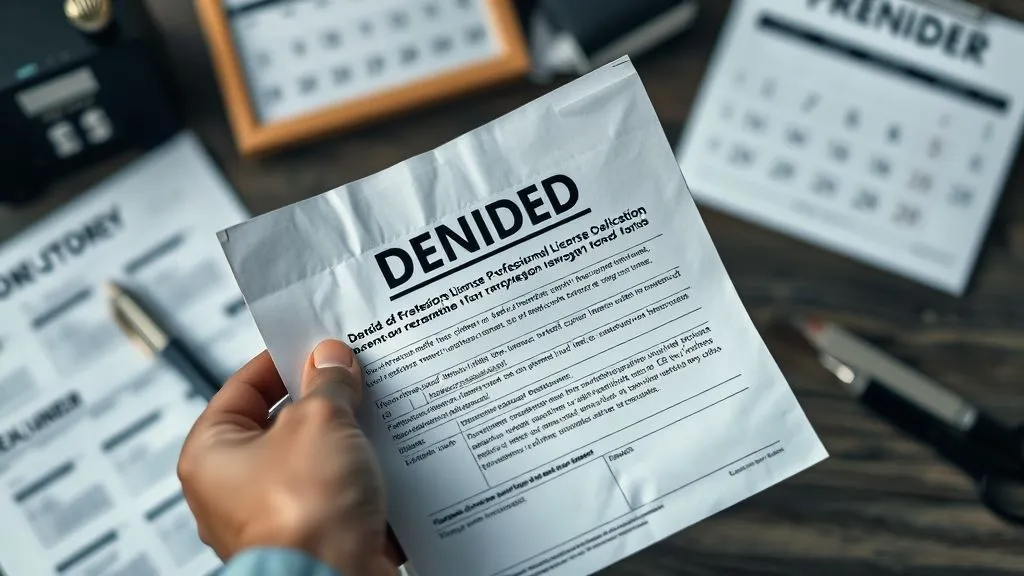
Urgent Steps for Credit Repair After Professional License Denied?
For over two decades in the finance industry, specializing in credit health, I've witnessed countless individuals navigate the choppy waters of financial setbacks. But few situations sting as sharply as having a professional license denied, not due to lack of skill or qualification, but because of a tarnished credit report. It's a moment that can feel like a career-ending blow, a sudden wall blocking your professional aspirations.
I understand that sinking feeling – the confusion, the frustration, the immediate panic about your future. Many professionals I've guided through this crisis never even realized their credit history held such sway over their licensing board's decision. This isn't just about a number; it’s about perceived financial responsibility, which licensing bodies often link directly to professional integrity and reliability.
But here’s what I know for certain: a denial is not a permanent roadblock. It's a clear signal that immediate, strategic action is required. In this definitive guide, I will walk you through a proven, step-by-step framework to not only rapidly repair your credit but also to confidently prepare for a successful reapplication. We'll delve into actionable strategies, real-world insights, and expert advice to get your professional journey back on track.
Understanding the Devastating Impact of a License Denial
When a professional license, be it for real estate, nursing, law, finance, or any other regulated field, is denied due to credit issues, the repercussions extend far beyond the immediate disappointment. It halts your career, impacting your income, your professional identity, and even your mental well-being. Licensing boards look for indicators of financial stability and trustworthiness, often viewing poor credit as a potential risk factor for unethical behavior or an inability to manage responsibilities.
The denial letter often cites "financial irresponsibility" or "poor credit history" as the primary reason, leaving applicants feeling exposed and unsure of where to turn. This isn't a judgment on your character, but rather a reflection of data points on a report that you can, and must, influence. The urgency here is paramount: every day lost is a day your career is on hold, making swift and decisive action non-negotiable.
"A denied professional license due to credit issues is not an indictment of your capabilities, but a loud call for immediate financial rectification. Your ability to act decisively now will define your professional future." - Industry Specialist Insight
Step 1: Immediate Action – Obtain and Scrutinize Your Credit Reports
The very first, non-negotiable step in any credit repair journey, especially one as urgent as this, is to get your hands on all three of your credit reports from the major bureaus: Experian, Equifax, and TransUnion. I've seen countless individuals try to guess what's on their report or rely on a single source, only to miss critical issues. These reports are the blueprints of your financial past, and without a complete picture, you're flying blind.
Federal law entitles you to one free copy of your credit report from each bureau every 12 months. Given the urgency, I recommend accessing them immediately. Don't delay this crucial step; it’s the foundation upon which all subsequent repair efforts will be built.
- Visit AnnualCreditReport.com: This is the only official, federally authorized website to get your free reports. Be wary of look-alike sites.
- Request All Three Reports: Ensure you download and save or print your reports from Experian, Equifax, and TransUnion. Each bureau might have slightly different information.
- Review Thoroughly, Line by Line: Set aside dedicated time to go through each report with a fine-tooth comb. Look for anything that seems incorrect, outdated, or unfamiliar.
What to Look For: Identifying Red Flags
As you review your reports, focus on these critical areas. These are the elements that licensing boards scrutinize and that have the most significant negative impact on your score:
- Inaccurate Personal Information: Incorrect names, addresses, or employers can indicate mixed files.
- Accounts You Don't Recognize: This is a major red flag for identity theft, which requires immediate attention beyond just credit repair.
- Incorrect Account Status: An account marked 'late' or 'charged off' when it was paid on time, or a closed account still showing as open.
- Duplicate Accounts: The same debt listed multiple times by different creditors or collection agencies.
- Outdated Negative Information: Most negative items should fall off your report after seven years (bankruptcies after 10). If they're older, they should be removed.
- High Credit Utilization: If your credit card balances are close to your limits, this significantly hurts your score.
- Public Records: Bankruptcies, foreclosures, or tax liens (though many have been removed from reports in recent years, some older ones might still appear).
This initial deep dive is where many discover the root cause of their license denial. I've often seen clients surprised by errors they never knew existed, errors that profoundly impacted their perceived financial responsibility.

Step 2: Prioritize & Dispute Inaccuracies – The Foundation of Repair
Once you've identified discrepancies, the next urgent step is to dispute them. This is not just about improving your score; it's about correcting the record that led to your license denial. The Fair Credit Reporting Act (FCRA) gives you the right to dispute inaccurate information, and credit bureaus are legally obligated to investigate your claims within 30 days (45 days in some cases).
I always advise my clients to dispute everything that is inaccurate, even minor details. Every corrected error helps chip away at the negative perception and improves your score. Focus on the items with the biggest negative impact first, such as late payments, collections, or charge-offs that you believe are incorrect.
- Gather Your Evidence: For each disputed item, collect any supporting documentation you have. This could be bank statements, cancelled checks, payment confirmations, or letters from creditors.
- Write a Formal Dispute Letter: While online disputes are possible, I always recommend sending a physical letter via certified mail with a return receipt requested. This provides a paper trail and proof of delivery. Clearly state the item you are disputing, why it is inaccurate, and include copies (not originals) of your supporting documents.
- Send to Both the Credit Bureau and the Creditor: Send a separate dispute letter to each credit bureau reporting the inaccuracy, and also to the original creditor or collection agency. This dual approach increases the likelihood of a swift and successful resolution.
- Monitor the Investigation: The bureaus have 30-45 days to investigate. If they cannot verify the information, they must remove it. Be prepared to follow up if you don't hear back within the timeframe.
Case Study: Sarah's Speedy Score Recovery
Sarah, a talented aspiring nurse, was devastated when her state nursing board denied her license due to a "poor financial history." Her credit report showed two collection accounts she didn't recognize and several late payments on a student loan she swore she'd paid on time. Following my guidance, Sarah immediately pulled all three reports. She discovered the collection accounts were due to an old medical bill from a miscoded procedure, and the student loan late payments were errors from a servicer transfer. Within 45 days of sending certified dispute letters with her supporting documentation (medical explanation of benefits and student loan payment history), both collection accounts were removed, and the late payments were corrected. Her score jumped 80 points, and with an explanatory letter, her nursing license was approved upon reapplication. This demonstrated the power of diligent dispute.
"The Consumer Financial Protection Bureau (CFPB) emphasizes the importance of promptly disputing inaccuracies on your credit report, as it's a fundamental right under the FCRA and a powerful tool for credit repair." - Expert Guidance
Step 3: Strategic Debt Management – Tackling What You Owe
While disputing errors is crucial, addressing legitimate debts is equally vital. Licensing boards aren't just looking for a clean slate; they want to see a proactive approach to financial responsibility. This means strategically managing and reducing your outstanding debts, especially those that are negatively impacting your score the most. This isn't just about paying bills; it's about smart financial planning.
My approach here is always about impact. We need to focus on debts that are both weighing down your score and are manageable to address quickly. This often involves a combination of reducing high-interest debt and improving your credit utilization ratio.
High-Impact Debts to Address First
- Credit Card Balances: High balances on revolving credit (credit cards) significantly hurt your credit utilization ratio, which is a major factor in your score. Aim to get these balances below 30% of your credit limit, and ideally below 10%.
- Collection Accounts: While disputed inaccurate collections should be removed, legitimate ones need to be addressed. Paying them off can stop further negative reporting and may be viewed favorably by licensing boards.
- Delinquent Accounts: If you have accounts that are currently past due, bring them current immediately. Future on-time payments are essential for rebuilding.
- Large Personal Loans/Installment Debts: While less impactful than revolving debt, consistent on-time payments on these show stability.
Consider the 'debt snowball' or 'debt avalanche' method to prioritize. The snowball method focuses on paying off the smallest debts first for psychological wins, while the avalanche method prioritizes high-interest debts to save money. For urgent credit repair, a hybrid approach might be best, focusing on high-impact debts that also have high interest rates.
| Debt Type | Current Balance | Interest Rate | Minimum Payment | Action Priority |
|---|---|---|---|---|
| Credit Card A | $5,000 | 24% | $100 | High - Reduce to <30% |
| Credit Card B | $1,500 | 18% | $30 | Medium - Pay off completely |
| Medical Bill (Collections) | $750 | N/A | N/A | High - Negotiate Pay-for-Delete |
| Personal Loan | $8,000 | 12% | $250 | Maintain On-Time Payments |
Step 4: Building Positive Credit – The Proactive Approach
While clearing up past issues is essential, actively building new, positive credit history is equally important. Think of it as planting new, healthy trees after clearing out the deadwood. This demonstrates to future creditors and, crucially, to your licensing board, that you are capable of managing new credit responsibly. This step is about being proactive, not just reactive.
I've seen many clients make the mistake of avoiding all credit after a denial, thinking it will help. In reality, a lack of recent, positive credit activity can also be a red flag. The goal is controlled, responsible credit usage.
Secured Cards and Credit Builder Loans
For those with severely damaged credit, traditional credit cards might be out of reach initially. This is where specialized tools come in:
- Secured Credit Cards: These cards require an upfront cash deposit, which acts as your credit limit. They report to credit bureaus like regular cards, allowing you to build positive payment history. Use it for small, regular purchases and pay the balance in full every month.
- Credit Builder Loans: With these, a lender places a small loan amount into a locked savings account. You make regular payments over 6-24 months, and the lender reports these payments to the credit bureaus. Once the loan is paid off, you receive the money. It's a structured way to demonstrate payment reliability.
- Authorized User Status: If you have a trusted family member with excellent credit, they might add you as an authorized user on one of their credit cards. Their positive payment history can then reflect on your report. Discuss this carefully, as their spending habits will impact you.
- Experian Boost/UltraFICO: These programs allow you to potentially add utility and telecom payments or banking activity to your credit report, which can provide a small but quick boost if reported positively.
The key here is consistency. One or two months of good behavior won't undo years of issues. It's the sustained, disciplined management of new credit that truly signals financial rehabilitation. I advise clients to treat these new credit lines as tools for rebuilding, not as opportunities for spending.

Step 5: Negotiating with Creditors – When Direct Communication is Key
Sometimes, the best offense is a good defense – or, in this case, direct communication. If you have legitimate debts that are in collections, charged off, or significantly delinquent, direct negotiation with creditors or collection agencies can be a powerful tool. This isn't about avoiding your responsibilities; it's about finding a workable solution that benefits both parties and, crucially, helps your credit report.
I've guided many clients through successful negotiations, often resulting in "pay-for-delete" agreements or reduced settlement amounts. Remember, collection agencies often buy debt for pennies on the dollar, so they have room to negotiate. The goal is to get negative items removed or marked as "paid in full" on your credit report.
- Verify the Debt: Before negotiating, always request debt validation from the collection agency. This forces them to prove the debt is yours and they have the legal right to collect. If they can't, the debt might be uncollectible.
- Negotiate a "Pay-for-Delete": This is the gold standard for collection accounts. Offer to pay a portion of the debt (often 30-50%) in exchange for the collection agency agreeing in writing to remove the negative entry from your credit reports. Insist on written confirmation before making any payment.
- Negotiate a Reduced Settlement: If a pay-for-delete isn't possible, negotiate a reduced amount you can afford to pay in full. While this won't remove the entry, it will update the status to "paid in full" or "settled for less than the full amount," which is still better than an unpaid collection.
- Get Everything in Writing: Never make verbal agreements. Ensure all terms, including the agreed-upon amount and the action they will take regarding your credit report, are in writing before you send any money.
- Make Payments Securely: Once an agreement is reached, pay with a money order, cashier's check, or secure online payment that leaves a clear transaction trail. Avoid giving access to your bank account.
This process requires patience and persistence, but the rewards—a cleaner credit report and a significant step towards license reapplication—are well worth the effort. According to financial experts at Forbes Advisor, effective debt negotiation can significantly improve your financial standing and credit score over time.
Step 6: Understanding Your Rights and Seeking Professional Help
Navigating credit repair, especially under the pressure of a license denial, can be complex. It's vital to understand your rights as a consumer and to know when to seek professional assistance. You don't have to tackle this alone, and sometimes, an expert's guidance can accelerate the process and prevent costly mistakes.
The Fair Credit Reporting Act (FCRA) is your shield. It dictates how credit bureaus and creditors handle your information and your rights to accuracy and privacy. Familiarize yourself with its provisions, particularly regarding disputes and the removal of outdated information. Knowledge is power in this arena.
When to Consider a Credit Repair Professional
While much of credit repair can be done yourself, there are specific situations where a reputable credit repair professional can be invaluable:
- Complex Credit Issues: If your report is riddled with multiple errors, identity theft, or complex legal judgments, a professional can streamline the process.
- Time Constraints: Given the urgency of a license denial, if you lack the time or expertise to dedicate to the intensive dispute and negotiation process, a professional can be a strategic investment.
- Lack of Success: If your own dispute efforts have been unsuccessful, a professional might have more leverage or expertise in dealing with stubborn creditors or bureaus.
- Emotional Overwhelm: The stress of a license denial and credit repair can be immense. Outsourcing some of the heavy lifting can provide much-needed peace of mind.
Be extremely cautious when choosing a credit repair company. The industry has its share of unscrupulous operators. Always look for companies that don't promise instant fixes, offer clear pricing, and don't ask you to pay for services before they are rendered. The Federal Trade Commission (FTC) provides excellent guidance on identifying and avoiding credit repair scams.
Step 7: Reapplying for Your Professional License – Presenting Your Case
After diligently working on your credit repair, the moment comes to reapply for your professional license. This isn't just about submitting a new application; it's about presenting a compelling narrative of financial rehabilitation and restored trustworthiness. You need to demonstrate not only that you've fixed the issues but that you've learned from them and are now a financially responsible professional.
I always emphasize that this stage requires careful preparation and a strategic mindset. Don't just resubmit the same application; submit an enhanced one that proactively addresses the previous denial reason.
Crafting Your Statement of Explanation
Many licensing boards will allow, or even require, a personal statement or letter of explanation if your license was denied due to credit issues. This is your opportunity to directly address the board:
- Acknowledge the Past: Humbly acknowledge the credit issues that led to the denial. Avoid making excuses.
- Outline Your Actions: Detail the specific steps you've taken to repair your credit. Mention the disputes, debt payments, and new positive credit accounts you've established. Provide dates and concrete examples.
- Demonstrate Learning and Growth: Explain what you've learned from the experience and how you've implemented new financial management strategies to prevent future issues. This could include budgeting, consistent monitoring, or seeking financial advice.
- Provide Supporting Documentation: Include updated credit reports (showing improvements), letters from creditors confirming paid-off debts or removed collections, and any other relevant financial documents that showcase your progress.
- Reiterate Your Commitment to the Profession: End by reaffirming your dedication to your chosen profession and your understanding of the financial responsibility required.
Your statement should be professional, concise, and heartfelt. It should convey a sense of personal accountability and a clear path forward. This proactive communication can significantly impact the board's perception of your readiness for licensure. Remember, the goal is to rebuild trust and demonstrate your unwavering commitment to your professional obligations.
For more insights on effectively communicating your financial recovery to licensing bodies, consider reviewing resources from professional organizations in your field, which often provide guidance on ethical conduct and financial responsibility. The AICPA, for instance, offers resources for accounting professionals that touch upon ethical considerations for licensure.
Long-Term Credit Habits for Sustainable Success
Achieving license approval is a huge victory, but the journey doesn't end there. To ensure you never face such a setback again, cultivating robust, long-term credit habits is paramount. This isn't just about avoiding denials; it's about building a foundation of financial health that supports your entire professional and personal life. In my experience, the clients who truly thrive are those who embrace these practices not as temporary fixes, but as permanent lifestyle changes.
Think of credit health like physical health: it requires ongoing effort and discipline. Neglecting it, even for a short period, can lead to a relapse.
- Regular Credit Monitoring: Make it a habit to check your credit reports from all three bureaus at least once a year (or more frequently with free monitoring services). Be vigilant for any new inaccuracies or signs of identity theft.
- Consistent On-Time Payments: This is the single most important factor in your credit score. Set up automatic payments for all bills to avoid missing due dates.
- Maintain Low Credit Utilization: Keep your credit card balances well below 30% of your available credit, ideally even lower. Pay off balances in full whenever possible.
- Diversify Your Credit Mix (Responsibly): A healthy credit mix (e.g., a mix of revolving credit like credit cards and installment loans like a car loan or mortgage) can be beneficial, but only if you can manage them responsibly. Avoid taking on unnecessary debt.
- Avoid Opening Too Many New Accounts: While building new credit is good, opening too many accounts in a short period can signal risk to lenders and lead to multiple hard inquiries, which temporarily ding your score.
- Build an Emergency Fund: A robust emergency fund (3-6 months of living expenses) is your best defense against unexpected financial shocks that could otherwise force you into debt or late payments.
Adopting these habits transforms your relationship with money from one of reaction to one of proactive control. This financial discipline will not only safeguard your professional license but also open doors to better interest rates on loans, mortgages, and other financial opportunities throughout your life. It's an investment in your future self.
Frequently Asked Questions (FAQ)
Q: How long does it typically take to repair credit sufficiently for license reapplication?
A: This varies significantly based on the severity of the issues. Minor inaccuracies might be resolved in 30-60 days. However, addressing multiple negative accounts, collections, or severe delinquencies can take anywhere from 6 months to over a year. The key is consistent, aggressive action. For an urgent situation like a license denial, I've seen clients make significant improvements within 3-6 months by following a diligent strategy.
Q: Can a bankruptcy ever be overcome for professional licensing?
A: Yes, absolutely. While a bankruptcy has a profound impact and stays on your report for 7-10 years, many licensing boards understand that life happens. The critical factor is demonstrating rehabilitation. This means building a strong, positive credit history post-bankruptcy, showing consistent on-time payments, and providing a comprehensive, compelling explanation in your reapplication statement about how you've learned and grown financially since the bankruptcy. It requires more time and effort, but it is achievable.
Q: Should I pay off old collection accounts even if they're close to falling off my credit report?
A: This is a nuanced decision. If a collection account is very old (e.g., 6 years old) and approaching the 7-year mark when it should drop off, paying it might actually reset the clock for reporting purposes, or at least not provide the immediate score boost you might expect. However, for a license reapplication, licensing boards often look beyond just the score and consider the underlying financial responsibility. An unpaid collection, regardless of age, might still be viewed negatively. My advice is to try to negotiate a "pay-for-delete" if possible. If not, weigh the potential score impact against the board's perception of unresolved debt. For license purposes, often resolving it, even if it doesn't dramatically change the score, is prudent for demonstrating responsibility.
Q: What if my license board has specific financial requirements I can't meet immediately?
A: If your board has specific financial thresholds (e.g., no bankruptcies within 5 years, no outstanding judgments), and you don't meet them, your primary focus must be on meeting those specific criteria. If it's a time-based restriction (like a bankruptcy window), you may have to wait until that period expires. In the meantime, concentrate on impeccable credit management, saving, and preparing a strong explanatory statement for when you are eligible. Some boards offer provisional licenses or require additional financial oversight, so explore all options directly with your licensing body.
Q: Is it better to close old credit cards once balances are paid off?
A: Generally, no. Closing old credit cards can actually hurt your credit score, especially if they are your oldest accounts. This is because it reduces your overall available credit, which can increase your credit utilization ratio, and it shortens your average age of accounts, both of which are negative factors. It's usually better to keep old, paid-off accounts open, even if you rarely use them, to maintain a healthy credit history and available credit. Just ensure they don't have annual fees you're not willing to pay.
Key Takeaways and Final Thoughts
A professional license denied due to credit issues is a significant challenge, but it is by no means an insurmountable one. I've seen firsthand how dedication, strategic action, and a commitment to financial rehabilitation can turn a devastating setback into a powerful comeback story. Your career aspirations are worth fighting for, and with the right approach, you can regain control of your financial narrative.
- Act Immediately: Pull all three credit reports and scrutinize every detail.
- Dispute Aggressively: Challenge every inaccuracy with evidence and persistence.
- Manage Debt Strategically: Prioritize high-impact debts and work towards reducing balances.
- Build Positive Credit: Proactively establish and maintain new lines of credit responsibly.
- Communicate & Explain: Prepare a compelling statement for your licensing board detailing your recovery.
- Embrace Long-Term Habits: Develop sustainable financial practices to prevent future issues.
Remember, this process is a marathon, not a sprint, but the initial steps are exceptionally urgent. By following the urgent steps for credit repair after professional license denied, you're not just fixing a number; you're rebuilding trust, demonstrating resilience, and investing in the integrity of your professional future. Stay focused, stay disciplined, and know that with every positive action, you're moving closer to achieving your professional dreams. Your commitment to financial health is a testament to your professional character.

Recommended Reading
- MBA: Financial Sacrifice & Career Halt? 7 Crucial Questions Answered.
- Unlock Savings: How IoT Devices Slash Your Home Insurance Costs
- 9 Ways to Shield Your ERC Claim from IRS Audit Triggers
- 7 Steps: Stop Missing SaaS Bills, Boost Budget Accuracy Now
- What Happens to Your Pension If You Move Abroad? The Ultimate Guide!





Comments
Leave a comment below. Your email will not be published. Required fields marked with *