



How to Urgently Repair Credit Score for Crucial Professional Loan?
For over 15 years, navigating the intricate world of finance and credit, I've witnessed firsthand the profound impact a credit score can have on an individual's professional aspirations. It’s not just about buying a house or a car; for many driven professionals, a healthy credit score is the silent partner in securing the crucial funding needed to launch a practice, expand a business, or invest in a career-defining opportunity. The stakes are incredibly high, and often, the timeline is uncomfortably short.
The specific challenge we're addressing today isn't just 'credit repair'; it's 'urgent credit repair for a crucial professional loan.' Perhaps you're a doctor looking to open a new clinic, a lawyer expanding your firm, or an entrepreneur seeking capital for a groundbreaking venture. You’ve identified a golden opportunity, but a less-than-stellar credit score is threatening to derail your dreams. This isn't a hypothetical scenario; it's a pressing reality for countless ambitious individuals, and the anxiety it generates can be paralyzing.
But here's the good news: while 'urgent' and 'credit repair' might seem contradictory, strategic, focused action can yield significant results in a compressed timeframe. In this definitive guide, I'll share the exact frameworks, tactical steps, and expert insights I’ve developed over years of experience, designed to help you understand how to urgently repair credit score for crucial professional loan. We'll move beyond generic advice to provide a roadmap for accelerating your credit health and unlocking that vital professional funding.
Understanding the Urgency: Why Your Credit Score Matters Now More Than Ever
When you're pursuing a professional loan, the clock is often ticking. Whether it's to seize a market opportunity, secure a prime location, or invest in critical equipment, delays can be costly, if not catastrophic. Your credit score, in this context, isn't merely a number; it's a direct reflection of your financial reliability and a powerful gatekeeper to the capital you need.
Lenders, particularly for professional loans, scrutinize credit scores meticulously. A higher score translates to lower interest rates, more favorable terms, and ultimately, a significantly reduced cost of borrowing over the life of the loan. Conversely, a low score can lead to outright rejection, exorbitant rates, or restrictive covenants that hinder your professional growth.
"In the world of professional lending, your credit score is your financial resume. For urgent needs, it needs to be impeccable, demonstrating stability and reliability even under pressure."
I've seen countless professionals miss out on life-changing opportunities simply because they underestimated the power of their credit score. This isn't a game you want to lose. It's time to take control and implement a rapid, strategic approach to credit repair.
Phase 1: Immediate Damage Control – Stopping the Bleeding
1. Obtain Your Credit Reports and Scores Immediately
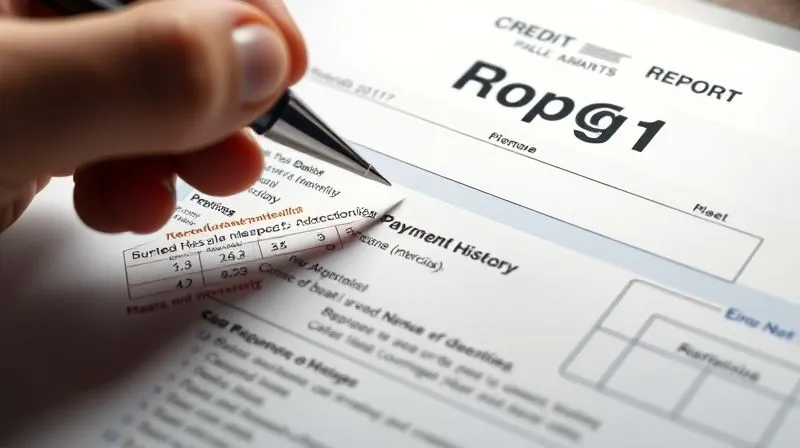
You cannot fix what you don't understand. The very first, non-negotiable step is to get a complete picture of your current credit situation. This means pulling your reports from all three major bureaus: Experian, Equifax, and TransUnion.
- Access Your Reports: Visit AnnualCreditReport.com, the only federally authorized source for free credit reports. You are entitled to one free report from each bureau every 12 months.
- Review for Accuracy: Scrutinize every detail: personal information, account statuses, payment history, public records, and inquiries. Look for anything that doesn't belong to you or appears incorrect.
- Identify Derogatory Marks: Pinpoint late payments, collections, charge-offs, bankruptcies, or judgments. These are the primary culprits dragging down your score and will be our immediate targets.
- Check Your Scores: Many credit card companies and banks offer free FICO or VantageScore access. Understand where you stand with each bureau, as scores can vary slightly.
2. Dispute Inaccuracies with Precision
Credit reports are not infallible. Errors are more common than you might think, and they can severely impact your score. Disputing these errors is one of the fastest ways to see an improvement.
- Gather Evidence: Collect any documentation that supports your claim (e.g., payment confirmations, canceled checks, correspondence from creditors).
- File Disputes Online or by Mail: Each credit bureau has an online dispute process. For critical, urgent issues, I often recommend sending disputes via certified mail with return receipt requested. This creates a paper trail. Clearly state what information is inaccurate and why.
- Contact the Furnisher: Simultaneously, send a dispute letter directly to the creditor or collection agency that reported the incorrect information. Inform them you are disputing the item with the credit bureaus and ask them to verify or remove the entry.
- Follow Up Relentlessly: Credit bureaus typically have 30 days to investigate. Mark your calendar and follow up if you don't hear back. Persistence is key.
Phase 2: Rapid Remediation – Strategic Score Boosting
3. Tackle High-Impact Derogatory Marks
Once inaccuracies are addressed, focus on legitimate negative items. These require a more nuanced, strategic approach. Prioritize the most recent and severe marks, as they have the greatest impact.
- Pay for Delete (P4D) for Collections: If you have collection accounts, contact the collection agency and offer to pay the debt in exchange for them removing the entry from your credit report. Get this agreement in writing *before* making any payment. For more guidance on consumer rights, consult resources like the Consumer Financial Protection Bureau (CFPB).
- Goodwill Letters for Late Payments: For a single, isolated late payment (especially if you have a good payment history otherwise), write a goodwill letter to the original creditor. Explain the circumstances (e.g., medical emergency, forgotten bill) and politely request they remove the late payment notation as a gesture of goodwill.
- Settling Charge-Offs: For charge-offs, paying the balance, even a settled amount, can improve your standing. While the charge-off itself remains, a 'paid' or 'settled' status is viewed more favorably by lenders than an 'unpaid' status.
4. Optimize Credit Utilization Ratios
This is arguably the fastest way to boost your score, as it accounts for 30% of your FICO score. Your credit utilization ratio (CUR) is the amount of credit you're using compared to your total available credit. Aim for below 30%, but ideally below 10% for the best results.
- Pay Down Revolving Debt: Focus intensely on reducing balances on credit cards and lines of credit. Even paying just enough to get below the 30% threshold for each card, and overall, can make a significant difference quickly.
- Strategically Pay Off Before Statement Date: Your credit utilization is typically reported to the bureaus based on your balance on your statement closing date. Pay down your balance *before* this date to ensure a lower utilization is reported.
- Request Credit Limit Increases (with Caution): If you have excellent payment history and minimal debt, you could request a credit limit increase. This increases your total available credit, thereby lowering your utilization ratio, assuming your spending doesn't increase. Be cautious, as a hard inquiry might temporarily ding your score.
| Credit Card | Limit | Balance | Utilization |
|---|---|---|---|
| Card A | $5,000 | $4,000 | 80% |
| Card B | $10,000 | $2,000 | 20% |
| Card C | $2,000 | $500 | 25% |
| Total (Individual) | N/A | N/A | Above 30% |
| Total (Consolidated) | $17,000 | $6,500 | 38.2% |
As you can see from the example above, even if one card has high utilization, the consolidated total also matters. By reducing the balances, especially on Card A, the overall utilization will drop, directly impacting your score.
5. Strategic Debt Repayment: The Avalanche vs. Snowball Method
While paying down debt is crucial, *how* you pay it down can also influence your motivation and progress. For urgent credit repair, the debt avalanche method is typically superior.
- Debt Avalanche: Focus on paying off the debt with the highest interest rate first, while making minimum payments on all other debts. Once the highest-interest debt is paid, you apply that payment amount to the next highest interest debt. This saves you the most money in interest over time and can accelerate your path to debt freedom.
- Debt Snowball: Focus on paying off the smallest debt first to gain psychological momentum, then rolling that payment into the next smallest debt. While emotionally satisfying, it might not be the most cost-effective for urgent repair.
For a detailed comparison and tools to help you choose, I recommend exploring resources from reputable financial literacy platforms like NerdWallet or Investopedia.
Phase 3: Building a Stronger Foundation – Long-Term Resilience, Fast-Tracked
6. Consider a Secured Credit Card or Credit Builder Loan
If your credit profile is thin or heavily damaged, you might need to actively build positive payment history. Secured credit cards and credit builder loans are excellent tools for this, even in an urgent scenario.
- Secured Credit Card: You put down a deposit, which becomes your credit limit. This card reports to credit bureaus like a regular credit card. Make small purchases and pay them off in full every month. This demonstrates responsible credit usage.
- Credit Builder Loan: A small loan where the funds are held in a savings account or CD until you've made all the payments. Once paid off, you get access to the money, and the positive payment history is reported.
Both options allow you to establish or re-establish a positive payment history, which is the single most important factor in your credit score (35% of FICO). The faster you start, the faster this positive history accrues.

7. The Power of Authorized User Status (with Caution)
Becoming an authorized user on someone else's credit card can provide a rapid, albeit indirect, boost to your credit score. This strategy is potent but requires immense trust and careful consideration.
- How it Works: When you're added as an authorized user to an account with a long history of on-time payments and low utilization, that account's positive history can appear on your credit report.
- Key Considerations:
- Choose an account holder with impeccable credit habits.
- Ensure the account has a low utilization ratio.
- Discuss expectations clearly: you're likely not intended to use the card, but rather to benefit from its reporting.
- Be aware that if the primary cardholder makes late payments or runs up high balances, it could negatively impact your score as well.
Case Study: Sarah's Urgent Credit Turnaround for Her Practice Loan
Sarah's Challenge
Sarah, a talented veterinarian, identified a perfect location to open her dream animal clinic. The lease was contingent on securing a professional practice loan within 90 days. Her credit score, however, was a disappointing 620, primarily due to a few medical collections from years ago and a credit card that she had maxed out during her residency.
The Strategy Implemented
Working together, we crafted an urgent credit repair plan:
- Immediate Credit Report Review: Sarah pulled all three reports. We found one minor error on an old utility bill, which was disputed.
- Pay for Delete: We contacted the medical collection agencies. Two agreed to 'pay for delete' in exchange for full payment, which Sarah funded from her savings. One refused, so we focused on the others.
- Credit Card Optimization: Sarah had $8,000 on a card with a $10,000 limit (80% utilization). She used a small bonus and some savings to pay the balance down to $1,500 (15% utilization) *before* the statement closing date.
- Authorized User: Her sister, who had a 15-year-old credit card with a $25,000 limit and zero balance, added Sarah as an authorized user.
The Outcome
Within 60 days, Sarah's credit score jumped from 620 to 715. The removal of the collections, the dramatic drop in her credit utilization, and the positive history from her sister's card made a significant impact. With her improved score, Sarah secured the professional loan at a competitive interest rate, enabling her to open her clinic on schedule. This demonstrated exactly how to urgently repair credit score for crucial professional loan and achieve tangible results.

Expert Insights & Pro Tips for Accelerated Repair
Negotiating with Creditors
Don't be afraid to negotiate, especially for older debts or collections. Creditors often prefer to recover some money rather than none. Be polite but firm, and always get any agreement in writing before you make a payment.
Understanding Credit Scoring Models (FICO vs. VantageScore)
While FICO is the most widely used model (around 90% of lenders use some version of it), VantageScore is also gaining traction. Understand that different models might weigh factors slightly differently, leading to variations in your scores. Focus on the fundamentals (payment history, utilization) as they are universally important. You can learn more about these models directly from their creators: FICO and VantageScore.
Professional Help: When to Consider a Credit Repair Company
For complex situations, or if you simply lack the time and expertise, a reputable credit repair company might be an option. They can assist with disputing errors and negotiating with creditors. However, exercise extreme caution.
- Research Thoroughly: Look for companies with strong reviews, transparent pricing, and a clear track record. Avoid any company that promises guaranteed results or asks for upfront payment for services not yet rendered.
- Understand the Limitations: A credit repair company cannot remove legitimate negative items from your report. They can only dispute inaccuracies or negotiate on your behalf.
- Cost-Benefit Analysis: Weigh the cost against the time you'll save and the potential score improvement. Often, with diligence, you can achieve similar results yourself.
| Aspect | Credit Repair Company | DIY Approach |
|---|---|---|
| Cost | Monthly fees, setup fees (can be high) | Primarily time, potential small fees for certified mail |
| Time Commitment | Low for client, high for company | High for client (research, writing, tracking) |
| Expertise | Knowledge of credit laws and dispute processes | Requires self-education and persistence |
| Guarantees | Often vague, no guarantee of score increase or item removal | Results depend entirely on individual effort and validity of claims |
| Risk | Potential for scams, less control over process | Lower risk of fraud, full control |

Frequently Asked Questions (FAQ)
Q: How quickly can I realistically see a credit score improvement? A: While significant changes can take months, I've seen clients achieve noticeable improvements (20-50 points) within 30-60 days by aggressively disputing errors and rapidly reducing credit utilization. For a crucial professional loan, every point counts, and urgent action can yield urgent results.
Q: Will opening new credit accounts help or hurt my score in the short term? A: Opening new accounts can initially cause a slight dip due to a hard inquiry and a reduction in the average age of your accounts. However, if managed responsibly (low utilization, on-time payments), a new account like a secured card can build positive history and ultimately help your score, especially if your file is thin. It's a strategic move, not a casual one.
Q: Is it better to close old credit cards once I pay them off? A: Generally, no. Closing an old, paid-off credit card can actually hurt your score. It reduces your total available credit, which can increase your credit utilization ratio. It also shortens the average age of your credit accounts, a factor that positively impacts your score. Keep them open, but use them sparingly and pay them off in full.
Q: What if I have a bankruptcy on my record? Can I still get a professional loan? A: A bankruptcy severely impacts your score and typically remains on your report for 7-10 years. However, it's not an absolute death knell. Lenders will look at the time elapsed since discharge, your current financial stability, and your efforts to rebuild credit. A secured credit card or credit builder loan immediately post-bankruptcy is crucial. It will be challenging, but not impossible, especially for a professional loan if you can demonstrate a strong business plan and significant equity.
Q: Should I consolidate my debts to improve my score quickly? A: Debt consolidation can be a double-edged sword for urgent credit repair. While it can simplify payments and potentially lower interest rates, it often involves a new loan or line of credit, which incurs a hard inquiry. If it leads to lower monthly payments that you can consistently make, and if it significantly reduces your overall credit utilization by paying off revolving debt, it can be beneficial. However, if you continue to spend on the old credit cards, you could end up in a worse position. Evaluate carefully.
Key Takeaways and Final Thoughts
Navigating the path to urgent credit repair for a crucial professional loan demands a clear strategy, unwavering focus, and consistent action. From my experience, the professionals who succeed are those who treat their credit score as an essential asset, worthy of immediate and meticulous attention. It's not about magic fixes, but about disciplined execution of proven strategies.
- Act Fast: Immediately obtain and scrutinize your credit reports from all three bureaus.
- Dispute Aggressively: Challenge every inaccuracy to clear your record quickly.
- Prioritize High-Impact Items: Target collections, charge-offs, and high credit utilization.
- Optimize Utilization: Aim for below 30%, ideally 10%, on all revolving accounts.
- Build Positive History: Utilize secured cards or credit builder loans if your file is thin or damaged.
- Leverage Authorized User Status: A powerful, but trust-dependent, quick boost.
- Stay Persistent: Credit repair is a journey, but urgent strategies can yield rapid, significant results.
Remember, the goal isn't just to repair your credit; it's to unlock the professional opportunities that your ambition deserves. By following these expert-backed steps, you're not just fixing numbers; you're investing in your future. Take these insights, apply them diligently, and prepare to secure that crucial professional loan. Your professional success awaits.
Recommended Reading
- Crypto Trading Fees: Are They Eating Into Your Profits?
- 7 Legal Ways High-Earners Slash Taxes on Passive Income
- Rebuilding Your Business's Crisis Cash: 7 Steps After Supply Chain Shocks
- Unmasking the Debt Trap: Why Are Developing Nations Struggling with Foreign Debt?
- Unlock Your Financial Freedom: Overcoming Common Obstacles to Financial Control





Comments
Leave a comment below. Your email will not be published. Required fields marked with *