



How to Quickly Raise Credit Score for a Large Professional Loan
For over two decades in the finance sector, particularly within credit and lending, I've guided countless professionals through the often-stressful journey of securing significant funding. I've witnessed the direct correlation between a robust credit score and the doors it opens – or, conversely, the opportunities missed due to a less-than-stellar financial reputation.
The dream of expanding your practice, investing in cutting-edge equipment, or seizing a pivotal business opportunity hinges on access to capital. However, for many, the urgency of a large professional loan application collides with the reality of a credit score that isn't quite ready. This creates a significant pain point: how do you bridge that gap, and do it quickly, without compromising your long-term financial health?
This isn't just about understanding credit; it's about strategic, actionable intervention. In this definitive guide, I will arm you with battle-tested frameworks, expert insights, and a step-by-step roadmap to significantly improve your credit score in a compressed timeframe, specifically tailored for those eyeing a large professional loan. We'll explore rapid-impact strategies, delve into crucial considerations, and equip you to confidently approach your lenders.
Understanding the Urgency: Why Speed Matters for Professional Loans
When you're pursuing a large professional loan, time is often of the essence. Opportunities can be fleeting, and a delay in securing financing can mean the difference between seizing a market advantage and watching it slip away. Lenders, especially for substantial sums, scrutinize credit profiles with intense diligence, and a higher score not only increases your chances of approval but also significantly impacts your interest rates and terms.
The Professional Loan Landscape
Professional loans, whether for medical practices, legal firms, consulting businesses, or other specialized ventures, are typically substantial. They often require a personal guarantee, meaning your personal credit score is inextricably linked to your business's ability to secure funding. A higher score communicates reliability, fiscal responsibility, and a lower risk profile to potential lenders, making you a far more attractive borrower. This isn't just about meeting a minimum threshold; it's about optimizing your financial standing to unlock the best possible loan conditions.
Credit Score: Your Financial Resume
Think of your credit score as your financial resume. It's a three-digit summary of your entire financial history, meticulously compiled by credit bureaus. For a large professional loan, lenders aren't just glancing at this resume; they're performing a deep dive. A score in the 'Good' (670-739) to 'Excellent' (740-799) or 'Exceptional' (800+) range can unlock lower interest rates, more flexible terms, and a smoother approval process, saving you potentially tens of thousands of dollars over the life of the loan. My experience tells me that every point counts when you're seeking significant capital.
The Core Pillars of a Strong Credit Score: A Rapid Review
Before we dive into quick fixes, it's crucial to understand the foundational elements that constitute your FICO score, which is predominantly used by lenders. These five factors, weighted differently, are what we will strategically target for rapid improvement.
Payment History: The Golden Rule (35% of Score)
This is the most critical factor. Late payments, collections, bankruptcies – these can severely damage your score. Consistent, on-time payments demonstrate reliability. For quick improvement, ensuring every payment is made on time, every time, is non-negotiable.
Credit Utilization: The 30% Threshold (30% of Score)
This refers to the amount of credit you're using compared to your total available credit. If you have a credit card with a $10,000 limit and a $5,000 balance, your utilization is 50%. Lenders prefer to see this below 30%, with lower being better – ideally under 10%. This is often the quickest lever to pull for immediate score impact.
Credit Age: Time is Money (15% of Score)
The length of your credit history, including the age of your oldest account and the average age of all your accounts, contributes to your score. Older, well-managed accounts are generally viewed favorably. This factor is harder to 'quickly' change, but we'll discuss how to avoid damaging it.
Credit Mix & New Credit: Strategic Diversification (10% each)
Having a healthy mix of credit (revolving accounts like credit cards and installment loans like mortgages or car loans) can be beneficial. New credit applications trigger 'hard inquiries' which can temporarily ding your score, especially if you have many in a short period. For a large professional loan, minimizing new credit applications is key.
Immediate Impact Strategies: Quick Wins for Your Score
These strategies focus on actions that can yield results within weeks, positioning you better for that critical loan application.
1. Address Credit Report Errors Instantly
This is often the lowest-hanging fruit. Errors on your credit report can unjustly depress your score. I've seen clients gain dozens of points simply by correcting inaccuracies. You are entitled to a free report from each of the three major bureaus (Experian, Equifax, TransUnion) annually via AnnualCreditReport.com.
- Obtain Your Reports: Request reports from all three bureaus.
- Scrutinize Every Detail: Look for incorrect late payments, accounts you don't recognize, wrong balances, or duplicate accounts.
- Dispute Immediately: File disputes directly with the credit bureau and the creditor. Provide documentation if you have it. Online disputes are often the fastest.
- Follow Up Relentlessly: Bureaus typically have 30 days to investigate. Don't hesitate to follow up.
"In my experience, roughly 1 in 5 credit reports contain significant errors that could be impacting your score. This isn't just about fairness; it's about maximizing your financial leverage."
Correcting these errors can provide an almost immediate boost, as the bureaus are legally obligated to investigate and correct verifiable inaccuracies.

2. Strategic Credit Utilization Reduction
This is arguably the most powerful short-term strategy. Reducing your credit utilization can significantly impact your score within 30-45 days, as most creditors report to bureaus monthly.
- Identify High-Utilization Accounts: Focus on credit cards where your balance is close to your limit.
- Make Aggressive Payments: Pay down balances as much as possible, aiming for under 30% utilization across all cards, and ideally under 10% on individual cards.
- Consider Early Payments: Don't wait for your statement closing date. Pay balances down before the statement reports to the credit bureaus for the quickest impact.
- Request Credit Limit Increases (Cautiously): If you have a long history with a card and always pay on time, requesting a credit limit increase without increasing your spending can lower your utilization ratio. Be aware this might involve a soft or hard inquiry, so assess the risk.
Case Study: How Dr. Elena Rodriguez Secured Her Practice Loan
Dr. Elena Rodriguez, a dentist, needed a $750,000 loan for a new practice location. Her credit score was 685, primarily due to a high credit card utilization (70% on two cards). Following my advice, she aggressively paid down $15,000 across those two cards, bringing her overall utilization to 22%. Within 45 days, her FICO score jumped to 720. This improvement not only qualified her for the loan but also secured her an interest rate 0.75% lower, saving her over $20,000 in the first five years alone. This demonstrates the profound impact of managing utilization effectively.
| Metric | Before Action | After Action | Impact |
|---|---|---|---|
| Credit Card A Balance | $7,000 | $2,000 | Significantly reduced |
| Credit Card A Limit | $10,000 | $10,000 | No change |
| Credit Card B Balance | $8,000 | $3,000 | Significantly reduced |
| Credit Card B Limit | $10,000 | $10,000 | No change |
| Overall Utilization | 75% | 25% | +35 FICO Points |
3. Become an Authorized User (Carefully!)
If you have a trusted family member (e.g., parent, spouse) with an excellent credit history, they might add you as an authorized user on one of their well-managed, low-utilization credit card accounts. Their positive payment history and low utilization can then reflect on your credit report, potentially boosting your score. This is a quick win, but requires immense trust and clear communication, as their spending habits could also negatively impact you if they aren't careful.
4. Pay Down Small Balances Aggressively
While reducing overall utilization is key, sometimes paying off a few small, nagging balances entirely can have a disproportionate psychological and even practical impact. It frees up available credit and removes those accounts from actively reporting a balance. According to FICO's own research, credit utilization is a primary driver of score changes, making this a highly effective tactic. For more on credit utilization, you can refer to insights from FICO directly.
Medium-Term Acceleration Tactics: 30-90 Day Impact
These strategies require a bit more time or a more significant commitment but can offer substantial score improvements, consolidating your position for a large professional loan.
5. Consider a Secured Credit Card or Credit Builder Loan
If your credit history is thin or has past blemishes, these tools are designed to build or rebuild credit effectively. They report to credit bureaus, demonstrating responsible financial behavior.
- Secured Credit Card: You deposit money (e.g., $500), which becomes your credit limit. Use it responsibly and pay it off in full each month. After 6-12 months, many issuers will convert it to an unsecured card and return your deposit.
- Credit Builder Loan: A small loan where the funds are held in a locked savings account while you make payments. Once paid off, you receive the funds. This builds payment history for an installment loan.
These are excellent tools for demonstrating new, positive payment history, which is crucial for building trust with future lenders. The Consumer Financial Protection Bureau offers valuable guidance on understanding secured credit cards.
6. Negotiate with Creditors for Pay-for-Delete (Risky but Possible)
If you have collections or charge-offs, a 'pay-for-delete' can be a potent, albeit risky, strategy. This involves negotiating with the collection agency to remove the negative entry from your credit report in exchange for payment. It's not guaranteed, and collection agencies aren't obligated to agree, but it's worth exploring, especially if the account is older. Always get any agreement in writing before making a payment.
7. Strategic Debt Consolidation (for the right candidates)
For those with multiple high-interest debts, consolidating them into a single, lower-interest loan can simplify payments and potentially reduce your overall debt burden. While the immediate impact on your score might be mixed (a new hard inquiry and new account), long-term, it can improve your credit utilization if you use it to pay off revolving debt and then don't run up new balances. This is a tactic for disciplined individuals, as running up new debt after consolidation can worsen your situation.

| Debt Type | Interest Rate | Monthly Payment | Balance |
|---|---|---|---|
| Credit Card 1 | 24.9% | $150 | $5,000 |
| Credit Card 2 | 21.5% | $120 | $4,000 |
| Personal Loan | 18.0% | $180 | $6,000 |
| Consolidated Loan (Example) | 12.9% | $350 | $15,000 |
Advanced Maneuvers: What Else Can You Do?
Beyond the direct credit score strategies, there are broader financial considerations that can indirectly support your quest for a large professional loan.
Leveraging Professional Credit Advisors
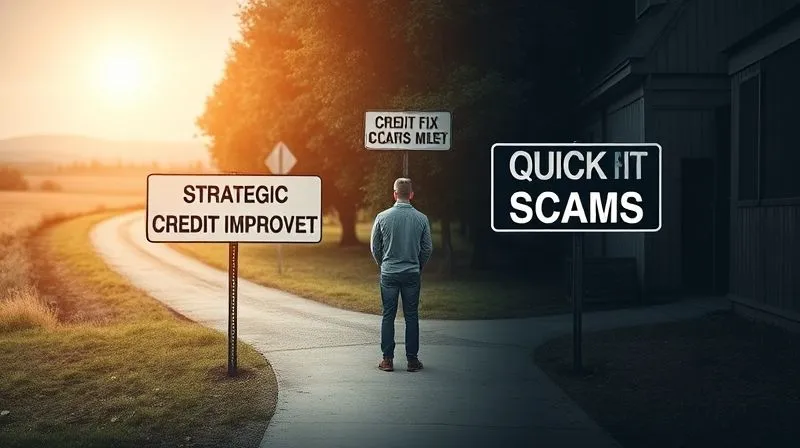
For complex situations or if you feel overwhelmed, engaging a reputable credit counseling agency or a financial advisor specializing in credit repair can be invaluable. They can help identify specific issues, negotiate with creditors, and create a personalized plan. Be wary of 'credit repair' scams that promise instant fixes; legitimate services focus on education and actionable steps.
Understanding Loan-Specific Score Models
While FICO 8 is common, some lenders use industry-specific FICO scores (e.g., FICO Bankcard Score, FICO Auto Score) or even their own proprietary models. While you can't optimize for every model, understanding that slight variations exist can explain minor score differences. The core principles of good credit remain universal.
The Power of a Personal Guarantor
If your personal credit score still falls short despite your best efforts, a strong personal guarantor can be a game-changer for a professional loan. A guarantor is an individual with excellent credit who agrees to be responsible for the loan if you default. This significantly reduces the lender's risk. However, this is a serious commitment for the guarantor and should only be pursued with absolute transparency and clear agreements. The Small Business Administration provides excellent resources on understanding personal guarantees for business loans.
Common Pitfalls to Avoid When Chasing a Higher Score
While striving to quickly raise credit score for a large professional loan, it's easy to fall into traps that can set you back. Avoid these common mistakes:
- Applying for Too Much New Credit: Each hard inquiry temporarily lowers your score. Resist the urge to open many new accounts just before a major loan application.
- Closing Old, Paid-Off Accounts: This reduces your total available credit and shortens your average credit age, both of which can negatively impact your utilization and score.
- Ignoring Small Debts: Even a $20 unpaid bill can go to collections and severely damage your score. No debt is too small to warrant attention.
- Falling for 'Quick Fix' Scams: Be skeptical of services promising to remove legitimate negative items or guarantee massive score increases overnight. Real credit repair takes diligent effort.
- Missing Any Payments: Even one late payment can undo weeks or months of diligent effort. Set up automatic payments for everything.
"The path to a higher credit score is paved with discipline and strategic action, not shortcuts. Trustworthy improvement comes from understanding and manipulating the core factors, not from magic."
Frequently Asked Questions (FAQ)
How fast can I realistically raise my credit score for a large professional loan? While significant jumps of 50-100 points can occur within 30-90 days, especially by addressing credit report errors or drastically reducing credit utilization, more substantial, long-term improvements require consistent effort over 6-12 months. The 'quick' aspect often depends on how much room for improvement exists in your current credit profile.
Should I close old credit card accounts once they are paid off? Generally, no. Closing old accounts can negatively impact your credit score in two ways: it reduces your total available credit, which increases your credit utilization ratio, and it shortens your average credit age, a factor that contributes to 15% of your FICO score. Keep them open, even if unused, but ensure they remain active with occasional small purchases and immediate payments.
What if I have a bankruptcy or other severe negative item on my record? Can I still get a professional loan? It's certainly more challenging, but not impossible. Bankruptcies can remain on your report for 7-10 years. The key is demonstrating a spotless credit history since the negative event. Focus on building new, positive credit. Lenders will look for a pattern of responsible behavior post-bankruptcy. A personal guarantor or a secured loan might be necessary initially.
Does checking my own credit score hurt it? No, checking your own credit score or report (a 'soft inquiry') does not affect your score. You can check it as often as you like. Only 'hard inquiries' – typically when you apply for new credit – can temporarily lower your score by a few points for a short period.
Can a professional loan officer help me raise my score directly? No, a loan officer cannot directly 'raise' your credit score. However, a good loan officer can provide valuable advice on what lenders look for, interpret your credit report with you, and suggest strategies to improve your creditworthiness. They can guide you on the best type of loan for your situation and what specific score thresholds you need to meet.
Key Takeaways and Final Thoughts
Securing a large professional loan is a pivotal moment for any professional or business owner, and your credit score is the gatekeeper. While the journey to a higher score requires diligence, it's far from insurmountable, even when time is critical. By focusing on the high-impact strategies we've discussed, you can significantly improve your standing.
- Prioritize Accuracy: Immediately dispute any errors on your credit reports.
- Control Utilization: Aggressively pay down credit card balances to below 30%, ideally 10%.
- Ensure Timeliness: Make all payments on time, every time – this is non-negotiable.
- Build Positive History: Consider secured cards or credit builder loans if your history is thin.
- Seek Expert Guidance: Don't hesitate to consult reputable credit advisors for complex situations.
- Avoid Pitfalls: Resist opening too many new accounts or closing old ones.
Remember, your credit score is a dynamic entity, a reflection of your financial habits. With focused effort and strategic action, you possess the power to transform it. Approach your professional loan application not with anxiety, but with the confidence that comes from having optimized your financial profile. The path to securing that critical funding is clearer than you think. Now, go forth and take control of your financial future!

Recommended Reading
- 7 Steps: Build a Robust Emergency Fund for Career Transition Resilience
- 5 Ways Your Good Personal Credit Secures Better Business Loans
- Stop Cash Flow Crises: Your Adapted Envelope Budget Blueprint?
- Startup Financial Strategy: Scale Fast Without Burning Cash
- High-Income Debt: 7 Strategies to Optimize Repayment & Build Wealth





Comments
Leave a comment below. Your email will not be published. Required fields marked with *