



How to Quickly Raise Credit Score for a High-Value Mortgage Loan?
For over two decades in the finance industry, I've had the privilege of guiding countless individuals through the complex labyrinth of credit and lending. I've witnessed firsthand the profound impact a strong credit score can have, not just on financial opportunities, but on peace of mind. It’s a key that unlocks doors, and for many, the most important door is their dream home.
The aspiration for a high-value mortgage loan often comes with a significant hurdle: a credit score that isn't quite where it needs to be. This isn't just about getting approved; it's about securing the most favorable interest rates, saving tens of thousands of dollars over the loan's lifetime, and achieving true financial leverage. The stress of watching mortgage rates climb while your score lags can feel overwhelming, leading to missed opportunities and deferred dreams.
But here's the good news: improving your credit score, even for a high-value mortgage, isn't an insurmountable challenge. In this definitive guide, I'll share expert-level, actionable strategies—born from years of experience and deep industry knowledge—that can help you significantly raise your credit score quickly. We'll dive into the mechanics, reveal proven tactics, and equip you with the frameworks to transform your credit profile and confidently pursue that high-value mortgage loan.
Understanding the Mortgage Credit Score Landscape
Before we accelerate your score, it’s crucial to understand what lenders are looking for and how your credit score is actually calculated. This foundational knowledge empowers you to make targeted improvements.
What Mortgage Lenders Look For
Mortgage lenders are primarily concerned with your ability and willingness to repay a substantial loan. They scrutinize your credit report to assess risk. A higher credit score signals lower risk, making you a more attractive borrower and qualifying you for better terms.
- Payment History: Are you reliable? Do you pay bills on time?
- Credit Utilization: How much of your available credit are you using? Lower is better.
- Length of Credit History: A longer history shows stability and experience managing credit.
- Credit Mix: Do you have a healthy blend of different credit types (e.g., credit cards, car loans)?
- New Credit: Too many recent applications can signal financial distress.
The FICO Score and Its Components
While there are various scoring models, the FICO score remains the gold standard for mortgage lending. It's a three-digit number, typically ranging from 300 to 850, derived from data in your credit reports. Understanding its components is your first step toward strategic improvement.
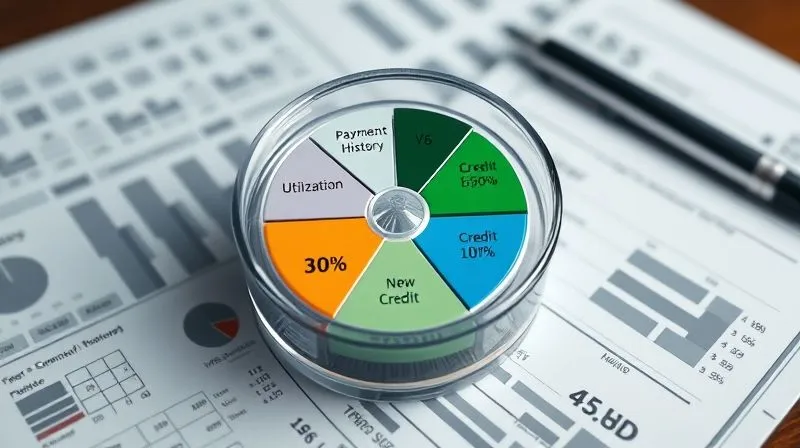
- Payment History (35%): This is the single most important factor. Timely payments demonstrate responsibility.
- Credit Utilization (30%): The ratio of your credit card balances to your total credit limits. Keeping this low is paramount.
- Length of Credit History (15%): Lenders prefer to see a long history of responsible credit use.
- New Credit (10%): Opening too many new accounts in a short period can be a red flag.
- Credit Mix (10%): A diverse portfolio of credit types (e.g., installment loans, revolving credit) is viewed favorably.
"In my experience, many people underestimate the granular impact of FICO's weighting. Focusing your efforts on payment history and credit utilization yields the most immediate and significant results when you need to quickly raise credit score for a high-value mortgage loan."
Immediate Impact Strategies: Rapid Score Boosters
When time is of the essence, certain actions can provide a noticeable uplift in your credit score relatively quickly. These are your priority targets.
Strategy 1: The Power of Payment History
This is non-negotiable. One late payment can drop your score by dozens of points and stay on your report for seven years. Conversely, a consistent record of on-time payments is your strongest asset.
- Set up Auto-Pay: Eliminate the risk of forgetting a payment. Even minimum payments on time are better than a missed payment.
- Pay All Bills On Time: This includes credit cards, loans, utilities, and even rent if reported to credit bureaus.
- Catch Up on Delinquent Accounts: If you have any past-due accounts, pay them immediately. While the late mark remains, bringing the account current stops further damage and shows good faith.
"A single 30-day late payment can slash 60-100 points off an excellent credit score. Consistent, timely payments are the bedrock of good credit, especially when aiming for a high-value mortgage loan."
Strategy 2: Optimizing Your Credit Utilization Ratio (CUR)
Your credit utilization ratio (CUR) is the amount of credit you're using compared to your total available credit. Lenders prefer to see this below 30%, with elite scores often having a CUR below 10%. This is one of the fastest ways to improve your score.
- Pay Down Revolving Debt: Focus on credit card balances. If you have multiple cards, prioritize those closest to their limit.
- Make Multiple Payments a Month: Instead of one payment at the due date, make smaller payments throughout the month. This keeps your reported balance low.
- Request a Credit Limit Increase: If you have a long, positive history with a card issuer, asking for a limit increase can lower your CUR *without* increasing your debt. Only do this if you trust yourself not to spend more.
- Avoid Closing Old Accounts: While tempting to simplify, closing an old, unused credit card can actually hurt your CUR by reducing your total available credit.
The goal is to show lenders you have plenty of available credit but aren't relying on it heavily. This demonstrates financial prudence and capacity for new debt.

Strategy 3: Dispute Credit Report Errors
Errors on your credit report are surprisingly common and can drag down your score unfairly. Correcting these can provide a significant boost.
- Obtain Your Credit Reports: You are entitled to a free report from each of the three major bureaus (Experian, Equifax, TransUnion) once every 12 months via AnnualCreditReport.com.
- Review Thoroughly: Look for incorrect account balances, accounts you don't recognize, duplicate accounts, or incorrect payment statuses.
- Gather Evidence: Collect any documentation that supports your claim (e.g., canceled checks, bank statements).
- Initiate a Dispute: Contact the credit bureau directly, providing clear details and supporting evidence. The Fair Credit Reporting Act (FCRA) requires bureaus to investigate and respond within 30-45 days.
Even a single corrected error, especially a negative one like a late payment that wasn't yours, can positively impact your score quickly.
Mid-Term Tactical Adjustments: Building a Stronger Foundation
Once you've tackled the immediate fixes, these strategies focus on solidifying your credit health over a slightly longer period, typically 3-6 months, which aligns well with mortgage planning timelines.
Strategy 4: Strategic Debt Repayment
Beyond just lowering your CUR, having a plan to systematically reduce your overall debt burden is critical. Lenders view high debt loads, even if well-managed, as a higher risk.
- Prioritize High-Interest Debt: The "debt avalanche" method, where you pay off debts with the highest interest rates first, saves you the most money over time.
- Target Small Balances: Alternatively, the "debt snowball" method focuses on paying off the smallest debts first to build psychological momentum. Choose the method that best suits your motivation.
- Consolidate Debt (Cautiously): A personal loan to consolidate high-interest credit card debt can simplify payments and sometimes offer a lower interest rate, but ensure it doesn't lead to more spending.
Strategy 5: Avoid New Credit Applications
Every time you apply for new credit, a "hard inquiry" is placed on your credit report. While one or two won't devastate your score, multiple inquiries in a short period can signal desperation to lenders, especially when you're preparing for a significant loan like a mortgage.
"Hold off on applying for new credit cards, car loans, or other personal loans for at least 6-12 months before you apply for a mortgage. Each hard inquiry can ding your score by a few points, and those points matter when you need to quickly raise credit score for a high-value mortgage loan."
Plan your credit applications strategically. If you need a new credit card, get it well in advance of your mortgage application process.
Strategy 6: Becoming an Authorized User (with caution)
If you have a trusted family member with an excellent credit history, becoming an authorized user on one of their credit cards can sometimes help. Their positive payment history and low utilization ratio can reflect on your report.
- Benefits: Can quickly add positive history and boost your available credit, lowering your CUR.
- Risks: Their irresponsible spending or late payments will also reflect on your report. Ensure they are financially disciplined and you have a clear agreement.
- Due Diligence: Make sure the card issuer reports authorized user activity to all three credit bureaus.
Long-Term Growth & Maintenance for Mortgage Readiness
While the focus is on quick improvements, sustainable credit health requires a long-term perspective. These strategies reinforce your credit profile for continued strength.
Strategy 7: Diversifying Your Credit Mix
Lenders like to see that you can responsibly manage different types of credit. A mix of revolving credit (like credit cards) and installment loans (like student loans or car loans) is generally favorable.
- Installment Loans: These have fixed payments over a set period. Examples include auto loans, student loans, or personal loans.
- Revolving Credit: These have variable payments based on your outstanding balance, like credit cards or lines of credit.
If your credit profile is heavily weighted towards one type, consider responsibly adding the other. For instance, if you only have credit cards, a small, secured personal loan could help diversify your mix over time.
Strategy 8: Length of Credit History
The longer your credit accounts have been open and in good standing, the better. This demonstrates a proven track record of financial responsibility.
"Never close your oldest credit accounts, even if you don't use them anymore. The age of your accounts significantly contributes to your credit score, and closing them can shorten your average account age, negatively impacting your score."
Keep old accounts open, even if you use them sparingly. A small, recurring charge that you pay off immediately can keep the account active and contributing positively.
Case Study: Sarah's Mortgage Journey
Sarah, a 32-year-old aspiring homeowner, dreamed of buying a starter home in a competitive market. Her credit score of 640 was holding her back from a favorable mortgage rate on a $400,000 loan. After consulting with me, she implemented a focused 6-month plan.
First, she paid off a credit card with a $3,000 balance that was nearly maxed out, immediately reducing her utilization. She then set up auto-pay for all her remaining bills, ensuring no more late payments. She found an incorrect collection account on her report and successfully disputed it. Finally, she became an authorized user on her sister's oldest credit card, which had a perfect payment history and low balance.
| Month | Credit Score | Key Action |
|---|---|---|
| Initial | 640 | Identified Goal |
| Month 1 | 675 | Paid off highest-utilization credit card |
| Month 2 | 688 | Set up auto-pay for all bills |
| Month 3 | 702 | Disputed credit report error |
| Month 4 | 715 | Became authorized user on sister's card |
| Month 5 | 723 | Consistent on-time payments |
| Month 6 | 731 | Secured mortgage pre-approval |
Within six months, Sarah's credit score rose to 731. This improvement qualified her for a prime interest rate, saving her over $250 a month on her mortgage payment, translating to tens of thousands over the life of the loan. Her strategic actions and disciplined execution allowed her to quickly raise credit score for a high-value mortgage loan, turning her dream into a reality.
Navigating Mortgage Lender Expectations
Understanding the numbers is one thing; knowing how lenders interpret them is another. Your credit score is just one piece of the puzzle, albeit a very important one.
Minimum Score vs. Optimal Score
While some government-backed loans (FHA, VA) may accept scores in the mid-500s or 600s, these often come with higher interest rates or additional fees. For a "high-value" mortgage and the best terms, aiming for a FICO score of 740 or higher is generally recommended. According to data from Fannie Mae, borrowers with scores above 740 typically receive the most competitive rates.
Pre-Approval vs. Pre-Qualification
These terms are often used interchangeably but are distinctly different:
- Pre-Qualification: A preliminary assessment based on self-reported financial information. It's an estimate and does not guarantee a loan.
- Pre-Approval: A more rigorous process involving a hard credit check and verification of your income and assets. It results in a conditional commitment from a lender for a specific loan amount, giving you significant leverage when making an offer on a home.
Always aim for pre-approval when serious about buying. It shows sellers you are a serious and qualified buyer.

Common Pitfalls and How to Avoid Them
Even with the best intentions, certain actions can inadvertently harm your credit score. Be vigilant against these common mistakes:
- Closing Old Accounts: As discussed, this reduces your average account age and total available credit.
- Maxing Out Credit Cards: Even if you pay them off, a high reported balance on your statement closing date can temporarily spike your CUR.
- Co-Signing Loans Blindly: If the primary borrower defaults, you are fully responsible, and it will hurt your credit.
- Falling for Credit Repair Scams: Be wary of companies promising instant fixes or asking for upfront fees. Most of what they do, you can do yourself for free. For reliable information on consumer financial protection, consult resources like the Consumer Financial Protection Bureau (CFPB).
- Ignoring Your Credit Report: Regular monitoring is key to catching errors and identity theft early.
"Financial discipline isn't just about making payments; it's about strategic planning and avoiding impulsive decisions that can derail months of hard work. When you're striving to quickly raise credit score for a high-value mortgage loan, every decision counts."
Frequently Asked Questions (FAQ)
How long does it actually take to raise a credit score significantly? The timeline varies based on your starting point and the actions you take. Minor improvements (20-40 points) can happen in 1-3 months by optimizing utilization and correcting errors. Significant increases (50-100+ points) typically require 6-12 months of consistent, disciplined effort, focusing on payment history, debt reduction, and strategic credit management. For a high-value mortgage, planning at least 6 months ahead is ideal.
Can I get a mortgage with a lower credit score if I have a large down payment? While a substantial down payment can mitigate some risk for lenders and may help you qualify with a slightly lower score, it doesn't entirely negate the importance of a good credit score. A lower score will almost always result in a higher interest rate, costing you more over the life of the loan, even with a large down payment. Lenders assess both your ability (credit score) and capacity (down payment, income) to repay.
Is it better to pay off a collection account or leave it? Generally, paying off a collection account is better, especially if you're pursuing a mortgage. While a paid collection still appears on your report, it shows you've fulfilled your obligation. Sometimes, you can negotiate a "pay for delete" with the collection agency, where they agree to remove the entry from your report in exchange for payment. This is not guaranteed, but it's worth asking. Unpaid collections are a significant red flag for mortgage lenders.
Should I use a credit repair company? Most credit repair actions, like disputing errors or paying down debt, can be done by yourself for free. While legitimate credit repair companies exist, many are scams. If you choose to use one, research thoroughly, check reviews, and understand their fee structure. Be wary of anyone promising guaranteed results or asking for payment before services are rendered. My advice: empower yourself with the knowledge and take control of your credit journey.
What's the difference between FICO and VantageScore? Both FICO and VantageScore are credit scoring models, but they use slightly different algorithms and weighting. FICO is the older and more widely used model, especially in mortgage lending (over 90% of lenders use FICO). VantageScore is newer and aims to score more consumers, often requiring less credit history. While improving one usually improves the other, always focus on your FICO score when preparing for a mortgage, as it's what your lender will primarily evaluate.
Key Takeaways and Final Thoughts
Securing a high-value mortgage loan with optimal terms hinges significantly on your credit score. It's not just a number; it's a reflection of your financial reliability and a powerful tool in your financial arsenal. By understanding its components and strategically applying the expert tactics I've outlined, you can take control of your financial future.
- Prioritize Payment History and Credit Utilization: These two factors account for 65% of your FICO score and offer the quickest routes to improvement.
- Be Proactive: Regularly check your credit reports for errors and dispute them promptly.
- Think Long-Term, Act Now: While some changes take time, immediate actions like reducing debt and ensuring on-time payments lay a crucial foundation.
- Avoid New Debt: Resist the urge to open new credit accounts in the months leading up to your mortgage application.
- Educate Yourself: The more you understand about credit, the better equipped you are to manage it effectively.
Remember, building and maintaining excellent credit is a journey, not a sprint. However, with focused effort and the right strategies, you can absolutely achieve the credit score needed to secure that high-value mortgage loan and step into the home of your dreams. Your financial empowerment starts now. For further insights into managing your personal finances effectively, I highly recommend exploring resources from reputable financial education platforms such as Investopedia's Personal Finance section.

Recommended Reading
- Unlock Digital Payment Safety: Are Small Businesses Truly Secure?
- Stuck Refund? 7 Steps to Expedite Your Client's Federal Tax Money Now
- FAFSA Income Conflicts: 5 Steps for Complex Tax Returns Explained
- 7 Proven Strategies: How Busy Professionals Build Truly Passive Income
- Protect Your Clean Energy Portfolio: 7 Expert Steps to Avoid Greenwashing





Comments
Leave a comment below. Your email will not be published. Required fields marked with *