



How to Prevent Mobile Banking Fraud for High-Value Clients?
For over two decades in the intricate world of finance and banking, I've had a front-row seat to the evolving landscape of digital security. I've witnessed firsthand the devastating impact of sophisticated fraud on individuals and institutions alike, especially when it targets our most vulnerable, yet often most digitally active, high-value clients. It's not just about losing money; it's about the erosion of trust, the psychological toll, and the reputational damage that can ripple through an entire wealth management ecosystem.
The convenience of mobile banking has become indispensable for affluent clients who manage complex portfolios and demand instant access to their finances. However, this very convenience presents a lucrative target for increasingly sophisticated fraudsters. High-value clients are often targeted not just for their substantial balances, but for the intricate web of financial connections they represent, making them prime candidates for identity theft, account takeover, and elaborate social engineering scams. The problem isn't just growing; it's mutating, adapting to every new security measure with alarming speed.
This article isn't just another generic guide. Drawing from my extensive experience, I will provide you with a definitive, expert-level framework detailing actionable strategies, advanced security protocols, and crucial client education techniques. You'll gain insights into not just *what* to do, but *why* these measures are critical, empowering you to proactively prevent mobile banking fraud for high-value clients and fortify their digital financial lives.
Understanding the Evolving Threat Landscape for Affluent Clients
The digital battlefield is constantly shifting, and for high-value clients, the stakes are exceptionally high. Fraudsters are no longer content with simple phishing attempts; they are employing highly personalized, multi-channel attacks designed to exploit trust and leverage advanced technology. Understanding these evolving threats is the first critical step in building an impenetrable defense.
The Sophistication of Modern Attacks: Phishing, SIM Swapping, and Malware
Today's phishing attempts are often indistinguishable from legitimate communications, crafted with impeccable grammar and accurate branding. They're part of a broader social engineering strategy that includes 'vishing' (voice phishing) and 'smishing' (SMS phishing), where fraudsters impersonate bank representatives, government officials, or even family members to trick clients into divulging sensitive information or authorizing fraudulent transactions.
SIM swapping remains one of the most insidious threats. Here, criminals convince a mobile carrier to transfer a client's phone number to a SIM card they control. This gives them access to one-time passcodes (OTPs) sent via SMS, effectively bypassing traditional two-factor authentication and granting them control over banking apps, email, and other critical accounts. The financial services industry has seen a significant uptick in these targeted attacks against high-net-worth individuals.
Malware, often disguised as legitimate apps or software updates, can infect a client's device, allowing fraudsters to record keystrokes, intercept communications, or even remotely control banking sessions. These sophisticated tools can lie dormant for weeks, silently gathering information before executing a high-value attack.
"In my experience, the human element remains the weakest link in any security chain. No matter how robust your technical defenses, a single moment of misplaced trust or a lapse in vigilance can open the door to devastating fraud."
Common attack vectors include:
- Spear Phishing: Highly personalized emails targeting specific individuals with tailored content.
- SIM Swapping: Gaining control of a client's phone number to intercept OTPs.
- Mobile Malware: Malicious software designed to steal credentials or control devices.
- Public Wi-Fi Exploitation: Intercepting data transmitted over unsecured networks.
- Credential Stuffing: Using stolen credentials from other breaches to try and log into banking apps.

Fortifying Authentication: Beyond Passwords and PINs
The days of relying solely on usernames and passwords for high-value accounts are long gone. To truly prevent mobile banking fraud for high-value clients, we must embrace multi-layered, adaptive authentication methods that are both secure and user-friendly.
Multi-Factor Authentication (MFA) Evolution: Biometrics and FIDO Standards
While traditional MFA using SMS OTPs is a step up from passwords, its vulnerability to SIM swapping means it's no longer sufficient for high-value clients. Modern solutions leverage a combination of 'something you know' (password), 'something you have' (hardware token, authenticator app), and 'something you are' (biometrics).
Biometric authentication, such as fingerprint or facial recognition, offers a superior level of security and convenience. It's inherently personal and far more difficult to compromise than a password. However, it's crucial that the implementation is robust, leveraging the device's secure enclave and anti-spoofing technologies.
The **FIDO Alliance (Fast IDentity Online)** standards are gaining traction, promoting passwordless authentication across various platforms. FIDO-certified authenticators use public-key cryptography, making them highly resistant to phishing and man-in-the-middle attacks. Implementing FIDO standards within mobile banking apps can significantly enhance security for high-value transactions.
Behavioral Biometrics: Passive Monitoring for Anomalies
Beyond explicit biometric scans, **behavioral biometrics** offers a powerful, passive layer of security. This technology continuously analyzes a user's unique patterns of interaction with their device – how they hold it, their typing rhythm, swipe patterns, and even their gait. Deviations from these established patterns can trigger alerts or additional authentication challenges, indicating a potential account takeover attempt without inconveniencing the legitimate user.
Implementing robust authentication requires a strategic approach:
- Assess Current Authentication Methods: Identify weaknesses in existing systems, especially those relying solely on SMS OTPs.
- Prioritize Biometric Integration: Invest in and promote the use of device-native biometric authentication (Face ID, Touch ID) for mobile banking access and transaction authorization.
- Implement Strong MFA for High-Value Transactions: For transfers exceeding a certain threshold, require a secondary form of authentication beyond initial login, such as an authenticator app code or a hardware token.
- Educate Clients on Secure Authentication Practices: Guide clients on setting up and protecting their MFA, explaining the risks of sharing codes or falling for social engineering tactics.
- Explore FIDO Standards: Evaluate integrating FIDO UAF (Universal Authentication Framework) or WebAuthn into your mobile banking platform for a future-proof, phishing-resistant solution.
For further reading on secure authentication guidelines, I highly recommend reviewing the NIST Digital Identity Guidelines.
Client Education: The First Line of Defense
Even the most advanced security systems can be undermined by human error. For high-value clients, who are often targeted by highly sophisticated social engineering attacks, robust education is not just an option – it's an imperative. Empowering them with knowledge transforms them into active participants in their own security.
Tailored Awareness Programs: What to Teach Clients
Generic cybersecurity advice often falls flat. High-value clients require tailored education that addresses the specific threats they face. This includes:
- Recognizing Phishing and Social Engineering: Provide real-world examples of sophisticated phishing emails, vishing calls, and smishing texts that mimic legitimate communications. Teach them to scrutinize sender addresses, look for subtle inconsistencies, and verify requests through independent channels.
- Understanding SIM Swapping Risks: Explain how SIM swapping works, the importance of strong PINs on their mobile accounts, and the need to report suspicious network activity immediately.
- Mobile Device Security Best Practices: Advise on keeping operating systems and apps updated, using strong device passcodes, avoiding public Wi-Fi for banking, and installing reputable security software.
- The Importance of Unique, Strong Passwords: Even with MFA, a compromised password can be a gateway. Encourage password managers.
Recognizing Social Engineering: Vishing, Smishing, and Impersonation
Fraudsters often play on emotions, urgency, or authority. Clients need to be trained to recognize these psychological manipulation tactics. Emphasize that banks will never ask for their full password, PIN, or OTP over the phone or via email. Teach them to pause, verify, and if in doubt, hang up and call the bank back on a known, official number.
"I've seen clients with decades of business acumen fall victim to a convincing imposter simply because they were under pressure or caught off guard. Education isn't about fear; it's about building a critical, defensive mindset."
Key educational topics for high-value clients:
- How to identify legitimate bank communications.
- The dangers of clicking suspicious links or downloading attachments.
- Protocols for reporting lost or stolen devices.
- Understanding the bank's communication channels and what information will *never* be requested.
- The importance of regularly reviewing transaction history and account statements.

Implementing Advanced Fraud Detection Systems
While authentication and education are foundational, a robust defense against mobile banking fraud for high-value clients demands sophisticated, real-time fraud detection systems. These systems act as an always-on sentinel, monitoring transactions and behaviors for anomalies that signify potential fraud.
AI and Machine Learning: Anomaly Detection and Predictive Analytics
The sheer volume and complexity of mobile banking transactions make manual fraud detection impossible. This is where Artificial Intelligence (AI) and Machine Learning (ML) become indispensable. AI/ML systems can analyze vast datasets of historical transactions, user behavior, and network data to establish baseline 'normal' patterns for each client.
When a transaction or activity deviates significantly from this established norm – perhaps a large transfer to a new beneficiary, an unusual login location, or a series of rapid, small transactions followed by a major one – the AI can flag it as suspicious. Predictive analytics take this a step further, identifying patterns and indicators that often precede fraudulent activity, allowing for intervention *before* a loss occurs.
Real-time Transaction Monitoring: Rules-Based vs. AI-Driven
Traditional fraud detection often relies on rules-based systems: 'If transaction amount > $X AND recipient is new, then flag.' While useful, these systems are static, prone to false positives, and easily circumvented by adaptive fraudsters.
AI-driven real-time transaction monitoring, however, is dynamic. It learns and adapts. It can identify complex, multi-variable correlations that human analysts or simple rules would miss. For example, it might detect that a client's typical mobile banking session involves logging in from their home IP, browsing for 5 minutes, and then making a small bill payment. A login from a new IP, immediately followed by an attempt to change account details and initiate a large transfer, would be instantly flagged, even if it doesn't violate a simple 'amount' rule.
| Feature | Traditional Rules-Based | AI/ML-Driven |
|---|---|---|
| Detection Speed | Delayed, based on static triggers | Real-time, predictive and adaptive |
| False Positives | High, due to rigid rules | Significantly lower, learns user behavior |
| Adaptability to New Threats | Low, requires manual updates | High, continuously learns from new data |
| Complexity of Analysis | Limited to predefined rules | Identifies complex, multi-variable patterns |
According to a Deloitte study on fraud risk management, financial institutions leveraging AI for fraud detection can significantly reduce losses and improve operational efficiency. The key is to continuously feed these systems with new data and fine-tune their algorithms.
Secure Mobile App Design and Infrastructure
The mobile banking application itself is the primary interface for high-value clients, making its security paramount. It's not enough for an app to be functional; it must be built from the ground up with security as its core principle. This extends beyond the user interface to the underlying infrastructure.
End-to-End Encryption: Data in Transit and at Rest
Every piece of data exchanged between the client's device and the bank's servers must be protected by robust **end-to-end encryption (E2EE)**. This ensures that even if data is intercepted during transmission, it remains unreadable to unauthorized parties. Furthermore, sensitive data stored on the client's device (e.g., cached account information) must also be encrypted 'at rest', making it inaccessible even if the device is lost or stolen.
This means employing industry-standard cryptographic protocols (like TLS 1.2 or higher for data in transit) and strong encryption algorithms for local storage. Avoid storing sensitive information on the device's external storage, and always clear temporary data after a session.
Regular Security Audits and Penetration Testing
A secure app today might have vulnerabilities tomorrow. The threat landscape is constantly evolving, and new exploits are discovered regularly. Therefore, **regular security audits and penetration testing** are non-negotiable. Independent security experts should attempt to 'break into' the app and its backend systems, identifying weaknesses before malicious actors do. This includes code reviews, vulnerability scanning, and simulated attacks.
Case Study: How Apex Wealth Management Fortified Its Mobile App
Apex Wealth Management, a firm specializing in high-net-worth clients, faced growing concerns about mobile banking fraud. Their existing app, while functional, hadn't been rigorously penetration-tested in years. After a minor credential stuffing incident, they engaged a leading cybersecurity firm. The audit revealed several vulnerabilities, including weaker-than-ideal encryption for cached transaction data and a lack of behavioral biometrics in their login flow.
By implementing stronger E2EE for all data at rest and in transit, integrating a FIDO-certified authentication module, and deploying a behavioral biometrics solution, Apex saw a dramatic reduction in attempted fraudulent logins and account takeovers. Within six months, their mobile fraud incident rate dropped by 60%, and client confidence in their digital platform significantly increased. This proactive investment not only prevented losses but also enhanced their reputation as a secure financial partner.
Best practices for secure mobile app design:
- Implement secure coding practices (e.g., OWASP Mobile Top 10 guidelines).
- Ensure strong session management and logout mechanisms.
- Prevent jailbreaking/rooting detection and app tampering.
- Utilize secure API design and authentication.
- Regularly update third-party libraries and components to patch known vulnerabilities.
Proactive Communication and Incident Response
Even with the most robust preventative measures, incidents can occur. How a financial institution responds to a potential mobile banking fraud event for high-value clients is critical. Speed, transparency, and clear communication are paramount to mitigating damage and preserving trust.
Establishing Clear Communication Channels: Secure Messaging
In the event of suspicious activity, clients need to be contacted immediately and through secure, verified channels. Relying solely on email or unverified phone calls can itself be a fraud vector. Implementing an in-app secure messaging system, or a dedicated, encrypted communication portal, ensures that alerts and inquiries are genuinely from the bank and not an imposter.
Clients should be educated on what to expect if suspicious activity is detected and how the bank will communicate with them. This includes a clear understanding that the bank will *never* ask for passwords or OTPs in any communication.
Rapid Response Protocols: Freezing Accounts, Client Notification
A well-defined and frequently rehearsed incident response plan is essential. This plan should include:
- Immediate Alerting: Fraud detection systems must trigger instant alerts to a dedicated fraud response team.
- Rapid Investigation: The team must quickly verify the authenticity of suspicious transactions or activities.
- Account Freezing/Locking: If fraud is confirmed or highly suspected, the ability to immediately freeze or lock the affected account(s) and associated mobile access is crucial to prevent further losses.
- Client Notification: Contact the client through the pre-established secure channels, explaining the situation clearly and calmly, and outlining the steps being taken.
- Forensic Analysis: Conduct a thorough investigation to understand how the breach occurred and implement measures to prevent recurrence.
- Recovery and Support: Assist the client in recovering funds, securing other accounts, and providing ongoing support throughout the process.
According to insights from Forbes Advisor, prompt reporting and a clear response plan are crucial for minimizing the impact of banking fraud. The faster the response, the higher the chance of recovery.
Geofencing and Transaction Limits for Enhanced Security
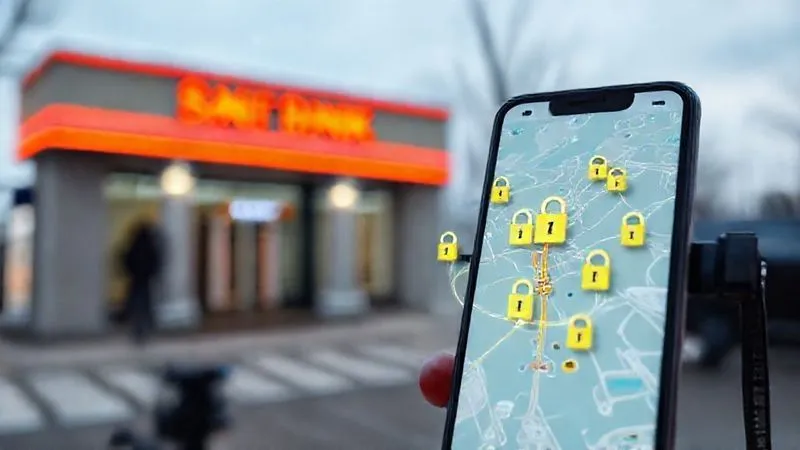
Adding layers of contextual security, such as location-based controls and customizable transaction limits, can significantly enhance protection against mobile banking fraud for high-value clients, especially when dealing with large sums or sensitive operations.
Leveraging Location-Based Security: Geofencing for High-Value Transactions
Geofencing allows financial institutions to define virtual geographic boundaries. For high-value clients, this can be an incredibly powerful tool. For instance, a bank could implement a policy where transactions exceeding a certain threshold (e.g., $50,000) cannot be initiated from a mobile device unless the device's GPS indicates it is within a pre-defined 'safe zone' – perhaps the client's home, office, or a bank branch. This adds a physical layer of security, making it much harder for fraudsters operating remotely to complete large transfers.
Alternatively, geofencing can be used to flag transactions originating from high-risk countries or regions where the client is not expected to be, triggering additional authentication or an immediate fraud alert. This is particularly useful for internationally mobile affluent clients.
Customizable Transaction Limits: Client-Specific Thresholds
While standard daily transaction limits exist, high-value clients often require more flexibility. However, this flexibility can also be exploited. Offering **customizable, client-specific transaction limits** allows both the bank and the client to set appropriate boundaries for mobile transactions.
Clients should have the ability, ideally through a secure in-app feature or with the assistance of their relationship manager, to set their own daily or per-transaction limits for different types of transactions (e.g., wire transfers, bill payments). For exceptionally large transfers, an additional 'cooling-off' period or multi-person authorization (e.g., requiring a call to the relationship manager) can be implemented. This provides a critical circuit breaker against rapid, large-scale fund exfiltration.
Benefits of geofencing and customizable limits:
- Reduced Exposure: Limits the potential financial loss from a single fraudulent event.
- Contextual Security: Adds intelligence to transaction monitoring based on location and client habits.
- Client Empowerment: Allows clients to tailor security to their specific risk appetite and needs.
- Enhanced Detection: Anomalous transactions outside geofences or above limits are immediately flagged.
The Role of Dedicated Client Relationship Managers (CRMs) in Security
For high-value clients, the relationship with their bank is often deeply personal, managed by a dedicated Client Relationship Manager (CRM). This human connection is an invaluable asset in the fight against mobile banking fraud, providing a layer of personalized vigilance and trust that technology alone cannot replicate.
Personalized Security Advisory: CRMs as Trusted Advisors
A CRM who truly understands their client's financial habits, travel patterns, and preferred communication methods can act as a crucial early warning system. They are uniquely positioned to offer personalized security advice, beyond generic guidelines. For example, if a client is planning international travel, the CRM can proactively discuss geofencing implications, temporary transaction limit adjustments, and safe mobile banking practices abroad.
CRMs can also facilitate enhanced security measures, such as assisting clients in setting up advanced MFA, reviewing transaction history for suspicious patterns, or explaining the nuances of new security features. This personalized guidance builds confidence and ensures clients are actively engaged in their own protection.
Building Trust and Vigilance: Fostering a Security-Aware Relationship
The relationship between a CRM and a high-value client is built on trust. This trust can be leveraged to foster a culture of security vigilance. CRMs should regularly touch base with clients, not just about investments, but also about the latest fraud trends and how the bank is enhancing its security. They can gently reinforce the importance of never sharing credentials and always verifying suspicious communications.
In the event of a suspected fraud incident, the CRM is often the first point of contact for the client. Their empathetic and knowledgeable response can significantly reduce client stress and facilitate a smoother resolution process. This human touch reinforces the bank's commitment to the client's security and well-being.
| Responsibility Area | CRM Role |
|---|---|
| Proactive Education | Educate clients on evolving threats, secure practices, and new security features. |
| Personalized Advice | Tailor security recommendations based on client's unique financial habits and risk profile. |
| Incident Response Support | Act as a trusted point of contact during a fraud incident, providing support and coordination. |
| Feedback Loop | Gather client feedback on security measures to inform continuous improvement. |
| Relationship Vigilance | Identify unusual client requests or behaviors that might indicate compromise. |

Frequently Asked Questions (FAQ)
Question? What is the single biggest mobile banking fraud threat to high-value clients today, and how can it be mitigated?
Answer: In my professional opinion, the most insidious threat today remains sophisticated social engineering combined with SIM swapping. Fraudsters target high-value clients with hyper-personalized phishing/vishing attempts to gain initial credentials, then use SIM swapping to bypass SMS-based MFA. Mitigation requires a multi-pronged approach: rigorous client education on social engineering tactics, moving away from SMS OTPs to app-based or hardware token MFA, and implementing robust behavioral biometrics and real-time transaction monitoring to detect anomalies before a SIM swap is even successful. Banks must also work closely with telecom providers to strengthen SIM card transfer protocols.
Question? How effective are biometric authentication methods (fingerprint, facial recognition) in truly preventing mobile banking fraud?
Answer: Biometric authentication is significantly more secure than passwords alone, offering a strong layer of defense against credential theft and brute-force attacks. It leverages unique biological traits, making it difficult for fraudsters to replicate. However, it's not foolproof. Robust implementation is key, ensuring the biometrics are processed in a secure enclave on the device and are resistant to spoofing attempts (e.g., using a photo or prosthetic). Furthermore, biometrics should always be part of a broader multi-factor authentication strategy, never the sole defense mechanism, especially for high-value transactions.
Question? Can high-value clients opt out of certain enhanced security features for convenience, and what are the risks?
Answer: While some flexibility might exist for certain features, allowing clients to opt out of critical security measures (like strong MFA or transaction monitoring) introduces significant risk. As an expert, I strongly advise against this. The convenience gained is almost always outweighed by the increased vulnerability to fraud, which can lead to substantial financial and emotional distress. Banks should clearly communicate these risks and, where possible, design security measures that are both robust and user-friendly, minimizing the perceived inconvenience. For truly high-risk actions, opting out should not be an option.
Question? What is the bank's ultimate responsibility versus the client's responsibility in preventing mobile banking fraud?
Answer: This is a shared responsibility, but with distinct roles. The bank has a fundamental duty of care to provide a secure mobile banking platform, implement robust fraud detection, and educate its clients. This includes investing in cutting-edge security technology, performing regular audits, and having a swift incident response. Clients, in turn, have a responsibility to adhere to security best practices, protect their credentials, keep their devices secure, and report suspicious activity promptly. When a bank fails in its duty (e.g., a system vulnerability), liability often falls on the bank. When a client is negligent (e.g., sharing their password), liability may shift. The goal, however, should always be collaboration to prevent fraud in the first place.
Question? How frequently should mobile banking security protocols and fraud prevention systems be updated or reviewed?
Answer: Given the rapid evolution of cyber threats, mobile banking security protocols and fraud prevention systems should be under continuous review and updated proactively, not just reactively. I recommend at least quarterly internal reviews of threat intelligence and system performance, coupled with annual comprehensive third-party penetration testing and security audits. Furthermore, critical updates to underlying operating systems, app frameworks, or security libraries should trigger immediate internal reviews to ensure compatibility and continued protection. The mindset should be one of constant vigilance and adaptive defense.
Key Takeaways and Final Thoughts
Preventing mobile banking fraud for high-value clients is not a static task; it's a dynamic, ongoing commitment that demands vigilance, innovation, and collaboration. As an industry specialist, I've seen that the most effective strategies combine cutting-edge technology with robust client education and a personalized human touch.
- Multi-Layered Authentication is Non-Negotiable: Move beyond SMS OTPs to biometrics and FIDO standards.
- Client Education is a Powerful Shield: Tailored programs empower clients to recognize and resist social engineering.
- AI-Driven Fraud Detection is Essential: Leverage machine learning for real-time anomaly detection and predictive analytics.
- Secure App Design is Foundational: Prioritize end-to-end encryption, regular audits, and secure coding.
- Proactive Incident Response is Critical: Establish clear communication channels and rapid action protocols.
- Contextual Security Enhances Protection: Utilize geofencing and customizable transaction limits.
- CRMs are Key to Trust and Vigilance: Personal relationships add an invaluable layer of security advisory.
The digital age offers unprecedented convenience for managing wealth, but it also introduces complex risks. By adopting these expert-backed strategies, financial institutions can not only significantly reduce the incidence of mobile banking fraud but also reinforce the trust and confidence that high-value clients place in their services. It's an investment in security, reputation, and the lasting relationships that define successful wealth management in the 21st century. Stay proactive, stay secure.
Recommended Reading
- 7 Steps to Rapidly Rebuild Your Emergency Fund After Unexpected Job Loss
- 5 Ways Your Good Personal Credit Secures Better Business Loans
- Is Refinancing Multiple Debts Wise? Uncover the Ultimate Strategy.
- Data Breach at Work: How to Recover from Identity Theft (7 Steps)
- Uncover the Truth: Does Your Home Insurance Cover Remote Work Gear?




Comments
Leave a comment below. Your email will not be published. Required fields marked with *