


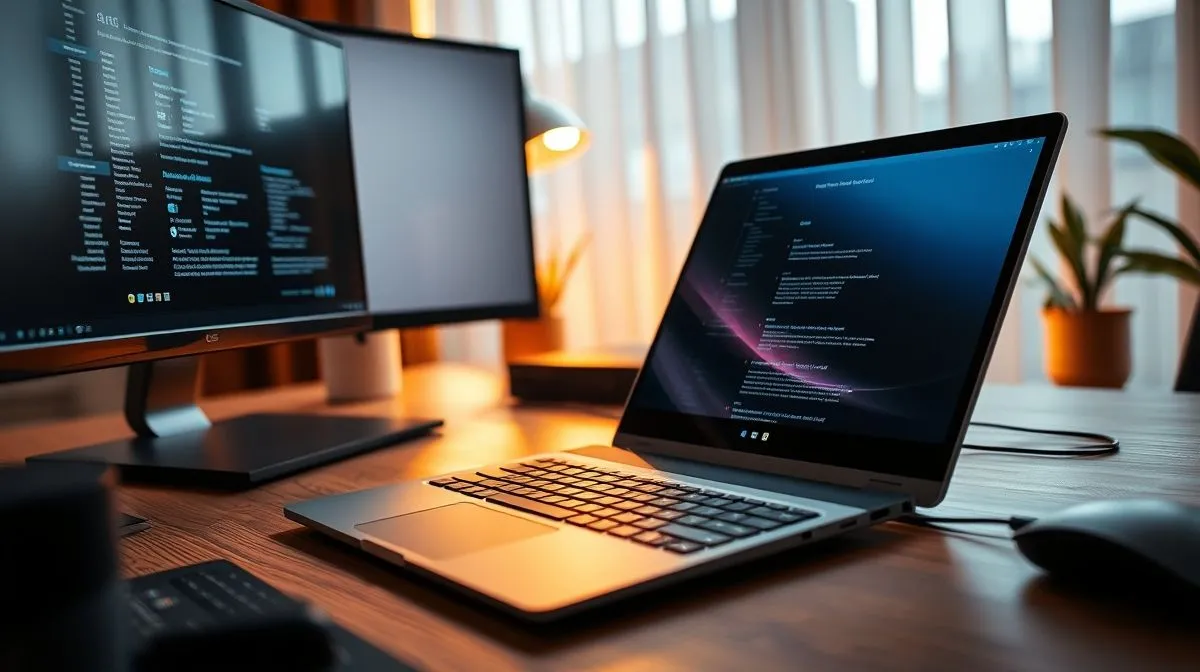
Does My Home Insurance Cover Remote Work Equipment? Unpacking the Essentials
Picture this: It's a busy Tuesday morning, the coffee is brewing, and you're just settling into your home office, ready to tackle a mountain of tasks. Suddenly, a power surge zaps your high-end work laptop, or perhaps, worse, a break-in leaves your valuable equipment missing. In that moment of panic, a critical question flashes through your mind: Does your home insurance cover remote work equipment?
The shift to remote work has transformed our homes into dynamic workspaces, blurring the lines between personal and professional life. While this offers unparalleled flexibility, it also introduces new risks, particularly concerning the valuable equipment we rely on daily. Many remote workers assume their standard homeowner's or renter's policy will automatically cover their work-related assets, but the reality is often far more nuanced and, at times, surprisingly complex.
This comprehensive guide is designed to cut through that complexity. By the end of this reading, you will understand the typical limitations of standard policies, explore the specific clauses that apply to business property, and discover the various pathways to ensure your essential remote work gear is adequately protected, giving you the peace of mind to focus on your productivity.
The Shifting Landscape of Work: Why Your Home is Now Your Office
The Remote Work Revolution
The past few years have witnessed an unprecedented acceleration in remote work adoption. What was once a niche benefit has become a mainstream reality for millions globally. This paradigm shift has transformed spare rooms, basements, and even kitchen tables into bustling command centers, equipped with everything from high-performance computers and multiple monitors to specialized software and high-speed internet connections.
While the benefits are clear – increased flexibility, reduced commute times, and a better work-life balance – this evolution also brings forth a new set of responsibilities. We invest significantly in creating efficient home offices, often purchasing expensive equipment out of our own pockets or receiving valuable assets from our employers. This investment, however, often goes hand-in-hand with an oversight of the potential risks.
New Risks, New Questions
With your professional life now housed within your personal space, the lines of responsibility for equipment damage, theft, or loss can become incredibly blurry. Is a laptop, primarily used for work but occasionally for personal browsing, considered personal property or business property? What happens if a pipe bursts in your home and damages your entire workstation? These are not hypothetical scenarios; they are real concerns that demand a clear understanding of your insurance coverage.
Understanding Your Homeowner's Policy: Personal Property Coverage Explained
At its core, a standard homeowner's or renter's insurance policy provides coverage for your personal belongings. This includes furniture, clothing, electronics, and other items within your home. However, when it comes to items used for business, the rules often change dramatically.
Standard Personal Property Limits
Most homeowner's policies offer what's called "personal property coverage," typically set as a percentage of your dwelling coverage (e.g., 50-70%). This broadly covers your possessions against specific perils like fire, theft, vandalism, and certain weather events. For a typical household, this coverage is usually sufficient for personal items. However, the critical distinction lies in how your policy defines and treats items used for business purposes.
Business Property Sub-Limits: The Crucial Detail
Here's where many remote workers encounter a significant gap in coverage: most standard homeowner's or renter's policies impose very low sub-limits for "business property" or "property used for business purposes." These sub-limits can be as low as $1,500 or $2,500, regardless of the overall personal property coverage you have. This means if your work laptop, monitors, printer, and other peripherals are valued at $5,000, your policy might only cover a fraction of that loss if they are considered business property.
The definition of "business property" can vary by insurer but generally includes items used in any trade, profession, or occupation. Even if you don't run a formal home-based business, if your employer's equipment or your personal equipment is primarily used for your job, it could fall under this restrictive sub-limit. Understanding this distinction is paramount. For more detailed information on standard homeowner's policy components, you can refer to resources from the Insurance Information Institute.
Perils Covered and Exclusions
Homeowner's policies typically cover named perils, which are specific events listed in your policy, such as fire, lightning, windstorms, hail, theft, and vandalism. However, they generally exclude damage from floods, earthquakes, and often, equipment breakdown due to mechanical failure or power surges (unless an endorsement is added). It's vital to review your policy's "perils covered" and "exclusions" sections to understand exactly what events your equipment is protected against.
The Nuances of Business Property Coverage Within Home Insurance
The question, "Does my home insurance cover remote work equipment?" hinges significantly on how your insurer classifies that equipment. It's not always black and white, leading to potential confusion and underinsurance.
Defining "Business Property" in Your Policy
In the eyes of an insurance provider, property used for business is often treated differently from purely personal property. Even if you're an employee working from home and not running a business, your equipment could be categorized under these business property clauses. This classification is usually determined by the primary use of the item. If your high-performance desktop is exclusively for your job, it's likely business property, even if you paid for it yourself.
The "On-Premises" vs. "Off-Premises" Debate
Another layer of complexity arises with the location of the equipment. Standard policies often have different sub-limits or even exclusions for business property that is taken off the insured premises. If you regularly take your work laptop to a coffee shop, a co-working space, or on business trips, its coverage might be significantly reduced or non-existent outside your home. Some policies might offer minimal off-premises coverage for business property, but it's rarely enough for expensive electronics.
When Standard Coverage Falls Short
Given the typical $1,500-$2,500 sub-limits for business property, it's clear that standard homeowner's policies are often insufficient for covering a modern remote work setup. A high-end laptop, multiple monitors, a specialized keyboard, mouse, webcam, and other peripherals can easily exceed this limit, leaving you with substantial out-of-pocket expenses in the event of a loss. This is the primary reason why remote workers need to proactively assess their coverage and consider alternatives.
Beyond Standard Home Insurance: Exploring Additional Protection Options
Recognizing the limitations of standard policies, several options exist to bolster your coverage for remote work equipment. These solutions can provide the robust protection needed for your valuable assets.
Adding an Endorsement or Rider
One of the simplest ways to increase coverage for your remote work equipment is to add a home business endorsement or rider to your existing homeowner's or renter's policy. This endorsement specifically increases the coverage limit for business property within your home, often to $5,000, $10,000, or even higher, depending on the insurer. It's typically a cost-effective solution, adding a relatively small amount to your annual premium, and it extends the perils covered to match your personal property coverage.
Dedicated Business Insurance Policies
For those running a full-fledged home-based business, or for remote workers with exceptionally high-value equipment, a dedicated business insurance policy might be necessary. Options include:
- Business Owner's Policy (BOP): A BOP combines general liability insurance with business property insurance, offering comprehensive coverage for both your equipment and potential liabilities arising from your home-based operations.
- Commercial Property Insurance: This policy specifically covers business property, whether owned or leased, against various perils. It's more extensive than a home endorsement and is ideal for businesses with significant equipment investments.
Personal Articles Floater for High-Value Items
If you have a single, very expensive piece of equipment (e.g., a professional-grade camera for photography work, or a high-end workstation for graphic design) that might exceed even a home business endorsement, a personal articles floater could be an option. This is a separate policy or endorsement that provides "all-risk" coverage for specific, scheduled items, often without a deductible, and covers them both on and off premises. While typically used for jewelry or art, it can be applied to high-value electronics.
What Happens if Your Employer Provides the Equipment?
A common scenario for remote workers is using equipment provided by their employer. This often leads to the assumption that the employer is fully responsible for any damage or loss. While generally true, there are important nuances.
Employer-Provided Equipment: Who's Responsible?
Typically, if your employer provides the laptop, monitors, and other equipment, they retain ownership and are responsible for its maintenance, repair, and replacement. Their commercial property insurance policy should cover these assets, regardless of where they are used (your home, a coffee shop, etc.). In such cases, your homeowner's policy would generally not be expected to cover it, nor would you typically file a claim on your policy.
Employee vs. Employer Liability
However, it's crucial to understand your employer's specific policy regarding company-owned equipment. Some employers may have clauses in their employee agreements stating that employees are responsible for exercising reasonable care. While gross negligence might make you liable, accidental damage or theft, assuming you took reasonable precautions, would usually fall under the employer's insurance. Always clarify this with your HR department or IT security team to understand your responsibilities and their coverage.
Practical Steps to Protect Your Remote Work Equipment
Beyond insurance, proactive measures can significantly reduce the risk of loss or damage to your valuable remote work setup.
Inventory and Documentation
One of the most critical steps is to create a detailed inventory of all your remote work equipment. Include:
- Make, model, and serial number of each item.
- Purchase date and original cost.
- Photos or video of the equipment.
- Receipts or proof of purchase.
Store this inventory securely (e.g., cloud storage, external hard drive) away from your home. This documentation is invaluable if you ever need to file a claim, speeding up the process and ensuring you receive fair compensation.
Understanding Your Policy's Deductible
Remember that most insurance policies come with a deductible – the amount you must pay out-of-pocket before your insurance coverage kicks in. For a $1,000 laptop with a $500 deductible, you'd only receive $500 from your insurer. For less expensive items, filing a claim might not even be worth it if the loss is less than or just slightly above your deductible.
Cybersecurity and Physical Security Measures
Protecting your equipment isn't just about physical damage or theft; it's also about safeguarding your data. Implement robust cybersecurity practices:
- Use strong, unique passwords and multi-factor authentication.
- Keep software and operating systems updated.
- Install reputable antivirus and anti-malware software.
- Back up your data regularly to a secure cloud service or external drive.
Physically, ensure your home office is secure. Lock doors and windows, and consider security systems if your equipment is particularly valuable. For more comprehensive cybersecurity advice for remote work, resources from organizations like the Cybersecurity & Infrastructure Security Agency (CISA) are invaluable.
Regular Policy Review
Your insurance needs can change. Review your homeowner's or renter's policy annually with your insurance agent. Discuss any new equipment purchases, changes in your work-from-home setup, or if you've started a side business. This ensures your coverage remains aligned with your current assets and risks.
The Cost-Benefit Analysis: Is Additional Coverage Worth It?
Deciding whether to invest in additional insurance coverage for your remote work equipment involves weighing the costs against the potential benefits and risks.
Assessing the Value of Your Equipment
Start by calculating the replacement cost of all your remote work equipment. Don't just think about your laptop; include monitors, keyboards, mice, printers, webcams, specialized software, ergonomic chairs (if used purely for work), and any other essential tools. If this total significantly exceeds the standard business property sub-limit on your home policy (typically $1,500-$2,500), then additional coverage is almost certainly a wise investment.
Weighing Premiums Against Potential Losses
A home business endorsement is often surprisingly affordable, adding perhaps $50-$150 annually to your premium, depending on the increased coverage limit and your insurer. Compare this small annual cost to the potentially thousands of dollars you'd have to spend out-of-pocket to replace your equipment if it were stolen or destroyed. The math often favors getting the additional coverage.
Peace of Mind: An Undeniable Benefit
Beyond the financial calculus, there's the invaluable benefit of peace of mind. Knowing that your essential work tools are protected allows you to focus on your job without the constant worry of a catastrophic financial hit from an unforeseen event. This psychological benefit alone can justify the modest additional premium for many remote professionals.
Common Mistakes Remote Workers Make Regarding Insurance
Even with the best intentions, remote workers often fall into common pitfalls that can leave their equipment vulnerable.
Assuming Full Coverage
The most pervasive mistake is the assumption that a standard homeowner's or renter's policy automatically covers all personal property, including work equipment, up to the general personal property limits. This overlooks the critical business property sub-limits.
Neglecting to Update Policy
Many remote workers purchase new, expensive equipment or upgrade their setup without informing their insurer or reviewing their policy. This can lead to significant underinsurance, especially if the new equipment pushes the total value far beyond existing limits.
Not Documenting Equipment
Failing to create and maintain a detailed inventory with photos and receipts can severely hinder a claim. Without proper documentation, proving the existence and value of your lost or damaged items becomes a challenge, potentially leading to lower payouts or denied claims.
Overlooking Cybersecurity Risks
While not directly an insurance coverage issue, neglecting cybersecurity measures can lead to data breaches, which can be just as financially devastating as physical loss, if not more so. While insurance might cover some data recovery costs, preventing a breach is always the best strategy.
Navigating a Claim: What to Do If Your Equipment is Damaged or Stolen
If the unfortunate happens and your remote work equipment is damaged or stolen, knowing the correct steps can significantly impact the success and speed of your insurance claim.
Immediate Actions
For theft: Immediately file a police report. This is a non-negotiable step for any theft claim, as your insurer will require it. Provide as much detail as possible about the stolen items. For damage: Take photos or videos of the damage as soon as it's safe to do so. Do not dispose of damaged items until your insurer advises you to.
Gathering Evidence
Refer to your detailed inventory. Gather all relevant documentation: purchase receipts, serial numbers, photos, and any communication related to the equipment (e.g., if it was employer-provided). The more evidence you can provide, the smoother the claims process will be.
Communicating with Your Insurer
Contact your insurance provider as soon as possible after the incident. Be prepared to provide details of the event, the items affected, and your documentation. Be honest and thorough. They will guide you through their specific claims process, which typically involves assigning an adjuster to assess your claim.
Frequently Asked Questions (FAQ)
Does my renters insurance cover remote work equipment? Similar to homeowner's insurance, renters insurance policies also have low sub-limits (typically $1,500-$2,500) for business property. You would need a specific endorsement or a separate business policy to adequately cover your remote work equipment under a renters policy.
Is my work laptop covered if I take it to a coffee shop? Standard homeowner's or renter's policies often have very limited or no coverage for business property taken off-premises. A home business endorsement might extend some coverage, but for comprehensive protection off-premises, a dedicated business policy or a personal articles floater might be required.
What if I run a small business from home? If you run a small business from home, even a side hustle, your needs go beyond just equipment. You'll likely need a Business Owner's Policy (BOP) or separate commercial general liability and commercial property insurance to cover your equipment, inventory, and potential liabilities arising from your business operations.
How do I prove the value of my equipment for a claim? The best way to prove value is through detailed documentation: original purchase receipts, credit card statements, photos, and serial numbers. An up-to-date inventory is crucial for this. For very old or custom equipment, you might need professional appraisals.
Will making a claim raise my premiums? Filing a claim can sometimes lead to an increase in your insurance premiums upon renewal, especially if it's a significant claim or if you've filed multiple claims recently. Insurers assess risk, and frequent claims can signal higher risk. However, the cost of replacing expensive equipment out-of-pocket often far outweighs a potential premium increase.
Recommended Reading
- Unlock the Secrets: Best Financial Travel Hacks for Long-Term Trips
- Global Inflation's Hidden Toll: How It Devastates Developing Nations
- Global Interest Rates & Inflation: The Untold Story You Must Know
- Startup Financials: Projecting Success with Your Business Plan
- Debt Collector Harassment: What Are Your Rights? (Protect Yourself!)
Conclusion
The rise of remote work has undeniably brought convenience and flexibility to millions, but it has also introduced new considerations for protecting our professional assets. The critical takeaway is that your standard homeowner's or renter's insurance policy, while essential for personal belongings, typically offers only minimal coverage for business property, including your remote work equipment. Understanding whether your home insurance covers remote work equipment is not just an academic exercise; it's a financial imperative.
Don't leave your valuable work tools vulnerable to unforeseen events. Take the proactive steps outlined in this guide: assess your equipment's value, review your current policy's business property sub-limits, and explore options like home business endorsements or dedicated business insurance. By doing so, you can ensure your home office remains a productive and secure environment, allowing you to focus on your work with complete peace of mind.




Comments
Leave a comment below. Your email will not be published. Required fields marked with *