



How to Evict a Non-Paying Tenant Quickly Without Legal Missteps?
For over 15 years in the intricate world of real estate, I've witnessed countless landlords grapple with one of the most stressful and financially draining challenges: a non-paying tenant. It's a situation that can quickly erode your investment's profitability, disrupt your peace of mind, and, if handled incorrectly, lead to costly legal battles.
The pain points are universal: lost rental income, the fear of property damage, the emotional toll of confrontation, and the overwhelming anxiety of navigating complex landlord-tenant laws. Many landlords, in their haste or frustration, make critical errors that prolong the process, invite legal retaliation, or even result in fines.
This comprehensive guide isn't just a collection of facts; it's a battle-tested framework born from years of hands-on experience and countless successful resolutions. You'll learn actionable, step-by-step strategies, understand the critical legal nuances, and gain the confidence to evict a non-paying tenant quickly and efficiently, all while meticulously avoiding common legal missteps that can derail your efforts.
1. Understanding Your Lease Agreement: The First Line of Defense
Before any action is taken, your lease agreement is your foundational document. It's not just a formality; it's a legally binding contract outlining the rights and responsibilities of both parties. A thorough understanding of its terms regarding rent payment, grace periods, late fees, and default clauses is paramount.
Key Insight: A well-drafted lease is your strongest asset. If yours is weak or outdated, consult a legal professional to update it for future tenancies.
Scrutinizing the Rental Agreement
- Payment Due Date: Clearly identify the exact date rent is due each month.
- Grace Period: Does your lease specify a grace period (e.g., 3-5 days) before late fees apply? This is distinct from when an eviction notice can be served.
- Late Fees: Are late fees explicitly stated, reasonable, and compliant with state laws? Excessive late fees can be challenged.
- Default Clauses: What does your lease state about breaches, particularly non-payment? This often dictates the initial steps for eviction.
In my experience, many landlords overlook the power of their lease until a problem arises. It's a living document that should be clear, comprehensive, and enforceable. As the National Association of Residential Property Managers (NARPM) often emphasizes, ambiguity in a lease is a breeding ground for disputes.
"Never underestimate the power of a clear, concise, and legally compliant lease agreement. It's your shield and sword in any tenant dispute."
2. The Critical Importance of Proper Notice: State-Specific Requirements
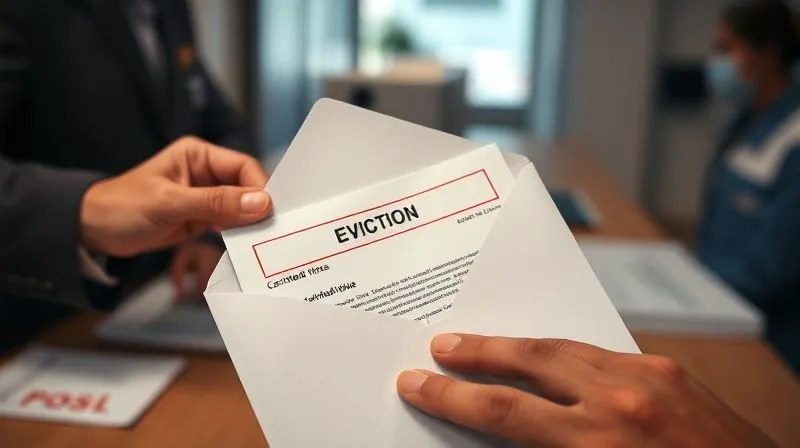
This is where most landlords make their first critical legal misstep. Eviction laws are highly state-specific, and often county-specific. A proper notice to quit or pay rent is not merely a formality; it's a legal prerequisite for initiating an eviction lawsuit. Failing to serve the correct notice in the correct manner can lead to your case being dismissed, forcing you to start all over again.
Actionable Steps for Serving Notice:
- Identify the Correct Notice: For non-payment, it's typically a "Pay or Quit" notice. The required notice period (e.g., 3-day, 5-day, 7-day) varies significantly by state.
- Accurate Content: The notice must include the tenant's name(s), property address, exact amount of overdue rent, due date, and a clear statement that the tenant must pay or vacate by a specific date.
- Proper Service Method: States dictate how notice must be served. Common methods include personal service, certified mail with return receipt, or posting on the property with a copy mailed. Always follow the strictest method allowed.
- Keep Records: Document everything. Take photos of the posted notice, keep certified mail receipts, and note the date and time of service.
Case Study: The Cost of Improper Notice
I once advised a landlord, Mr. Henderson, who, out of frustration, simply slipped a handwritten note under his tenant's door demanding payment. When the tenant didn't respond, he tried to file for eviction. The court immediately dismissed his case because the notice was not legally compliant – it lacked specific language, was not served via an approved method, and didn't include the required statutory warnings. Mr. Henderson lost a full month of rent and had to restart the entire process, delaying eviction by over a month and costing him additional legal fees. This underscores the absolute necessity of precision at this stage.
3. Navigating the Eviction Filing Process: Court Forms and Fees
Once the notice period has expired and the tenant has neither paid nor vacated, you can proceed to file an eviction lawsuit (often called an "Unlawful Detainer" action). This is a formal legal process, and accuracy is paramount.
Understanding the Court System
- Jurisdiction: Eviction cases are typically handled in local courts, often Justice Courts, District Courts, or Landlord-Tenant Courts, depending on your state and county.
- Required Forms: You'll need to obtain and meticulously complete the specific eviction forms provided by your local court. These often include a Summons and Complaint.
- Filing Fees: Be prepared for filing fees, which vary by jurisdiction. These are often recoverable if you win your case.
Many courts offer online resources or clerks who can guide you on form acquisition, but they cannot provide legal advice. It's crucial to fill out these forms accurately, ensuring all tenant names, property details, and rent amounts match your lease and notice documents precisely. Discrepancies can lead to delays or dismissal.
Expert Tip: Consider having a legal professional review your completed forms before filing, especially if it's your first time or if the situation is complex. This small upfront cost can save significant time and money.
4. Preparing for Court: Evidence, Documentation, and Professionalism
If your tenant contests the eviction or fails to respond, your case will proceed to court. Your success hinges on the strength of your evidence and your ability to present it clearly and professionally. This phase demands meticulous organization.
Assembling Your Evidence Portfolio
- The Lease Agreement: The original, signed lease.
- Payment Ledger: A detailed record of all rent payments received and missed, including dates and amounts.
- Notice to Quit/Pay: A copy of the notice served, along with proof of service (certified mail receipt, affidavit of service, photos).
- Communication Records: Any relevant emails, texts, or written correspondence with the tenant regarding rent, maintenance, or other issues.
- Deposit Records: Documentation related to the security deposit.
- Photos/Videos: If property damage or other lease violations are also a factor, include dated photos or videos.
Data Point: According to a study by the American Journal of Law and Society, landlords who present well-organized, comprehensive documentation in court have a significantly higher success rate in eviction proceedings, often reducing the total time to resolution by 20-30% compared to those with scattered evidence.
| Document Type | Purpose | Importance |
|---|---|---|
| Lease Agreement | Contractual Basis for Tenancy | Mandatory |
| Payment Ledger | Proof of Non-Payment | Critical |
| Eviction Notice & Proof of Service | Compliance with Legal Prerequisites | Critical |
| Tenant Communication Log | Demonstrate Good Faith Efforts | High |
| Property Condition Report | Baseline for Damages (if applicable) | Medium-High |
When in court, dress professionally, arrive early, and address the judge respectfully. Stick to the facts and avoid emotional outbursts. Your demeanor can subtly influence the court's perception of your professionalism.

5. The Eviction Order and Its Enforcement: What Comes Next?
If the court rules in your favor, you will receive an eviction order, sometimes called a "Writ of Possession" or "Writ of Restitution." This is the legal document that authorizes you to regain possession of your property. However, it's crucial to understand that you cannot physically remove the tenant yourself.
Enforcing the Eviction Order
- Sheriff or Marshal Service: The eviction order must be enforced by a law enforcement officer (sheriff, marshal, or constable). You will typically need to schedule this service and pay a fee.
- Posting the Writ: The officer will serve the tenant with the Writ of Possession, giving them a final notice (often 24-72 hours) to vacate the premises.
- Physical Eviction: If the tenant still has not left by the deadline, the officer will supervise their removal from the property. You should be present with a locksmith to change the locks immediately after the tenant is removed.
Important Warning: Never engage in "self-help" eviction tactics, such as changing locks, turning off utilities, or removing the tenant's belongings. These actions are illegal in nearly every jurisdiction and can result in severe penalties, including fines and the tenant being allowed to move back in, often with damages awarded against you. The legal system is designed to prevent vigilantism.
"Patience and adherence to legal protocol, even after receiving an eviction order, are non-negotiable. Self-help evictions are a direct path to legal peril."
6. Avoiding Retaliation and Tenant Harassment Claims
Even when a tenant is clearly in the wrong for non-payment, landlords must be vigilant against claims of retaliation or harassment. These claims can complicate or even invalidate an otherwise legitimate eviction.
Best Practices to Prevent Claims
- Strict Adherence to Law: Follow all state and local landlord-tenant laws meticulously throughout the entire process.
- Documentation of Communication: Keep a clear, unemotional record of all interactions. Avoid any communication that could be construed as threatening or harassing.
- Maintain Services: Do not cut off utilities (water, electricity, heat) or interfere with essential services, even if rent is unpaid.
- Respect Privacy: Do not enter the property without proper notice, unless there's an emergency, even if you are in the eviction process.
The legal definition of retaliation often includes any adverse action taken against a tenant (like raising rent, decreasing services, or filing for eviction) within a certain period after they've exercised a legal right (e.g., complaining about conditions). While non-payment is a clear breach, ensuring your actions are solely based on that breach and not perceived as punitive is vital.
7. Post-Eviction Procedures: Property Recovery and Damage Assessment
Once the tenant has been legally removed and you've regained possession, your work isn't over. There are critical steps to take to secure your property and prepare it for re-rental, while also adhering to laws regarding abandoned property and security deposits.
Steps After Regaining Possession
- Secure the Property: Immediately change all locks. Inspect the property thoroughly for damage beyond normal wear and tear.
- Document Damages: Take extensive photos and videos of any damages. This evidence is crucial if you plan to deduct from the security deposit or pursue further legal action for damages.
- Handle Abandoned Property: State laws dictate how abandoned tenant property must be handled. This often involves inventorying items, storing them for a specified period, and providing notice to the former tenant. Failure to follow these rules can result in liability.
- Security Deposit Accounting: Within the legally mandated timeframe (which varies by state, typically 14-30 days), provide the former tenant with an itemized statement of deductions from their security deposit for unpaid rent and damages, along with any remaining balance.
External Resource: For detailed state-specific information on landlord-tenant laws, including abandoned property and security deposit rules, NOLO's excellent resources at Nolo.com are an invaluable starting point.

When to Seek Legal Counsel: Recognizing Your Limits
While this guide provides a robust framework, there are situations where professional legal counsel is not just advisable, but essential. Recognizing these limits can save you from far greater complications.
Situations Warranting Legal Intervention
- Complex Legal Defenses: If the tenant hires an attorney and raises complex legal defenses (e.g., habitability issues, discrimination claims, improper service).
- Rent Control/Just Cause Eviction: Properties in rent-controlled areas or those with "just cause" eviction ordinances have highly specific and often stricter rules.
- High-Value Property: For significant investments, the risk of error outweighs the cost of legal representation.
- Unusual Circumstances: Squatters, tenants with severe mental health issues, or situations involving violence or criminal activity.
- Counterclaims: If the tenant files a counterclaim against you.
As the American Bar Association (ABA) frequently advises, navigating landlord-tenant law without legal training can be perilous. A local landlord-tenant attorney can offer invaluable, state-specific advice, represent you in court, and ensure all procedures are followed precisely. This is an investment in protecting your investment.
Another excellent resource for understanding your rights and obligations, especially concerning fair housing, is the U.S. Department of Housing and Urban Development (HUD) website: HUD.gov.
Frequently Asked Questions (FAQ)
Q: How long does the eviction process typically take? A: The timeline varies significantly by state and local court caseloads. A swift, uncontested eviction for non-payment might take 2-4 weeks in some areas, while a contested case in a busy jurisdiction could stretch to 2-3 months or even longer. Proper preparation and prompt action are key to minimizing delays.
Q: Can I accept partial rent payments during the eviction process? A: This is a tricky area. In many states, accepting a partial payment after serving an eviction notice can be seen as waiving your right to evict based on that notice, forcing you to start the process over. Always consult with a legal professional before accepting any partial payments once an eviction notice has been served.
Q: What if the tenant abandons the property during the eviction? A: If you believe the tenant has truly abandoned the property, you must still follow specific legal procedures. Many states require you to post a notice of abandonment and wait a certain number of days before legally repossessing the property. Document everything, including evidence of abandonment (e.g., utilities disconnected, property removed). Do not assume abandonment without following the law.
Q: What are the consequences of an illegal eviction? A: Engaging in illegal "self-help" evictions (e.g., changing locks, turning off utilities) can lead to severe penalties. You could face lawsuits for wrongful eviction, be ordered to pay significant damages to the tenant (sometimes multiple times the actual damages), and even face criminal charges in some jurisdictions. Always use the legal eviction process.
Q: Can I recover unpaid rent and damages after the tenant is evicted? A: Yes, you can typically pursue a separate money judgment for unpaid rent, late fees, and property damages beyond the security deposit. This often requires filing a small claims court action or continuing the initial eviction lawsuit to include a monetary claim. Collecting on such a judgment, however, can be challenging if the former tenant has no assets or income.
Key Takeaways and Final Thoughts
- Know Your Lease: It's your primary legal tool; understand its clauses thoroughly.
- Master the Notice: Serve the correct notice, accurately, and using approved methods. This is the most common point of failure.
- Document Everything: Maintain meticulous records of payments, communications, and service.
- Follow the Law, Always: Never resort to self-help eviction tactics. Use the legal system as intended.
- Seek Counsel When Needed: Don't hesitate to consult an attorney for complex cases or if you feel overwhelmed.
Navigating the eviction of a non-paying tenant is undeniably challenging, but it doesn't have to be a nightmare. By approaching the situation with a calm, informed, and legally compliant strategy, you can protect your investment, minimize financial losses, and ensure a swift resolution. Remember, as a landlord, you have rights, and the legal system is there to uphold them, provided you play by the rules. Be diligent, be prepared, and you will prevail.
Recommended Reading
- Unlock True Value: 7 Steps to Accurately Value Distressed Commercial Property
- 7 Proven Strategies: Busy Pros' Guide to Unmissable Tax Deductions
- Avoid Pitfalls: How to Select a Trustworthy Trustee for Your Trust
- Unveiling the Future: What Rising Mortgage Rates Mean for Your Long-Term Finances
- 7 Steps: Prioritize Bills After Medical Event When Emergency Fund is Gone




Comments
Leave a comment below. Your email will not be published. Required fields marked with *