


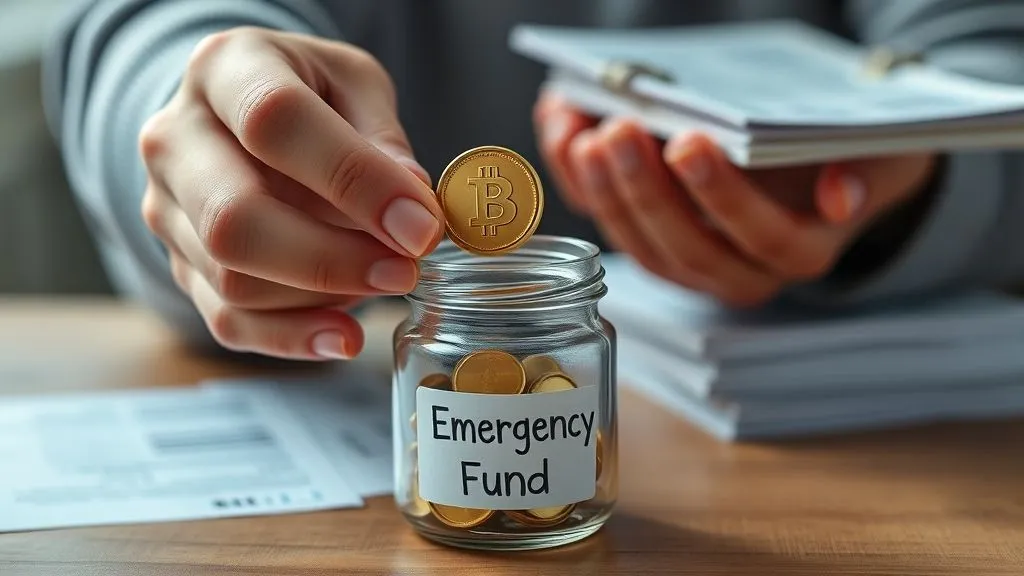
How to build emergency fund with high student loan debt?
For over 15 years in the financial planning and advisory space, I've witnessed firsthand the paralyzing fear that high student loan debt can instill. It's a heavy burden that often overshadows other crucial financial goals, leading many to postpone essential steps like building an emergency fund.
The common dilemma is a vicious cycle: you want to pay down your loans aggressively, but the lack of a financial safety net leaves you vulnerable to life's inevitable curveballs. This constant tension creates a significant barrier to achieving genuine financial peace, leaving individuals feeling trapped between two seemingly opposing priorities.
This article isn't about choosing one over the other; it's about mastering the delicate balance. I'll share a comprehensive, 7-step framework, rich with actionable strategies, expert insights, and real-world analogies, designed to empower you to build a robust emergency fund even while navigating substantial student loan obligations. My goal is to equip you with the tools to secure your financial present and future, fostering a sense of control and confidence.
Understanding the Debt vs. Savings Dilemma
The psychological tug-of-war between paying off debt and building savings is incredibly real, especially when facing a mountain of student loans. Many financial gurus advocate for a laser focus on debt repayment, often suggesting that every spare dollar should go towards high-interest loans. While this advice has merit, it often overlooks the foundational importance of a liquid emergency fund.
In my experience, prioritizing debt repayment to the absolute exclusion of an emergency fund is a dangerous gamble. Life doesn't pause for your debt repayment plan. Unexpected expenses – a car repair, a medical emergency, a job loss – can quickly derail your progress, forcing you into further debt via credit cards or personal loans, effectively undoing all your hard work. This is why understanding how to build emergency fund with high student loan debt is not just a preference, but a necessity.
A well-funded emergency reserve acts as a crucial buffer. It prevents financial shocks from escalating into crises, safeguarding your progress and providing invaluable peace of mind. It allows you to tackle your student loans from a position of strength, knowing you have a safety net to fall back on when the unexpected inevitably occurs.
The 'Why' Behind Your Emergency Fund: More Than Just Money
An emergency fund isn't merely a pile of cash; it's a reservoir of resilience, a testament to your financial discipline, and a direct pathway to genuine financial peace. In the context of high student loan debt, its importance is amplified. It frees you from the constant anxiety of living paycheck to paycheck and the fear of unforeseen expenses.
Consider the emotional toll of knowing that one minor setback could plunge you deeper into debt. That constant stress can impact your productivity, relationships, and overall well-being. Building an emergency fund, even a small starter fund, immediately alleviates some of that pressure.
As I've often told clients, "An emergency fund is your financial seatbelt. You hope you never need it, but you're profoundly grateful it's there when you do." It’s an investment in your mental health as much as your financial stability.
This fund provides options. It grants you the liberty to take a calculated risk, like pursuing a better job opportunity, or simply to weather a storm without resorting to high-interest borrowing. It's the bedrock upon which all other financial goals, including aggressive student loan repayment, can be confidently built. It transforms the question of how to build emergency fund with high student loan debt from a chore into an empowering journey toward true financial freedom.
Step 1: Get Ruthlessly Honest with Your Financial Snapshot
Before you can effectively build an emergency fund, especially with high student loan debt, you must first understand exactly where your money is going. This isn't about judgment; it's about clarity. It's about taking a magnifying glass to your income, expenses, and existing debts to identify opportunities for optimization.
A. Track Every Dollar
For at least one month, meticulously track every single dollar you earn and spend. Use apps, spreadsheets, or even a simple notebook. Categorize your expenses. You'll likely uncover spending habits you weren't aware of. This exercise often reveals significant "money leaks" – small, recurring expenses that add up over time.
B. Calculate Your Net Worth
While potentially daunting with high student loans, calculating your net worth (assets minus liabilities) provides a realistic baseline. This isn't just about the number; it's about understanding your financial position and setting a starting point for improvement. Focus on the progress, not just the initial figure.
C. Create a Realistic Budget
Based on your tracking, develop a budget that reflects your actual income and expenses. I advocate for a zero-based budget, where every dollar has a job. This forces you to be intentional with your money. Allocate funds for essentials, loan payments, and crucially, a dedicated line item for your emergency fund, no matter how small it starts.

Here’s a simplified example of how you might categorize your budget, highlighting areas for potential savings:
| Category | Amount |
|---|---|
| Income (Monthly Net) | $4,000 |
| Student Loan Payments | $800 |
| Rent/Mortgage | $1,200 |
| Utilities | $200 |
| Groceries | $450 |
| Transportation | $150 |
| Discretionary Spending (Dining Out, Entertainment) | $300 |
| Insurance | $100 |
| Emergency Fund Contribution | $100 |
| Miscellaneous/Buffer | $700 |
The "Miscellaneous/Buffer" category is where you'll often find the most flexibility for increasing your emergency fund contributions after essential expenses are covered. This detailed approach is the first critical step in figuring out how to build emergency fund with high student loan debt effectively.
Step 2: Optimize Your Student Loan Strategy (Without Sacrificing Savings)
Many people mistakenly believe that optimizing student loan payments means throwing every spare penny at them. While aggressive repayment is a noble goal, it must be balanced with building an emergency fund. The key is to optimize your loan strategy in a way that frees up cash flow for savings, rather than solely accelerating payoff.
A. Explore Income-Driven Repayment (IDR) Plans
Federal student loans offer various IDR plans (e.g., PAYE, REPAYE, IBR, ICR) that adjust your monthly payment based on your income and family size. For those with high debt-to-income ratios, these plans can significantly lower your minimum monthly payment, freeing up crucial funds to kickstart your emergency fund. While it might extend your repayment period, the immediate cash flow relief is vital for financial stability. You can learn more about these options at StudentAid.gov.
B. Consider Refinancing Private Loans
If you have private student loans, or even federal loans that you're comfortable converting (understanding the loss of federal protections like IDR and forbearance), refinancing could be an option. If you can secure a lower interest rate or a longer repayment term, your monthly payment could decrease. This reduction can then be redirected to your emergency fund. Always weigh the pros and cons carefully before refinancing.
C. The 'Minimum Plus' Approach
Instead of aiming for maximum overpayment immediately, focus on paying the minimum required on your student loans *plus* a consistent, dedicated amount to your emergency fund. Once you've built a foundational emergency fund (e.g., $1,000 to $2,000), you can then re-evaluate and potentially increase your loan payments. This balanced approach is central to how to build emergency fund with high student loan debt responsibly.
Step 3: Master the Art of Aggressive Budgeting and Expense Reduction
Once you have your financial snapshot, the real work of finding extra money begins. This isn't about deprivation, but about intentional spending and identifying areas where you can significantly cut back, even temporarily, to fund your emergency savings. This is often where individuals discover substantial hidden cash flow.
A. Identify "Fat" in Your Budget
Go back to your expense tracking. Are there categories where you're consistently overspending? Dining out, entertainment, subscriptions, impulse purchases? These are often the easiest targets for reduction. Even small cuts, like brewing coffee at home instead of buying it daily, can add up significantly over a month.
B. Implement a "No-Spend Challenge"
Consider a "no-spend challenge" for a week or even a month. This means buying only absolute necessities (groceries, utilities, loan payments) and cutting out all discretionary spending. It's a powerful way to reset your spending habits and rapidly accelerate your emergency fund contributions. The temporary discomfort is a small price for long-term financial security.
C. Negotiate Bills and Shop Around
Many regular expenses are negotiable. Call your internet, cable, and even insurance providers to see if you can get a better rate. Shop around for cheaper car insurance or cell phone plans. These small efforts can collectively free up tens or even hundreds of dollars each month, directly fueling your emergency fund.
Example: The Subscription Audit. Many clients are surprised by the sheer number of subscriptions they pay for but rarely use. From streaming services to forgotten gym memberships, these monthly charges silently erode your savings potential. A thorough audit and cancellation of unnecessary subscriptions can easily free up $50-$100 per month.
Step 4: Boost Your Income: Side Hustles and Salary Negotiations
Sometimes, cutting expenses simply isn't enough, especially when you're grappling with substantial student loan debt. In such cases, the most effective strategy is to increase your income. This doesn't necessarily mean a full career change; it can involve leveraging existing skills or acquiring new ones to create additional revenue streams.
A. Embrace the Gig Economy
The gig economy offers countless opportunities to earn extra cash in your spare time. Consider:
- Freelancing: If you have skills in writing, graphic design, web development, or social media management, platforms like Upwork or Fiverr can connect you with clients.
- Delivery Services: Driving for Uber Eats, DoorDash, or Instacart can provide flexible income.
- Online Tutoring: Share your knowledge in a subject you excel at.
- Pet Sitting/Dog Walking: Turn a love for animals into extra income.
Even an extra $200-$500 a month from a side hustle can make a dramatic difference in how quickly you build your emergency fund.
B. Negotiate Your Salary
If you're employed, don't underestimate the power of salary negotiation. Research industry averages for your role and experience. Prepare a strong case highlighting your achievements and value to the company. A successful negotiation can result in a permanent increase in your take-home pay, a significant portion of which can be allocated directly to your emergency fund.

Case Study: How Sarah Built Her Emergency Fund with a Side Hustle
Sarah, a recent graduate with $60,000 in student loan debt, felt overwhelmed. Her entry-level salary barely covered her expenses and minimum loan payments. After getting honest with her budget, she realized cutting more wasn't feasible. Inspired, she started offering freelance proofreading services online for 10-15 hours a week. Initially, she earned an extra $300 a month, which she immediately directed to her emergency fund. Within six months, she had accumulated her initial $1,500 starter fund. This allowed her to breathe easier and then pivot to using half of her side hustle income for aggressive loan payments, while the other half continued to bolster her savings. Sarah's story is a powerful illustration of how to build emergency fund with high student loan debt by strategically increasing income.
Step 5: Automate Your Savings and Create a 'Debt-Free' Mindset
The human element of budgeting and saving often fails due to inconsistency and willpower. This is why automation is your most powerful ally in building an emergency fund, especially when you're also managing high student loan debt. It removes the decision-making process and ensures consistent progress.
A. Set Up Automatic Transfers
The moment your paycheck hits your account, have a predetermined amount automatically transferred to a separate, dedicated savings account for your emergency fund. Treat this transfer like any other non-negotiable bill. Even if it's just $25 or $50 to start, consistency is key. Out of sight, out of mind, and out of reach for impulse spending.
B. Create a Dedicated Emergency Fund Account
Don't keep your emergency fund in your primary checking account. Open a separate high-yield savings account at a different bank or credit union. This makes it harder to dip into for non-emergencies and allows your money to grow, albeit modestly. The psychological barrier of having to transfer money to your checking account for an unnecessary purchase can be a powerful deterrent.
C. Cultivate a 'Debt-Free' Mindset
This isn't about ignoring your loans, but about shifting your perspective. Visualize the financial peace that comes with having a fully funded emergency fund and eventually, being debt-free. Celebrate small milestones – hitting your first $500, then $1,000. This positive reinforcement fuels motivation and helps you stay on track, making the journey of how to build emergency fund with high student loan debt feel less like a burden and more like an achievement.

Step 6: Leverage Windfalls and Unexpected Income Wisely
Life occasionally throws you a financial bone – a tax refund, a work bonus, an inheritance, or even a generous gift. When these windfalls occur, it's tempting to use them for immediate gratification or to make a huge dent in your student loans. However, strategic allocation of these funds can significantly accelerate your emergency fund growth.
A. The 50/50 Rule (or 100% to Emergency Fund First)
My general advice for windfalls, especially when you're still building your emergency fund, is to allocate at least 50% to your emergency savings and the remaining 50% to high-interest debt (if you have any beyond student loans) or your student loans. However, if your emergency fund is still in its nascent stages (e.g., less than one month's expenses), I strongly recommend dedicating 100% of the windfall to it until you reach a more comfortable buffer. This rapid injection can provide a huge psychological boost and a critical safety net.
B. Avoid Lifestyle Creep
A common pitfall with windfalls is allowing them to fuel lifestyle creep. Instead of saving or paying down debt, people start spending more on non-essentials because they feel richer. Resist this urge. Treat windfalls as opportunities to strengthen your financial foundation, not as an excuse for increased discretionary spending. As Forbes Advisor often highlights, strategic allocation of extra funds is key to financial acceleration.
C. Tax Refunds as a Savings Tool
Many people view tax refunds as a bonus. Instead, adjust your W-4 withholding so that you receive more money in each paycheck throughout the year, rather than a large lump sum at the end. This allows you to consistently contribute to your emergency fund via automation (Step 5), rather than waiting for an annual windfall. If you do receive a refund, it becomes a powerful tool to supercharge your savings.
Step 7: Protect Your Progress: Insurance and Financial Wellness
Building an emergency fund is a proactive step, but maintaining financial peace also requires a defensive strategy. This means adequately protecting yourself against foreseeable risks that could otherwise deplete your hard-earned savings. This is a crucial, often overlooked, aspect of how to build emergency fund with high student loan debt and keep it intact.
A. The Role of Adequate Insurance
Your emergency fund is for *unexpected* emergencies, not for predictable or insurable events. Ensure you have proper insurance coverage:
- Health Insurance: A major medical event without coverage can wipe out years of savings.
- Disability Insurance: If you can't work due to illness or injury, this replaces a portion of your income, preventing you from draining your emergency fund or defaulting on loans.
- Auto Insurance: Adequate coverage protects you from costly accidents.
- Renter's or Homeowner's Insurance: Protects your belongings and provides liability coverage.
Review your policies annually to ensure they meet your current needs. Investopedia provides excellent resources on understanding different types of insurance.
B. Avoid New Debt
While building your emergency fund, make a conscious effort to avoid taking on any new consumer debt, especially high-interest credit card debt. Every new debt payment reduces the amount you can allocate to savings and increases your overall financial burden. If an emergency arises *before* your fund is fully stocked, use your emergency fund first, even if it's small, rather than reaching for a credit card.
C. Regular Financial Reviews
Your financial situation is dynamic. Schedule quarterly or semi-annual financial reviews. Revisit your budget, assess your emergency fund progress, and check your student loan statements. This allows you to adjust your strategy as your income, expenses, or goals change. Consistent monitoring is key to long-term financial health and ensuring your emergency fund continues to grow alongside your debt repayment efforts.

Frequently Asked Questions (FAQ)
How much should I save for an emergency fund if I have high student loan debt? The general rule is 3-6 months of essential living expenses. However, if you have high student loan debt, I recommend starting with a smaller, more achievable goal first, such as $1,000-$2,000. This provides a critical initial buffer. Once that's established, gradually work towards 1-3 months of expenses, and then expand to the full 3-6 months. The priority is to get *something* saved, rather than nothing, due to the perceived impossibility of the larger goal.
Should I pay off student loans or save for an emergency fund first? This is the classic dilemma. My expert recommendation is to build a starter emergency fund (e.g., $1,000-$2,000) *first*. This small fund protects you from immediate financial shocks. Once that's in place, you can then focus more aggressively on student loan repayment, while still consistently contributing a smaller amount to grow your emergency fund. Without that initial buffer, any unexpected expense can throw you back into debt, negating your loan repayment efforts.
Can I use my emergency fund to pay off student loans? An emergency fund is strictly for true emergencies: job loss, medical crisis, unexpected major home or car repair. It is NOT for paying off student loans, even if you're struggling. Using it for anything other than a genuine emergency defeats its purpose and leaves you vulnerable. If you're struggling with loan payments, revisit Step 2 (optimizing loan strategy) before touching your emergency fund.
What if I have variable interest rate student loans, does that change my strategy? Yes, variable interest rates introduce an additional layer of risk. If your rates could spike, it makes building your emergency fund even more critical. A larger emergency fund provides a buffer against potentially higher monthly payments. It also makes refinancing (if suitable) a more attractive option to lock in a stable rate, freeing up cash flow for savings. You might consider prioritizing a slightly larger emergency fund (e.g., 4-6 months) if you have significant variable-rate debt.
How long does it typically take to build an emergency fund with significant debt? There's no single answer, as it depends entirely on your income, expenses, and dedication. However, by aggressively implementing the steps outlined – ruthless budgeting, expense reduction, income boosting, and automation – many of my clients are able to build a $1,000-$2,000 starter fund within 3-6 months. Reaching a 3-month fund might take 1-2 years, and a 6-month fund 2-4 years, but every dollar saved is progress toward financial peace.
Key Takeaways and Final Thoughts
Navigating the complexities of high student loan debt while simultaneously building an emergency fund can feel like an uphill battle, but it is unequivocally achievable. As an experienced industry specialist, I've seen countless individuals transform their financial lives by adopting a disciplined, balanced approach. Remember, true financial peace isn't just about paying off debt; it's about building a robust foundation that protects you from life's inevitable challenges.
- Prioritize a Starter Fund: Begin with a small, achievable emergency fund (e.g., $1,000-$2,000) before aggressively tackling loan principal.
- Know Your Numbers: A detailed budget and understanding of your cash flow are non-negotiable.
- Optimize Loan Payments: Explore IDR plans or refinancing to free up cash for savings.
- Boost Income & Cut Expenses: Look for opportunities to earn more and spend less, directing the surplus to your emergency fund.
- Automate Everything: Make saving a non-negotiable, automatic part of your financial routine.
- Protect Your Progress: Adequate insurance is your frontline defense against emergency fund depletion.
The journey of how to build emergency fund with high student loan debt is a marathon, not a sprint. Celebrate every milestone, stay persistent, and trust the process. You are taking powerful steps toward securing your financial future and achieving the peace of mind you deserve. Start today, even with the smallest contribution, and watch your financial resilience grow.
Recommended Reading
- Budget Travel Insurance: 5 Ways to Protect Your Business Gear Abroad
- 7 Proven Strategies: Quickly Eliminate High-Interest Credit Card Debt for Professionals
- 5 Critical Strategies: Covering FIRE Healthcare Before Medicare
- Decoding Robo-Advisor Taxes: Unlock Smart Investing for Your Future
- Unlock Your Financial Fortress: How to Secure Mobile Banking on Android





Comments
Leave a comment below. Your email will not be published. Required fields marked with *