



How to Build a Student Budget for Professional Exam Fees and Networking?
For over 15 years in student finance and career development, I've witnessed countless bright, ambitious students hit a financial wall when it comes to advancing their professional journeys beyond tuition. They meticulously plan their academic path, but often overlook the crucial, often significant, costs associated with professional exam fees and strategic networking.
This oversight isn't just a minor hiccup; it can be a major roadblock, delaying certifications, limiting valuable connections, and ultimately hindering career launch or progression. Many students feel overwhelmed, unsure how to integrate these vital investments into an already tight budget, leading to missed opportunities and unnecessary stress.
Today, I'm going to share a definitive, actionable framework on how to build a student budget for professional exam fees and networking. This isn't just about cutting costs; it's about smart financial planning, strategic resource allocation, and ensuring you're investing in your future self without compromising your present stability. We'll cover everything from assessing your current financial landscape to leveraging hidden opportunities, all designed to empower you with control over your career destiny.
The Real Cost of Career Advancement: Beyond Tuition
When you think about the cost of education, tuition, books, and living expenses typically come to mind. However, the true investment in your career extends far beyond these traditional categories. Professional exam fees and networking opportunities are often overlooked, yet they are critical components of a successful career launch or pivot.
Understanding Professional Exam Fees
Professional certifications and licenses are increasingly becoming gatekeepers to desirable careers across various industries, from finance and accounting to IT and healthcare. These exams come with a price tag that can range from a few hundred to several thousand dollars, covering application fees, exam registration, and sometimes even re-take fees.
For instance, aspiring Certified Public Accountants (CPAs) face fees for each section of the exam, along with state board application fees. Similarly, IT professionals pursuing certifications like AWS or Cisco, or financial advisors aiming for a Series 7 or CFP designation, will encounter substantial costs. Failing to account for these can lead to unexpected debt or delays in obtaining qualifications that are essential for securing your dream job.

The Value of Strategic Networking
Networking isn't just about collecting business cards; it's about building relationships that can open doors to internships, job opportunities, mentorship, and invaluable industry insights. While some networking can be done virtually and for free, truly impactful connections often require attending conferences, industry events, and workshops.
These events, while crucial for career advancement, often involve registration fees, travel expenses, accommodation, and even the cost of professional attire or a decent meal. Neglecting to budget for these can mean missing out on opportunities to meet key players in your field, gain insights into emerging trends, and secure recommendations that can differentiate you in a competitive job market. As Forbes often highlights, strategic networking is a cornerstone of career success.
Phase 1: Your Financial Reality Check – Assessment & Goal Setting
Before you can build an effective budget, you need a clear picture of where you stand and where you want to go. This initial phase is about honest self-assessment and meticulous research.
Step 1: Audit Your Current Income & Expenses
The first step in any robust financial plan is understanding your current cash flow. I've seen students try to budget without this foundational knowledge, and it's like trying to navigate a maze blindfolded.
- List All Income Sources: Include scholarships, grants, student loans, part-time job wages, parental contributions, and any other regular income. Be precise.
- Track Every Expense: For at least one month, meticulously record every dollar you spend. Categorize them: rent, utilities, groceries, transportation, entertainment, subscriptions, etc. Use an app, a spreadsheet, or even a simple notebook.
- Identify Fixed vs. Variable Costs: Fixed costs (rent, loan payments) are consistent. Variable costs (groceries, entertainment) fluctuate and offer more flexibility for adjustments.
- Calculate Your Net Disposable Income: Subtract your total expenses from your total income. This reveals how much, if anything, you have left over to allocate towards your professional development goals. If it's negative, you know you have some serious adjustments to make.
Step 2: Research & Prioritize Your Professional Goals
Knowing what you want to achieve is critical, but understanding the financial implications of those goals is paramount. Don't just pick an exam; dig into its full cost.
- Identify Target Certifications/Exams: Research the specific certifications relevant to your desired career path. Look beyond the immediate exam fee; consider study materials, prep courses, and potential re-take fees.
- Map Out Key Networking Events: Identify industry conferences, career fairs, and professional association meetings that align with your goals. Research their registration fees, potential travel costs, and any associated expenses.
- Prioritize Based on Impact & Timeline: You might not be able to do everything at once. Which certifications are most critical for your immediate job search? Which networking events offer the highest ROI? Create a phased plan.
Here's a simple template to help you visualize these costs:
| Item | Estimated Cost | Study Materials | Networking Event: Industry Mixer (Local) | Professional Association Membership |
|---|---|---|---|---|
| CPA Exam Section 1 (FAR) | $250 | $500 | $75 | $100 |
| AWS Certified Solutions Architect | $150 | $300 | $800 | $0 (Pro Bono) |
Step 3: Set Realistic Financial Targets
Once you know your current financial situation and the costs of your goals, you can set achievable targets. This isn't about magical thinking; it's about practical planning.
"A goal without a plan is just a wish." – Antoine de Saint-Exupéry. This rings especially true in financial planning. Your targets must be specific, measurable, achievable, relevant, and time-bound (SMART).
Determine how much you need to save each month or week to cover your exam fees and networking expenses by your target dates. Break down large sums into smaller, manageable contributions. For instance, if a certification costs $1,000 and you want to take it in 10 months, you need to save $100 per month.
Phase 2: Crafting Your Dynamic Budget – The Core Strategy
Now that you have your data, it's time to build a flexible, responsive budget. This phase focuses on allocating your resources intentionally.
The Zero-Based Budgeting Approach for Students
I'm a big proponent of zero-based budgeting, especially for students with fluctuating incomes and specific savings goals. The principle is simple: every dollar of income is assigned a job. Your income minus your expenses (including savings goals) should equal zero.
- Allocate Income: After covering fixed expenses, assign specific amounts to your variable expenses and, crucially, to your professional development fund.
- Be Intentional: Instead of just 'having money left over,' consciously decide where every dollar goes. This includes your 'Exam & Networking' fund.
- Review and Adjust: At the end of each month, review your budget. Did you stick to it? Where did you overspend? Where can you reallocate? This iterative process is key to long-term success.
Dedicated Funds: The 'Exam & Network' Envelope System
To make your professional development savings tangible, I recommend a digital (or even physical) 'envelope system.' Create a separate savings account or use a budgeting app that allows you to designate funds for specific purposes.
Label one 'Professional Exam Fund' and another 'Networking & Career Development Fund.' This psychological separation makes it harder to dip into these funds for other expenses and gives you a clear visual of your progress. It's an old-school concept, but incredibly effective for modern student finance.
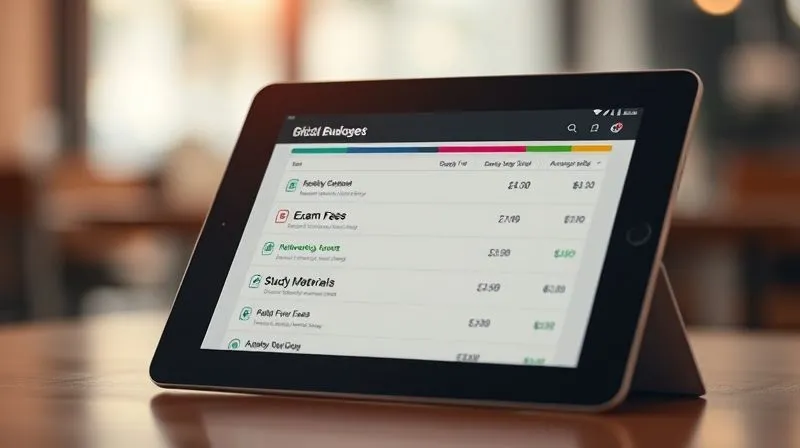
Case Study: Sarah's CPA Journey & Networking Success
Case Study: How Sarah Funded Her CPA Exams and Landed Her Dream Job
Sarah, a driven accounting student, faced the daunting prospect of funding her CPA exams (approx. $1,000 in fees) and attending two critical industry conferences (estimated $700 total, including travel). Her part-time job brought in $1,200/month after taxes, covering her basic living expenses but leaving little extra.
She implemented a zero-based budget, meticulously tracking every dollar. First, she identified $150/month she was spending on non-essential subscriptions and eating out. By cutting these, she immediately freed up funds. Next, she committed to taking on an extra 5 hours of work per week, boosting her income by $100/month. She also applied for a professional scholarship offered by the AICPA & CIMA, which provided a $500 grant towards her exam fees.
Sarah created a dedicated 'CPA & Networking' savings account. With $150 from cuts, $100 from extra work, and the $500 scholarship, she had $750 in her fund within two months. She continued saving $250/month. Within six months, she had enough to cover one exam section and attend a local industry mixer, where she met a recruiter from a top accounting firm. By the time she passed her second exam section, she had enough saved for the national conference, where she reconnected with the recruiter and secured an internship that led to her full-time offer. Her disciplined budgeting and strategic networking paid off immensely, turning potential financial hurdles into stepping stones for her career.
Phase 3: Income Generation & Savings Strategies
Sometimes, cutting expenses isn't enough. You need to actively boost your income or optimize your savings. This phase explores proactive ways to grow your professional development fund.
Exploring Funding Avenues: Scholarships & Grants
Don't overlook the myriad of scholarships and grants specifically designed for students pursuing professional development. These are non-repayable funds that can significantly ease your financial burden.
- Professional Associations: Many industry bodies (e.g., medical associations, engineering societies, IT groups) offer scholarships for students pursuing relevant certifications or attending conferences. Research the associations in your field.
- University Departments: Your academic department or career services office might have specific funds or know of external opportunities.
- Private Organizations & Foundations: Look for foundations that support students in your area of study or demographic. Websites like FinAid.org are excellent starting points for broader searches.
- Employer Sponsorship: If you're currently working, even part-time, ask if your employer offers any tuition reimbursement or professional development sponsorship programs. It never hurts to ask!
Strategic Part-Time Work & Freelancing
If your schedule allows, consider taking on a part-time job or freelance gigs specifically to fund your professional goals. The key here is 'strategic.'
- Skill-Aligned Work: Can you find a job that also builds relevant skills? For an aspiring marketing professional, managing social media for a local business could be ideal.
- Flexible Gigs: Look for jobs with flexible hours that won't interfere with your studies, such as online tutoring, virtual assistant roles, or gig economy work.
- Freelancing Your Expertise: If you have a specific skill (writing, coding, graphic design), offer your services on platforms like Upwork or Fiverr. Even a few hours a week can generate substantial funds for your budget.
Smart Savings: Automate & Optimize
Making savings automatic removes the temptation to spend. Set up recurring transfers from your checking account to your dedicated 'Exam & Networking' savings fund each time you get paid.
Furthermore, ensure your savings are working for you. Look into high-yield savings accounts. While the interest rates might not be astronomical, every little bit helps, especially over time. The goal is to make saving effortless and efficient, so you're not constantly battling your own willpower.
Phase 4: Smart Spending & Cost Reduction for Professional Development
Beyond generating income, there are numerous ways to reduce the costs associated with exams and networking without sacrificing quality or opportunity.
Discount Hunting for Exam Fees & Study Materials
The sticker price isn't always the final price. Be proactive in seeking out savings:
- Student Discounts: Many professional organizations and exam providers offer student-specific discounts. Always ask!
- Early Bird Registration: For conferences and exams, registering early can often save you a significant percentage.
- Bundled Packages: Sometimes, purchasing study materials or exam sections as a bundle can be cheaper than buying them individually.
- Used Materials & Libraries: Check if your university library has study guides or prep books. Look for used textbooks online or from senior students who have already passed.
- Free Online Resources: Leverage free online courses (Coursera, edX), YouTube tutorials, and forums dedicated to your specific exam. These can supplement paid materials effectively.
Maximizing Free & Low-Cost Networking Opportunities
Networking doesn't always require a hefty conference fee. Many valuable connections can be made with minimal or no cost.
- University Career Fairs & Alumni Events: Your university is a goldmine for networking. Attend every career fair, guest lecture, and alumni event. Alumni are often eager to help current students.
- LinkedIn & Online Communities: Engage professionally on LinkedIn. Join industry-specific groups, participate in discussions, and connect with professionals in your field. This is a powerful, free tool for building your network.
- Informational Interviews: Reach out to professionals in your desired field for a brief informational interview. Most are flattered and willing to share insights. This costs nothing but your time and a well-crafted email.
- Volunteering: Volunteer at industry events or for professional organizations. This gives you free access to events and allows you to interact with key players in a more meaningful, less formal setting.

Travel & Accommodation Hacks for Events
For out-of-town events, travel and accommodation can quickly inflate your budget. Smart planning can drastically reduce these costs.
- Group Travel: If friends are attending the same event, carpool and share accommodation costs.
- Budget Accommodation: Look into hostels, Airbnb rooms, or even staying with friends/family if possible, instead of expensive hotels.
- Advance Booking: Book flights and accommodation well in advance to secure better rates.
- Public Transport: Utilize public transportation at your destination to save on taxi or ride-share costs.
- Pack Smart: Avoid baggage fees by packing light and using carry-on luggage.
For more detailed tips on managing student travel, resources like StudentAid.gov often provide general budgeting advice that can be adapted for travel.
Phase 5: Monitoring, Adjusting, and Staying Accountable
A budget isn't a static document; it's a living tool. Continuous monitoring and adjustment are essential for its effectiveness.
Regular Budget Reviews: Your Financial Health Check-up
Set aside time weekly or bi-weekly to review your budget. Compare your actual spending and savings against your planned amounts. This isn't about guilt; it's about learning and adapting.
Identify areas where you're consistently over budget and figure out why. Were your initial estimates unrealistic? Did unexpected expenses arise? Or did you simply lose focus? Adjust your budget for the next period based on these insights. This proactive approach prevents small discrepancies from snowballing into major financial setbacks.
The Power of a Budget Buddy or Mentor
Accountability can be a powerful motivator. Consider finding a 'budget buddy' – a friend or fellow student with similar financial goals – to check in with regularly. Share your progress, challenges, and tips.
Even better, if you have a financial mentor or a career advisor, share your budgeting goals with them. Their insights and encouragement can provide invaluable support and keep you on track. Sometimes, just knowing someone else is aware of your goals is enough to boost your discipline.
Embracing Flexibility: Life Happens
No budget is perfect, and life is full of unexpected twists. A rigid budget that doesn't allow for flexibility is a budget destined to fail. Build in a small 'buffer' or 'miscellaneous' category for those unforeseen expenses.
"The best-laid plans of mice and men often go awry." – Robert Burns. Your budget should be a guide, not a straitjacket. Be prepared to pivot and adjust when circumstances change. The ability to adapt is a strength, not a weakness, in financial planning.
If you have an unexpected expense, don't abandon your budget entirely. Re-evaluate your priorities, make necessary cuts elsewhere, or explore temporary income boosts to get back on track. The goal is resilience, not perfection.
Here's a simplified monthly tracker that highlights key budget elements:
| Category | Planned | Actual | Difference |
|---|---|---|---|
| Income (Net) | $1,500 | $1,450 | -$50 |
| Fixed Expenses (Rent, Bills) | $700 | $700 | $0 |
| Variable Expenses (Groceries, Transport) | $400 | $450 | -$50 |
| Professional Exam Fund | $200 | $150 | -$50 |
| Networking Fund | $100 | $100 | $0 |
| Buffer/Misc. | $100 | $50 | +$50 |
Frequently Asked Questions (FAQ)
Q: What if my income is too low to cover both living expenses and professional development? A: This is a common challenge. First, rigorously audit your expenses to identify any non-essentials. Then, focus heavily on income generation strategies like strategic part-time work, freelancing, and especially applying for scholarships and grants specifically for professional development. Prioritize the most critical exam or networking event first, deferring others if necessary. Remember, even small, consistent contributions add up.
Q: How far in advance should I start budgeting for these costs? A: As soon as you identify your career goals and potential certifications, start planning. Ideally, begin 6-12 months before you anticipate taking an exam or attending a major conference. This gives you ample time to save smaller, more manageable amounts and to apply for funding opportunities that often have early deadlines. Proactive planning significantly reduces stress and the need for high-interest loans.
Q: Is it really worth investing in expensive networking events as a student? A: It depends on the event and your goals. Not all networking events are created equal. Prioritize events that are highly relevant to your specific career path, offer direct access to decision-makers or mentors, and provide clear opportunities for interaction. Sometimes, a smaller, local event with targeted attendees can be more valuable than a large, expensive national conference. Always weigh the potential return on investment (ROI) against the cost.
Q: Can I use student loans to cover professional exam fees and networking? A: While some student loans might technically allow for 'educational expenses' beyond tuition, it's generally not advisable to use high-interest student loans for these purposes if avoidable. Loans should be a last resort. If you must, ensure it's a small, manageable amount, and you have a clear plan for repayment. Explore grants, scholarships, and income generation first to minimize debt.
Q: How do I handle unexpected costs that throw my budget off track? A: This is where flexibility and a buffer fund come in. If an unexpected cost arises, don't panic. First, access your buffer fund if you have one. If not, re-evaluate your variable expenses for the current month – can you temporarily cut back on entertainment or dining out? If the cost is significant, you may need to temporarily adjust your professional development savings target for a month or two, or explore a temporary income boost. The key is to address it proactively and adjust, rather than abandoning your budget.
Key Takeaways and Final Thoughts
Building a robust student budget for professional exam fees and networking is not just a financial exercise; it's a strategic investment in your future. It's about taking proactive control of your career trajectory and ensuring that financial constraints don't derail your ambitions.
- Start with a Solid Foundation: Meticulously audit your current finances and clearly define your professional goals and their associated costs.
- Embrace Intentional Budgeting: Utilize methods like zero-based budgeting and dedicated 'envelope' funds to ensure every dollar serves a purpose, especially for your career development.
- Proactively Seek Funding: Don't rely solely on your current income. Actively pursue scholarships, grants, and strategic part-time work to boost your professional development fund.
- Be a Savvy Spender: Always look for discounts, leverage free and low-cost opportunities, and implement smart travel hacks to minimize expenses without compromising value.
- Monitor and Adapt: Your budget is a living document. Regularly review, adjust, and stay accountable to ensure it remains a powerful tool for your success.
Remember, your professional journey is unique, and so too will be your budget. By applying these expert strategies on how to build a student budget for professional exam fees and networking, you're not just saving money; you're building financial discipline, honing your planning skills, and setting yourself up for a career filled with opportunity and success. Invest in yourself wisely, and watch your future unfold.
Recommended Reading
- Nearing Retirement & Investments Crash? 7 Urgent Steps to Take Now
- How Long Do Derogatory Marks Hurt Credit? The Surprising Truth
- The Ultimate Guide: Safeguarding Your Assets from Nursing Home Costs
- 7 Proven Steps: Fix Negative Cash Flow Despite Positive Revenue
- Safeguarding Your Golden Years: 7 Strategies Against Sequence Risk





Comments
Leave a comment below. Your email will not be published. Required fields marked with *