



How to fix negative cash flow despite positive revenue projections?
For over 15 years immersed in the world of entrepreneurial finance, I've witnessed a paradox that consistently blindsides even the savviest business owners: companies failing not because they lack sales, but because they run out of cash. It's a scenario I've dubbed the 'growth trap' – a business with impressive revenue figures on paper, yet an agonizingly empty bank account.
This isn't just a theoretical dilemma; it's a painful reality for countless startups and growing enterprises. You're hitting your sales targets, your projections look fantastic, and yet, the constant scramble to cover payroll, pay suppliers, or invest in growth feels like an uphill battle. The disconnect between a healthy P&L statement and a struggling balance sheet can be deeply unsettling, leaving you questioning where the money actually went.
But here's the crucial insight: this problem is fixable. In this comprehensive guide, I'm going to pull back the curtain on why this happens and, more importantly, equip you with the actionable frameworks, real-world case studies, and expert insights I've honed over decades. You'll learn not just to identify the leaks in your cash flow, but to systematically plug them, transforming your positive revenue into tangible, sustainable cash in the bank.
The Deceptive Lure of Revenue: Understanding the Cash Flow Gap
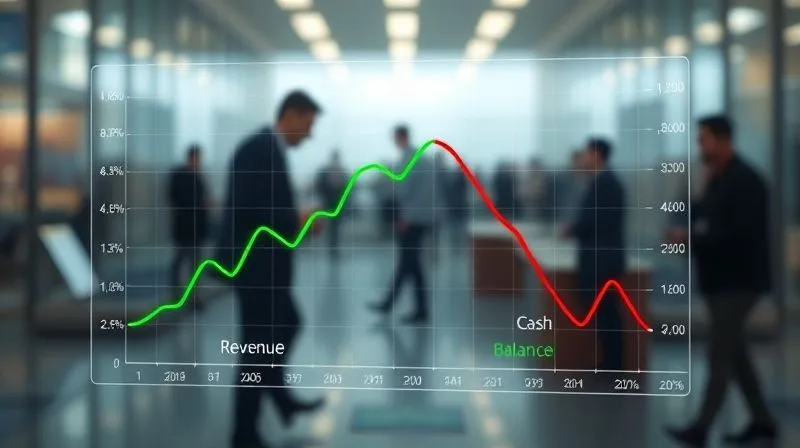
I often tell my mentees that revenue is vanity, profit is sanity, but cash is king. This isn't just a catchy adage; it's the fundamental truth that underpins every successful venture. Many entrepreneurs, understandably, focus intensely on their Profit & Loss (P&L) statement, celebrating rising sales and healthy net income. However, the P&L tells only part of the story – it reflects profitability, not liquidity. A profitable business can still go bankrupt if it cannot meet its short-term obligations.
The core distinction lies in timing. Revenue is recognized when a sale is made, regardless of when the cash is actually received. Expenses are recognized when incurred, not necessarily when they are paid. This accrual accounting method, while excellent for showing financial performance over a period, can mask significant cash flow issues. For instance, if you make a large sale on credit, your revenue goes up immediately, boosting your P&L, but the cash might not hit your bank account for 30, 60, or even 90 days. Meanwhile, your operational expenses – payroll, rent, utilities – demand immediate cash.
This gap between revenue recognition and actual cash receipt, or expense incurrence and cash payment, is where the trouble often begins. It's a common trap, especially for fast-growing businesses that require significant upfront investment in inventory, marketing, or expansion, all while waiting for customer payments to materialize. Understanding this fundamental difference is the first, crucial step in untangling your cash flow paradox.
"Cash flow isn't just another financial metric; it's the lifeblood of your business. Without it, even the most profitable ventures will wither and die. You can’t pay your suppliers or employees with paper profits."
Diagnose Your Leak: Pinpointing the Root Causes of Cash Drain
Before you can fix the problem, you must accurately diagnose it. From my vantage point, the sources of negative cash flow despite healthy revenue often boil down to a few critical areas. It’s like a leaky bucket; you need to find all the holes, not just the biggest one.
Common culprits include extended Accounts Receivable (AR) cycles, excessive inventory, uncontrolled operational expenses (OPEX), and poorly managed debt structures. Let’s break down how to identify and address each of these.
Accounts Receivable: The Silent Killer of Liquidity
Accounts Receivable (AR) represents money owed to your business by customers for goods or services already delivered. While these sales boost your revenue, if the payment terms are too long, or if customers are consistently late, that cash is effectively trapped outside your business. This is arguably one of the most common reasons for the 'growth trap' I mentioned earlier.
To manage your AR effectively and free up this trapped cash, I recommend the following actionable steps:
- Review and Tighten Payment Terms: Assess your current payment terms. Are they unnecessarily generous? Can you reduce net-30 to net-15 for certain clients, or offer incentives for early payment (e.g., a small discount for payment within 10 days)? While some industries dictate standard terms, always look for opportunities to accelerate cash inflow.
- Implement Robust Credit Checks: Before extending credit, especially for large orders, conduct thorough credit checks on new clients. This mitigates the risk of non-payment or significantly delayed payments down the line.
- Automate Invoicing and Follow-ups: Manual invoicing is prone to delays and errors. Use accounting software to automate invoice generation and schedule polite, persistent follow-up reminders. A structured follow-up process, escalating from email reminders to phone calls, is crucial.
- Factor Invoices or Use Invoice Financing: For immediate cash needs, consider invoice factoring (selling your invoices to a third party at a discount for upfront cash) or invoice financing (using invoices as collateral for a loan). While there's a cost, it can be a vital bridge during periods of high growth and tight liquidity.
- Establish Clear Collection Policies: Have a clear, documented policy for overdue accounts. This includes when to send reminders, when to make phone calls, and when to consider professional collection services. Consistency is key.
Inventory Bloat: Cash Trapped on Shelves
For product-based businesses, inventory can be a significant drain on cash flow. Every item sitting in your warehouse represents cash that has been spent on raw materials, production, and storage, but hasn't yet been converted back into revenue. Excessive inventory leads to storage costs, potential obsolescence, and reduced flexibility.
Here’s how to optimize your inventory and unlock that trapped capital:
- Accurate Demand Forecasting: Invest in better sales forecasting tools and processes. Understanding future demand helps you order and produce only what you need, when you need it. Look at historical sales data, market trends, and upcoming promotions.
- Implement Just-In-Time (JIT) Principles: Where feasible, adopt JIT inventory management. This minimizes inventory holdings by receiving goods only as they are needed for production or sale. It requires strong supplier relationships and efficient logistics.
- Optimize Reorder Points and Quantities: Regularly review your reorder points and economic order quantities (EOQ). These calculations help determine the ideal time to reorder and the optimal quantity to minimize carrying costs and stockouts.
- Supplier Relationship Management: Negotiate favorable payment terms with your suppliers. Can you extend payment terms without incurring penalties? Building strong relationships can also lead to more flexible delivery schedules.
- Regular Inventory Audits and Clearance: Periodically audit your inventory for slow-moving or obsolete items. Be prepared to liquidate these items, even at a discount, to convert them back into cash rather than letting them continue to incur carrying costs.
Strategic Financial Forecasting: Beyond Simple Projections
Many entrepreneurs create revenue projections, but few build truly comprehensive cash flow forecasts. This is a critical oversight. A simple revenue projection might tell you you'll sell $1 million next quarter, but a detailed cash flow forecast will tell you when that $1 million will actually hit your bank account, and crucially, when you'll need to pay out expenses related to achieving that revenue.
A robust cash flow forecast is a living document, typically projected 12-18 months out, updated regularly, and broken down by week or month. It considers all cash inflows (customer payments, loan disbursements, equity injections) and all cash outflows (payroll, rent, supplier payments, debt service, capital expenditures). This level of detail allows you to anticipate potential shortfalls well in advance, giving you time to react strategically.
In my experience, entrepreneurs who proactively manage their cash flow using detailed forecasts are far less likely to be caught off guard by liquidity crises, even when experiencing rapid growth. It’s your early warning system, allowing you to secure funding, adjust spending, or accelerate collections before a problem becomes a crisis.
Case Study: The "Growth Trap" at InnovateTech
InnovateTech, a rapidly growing SaaS startup, secured a large contract with a major enterprise client, boosting their annual recurring revenue (ARR) by 40%. Their P&L looked fantastic, showing strong profitability. However, the contract required significant upfront investment in server infrastructure and hiring additional engineers, with payment terms of net-60 after project milestones were met. InnovateTech had been operating on net-30 terms for smaller clients.
Despite the huge revenue win, InnovateTech found itself in a severe cash crunch. Payroll became a challenge, and they almost missed a critical server payment. Their existing cash flow projections were too simplistic, failing to account for the extended payment terms of the new client and the immediate, substantial capital expenditures required. They were revenue-rich but cash-poor.
By implementing a more granular, weekly cash flow forecast, InnovateTech identified the exact weeks they would face shortfalls. They proactively negotiated a short-term line of credit with their bank and, crucially, began offering a 2% discount for early payment (net-15) to their smaller, more flexible clients. This two-pronged approach allowed them to bridge the gap, pay their immediate obligations, and ultimately capitalize on their significant growth without succumbing to the 'growth trap'. This resulted in a stabilized cash position within three months, allowing them to fund their expansion organically.
| Month | Projected Inflows | Projected Outflows | Net Cash Flow |
|---|---|---|---|
| January | $150,000 | $130,000 | $20,000 |
| February | $160,000 | $180,000 | ($20,000) |
| March | $200,000 | $170,000 | $30,000 |
| April | $180,000 | $195,000 | ($15,000) |
Example: A simplified monthly cash flow forecast highlighting potential future shortfalls.
Mastering Operational Efficiency: Turning Costs into Cash
Another significant lever you have to fix negative cash flow despite positive revenue is your operational efficiency. It's not just about cutting costs indiscriminately; it's about optimizing how you spend every dollar to maximize its return and ensure it doesn't leak out unnecessarily. I've often seen businesses overlook this area, focusing solely on increasing sales, when significant cash improvements can be made from within.
Think of your business operations as a finely tuned machine. Any friction, waste, or unnecessary steps can translate directly into cash drain. This involves a deep dive into both your variable and fixed costs. Variable costs, like raw materials or sales commissions, fluctuate with your sales volume. Fixed costs, such as rent or salaries, remain relatively constant regardless of sales.
- Deep Dive into Expense Categories: Conduct a granular review of every expense line item on your P&L. Ask critical questions: Is this expense truly necessary? Can we get a better deal? Is there a more efficient way to achieve the same outcome? Small, recurring expenses can add up to significant cash outflows over time.
- Vendor Negotiation and Consolidation: Don't be afraid to negotiate with your suppliers. Seek competitive bids, explore bulk discounts, or even consolidate vendors to gain more leverage. Even a 5-10% reduction in supplier costs can free up substantial cash.
- Optimize Staffing and Productivity: While layoffs are a last resort, optimizing staffing levels and enhancing employee productivity can significantly impact cash flow. Are your teams operating at peak efficiency? Can you cross-train employees to reduce reliance on external contractors?
- Leverage Technology for Automation: Invest in technology that automates repetitive tasks. This can reduce labor costs, minimize errors, and improve overall efficiency across various departments, from accounting to customer service.
- Review Subscription Services: Many businesses accumulate unused or underutilized software subscriptions. Conduct a regular audit of all recurring subscriptions and cancel those that aren't providing clear value.

Optimizing Your Working Capital Cycle
Working capital is the difference between your current assets (cash, accounts receivable, inventory) and current liabilities (accounts payable, short-term debt). It's the capital you need to run your day-to-day operations. A negative cash flow despite positive revenue often points to inefficiencies in your working capital cycle – how quickly you convert your investments in inventory and accounts receivable into cash.
Optimizing this cycle means shortening the time it takes to collect cash from sales and, conversely, extending the time it takes to pay your suppliers, without damaging relationships. This delicate balance is crucial for maintaining healthy liquidity.
Key metrics to focus on are:
- Days Sales Outstanding (DSO): The average number of days it takes for your company to collect payment after a sale. Lower DSO means faster cash collection.
- Days Inventory Outstanding (DIO): The average number of days your inventory sits in storage before being sold. Lower DIO means faster inventory turnover and less cash tied up.
- Days Payable Outstanding (DPO): The average number of days it takes for your company to pay its invoices from suppliers. A higher DPO, within ethical and relationship-preserving limits, means you hold onto your cash longer.
The goal is to minimize DSO and DIO while strategically maximizing DPO. This creates a positive cash conversion cycle, where you collect cash from customers before you have to pay your suppliers.
| Metric | Current Value | Target Value | Impact on Cash |
|---|---|---|---|
| Days Sales Outstanding (DSO) | 45 days | 30 days | Faster cash collection |
| Days Inventory Outstanding (DIO) | 60 days | 40 days | Less cash tied in inventory |
| Days Payable Outstanding (DPO) | 30 days | 45 days | Hold onto cash longer |
Example: Working Capital Metric Optimization Targets.
The Power of Proactive Funding and Strategic Debt Management
Even with the most rigorous cash flow management, there will be times, especially during rapid growth or seasonal fluctuations, when external funding becomes a strategic necessity. The key here is 'proactive.' Waiting until you're in a cash crisis drastically limits your options and negotiating power. I always advise entrepreneurs to establish relationships with lenders and explore funding options before they desperately need the cash.
Consider these avenues:
- Lines of Credit: A revolving line of credit can provide flexible access to capital, allowing you to draw funds as needed and repay them when cash flows improve. It's an excellent buffer for short-term liquidity needs.
- Invoice Factoring or Financing: As mentioned earlier, if AR is a significant issue, these options can provide immediate cash by leveraging your outstanding invoices.
- Short-Term Loans: For specific, predictable cash flow gaps, a short-term business loan can provide the necessary capital. Ensure the repayment terms align with your expected cash inflows.
- Strategic Debt Restructuring: If existing debt obligations are straining your cash flow, explore options to refinance or restructure your debt. This could involve extending repayment periods, negotiating lower interest rates, or consolidating multiple loans into one.
- Equity Investment: While it dilutes ownership, bringing in strategic equity investors can provide a significant cash injection without the burden of debt repayment, especially for high-growth ventures.
Understanding your funding options and having a clear strategy for when and how to access them is a hallmark of a financially astute entrepreneur. Don't let pride or fear prevent you from securing the capital your business needs to thrive, especially when your revenue trajectory is strong. According to a Harvard Business Review article on the cost of capital, understanding your financing options is paramount for sustainable growth.
Cultivating a Cash-Conscious Culture
Financial management isn't solely the CEO's or CFO's responsibility. To truly fix negative cash flow despite positive revenue, you need to embed a cash-conscious culture throughout your entire organization. Every employee, from sales to operations, plays a role in how cash flows in and out of the business. I've found that when teams understand the 'why' behind financial decisions, they become powerful allies in cash flow optimization.
Here's how to foster such a culture:
- Educate Your Team: Provide basic financial literacy training. Explain the difference between revenue, profit, and cash. Help them understand how their actions (e.g., prompt invoicing, careful spending, efficient project completion) directly impact the company's cash position.
- Set Clear Goals and Incentives: Link team or individual performance metrics to cash flow objectives. For example, incentivize faster AR collection or efficient inventory management.
- Regular Communication: Share key cash flow metrics with your team regularly (appropriately, of course). Transparency builds trust and encourages collective responsibility. Discuss challenges and celebrate improvements.
- Empower Smart Spending: Give employees guidelines and a framework for making spending decisions. Encourage them to think like owners, asking if an expense is truly necessary and if there's a more cost-effective alternative.
- Lead by Example: As the entrepreneur, your financial discipline and focus on cash flow will set the tone for the entire organization. If you prioritize cash, your team will follow suit.

Advanced Strategies for Sustainable Cash Flow
Once you've addressed the immediate leaks and established a strong foundation, it's time to consider more advanced, strategic approaches to ensure your cash flow remains robust and sustainable. These strategies often involve rethinking your business model or how you generate revenue.
- Optimize Your Pricing Strategy: Review your pricing. Are you leaving money on the table? Can you implement tiered pricing, value-based pricing, or introduce premium options? Even small price adjustments can have a significant impact on your gross margins and, consequently, your cash flow. As renowned marketing expert Seth Godin often emphasizes, "Price is a signal, not just a number."
- Explore Subscription or Recurring Revenue Models: If your business allows, transitioning to a subscription or recurring revenue model can dramatically stabilize and improve cash flow predictability. Instead of one-off large payments, you receive consistent smaller payments, making forecasting easier and reducing reliance on large, infrequent invoices.
- Diversify Revenue Streams: Relying on a single product or client can be risky. Explore complementary products, services, or new market segments. Diversification can smooth out seasonal fluctuations and reduce the impact of losing a major client, thus protecting your cash flow.
- Strategic Use of Deposits and Upfront Payments: Where appropriate and common in your industry, negotiate for deposits or partial upfront payments. This immediately injects cash into your business at the start of a project, reducing your working capital burden.
- Asset Utilization and Monetization: Look at underutilized assets within your business. Can you lease out excess office space, sell off old equipment, or even license intellectual property? Converting non-performing assets into cash is a smart move.

Frequently Asked Questions (FAQ)
Question: Can I fix negative cash flow without increasing sales? Absolutely. While increasing sales often helps, many of the strategies discussed – such as optimizing accounts receivable, managing inventory, controlling operational expenses, and improving working capital – are entirely focused on improving cash flow from your existing revenue. In fact, sometimes rapid, unmanaged sales growth can exacerbate negative cash flow if not properly managed.
Question: How often should I review my cash flow statement? For most growing businesses, I recommend reviewing your detailed cash flow statement and forecast at least weekly, if not daily, for critical periods. This allows for immediate identification of discrepancies and proactive adjustments. Monthly is the absolute minimum, but by then, you might have missed crucial opportunities to intervene.
Question: What's the biggest mistake entrepreneurs make with cash flow? In my experience, the single biggest mistake is confusing profit with cash. They see a healthy profit on their P&L and assume their bank account should reflect that. This leads to complacency and a lack of focus on the actual movement of money, ultimately leading to the 'growth trap' where a profitable business runs out of cash.
Question: When should I consider external financing for cash flow issues? You should consider external financing proactively, not reactively. If your detailed cash flow forecast shows a projected shortfall, even if temporary, it's time to explore options like a line of credit or short-term loan. Waiting until you're already missing payments will put you in a desperate negotiating position, leading to higher costs and less favorable terms. Think of it as a strategic tool for growth, not just a bailout.
Question: Is positive cash flow always a sign of a healthy business? Not always. While positive cash flow is generally good, it's important to look at the source. For example, a business could have positive cash flow from selling off significant assets, taking on a large amount of debt, or from equity investment, which doesn't necessarily reflect strong operational health. Always analyze your cash flow from operations, investing, and financing activities separately to get a complete picture. A consistently positive cash flow from operations is a strong indicator of health.
Key Takeaways and Final Thoughts
Navigating the complexities of entrepreneurial finance, especially when facing the paradox of negative cash flow despite positive revenue, can feel daunting. However, armed with the right knowledge and a disciplined approach, this challenge becomes an opportunity to build a more resilient and financially robust business.
Here are the critical takeaways to remember:
- Cash is King, Not Just Revenue: Understand the fundamental difference between profit and cash. Your P&L shows performance; your cash flow statement shows survival.
- Diagnose Systematically: Pinpoint specific leaks like slow AR, bloated inventory, or uncontrolled expenses before attempting to fix them.
- Forecast with Precision: Develop detailed, dynamic cash flow forecasts that anticipate future shortfalls and allow for proactive intervention.
- Optimize Operations: Continuously seek efficiencies in every aspect of your business to convert costs into cash.
- Leverage Working Capital: Actively manage your DSO, DIO, and DPO to shorten your cash conversion cycle.
- Be Proactive with Funding: Establish relationships and explore financing options before a crisis hits.
- Build a Cash-Conscious Culture: Empower your entire team to be stewards of the company's cash.
- Innovate for Sustainability: Explore advanced strategies like pricing optimization and recurring revenue models for long-term cash flow health.
The journey of entrepreneurship is filled with challenges, but few are as critical as mastering your cash flow. By diligently applying these strategies, you won't just survive; you'll build a business that is not only profitable but genuinely liquid and capable of sustaining its growth. Your future success hinges on your ability to make cash flow your unwavering priority. For further in-depth financial planning resources, consider exploring guides from reputable institutions like Investopedia's financial planning basics.
Recommended Reading
- Unlock Sustainable Investing: How to Evaluate Companies Based on ESG Criteria?
- Unlock Your Financial Freedom: Overcoming Common Obstacles to Financial Control
- Unlock Secret Deals: Find Cheap Flights with These Top Websites
- 7 Checks: How to Verify Ethical Fund Claims & Avoid Greenwashing Risk
- 5 Proven Strategies: Bridge Your Early Retirement Income Gap From Corporate





Comments
Leave a comment below. Your email will not be published. Required fields marked with *