



How to Adjust Fixed Income Strategy for Global Rate Hikes?
For over two decades in the global financial markets, I've observed countless cycles of economic expansion and contraction, but few present a challenge quite like the current synchronized global rate hike phenomenon. I've seen investors, both institutional and retail, caught off guard, watching their 'safe' fixed income portfolios erode in value simply because they failed to adapt to the shifting monetary landscape.
Today, we're facing a confluence of persistent inflation, aggressive central bank tightening, and geopolitical uncertainties that collectively create a uniquely hostile environment for traditional fixed income assets. The conventional wisdom for bond investing is being rewritten, and the passive 'buy and hold' approach for long-duration bonds can be a recipe for significant capital loss. Many are feeling the pinch, wondering how to protect their principal while still generating income.
This article isn't just about understanding the problem; it's about equipping you with actionable, expert-level strategies to not only mitigate risks but also uncover opportunities within this volatile landscape. We'll dive deep into practical frameworks, explore real-world scenarios, and provide insights that I've honed over years of navigating complex market conditions, ensuring your fixed income strategy is robust and resilient.
Understanding the Global Rate Hike Phenomenon
The current wave of global rate hikes isn't a localized event; it's a coordinated response to inflationary pressures that have proven more persistent than initially anticipated. Central banks, from the Federal Reserve to the European Central Bank and beyond, are aggressively raising benchmark rates to cool overheated economies and bring inflation back to target levels. This synchronization amplifies the impact across all asset classes, especially fixed income.
In my experience, understanding the 'why' behind these moves is crucial. It's often a battle between economic growth and price stability. When inflation runs hot, central banks prioritize stability, even if it means slowing growth. This shift fundamentally alters the risk-reward calculus for bonds, as new issues offer higher yields, making older, lower-yielding bonds less attractive and driving down their prices.
As the Bank for International Settlements (BIS) noted in a recent report, the cumulative effect of these synchronized hikes creates significant headwinds for global financial stability, particularly impacting sovereign and corporate debt markets. Understanding this macro backdrop is the first step towards a resilient fixed income strategy.
The interconnectedness of global markets means that a hike in one major economy can trigger ripple effects elsewhere, influencing capital flows, currency valuations, and, critically, bond yields worldwide. Ignoring these global dynamics is akin to sailing without a compass in a storm.

Re-evaluating Duration Risk: Your First Line of Defense
When interest rates rise, the value of existing bonds falls. The extent of this fall is largely determined by a bond's duration. Simply put, duration measures a bond's price sensitivity to changes in interest rates. The longer the duration, the more sensitive the bond is to rate movements, and thus, the greater the potential for capital loss in a rising rate environment.
For years, investors chased yield by extending duration, often without fully appreciating the inherent risks. In today's market, this approach can be detrimental. Shortening your portfolio's duration is perhaps the most immediate and impactful adjustment you can make to mitigate interest rate risk.
Actionable Steps to Manage Duration Risk:
- Calculate Your Portfolio's Effective Duration: Don't just look at individual bond maturities. Understand the weighted average duration of your entire fixed income allocation. Tools are available online, or your financial advisor can assist.
- Identify and Reduce Exposure to High-Duration Assets: If you hold long-term government bonds or corporate bonds with maturities of 10 years or more, consider gradually reducing their allocation. This doesn't mean a fire sale, but a strategic rebalancing.
- Shift Towards Shorter-Duration Bonds: Reallocate capital to bonds with maturities of 1-5 years. While these may offer lower yields, their price stability in a rising rate environment often outweighs the yield differential.
- Consider Short-Duration Bond Funds or ETFs: These offer diversified exposure to short-term bonds and can be a convenient way to manage duration without individual bond selection.
- Implement a Bond Laddering Strategy: Invest in bonds with staggered maturities (e.g., 1-year, 2-year, 3-year bonds). As shorter-term bonds mature, you can reinvest the principal at potentially higher prevailing interest rates, dynamically adjusting your portfolio's duration.
By proactively managing duration, you're not just reacting to market movements; you're positioning your portfolio to be more resilient and agile. This strategic shift is fundamental in protecting your capital.
| Bond Type | Approximate Duration | Interest Rate Sensitivity |
|---|---|---|
| U.S. Treasury Bond (10-Year) | 8-9 years | High |
| U.S. Treasury Bond (2-Year) | 1.9-2 years | Low-Medium |
| Investment Grade Corporate Bond (5-Year) | 4-5 years | Medium |
| High-Yield Corporate Bond (5-Year) | 3-4 years | Medium-Low (Credit risk often dominates) |
| Floating-Rate Note | <1 year | Very Low |
Embracing Floating-Rate and Inflation-Protected Securities
In a rising rate environment, not all fixed income assets suffer equally. Some are specifically designed to perform well, or at least mitigate losses, during such periods. Two prime examples are floating-rate notes (FRNs) and Treasury Inflation-Protected Securities (TIPS).
Floating-rate notes are bonds with variable interest payments. Unlike traditional fixed-rate bonds, their coupon payments adjust periodically (e.g., quarterly or semi-annually) based on a benchmark interest rate, such as LIBOR or SOFR, plus a fixed spread. This means that as benchmark rates rise, so do the coupon payments you receive, effectively protecting your income stream and minimizing price depreciation.
TIPS, on the other hand, are designed to protect investors from inflation. Their principal value adjusts with the Consumer Price Index (CPI), and the coupon rate is applied to this inflation-adjusted principal. So, when inflation rises, both your principal and your interest payments increase, providing a robust hedge against purchasing power erosion.
Benefits of FRNs and TIPS in a Rising Rate Environment:
- Floating-Rate Notes:
- Coupon payments increase with rising interest rates.
- Lower interest rate sensitivity (very short effective duration).
- Often issued by corporations or financial institutions, offering diversification from government debt.
- Treasury Inflation-Protected Securities (TIPS):
- Principal value adjusts for inflation, protecting purchasing power.
- Interest payments also increase with inflation-adjusted principal.
- Backed by the U.S. Treasury, offering high credit quality.
Incorporating these instruments into your fixed income allocation can provide a crucial layer of protection, allowing your portfolio to better weather the twin storms of rising rates and persistent inflation. It's a pragmatic approach to maintaining real returns.
The Role of Credit Quality and Spreads in Volatile Markets
Beyond interest rate risk, fixed income investors must also consider credit risk – the risk that a bond issuer will default on its payments. In times of economic uncertainty and rising rates, credit quality becomes even more paramount. As borrowing costs increase for companies, their ability to service debt can come under pressure, especially for those with weaker balance sheets.
Credit spreads – the difference in yield between a corporate bond and a comparable government bond – are a key indicator of perceived credit risk. When spreads widen, it suggests that investors are demanding higher compensation for taking on corporate credit risk, often signaling economic concerns or increasing default probabilities.
Case Study: Navigating Credit Spreads in the 2008 Financial Crisis
Consider 'Global Holdings Corp.', a fictional diversified conglomerate that had a significant portion of its fixed income portfolio allocated to high-yield corporate bonds in late 2007. As the global financial crisis unfolded in 2008, credit spreads on these bonds widened dramatically, reflecting heightened default fears. While interest rates were actually falling during this 'flight to quality' period for safe government bonds, Global Holdings' high-yield bonds saw severe price depreciation due to escalating credit risk.
Their mistake was an overconcentration in lower-credit-quality assets without adequate diversification or hedging. By contrast, 'Prudent Investments LLC', which had diversified into higher-rated corporate bonds and even some emerging market sovereign debt with solid fundamentals, experienced less severe drawdowns. Their strategy focused on rigorous credit analysis and maintaining a prudent balance between yield and risk.
This illustrates the importance of meticulous credit analysis. In the current environment, I advise a tilt towards higher-quality investment-grade corporate bonds and sovereign debt from stable economies. While they might offer lower yields than their riskier counterparts, their resilience during downturns provides critical capital preservation.
Keep a close eye on economic indicators and company-specific news. Diversify across different sectors and geographies to avoid overexposure to any single issuer or industry. A bond's credit rating is a good starting point, but always supplement it with your own fundamental analysis or that of a trusted expert.
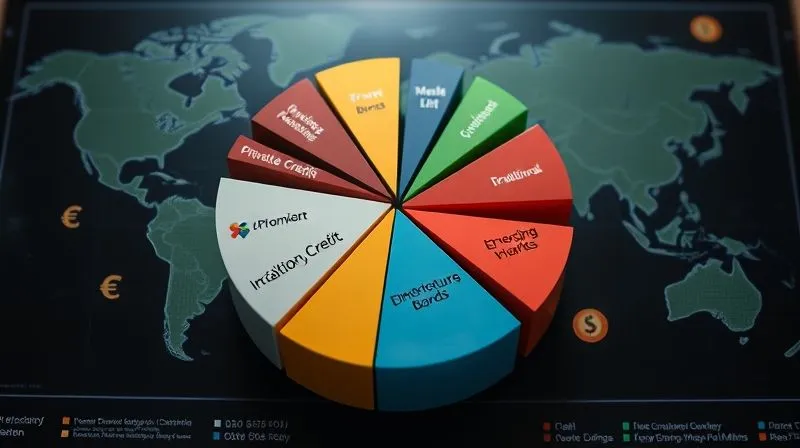
Exploring Alternative Fixed Income and Diversification Beyond Traditional Bonds
The traditional 60/40 portfolio (60% stocks, 40% bonds) faces significant headwinds when both equities and bonds decline, as can happen in inflationary, rising-rate environments. This necessitates looking beyond conventional government and corporate bonds to truly diversify your fixed income exposure and seek uncorrelated returns.
Alternative fixed income encompasses a broad range of assets that don't fit the mold of standard publicly traded bonds. These can include:
- Private Credit: Direct loans to companies, often illiquid but can offer higher yields and floating-rate structures. This requires due diligence and access, typically through specialized funds.
- Structured Products: Complex instruments like collateralized loan obligations (CLOs) which pool loans and tranche them by risk. These require expert understanding due to their complexity.
- Real Estate Debt: Mortgages, construction loans, or mezzanine financing for real estate projects. Can offer attractive yields and some inflation protection through underlying real assets.
- Infrastructure Debt: Loans or bonds financing infrastructure projects (e.g., roads, utilities). Often long-term, stable cash flows.
Beyond these, consider geographic diversification. While global rates are rising, the pace and trajectory vary. Emerging market (EM) debt, for instance, can offer higher yields, but comes with increased currency, political, and credit risks. However, some EM economies may be ahead in their hiking cycles or have stronger fiscal positions. As Ray Dalio, founder of Bridgewater Associates, often emphasizes, proper diversification across uncorrelated assets and geographies is paramount for portfolio resilience.
The key here is thoughtful allocation. These alternatives are not a panacea and often come with higher liquidity risk or complexity. They are best utilized as a complementary component within a well-diversified portfolio, chosen after careful consideration of your risk tolerance and investment horizon.
Dynamic Portfolio Rebalancing and Active Management
In a rapidly changing interest rate environment, a 'set it and forget it' approach to fixed income is an invitation to underperformance. Instead, I advocate for dynamic portfolio rebalancing and, where appropriate, a more active management style. This means continuously monitoring market conditions, economic data, and central bank communications, and being prepared to adjust your holdings accordingly.
Active management in fixed income involves making tactical decisions about duration, credit quality, sector allocation, and geographic exposure. It's about seeking opportunities and mitigating risks as they emerge, rather than passively accepting market returns. While it requires more effort and expertise, the potential to outperform passive benchmarks in volatile markets is significant.
Actionable Steps for Dynamic Rebalancing:
- Establish Rebalancing Triggers: Don't rebalance purely on a calendar schedule. Set thresholds (e.g., if duration deviates by X%, or if a specific yield curve inversion occurs) that prompt a review and potential adjustment.
- Monitor Key Economic Indicators: Keep an eye on inflation reports, employment data, GDP growth, and central bank policy statements. These provide critical clues about the future direction of interest rates.
- Review Yield Curve Dynamics: Pay attention to the shape of the yield curve. A flattening or inverted curve can signal economic slowdowns or recessionary pressures, impacting different bond maturities disproportionately.
- Consider Tactical Shifts: If you anticipate further rate hikes, you might tactically reduce duration even further. Conversely, if you foresee a pause or reversal in hikes, you might gradually extend duration to capture higher long-term yields.
This isn't about market timing, which is notoriously difficult. It's about being strategically responsive. As investors, we must be adaptable. The financial world is not static, and our portfolios shouldn't be either. The goal is to maintain an optimal risk-adjusted return profile by proactively adjusting to prevailing conditions.
Hedge Strategies and Risk Management Tools
For sophisticated investors and institutions, advanced hedging strategies can offer precise ways to manage interest rate risk. These tools, while complex, can be invaluable in protecting large portfolios from adverse rate movements. They include:
- Interest Rate Swaps: An agreement between two parties to exchange future interest payments. For example, swapping fixed-rate payments for floating-rate payments can hedge against rising rates.
- Bond Futures and Options: Derivatives that allow investors to bet on the future direction of bond prices or interest rates. These can be used to short long-term bonds, effectively reducing portfolio duration.
- Interest Rate Caps and Floors: Agreements that set upper (cap) or lower (floor) limits on interest rates, providing protection against extreme movements.
For most individual investors, these direct hedging instruments are often too complex, illiquid, or costly. However, the underlying principles of risk management are still highly relevant. A simpler, yet effective, risk management tool is cash allocation. Holding a portion of your portfolio in cash or very short-term instruments provides liquidity and optionality.
In a rising rate environment, cash becomes a more attractive asset. It offers capital preservation and, as rates climb, begins to yield a meaningful return. More importantly, it provides dry powder to seize opportunities when market dislocations occur or when attractive higher-yielding bonds become available. It's a foundational element of prudent portfolio management, offering both defense and offense.
The Psychological Aspect: Avoiding Panic and Sticking to Your Plan
Finally, I must emphasize the human element in investing. Market volatility, especially when it impacts assets traditionally considered 'safe,' can be deeply unsettling. The temptation to panic, make impulsive decisions, or abandon a well-thought-out strategy is immense. I've witnessed countless investors make costly mistakes by letting their emotions dictate their actions.
Remember that fixed income is often a component of a broader, long-term financial plan. While adjustments are necessary, a complete overhaul driven by fear is rarely productive. Stick to your investment policy statement, which should outline your risk tolerance, financial goals, and asset allocation strategy.
As investing legend Benjamin Graham wisely stated, 'The investor's chief problem – and even his worst enemy – is likely to be himself.' Discipline and a long-term perspective are your most valuable assets in volatile markets.
Regularly review your strategy, but do so with a clear head, based on data and expert analysis, not on daily market noise or sensational headlines. Understand that short-term market fluctuations are normal. Your goal is to build a resilient portfolio that can weather various economic cycles, not to perfectly time every market turn. Maintaining a disciplined approach is the bedrock of successful long-term investing.
Frequently Asked Questions (FAQ)
How do global rate hikes differ from domestic hikes in their impact on fixed income? Global rate hikes, especially when synchronized across major economies, create a more pervasive and amplified impact. Domestic hikes primarily affect local bond markets and currency, but global hikes can trigger capital flight, currency depreciation, and broader repricing of risk across multiple countries simultaneously, making it harder to find safe havens and increasing systemic risk. This requires a more globally diversified and adaptable strategy.
Should I sell all my long-duration bonds now? Not necessarily. A wholesale liquidation might crystallize losses, and market timing is notoriously difficult. Instead, I recommend a strategic and gradual reduction in duration. This could involve rebalancing as bonds mature, or slowly shifting allocations towards shorter-duration or floating-rate instruments. Your decision should align with your overall financial plan, risk tolerance, and investment horizon.
Are emerging market bonds a good idea with global rate hikes? Emerging market (EM) bonds can offer attractive yields but come with higher risks, including currency fluctuations, political instability, and credit risk. While some EM central banks may have already completed their hiking cycles, a strong dollar (often driven by Fed hikes) can make dollar-denominated EM debt more expensive to service. A highly selective approach, focusing on countries with strong fundamentals, manageable debt levels, and favorable economic outlooks, is crucial. Diversification within EM debt is also key.
What's the role of cash in a rising rate environment? Cash becomes a more valuable asset in a rising rate environment. It offers capital preservation, and as rates increase, it generates higher yields in money market accounts or short-term T-bills. More importantly, it provides liquidity to take advantage of market opportunities when bond prices drop or when new, higher-yielding bonds become available. It's a strategic allocation, not just a passive holding.
How often should I review my fixed income strategy? I recommend reviewing your fixed income strategy at least quarterly, and certainly whenever there are significant shifts in economic data, central bank policy, or your personal financial situation. Major market events or changes in inflation outlook should also trigger an immediate review. This proactive approach ensures your strategy remains aligned with the prevailing market environment and your long-term goals.
Key Takeaways and Final Thoughts
Navigating a global interest rate hiking cycle in fixed income markets demands a blend of informed strategy, proactive management, and disciplined execution. It's a challenging period, but one that also presents opportunities for those willing to adapt. Here are the critical takeaways:
- Reduce Duration: This is your primary defense against rising rates. Shift towards shorter-term bonds or funds.
- Embrace Floating-Rate and Inflation-Protected Securities: FRNs and TIPS are designed to perform better in these environments, protecting income and principal from inflation.
- Prioritize Credit Quality: In uncertain times, a flight to quality is common. Focus on investment-grade issuers to mitigate default risk.
- Diversify Beyond Traditional Bonds: Explore private credit, real estate debt, or carefully selected emerging market debt to broaden your fixed income universe.
- Actively Rebalance: Monitor economic indicators and central bank actions, and be prepared to make tactical adjustments to your portfolio.
- Maintain Discipline: Avoid emotional decisions. Stick to your long-term plan and use market volatility as a chance to re-evaluate, not to panic.
The landscape for fixed income has fundamentally shifted. The days of simply buying long-term bonds and expecting steady returns are, for now, behind us. By implementing these expert-driven strategies, you can transform the challenge of global rate hikes into an opportunity to build a more resilient, adaptable, and ultimately, more successful fixed income portfolio. Stay informed, stay strategic, and trust in a well-thought-out plan. The future of your financial stability depends on your ability to adjust today. For further reading, I recommend exploring the International Monetary Fund's (IMF) recent reports on global economic outlooks and central bank policies, as well as the Federal Reserve's official statements for insights into monetary policy. For deeper dives into bond market mechanics, the CFA Institute's research publications are an invaluable resource, and Bloomberg's fixed income section provides real-time market data and analysis. Additionally, for an academic perspective on inflation-protected securities, consider research papers available through institutions like the National Bureau of Economic Research (NBER).
Recommended Reading
- 7 Strategies: Monetizing Open Banking Data While Protecting Privacy
- 5 Proven Steps: Fix Low Business Credit, Unlock Growth Capital
- Client Demands Unsustainable Returns? 5 Private Banker Strategies
- 7 Proven Strategies: How to Motivate Clients for Debt Snowball Success
- Should You Use a Personal Loan for Medical Debt? The Ultimate Guide





Comments
Leave a comment below. Your email will not be published. Required fields marked with *