



How do professionals budget for highly inconsistent monthly income?
For over 15 years in the finance and budgeting space, I've witnessed firsthand the immense stress and anxiety that an inconsistent monthly income can inflict on even the most seasoned professionals. It's a unique financial tightrope walk, where periods of abundance can quickly be followed by lean months, leaving many feeling perpetually unsettled and unable to plan for the future.
This isn't just a minor inconvenience; it's a significant barrier to achieving financial stability, investing in personal growth, or even enjoying life without the constant worry of the next paycheck. The traditional budgeting advice often falls short for those of us who don't receive a fixed salary on the 1st and 15th of every month.
In this definitive guide, I'll share actionable frameworks, real-world case studies, and expert insights drawn from my experience to equip you with the tools to not just survive, but thrive, with variable income. You'll learn how to build resilience, optimize your cash flow, and confidently answer the question: how do professionals budget for highly inconsistent monthly income?
Embrace the "Income Smoothing" Mindset
The first and most crucial step in managing inconsistent income is to adopt an "income smoothing" mindset. This isn't about magically making your income consistent; it's about making your spending consistent, regardless of your incoming cash flow. It’s about building a financial buffer that acts as a shock absorber for your finances.
Building Your Financial Buffer: The Foundation
Think of your financial buffer as your personal central bank. Its primary role is to ensure you have a stable amount of money available for your essential expenses each month, even when your actual income for that month is low. This requires discipline and foresight, but the peace of mind it brings is invaluable.
"Your financial buffer isn't just an emergency fund; it's your operational capital for living a stable life amidst income volatility. It's the bedrock of your financial resilience."
I always advise professionals with variable income to aim for a buffer that covers at least three to six months of essential living expenses. For some, especially those with extremely high income variability, extending this to nine or even twelve months can be a game-changer. This fund should be easily accessible, ideally in a separate, high-yield savings account.

The Zero-Based Budgeting Power Play
Once your buffer is underway, the next powerful tool in your arsenal is Zero-Based Budgeting (ZBB). Unlike traditional budgeting, where you allocate money until it runs out, ZBB requires you to assign every single dollar of your income a job. This means your income minus your expenses and savings should always equal zero.
For inconsistent income, ZBB is particularly effective because it forces you to be hyper-aware of where every dollar goes. When income is high, you proactively allocate surplus to savings, investments, or your buffer. When income is low, you know exactly what expenses can be adjusted or covered by your buffer.
Implementing Zero-Based Budgeting: A Step-by-Step Guide
- Calculate Your Monthly Income (Estimate): For variable income, this means using your lowest historical income month as your baseline for essential expenses, and then planning for surplus when higher income months occur.
- List All Expenses: Categorize everything from rent and utilities to groceries, entertainment, and debt payments. Be exhaustive.
- Assign Every Dollar a Job: Allocate funds to each category. If you have a surplus, assign it to savings, debt repayment, or your income smoothing buffer.
- Adjust and Iterate: At the end of each month, review your actual income and expenses. Adjust your budget for the next month based on what you learned and your current financial situation. This is crucial for variable income.
- Utilize a Budgeting Tool: Whether it's a spreadsheet or a dedicated app, a tool makes tracking and adjusting much easier.
| Category | Amount |
|---|---|
| Income (Baseline) | $4,000 |
| Housing (Fixed) | $1,500 |
| Utilities (Variable) | $200 |
| Groceries (Variable) | $400 |
| Transportation (Variable) | $150 |
| Debt Repayment (Fixed) | $350 |
| Savings (Buffer) | $800 |
| Discretionary (Variable) | $300 |
| Total Allocated | $3,700 |
| Remaining (To Buffer/Invest) | $300 |
Categorizing Expenses: Fixed, Variable, and Discretionary
A granular understanding of your spending is paramount when your income is a moving target. I always advise my clients to meticulously categorize their expenses into three distinct buckets: fixed, variable, and discretionary. This clarity provides the leverage you need to adapt quickly.
- Fixed Expenses: These are the non-negotiables that generally stay the same month-to-month. Think rent/mortgage, loan payments, insurance premiums, and subscriptions. These are your baseline financial commitments.
- Variable Expenses: These fluctuate based on usage or need. Groceries, utilities (like electricity or water, which can change seasonally), and transportation costs fall into this category. You have some control over these.
- Discretionary Expenses: These are your 'wants' rather than 'needs.' Dining out, entertainment, new gadgets, vacations, and non-essential shopping. These are the first to be cut back during lean months.
Prioritizing Needs vs. Wants
When income dips, your ability to quickly identify and trim discretionary and even some variable expenses is your safety net. This is where the discipline of ZBB shines. You've already assigned those dollars, so when income is lower, you know exactly which 'jobs' can be put on hold.
As Investopedia often highlights, understanding the nature of your expenses is the cornerstone of effective financial management, especially for those with fluctuating earnings. It allows for agile adjustments without compromising your essential quality of life.
The "Pay Yourself First" Principle with a Twist
The timeless "Pay Yourself First" principle, where you prioritize saving and investing before any other expenses, is even more critical for professionals with inconsistent income. The twist? You're not just paying your future self; you're also paying your immediate self for financial stability.
When you receive a larger-than-average payment, resist the urge to immediately upgrade your lifestyle. Instead, channel a significant portion of that surplus directly into your income smoothing buffer, emergency fund, and long-term investment accounts. This proactive approach ensures that even during peak income periods, you're building a fortress against future troughs.
Setting Up Automated Savings and Investment Goals
Automation is your best friend here. Set up automatic transfers to your savings and investment accounts for a fixed, manageable amount that you can consistently afford, even in a leaner month. Then, when a high-income month hits, make an additional, manual transfer to supercharge your funds. This dual approach maximizes your savings potential.
Case Study: How Sarah, a Freelance Designer, Stabilized Her Finances
Sarah, a talented freelance graphic designer, initially struggled with months where her income swung wildly from $3,000 to $10,000. She felt she was always behind. After adopting the "Pay Yourself First" principle with an income smoothing buffer, she set up an automatic transfer of $1,000 to her buffer each month. In months where she earned above $5,000, she committed to transferring an additional 50% of the surplus to her buffer. Within 18 months, she had built a nine-month expense buffer, reducing her financial stress dramatically and allowing her to invest in new design software and training without worry.

Forecasting & Scenario Planning: Expect the Unexpected
For professionals managing highly inconsistent income, relying solely on past averages can be misleading. True mastery comes from proactive forecasting and scenario planning. This means not just looking backward, but actively anticipating different financial futures.
Calculating Your Income Baseline & Range
- Calculate Your Average Monthly Income: Look at your income over the last 12-24 months.
- Identify Your Lowest & Highest Income Months: Understand the true range of your earnings.
- Establish Your Baseline: Your baseline income should be conservative, perhaps your average for the lowest 25% of your income months. This is the figure you'll use for essential budgeting.
Beyond the baseline, I encourage clients to create three distinct scenarios for the upcoming quarter or year: a Worst-Case Scenario (e.g., income at your historical low, unexpected large expense), a Realistic Scenario (e.g., slightly above your baseline income), and a Best-Case Scenario (e.g., significant new projects, high-paying clients). Planning for these allows you to mentally and financially prepare for various outcomes.
As Forbes Advisor frequently emphasizes, proactive financial planning, including scenario analysis, is crucial for long-term financial health, especially for those in volatile income situations. It transforms uncertainty into manageable possibilities.
Leveraging Technology: Apps and Tools for Variable Income
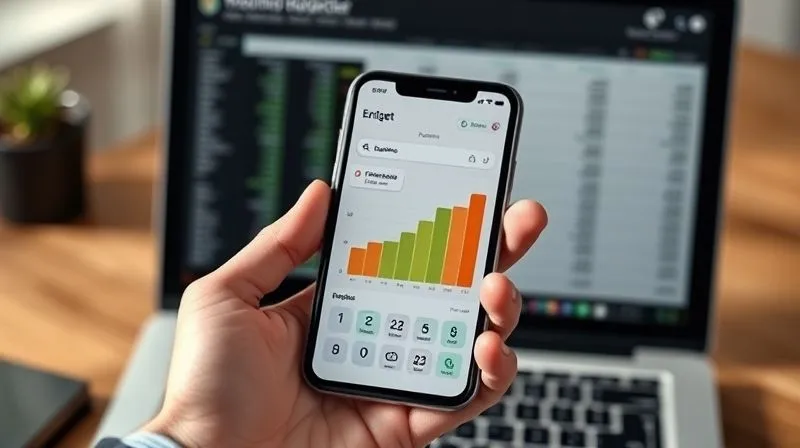
In today's digital age, you don't have to manage your complex financial landscape with just a pen and paper. There's a wealth of technology designed to simplify budgeting, tracking, and forecasting, making it significantly easier to answer how do professionals budget for highly inconsistent monthly income.
- Budgeting Apps: Tools like YNAB (You Need A Budget) are built on the zero-based budgeting philosophy and excel at helping you assign every dollar a job, even when income fluctuates. Others like Mint or Personal Capital offer excellent overall financial tracking and net worth analysis.
- Invoice & Payment Tracking Software: For freelancers and contractors, dedicated invoicing software (e.g., FreshBooks, Wave) isn't just for sending bills; it provides critical data on expected income and payment timelines, allowing for better cash flow forecasting.
- Spreadsheets (Advanced): For those who love control, a well-designed Google Sheet or Excel spreadsheet can be customized to track income, expenses, and forecast scenarios with incredible precision. You can build in formulas that automatically adjust your budget allocations based on actual income received.
The key is to find a tool that resonates with your personal style and commitment level. The best tool is the one you'll actually use consistently. Integrating these tools into your weekly financial review process can significantly reduce the mental load of managing irregular income.
Building Multiple Income Streams: A Proactive Defense
One of the most effective long-term strategies for mitigating the impact of inconsistent income is to proactively build multiple income streams. This isn't just about earning more; it's about diversifying your financial risk and creating a more robust financial ecosystem.
I've seen countless professionals transform their financial resilience by moving beyond a single source of variable income. Imagine if one client project falls through, but you have another passive income stream or a small side gig that can help cushion the blow. This significantly reduces the pressure on your primary, often inconsistent, income source.
Passive Income vs. Active Side Gigs
- Passive Income: This involves generating income with minimal ongoing effort after the initial setup. Examples include investments (dividends, rental income), royalties from creative works, or automated online businesses.
- Active Side Gigs: These require direct effort and time but can offer immediate cash flow. Consulting on the side, teaching workshops, freelancing in a complementary skill, or even driving for a ride-share service are examples.
According to research highlighted by the Harvard Business Review, professionals who successfully diversify their income streams report greater financial security and a reduced perception of risk. It's a strategic move from being a single point of failure to a multifaceted financial entity.
Regular Review and Adjustment: Your Budget is a Living Document
Finally, and perhaps most critically, your budget for inconsistent income should never be treated as a static document. It is a living, breathing financial plan that requires regular review and adjustment. What worked last month might not work this month, and that's perfectly normal.
I recommend setting aside dedicated time each week or, at the very least, once a month, to review your income and expenses. Compare your actual figures against your budget. Ask yourself:
- Did I earn more or less than my conservative estimate?
- Where did my money actually go?
- Are there any unexpected expenses or windfalls?
- Do my financial goals still align with my current spending and saving patterns?
Adapting to Life's Changes
Life happens. A new client, a significant unexpected expense, a change in family circumstances – all these necessitate a re-evaluation of your budget. The beauty of a flexible budgeting system for inconsistent income is its adaptability. Don't be afraid to pivot, reallocate, or even completely overhaul your plan when circumstances demand it.
"Your budget is not a straitjacket; it's a dynamic GPS for your financial journey. Regularly recalibrate it to stay on course, especially when navigating the unpredictable terrain of variable income."
This continuous feedback loop ensures that your financial strategy remains relevant and effective, empowering you to maintain control over your money, regardless of how your income behaves.
Frequently Asked Questions (FAQ)
Q: How much should my emergency fund be for inconsistent income? For professionals with highly inconsistent income, I strongly recommend building an emergency fund that covers 6-12 months of essential living expenses. While 3-6 months is standard advice, the extended buffer provides crucial peace of mind and flexibility during prolonged lean periods or unexpected income drops. This fund acts as your primary income smoothing tool.
Q: What if I have a really bad month and can't cover expenses? This is precisely why the income smoothing buffer and zero-based budgeting are so vital. If your current month's income doesn't cover your essential expenses, you draw from your pre-built buffer. Your zero-based budget should clearly define what's essential. In such a month, you'd also significantly cut back on all discretionary spending and explore any immediate opportunities for additional income. The key is to avoid debt during these times.
Q: Is it possible to invest aggressively with variable income? Yes, it absolutely is, but with careful planning. Once you have a robust emergency fund (6-12 months) and are consistently meeting your essential expenses, you can allocate surplus income to investments. Consider dollar-cost averaging into investments with a fixed, smaller amount you can always afford, and then make larger, opportunistic contributions during high-income months. Prioritize tax-advantaged accounts like IRAs or 401(k)s.
Q: How do I handle taxes with inconsistent income? For self-employed professionals, quarterly estimated taxes are critical. I advise setting aside a fixed percentage (e.g., 25-35%, depending on your income bracket and deductions) of every payment you receive into a separate, dedicated savings account. Do not touch this money. This prevents a massive tax bill shock at the end of the year and ensures you meet your obligations without dipping into your operational or emergency funds. Consult a tax professional for personalized advice.
Q: What's the best way to track my variable income? Consistency is key. Use a dedicated invoicing software (if applicable), a robust budgeting app that links to your bank accounts, or a custom spreadsheet. The goal is to have a clear, real-time picture of what income has come in, what's expected, and what payments are still outstanding. Review this at least weekly to inform your spending decisions and buffer management.
Key Takeaways and Final Thoughts
Navigating the financial landscape with highly inconsistent monthly income can feel like an uphill battle, but it doesn't have to be a source of constant stress. As an experienced industry specialist, I've seen firsthand that with the right strategies and a disciplined approach, professionals can achieve profound financial stability and even prosperity.
- Build a Robust Buffer: Your 6-12 month income smoothing fund is non-negotiable.
- Embrace Zero-Based Budgeting: Give every dollar a job to gain ultimate control.
- Categorize Your Expenses: Know your fixed, variable, and discretionary spending inside out.
- Pay Yourself First (Strategically): Prioritize savings and investments, especially during high-income periods.
- Forecast and Plan Scenarios: Prepare for the best, worst, and realistic financial futures.
- Leverage Technology: Use apps and tools to simplify tracking and management.
- Diversify Income Streams: Reduce risk and enhance resilience with multiple sources of income.
- Review and Adjust Regularly: Your budget is dynamic; adapt it to your evolving reality.
Remember, financial mastery with inconsistent income is a journey, not a destination. It requires patience, persistence, and a willingness to learn and adapt. By implementing these expert-level strategies, you're not just budgeting; you're building a foundation for enduring financial confidence and freedom, allowing you to focus on your professional growth and personal well-being.
Recommended Reading
- 7 Proven Strategies to Mitigate Liquidity Risk in Corporate Money Market Accounts
- Unlock the Mystery: How Central Bank Policies Shape Global Bond Yields
- Rainy Day Fund vs. HELOC: Your Guide to Smart Emergency Funding
- 7 Critical Professional Liability Gaps in New Data Privacy Laws
- Busy Pro? Cut College Costs: 7 Smart Strategies You Need Now





Comments
Leave a comment below. Your email will not be published. Required fields marked with *