



Unlocking Financial Clarity: Best Methods for Tracking Variable Monthly Expenses?
Ever felt like your bank account has a mind of its own, fluctuating wildly from one month to the next? You're not alone. The unpredictable nature of variable expenses – those costs that change from period to period, like groceries, utilities, or entertainment – can make even the most diligent budgeter feel like they're navigating a financial labyrinth blindfolded. One month, your electric bill is manageable; the next, it's soaring. Your grocery tab might be modest one week, then inexplicably high the next.
This inherent unpredictability poses a significant challenge to achieving true financial clarity and control. Without a clear understanding of where your money is actually going, it's incredibly difficult to set realistic savings goals, plan for the future, or even just avoid the nagging stress of overdrafts or unexpected shortfalls. The 'unknown' in your spending can be a major source of anxiety, making it hard to feel secure in your financial journey.
Fortunately, the solution isn't to simply cut out all variable spending – that's often impractical and unsustainable. Instead, the key lies in mastering the art of tracking. This comprehensive guide will delve into the best methods for tracking variable monthly expenses, equipping you with the strategies, tools, and insights needed to transform financial uncertainty into empowered understanding. By the end of this reading, you'll have a clear roadmap to take charge of your fluctuating costs and build a more resilient budget.
Understanding Variable Expenses: The Elusive Budgeting Challenge
Before we dive into tracking, it's crucial to understand what we're up against. Variable expenses are distinct from fixed expenses, which remain constant month after month (e.g., rent, loan payments). Variable costs, by definition, fluctuate. They are the dynamic elements of your budget that require consistent attention and adaptation.
What Qualifies as Variable?
- Groceries: Your food bill can vary significantly based on dietary changes, promotions, or even the number of meals eaten out.
- Utilities: Electricity, gas, and water bills often change with seasonal usage, weather, and rates.
- Transportation: Fuel costs, ride-sharing, or public transport fares can differ based on travel needs.
- Entertainment: Movies, concerts, dining out, or hobbies – these are discretionary and highly variable.
- Personal Care: Haircuts, toiletries, or health products may not be purchased on a strict monthly cycle.
- Clothing: Apparel purchases are typically sporadic and opportunistic.
Why Are They So Tricky?
The primary challenge with variable expenses stems from their unpredictability. Unlike a fixed rent payment, you can't set aside the exact same amount for groceries every single month and expect it to always be enough. This variability makes forecasting difficult and often leads to budget overruns. Furthermore, many variable expenses are tied to our habits and emotional spending. A stressful day might lead to an unplanned takeout order, or a sudden urge for retail therapy can derail your clothing budget. Without diligent tracking, these small, seemingly insignificant fluctuations can accumulate into significant budget gaps, eroding your financial progress.
The Foundation: Why Tracking is Non-Negotiable
Tracking variable expenses isn't just about recording numbers; it's about gaining profound insights into your financial behavior. It's the essential first step towards building a budget that truly works for you, rather than against you. Without this foundational practice, any budgeting attempt will be based on guesswork, leading to frustration and potential failure.
Gaining Control and Reducing Stress
Imagine knowing exactly where every dollar goes. This level of awareness brings an incredible sense of control. When you track variable expenses, you transform the unknown into the known, significantly reducing financial anxiety. You're no longer blindsided by high utility bills or unexpected grocery totals because you've been actively monitoring them.
Identifying Spending Patterns
Tracking reveals patterns you might not otherwise notice. Perhaps you consistently overspend on dining out on weekends, or your utility bill spikes during certain months. These patterns are crucial data points that allow you to make informed decisions. You can then consciously decide to adjust your habits, find alternatives, or allocate more funds where needed. It's like having a financial GPS, showing you not just where you are, but also where you're heading.
Optimizing Your Budget for Savings
Once you understand your spending patterns, you can begin to optimize. Tracking highlights areas where you might be able to cut back without feeling deprived. For instance, if you see you're spending hundreds on subscriptions you rarely use, you can cancel them. If your entertainment budget is consistently exceeded, you can explore free or low-cost alternatives. This optimization directly translates into more money available for savings, debt repayment, or investments, accelerating your journey towards financial goals.
Digital Domination: Leveraging Apps and Software
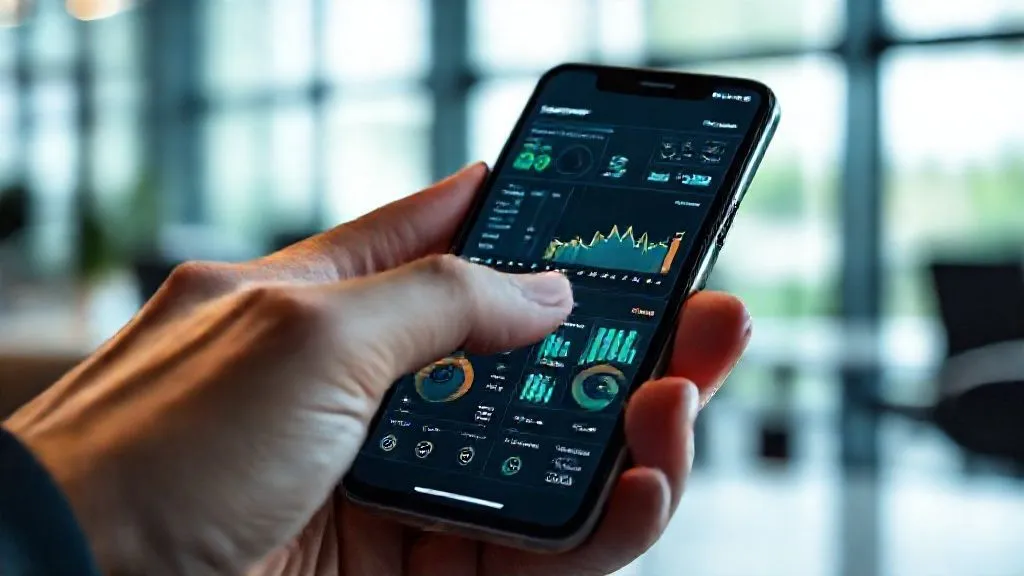
In the modern age, technology offers powerful solutions for tracking variable expenses. Digital tools automate much of the data collection, making the process less cumbersome and more accurate. They provide real-time insights and often visualize your spending in helpful charts and graphs.
Budgeting Apps
Many mobile and web-based applications are specifically designed for personal finance management. They typically link directly to your bank accounts and credit cards, automatically categorizing transactions.
- Mint: A popular free option that aggregates all your financial accounts in one place. It offers budgeting tools, bill reminders, and spending insights. Its automatic categorization is a huge time-saver, though sometimes requires manual adjustment for accuracy.
- You Need A Budget (YNAB): A paid app renowned for its 'zero-based budgeting' philosophy. Every dollar is assigned a job, making it excellent for proactive management of variable expenses. YNAB encourages a mindful approach to spending, forcing you to allocate funds before you spend them.
- Personal Capital: While primarily known for investment tracking, Personal Capital also offers robust budgeting and spending analysis tools. It provides a holistic view of your net worth alongside your cash flow.
The benefit of these apps is their convenience and automation. They reduce the friction of manual data entry, making it easier to stick with tracking long-term. According to a recent survey by Statista, a significant portion of consumers now use budgeting apps, highlighting their growing utility in personal finance management. For more details on budgeting app features, you can explore resources like NerdWallet's guide to the best budgeting apps.
Spreadsheet Software
For those who prefer a hands-on approach and maximum customization, spreadsheets like Google Sheets or Microsoft Excel are invaluable tools. They require manual data entry (or importing transaction data from your bank), but offer unparalleled flexibility.
- Customization: You can design your spreadsheet exactly how you want it, creating specific categories, formulas, and dashboards that cater to your unique spending habits.
- Data Visualization: Use charts and graphs to visualize your variable spending trends over time. This can be incredibly insightful for identifying patterns and areas for improvement.
- Forecasting: You can build formulas to project future variable expenses based on historical data, helping you plan more effectively.
Many free templates are available online, or you can build one from scratch. The process of manually entering data can also enhance your awareness of each transaction, fostering a deeper connection to your money.
Bank & Credit Card Tools
Many financial institutions now offer sophisticated online portals and mobile apps with built-in spending trackers. These tools automatically categorize your transactions and provide summaries of your spending. While they might not be as comprehensive as dedicated budgeting apps, they offer a convenient starting point for tracking expenses directly within the platforms you already use. Check your bank's online banking portal or app for features like 'Spending Insights' or 'Budgeting Tools'.
Analog Approaches: The Power of Pen and Paper
In an increasingly digital world, the simplicity and tangibility of analog tracking methods still hold significant value. For some, the act of physically writing down expenses creates a stronger connection to their money and can be a more mindful practice than passive digital tracking.
Expense Journals and Notebooks
A simple notebook can be a powerful tool. Each day, or at least every few days, jot down every expense you incur, along with the date, amount, and category. At the end of the week or month, tally up your totals for each category. This method requires discipline but offers several benefits:
- Mindfulness: The physical act of writing forces you to acknowledge each purchase, making you more aware of your spending habits.
- Simplicity: No apps to learn, no software to navigate. Just a pen and paper.
- Accessibility: Always available, regardless of battery life or internet connection.
This approach is particularly effective for those who feel overwhelmed by digital tools or prefer a more tactile interaction with their finances. It can also be combined with digital methods, using the journal for daily tracking and then transferring totals to a spreadsheet for long-term analysis.
The Envelope System
Popularized by financial experts like Dave Ramsey, the envelope system is a classic method for managing cash-based variable expenses. At the beginning of each month, you withdraw cash for specific variable expense categories (e.g., groceries, entertainment) and place the money into separate envelopes labeled with the category name. When you make a purchase, you use money from the corresponding envelope. Once an envelope is empty, you stop spending in that category until the next month.
- Tangible Control: You literally see how much money you have left for each category.
- Prevents Overspending: Once the cash is gone, it's gone, forcing you to stick to your budget.
- Ideal for Discretionary Spending: Excellent for categories where you tend to overspend, like dining out or shopping.
While less practical for all expenses in a largely cashless society, the envelope system remains highly effective for managing specific, problematic variable categories and instilling financial discipline.
Strategic Methodologies for Variable Expense Tracking
Beyond the tools, certain budgeting methodologies are particularly effective for handling the variability of monthly expenses. These strategies provide frameworks for how to allocate and manage your money proactively.
The Zero-Based Budgeting Approach
As mentioned with YNAB, zero-based budgeting (ZBB) is a powerful method where every dollar of your income is assigned a 'job' – whether it's for fixed expenses, variable expenses, savings, or debt repayment. The goal is for your income minus your expenses and savings to equal zero. This forces you to be intentional with every dollar.
- Proactive Allocation: Instead of reacting to spending, you decide beforehand how much you'll allocate to each variable category.
- Increased Awareness: You become acutely aware of where all your money is going, preventing 'mystery' spending.
- Adaptability: If one variable category goes over, you must consciously 'take' from another category, making trade-offs explicit.
ZBB is particularly effective for variable expenses because it demands that you estimate and allocate funds for them, rather than letting them surprise you. It promotes a proactive mindset towards financial management.
The 50/30/20 Rule Adaptation
This popular rule suggests allocating 50% of your after-tax income to needs, 30% to wants, and 20% to savings and debt repayment. Variable expenses often fall into both 'needs' (like groceries and utilities) and 'wants' (like entertainment and dining out).
- Needs (50%): Allocate a portion for essential variable expenses. Track these diligently to stay within the 50% overall.
- Wants (30%): This is where most discretionary variable spending occurs. Tracking helps ensure you don't exceed this 30% threshold.
While not as granular as ZBB, the 50/30/20 rule provides a flexible guideline. Tracking your variable expenses helps you ensure you're staying within these broad percentage targets, allowing you to adjust your spending habits if you find yourself consistently over budget in the 'wants' category. For a deeper dive into this rule, consider exploring resources from financial planning institutions like Investopedia's explanation of the 50/30/20 rule.
Average Monthly Spending Analysis
A simple yet effective strategy is to look at your past spending. Collect 3-6 months of transaction data for each variable expense category. Calculate the average spent per month. This average becomes your baseline budget for that category moving forward. For example, if your grocery bills were $400, $450, and $380 over three months, your average is $410. You would then budget $410 for groceries.
- Realistic Budgeting: Based on your actual spending habits, not arbitrary figures.
- Forecasting: Provides a reasonable expectation for future expenses.
- Highlighting Anomalies: If a month's spending is significantly higher or lower than average, it prompts you to investigate why.
This method works best when combined with ongoing tracking, allowing you to compare current spending against your established average and make adjustments as needed.
The "Buffer" System
Given the inherent unpredictability of variable expenses, some people find it useful to build in a small 'buffer' or contingency fund within each variable category, or a general buffer for all variable expenses. For instance, if you estimate your average utility bill is $150, you might budget $175. The extra $25 acts as a cushion for unexpected spikes.
- Reduces Stress: Minimizes the impact of minor overages.
- Prevents Budget Busting: Small buffers can prevent the need to dip into savings or go into debt for minor fluctuations.
This system acknowledges that perfection in budgeting variable expenses is often unrealistic and provides a practical way to manage minor deviations.
Avoiding Common Pitfalls and Maximizing Accuracy
Tracking variable expenses is a journey, not a destination. There will be bumps along the way. Being aware of common mistakes can help you navigate them and maintain consistency.
Inconsistency is the Enemy
The biggest pitfall is sporadic tracking. If you only track for a few days here and there, your data will be incomplete and misleading. Consistency is paramount. Whether daily, every few days, or weekly, establish a routine and stick to it. Missing just a few transactions can skew your entire understanding of your spending patterns.
Over-Categorization vs. Under-Categorization
Finding the right balance in categorization is key. Too many categories can make tracking feel overwhelming and time-consuming. Too few, and you lose valuable insights. Aim for categories that are meaningful to you and reflect your major spending areas. For example, instead of 'snacks', 'coffee', and 'lunch', you might use a broader 'Food & Drink' or 'Dining Out' category, and a separate 'Groceries' category.
Ignoring Small Purchases
The 'latte factor' is real. Those daily coffees, vending machine snacks, or small online purchases can add up surprisingly quickly. It's tempting to omit them from your tracking because they seem insignificant individually. However, these 'micro-transactions' are often where significant overspending occurs. Be diligent about recording every single expense, no matter how small.
Not Reviewing Regularly
Tracking data is only useful if you review and act upon it. Set aside time weekly or monthly to review your spending reports. Ask yourself: Where did I overspend? Where did I save? Are my allocations realistic? This regular review allows you to adjust your budget, identify problematic habits, and learn from your financial behavior. Without review, tracking is merely data collection, not financial management.
Integrating Tracking into Your Financial Routine
For variable expense tracking to be truly effective, it needs to become an ingrained habit, not a chore you dread. The goal is to make it as seamless and natural as possible within your daily or weekly routine.
Setting Aside Dedicated Time
Schedule specific times for tracking. This could be 10 minutes every evening, or an hour on Sunday mornings. Treat it like an important appointment. Consistency is far more important than the amount of time you spend in one go. Short, regular check-ins are more effective than infrequent, marathon sessions.
Making it a Habit, Not a Chore
Find a method that resonates with you. If you hate spreadsheets, don't force it. If you love the simplicity of pen and paper, embrace it. The 'best' method is the one you will actually stick with. Reward yourself for consistent tracking, and don't beat yourself up over minor slip-ups. Focus on progress, not perfection.
Leveraging Automation Where Possible
While some manual input might always be necessary for variable expenses, utilize automation features in apps or bank tools as much as possible. Link your accounts, set up automatic categorization rules, and use bill pay reminders. The less friction in the process, the more likely you are to maintain your tracking discipline.
Frequently Asked Questions (FAQ)
How often should I track my variable expenses? Ideally, you should track daily or every few days. This keeps the task manageable and ensures accuracy. A weekly review is also highly recommended to analyze trends and adjust your budget.
What's the biggest mistake people make when tracking variable expenses? The most common mistake is inconsistency. Skipping days or not recording small purchases leads to incomplete data, which makes it impossible to get an accurate picture of your spending.
Can tracking variable expenses really help me save money? Absolutely. By revealing exactly where your money is going, tracking empowers you to identify areas of overspending, make conscious choices to cut back, and reallocate funds towards savings goals. It's the first step to financial optimization.
Is it better to use an app or a spreadsheet for tracking? There's no single 'better' option; it depends on your personal preference and needs. Apps offer automation and convenience, while spreadsheets provide unparalleled customization. Many people find success by combining both, using an app for daily tracking and a spreadsheet for deeper analysis.
What if my variable expenses are consistently higher than expected? If your actual variable expenses are constantly exceeding your budget, it's a sign that your estimates might be unrealistic or your spending habits need adjustment. Review your past spending data to create more accurate averages, and identify specific categories where you can consciously reduce spending. Consider the 'buffer' system for added flexibility. For more guidance on managing fluctuating expenses, refer to consumer financial protection sites like Consumer Financial Protection Bureau's budgeting resources.
Recommended Reading
- Unlock Your Crypto: How to Recover Lost Virtual Currency Wallet Access Now!
- Dividend Stocks for Monthly Income: A Beginner's Guide to Success
- The Smart Move: Knowing When to Drop Collision Car Insurance and Save
- Ethically Invest in Sustainable Brands: The Ultimate Guide
- Unveiling the Gaps: What Risks Are Not Covered by Your Umbrella Policy?
Conclusion
Mastering your finances, especially the tricky realm of variable monthly expenses, is less about strict deprivation and more about informed awareness. By consistently applying the best methods for tracking variable monthly expenses – whether through powerful digital apps, customizable spreadsheets, or the mindful simplicity of analog systems – you transform financial uncertainty into clarity. The journey begins with understanding where your money truly goes, identifying patterns, and then using that knowledge to make conscious decisions that align with your financial goals. Embrace the process, be patient with yourself, and remember that every tracked dollar is a step closer to financial empowerment and peace of mind. Start today, and unlock the secrets to a more controlled and prosperous financial future.




Comments
Leave a comment below. Your email will not be published. Required fields marked with *