



What to do when FAFSA verification flags delay aid disbursement?
For over two decades in the student finance landscape, I've witnessed countless students grapple with the anxiety and confusion that FAFSA verification flags can bring. It's a moment of dread when you're expecting your financial aid to land, only to find your entire academic year's funding is on hold due to a bureaucratic hurdle. I understand the frustration; it feels like an unexpected roadblock just when you're ready to hit the gas on your education.
This isn't just a minor inconvenience; it's a significant disruption that can jeopardize enrollment, housing, and even your ability to purchase textbooks. The unexpected delay in aid disbursement can create immense financial strain, leaving students and families scrambling to cover immediate educational expenses. It can feel like your dreams are being put on hold, and the path forward suddenly becomes unclear.
But here's the good news: you're not powerless in this situation. In this definitive guide, I'll walk you through a proven, step-by-step framework to demystify the FAFSA verification process. Drawing from my extensive experience, I'll provide you with actionable strategies, insights into common pitfalls, and expert advice to not only resolve your current aid delay but also equip you with the knowledge to prevent future issues. We'll cover everything from understanding why verification happens to proactive communication with your financial aid office and exploring interim funding solutions.
Understanding FAFSA Verification: Why It Happens and What It Means
First, let's demystify FAFSA verification. It's not a personal attack or an accusation of wrongdoing. Rather, it's a quality control process mandated by the U.S. Department of Education to ensure the accuracy of the information provided on your Free Application for Federal Student Aid (FAFSA). Schools are required to verify a certain percentage of applications, and sometimes, specific data points can trigger a flag.
Common Triggers for Verification Flags
Several factors can lead to your FAFSA being selected for verification. These aren't exhaustive, but they represent the most frequent reasons I've encountered:
- Incomplete or Conflicting Information: Discrepancies between your FAFSA data and tax records, or missing information.
- Unusual Income Patterns: Significant differences in income reported from one year to the next without clear explanation.
- Household Size vs. Income: A large household size reported with a relatively low income.
- Random Selection: A percentage of applications are chosen purely at random, regardless of their data.
- Prior-Year Verification: If you were verified in a previous year, there's a higher chance you might be selected again.
The core purpose is to maintain integrity in the federal student aid programs. While it might feel like an obstacle, remember that it's a necessary step to ensure aid is distributed fairly and accurately to those who truly qualify. Understanding this context can help shift your perspective from frustration to focused action.
Immediate Actions When You're Flagged for FAFSA Verification
The moment you receive notification that your FAFSA has been selected for verification, swift and precise action is paramount. Procrastination here can significantly extend your aid disbursement delay. I've seen students lose out on valuable time because they didn't know where to start. Here's your immediate checklist:
- Don't Panic, But Act Promptly: The initial reaction might be anxiety, but channel that energy into action. Every day counts, especially as deadlines approach.
- Check Your Email and FAFSA Account: Your school's financial aid office will typically notify you via email, often to your student email address. They will also post specific requirements on your student portal or FAFSA account. Log in and carefully review what documents are being requested.
- Contact Your School's Financial Aid Office (FAO): This is your most critical step. Reach out immediately. Ask for a clear list of required documents, specific forms they use, and their preferred submission method. In my experience, a direct conversation can clarify ambiguities and provide invaluable guidance.
- Understand the Deadline: Ask about any specific deadlines for submitting verification documents. While federal deadlines exist, individual schools often have their own, earlier priority deadlines that can impact your aid package.
Expert Insight: Many schools use their own verification forms, not just the FAFSA's. Never assume you know what's needed; always confirm directly with your financial aid office.
Gathering Your Documents: The Verification Checklist
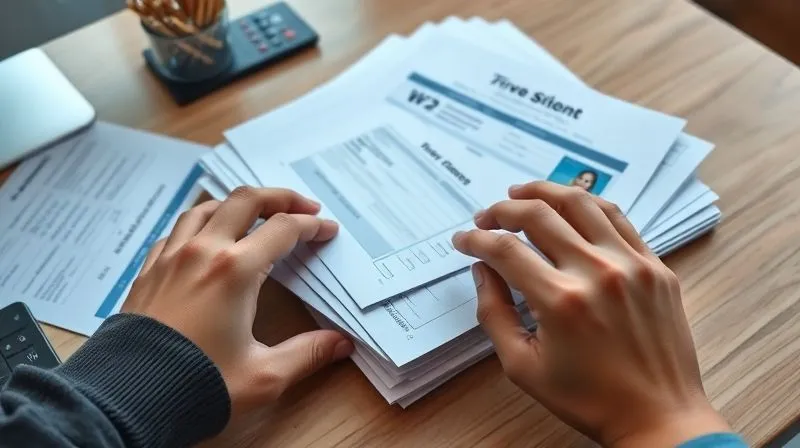
The most common reason for delays in the verification process is incomplete or incorrect documentation. This is where meticulous organization pays off. The documents requested will depend on the type of verification you're undergoing, but certain items are almost universally required.
Key Documents for Verification
- IRS Tax Transcripts: This is often the most critical document. Do NOT submit copies of your tax returns; schools require official IRS Tax Transcripts. You can request these for free directly from the IRS website (IRS Get Transcript) or by mail.
- W-2 Forms: For all reported income, both for the student and parents (if applicable).
- Verification Worksheet: Your school's financial aid office will provide a specific form, often called a 'Verification Worksheet,' that you and your parents (if dependent) must complete and sign.
- Proof of Identity and Statement of Educational Purpose: Often requires a government-issued photo ID (like a driver's license) and a signed statement affirming your intent to use federal aid for educational purposes.
- Untaxed Income Documentation: If you or your parents receive untaxed income (e.g., Social Security benefits, child support), you may need documentation for these.
- Proof of Household Members: Sometimes, documentation like birth certificates or utility bills may be requested to verify household size.
It's crucial to ensure all information on these documents matches what was reported on your FAFSA. Any discrepancies will lead to further questions and delays. Double-check every entry before submission.
Navigating the Financial Aid Office: Communication is Key
Your financial aid office (FAO) is your primary point of contact and ally in resolving verification issues. Establishing a good rapport and maintaining clear, consistent communication can significantly streamline the process. I've often advised students that the FAO isn't just an administrative hurdle, but a resource there to help.
Proactive Engagement Strategies
- Submit Complete and Accurate Documents: This cannot be stressed enough. Incomplete submissions are the number one cause of prolonged delays. Before submitting, review everything against the school's checklist.
- Follow Up Professionally: After submitting your documents, give the FAO a reasonable amount of time (typically 5-7 business days) to process them. If you haven't heard back, send a polite email or make a phone call to check on the status. Keep a record of all communications, including dates, times, and the names of staff members you speak with.
- Be Responsive to Requests: If the FAO asks for additional information or clarification, respond as quickly and completely as possible. Delays on your part will directly translate to delays in your aid.
- Understand the Queue: Financial aid offices handle hundreds, if not thousands, of verification cases, especially during peak seasons. Be patient, but persistent.
As a veteran in this field, I've seen that a proactive, organized student almost always navigates this process more smoothly than one who waits passively. Your engagement demonstrates your commitment and can sometimes prioritize your case, even subtly.
Case Study: Maria's Timely Aid Recovery
Case Study: How Maria Expedited Her FAFSA Verification
Maria, a sophomore at State University, found her financial aid on hold just weeks before tuition was due. Her FAFSA was flagged for verification due to a discrepancy in her parents' reported income versus their tax transcript. Initially, she panicked, fearing she wouldn't be able to register for classes.
Following my advice, Maria immediately contacted State University's Financial Aid Office. She received a specific verification worksheet and a clear list of required documents, including her parents' IRS Tax Transcripts and W-2s. Instead of mailing them, she utilized the university's secure online portal for document submission, ensuring everything was uploaded correctly and completely within three days.
A week later, she followed up with an email to the FAO, politely inquiring about the status. The aid officer informed her they were processing a backlog but appreciated her organized submission. Within two weeks of her initial submission, Maria received an email confirming her verification was complete, and her aid disbursed the following day. This resulted in her being able to register for classes on time and avoid late fees, demonstrating the power of prompt, organized, and proactive communication.
Understanding the Impact of Delays: Bridging the Financial Gap
Even with swift action, FAFSA verification can sometimes take weeks, or even longer during peak processing times. This delay can create a significant financial gap, leaving you to cover immediate expenses out-of-pocket. It's crucial to have a plan for bridging this gap.
Exploring Interim Financial Solutions
- Payment Plans: Many institutions offer installment payment plans for tuition. This allows you to pay your balance over several months, easing the immediate burden.
- Emergency Loans/Short-Term Advances: Some universities offer small, short-term emergency loans or advances against anticipated financial aid for students facing immediate hardship. Inquire about these options with your FAO or student services.
- Personal Savings or Family Support: If possible, consider using personal savings or seeking temporary support from family to cover essential costs like housing, food, and textbooks until your aid disburses.
- Student Employment: If you have work-study eligibility, you might be able to start earning money through campus employment to cover some expenses.
It's important to differentiate between these temporary solutions and long-term financial aid. The goal is to keep your academic progress on track while the verification process unfolds. Don't be afraid to ask your FAO about all available interim options; they are often more flexible than students realize.
| Option | Pros | Cons |
|---|---|---|
| University Payment Plan | Spreads out costs, avoids late fees | Interest/fees may apply, not all expenses covered |
| Emergency University Loan | Quick access to funds, interest-free (often) | Small amounts, strict repayment terms |
| Personal Savings/Family Support | Immediate, no interest | May deplete savings, not always available |
| Private Student Loan (Short-term) | Can cover large gaps | High interest rates, requires credit check, takes time |
Preventative Measures: Avoiding Future FAFSA Verification Delays
While you can't entirely eliminate the possibility of being selected for verification, you can significantly reduce your chances and prepare better if it happens again. Prevention is always better than cure, especially in the realm of financial aid.
Best Practices for FAFSA Application
- File Early: Submit your FAFSA as soon as it becomes available (October 1st each year). This gives you ample time to address any issues before deadlines.
- Use the IRS Data Retrieval Tool (DRT): This tool, available within the FAFSA, allows you to directly import your tax information from the IRS. It significantly reduces errors and often minimizes the chance of verification.
- Double-Check Everything: Before submitting, meticulously review every field on your FAFSA. Ensure names, social security numbers, dates of birth, and financial figures are accurate and consistent with your tax documents.
- Keep Copies of All Documents: Maintain a well-organized file (digital or physical) of all financial documents used for your FAFSA application, including tax returns, W-2s, and bank statements.
- Read All Communications: Pay close attention to emails and letters from both the Department of Education and your school's financial aid office. Don't dismiss anything as junk mail.
Expert Insight: The IRS Data Retrieval Tool is your best friend. Its use not only simplifies the application but also dramatically reduces the likelihood of being selected for verification based on income discrepancies. Always use it if you are eligible.
Your Rights and Resources as a Student
When navigating the complexities of financial aid, it's empowering to know your rights and the resources available to you. While financial aid offices are there to help, sometimes you might feel stuck or unheard. This is rare, but it's important to know your options.
Advocacy and Support Systems
If you feel your school's financial aid office is not adequately addressing your verification issues, or if you believe there's an error in their process, you have avenues for recourse:
- Speak to a Supervisor: Politely request to speak with a financial aid supervisor or director if your concerns are not being resolved at the initial level.
- University Ombudsman: Many universities have an Ombudsman's office, which acts as an impartial resource to resolve student complaints and mediate disputes.
- U.S. Department of Education's Federal Student Aid Ombudsman Group: This is a last resort for federal student aid disputes. They can mediate issues between students and schools or lenders. You can find more information on their services at StudentAid.gov.
- Legal Aid Services: In extreme cases, if you believe your rights are being violated, legal aid services specializing in education law might be an option.
Remember, the goal is always resolution. Approaching these resources with clear documentation and a professional demeanor will yield the best results. As Forbes Advisor often highlights, understanding the process is key to advocating for yourself effectively.
Dispelling Myths Around FAFSA Verification
The FAFSA verification process is often shrouded in misconceptions, leading to unnecessary stress. Let's clear up some common myths I've encountered over the years:
- Myth 1: Verification means I did something wrong. False. As discussed, it's often random or due to minor discrepancies, not fraud.
- Myth 2: My aid will automatically be reduced. Not necessarily. If your verified information matches your FAFSA, your aid won't change. If there are differences, your aid may be adjusted, but not always reduced.
- Myth 3: It's a quick process. While some cases are resolved quickly, others take weeks. The timeline depends heavily on how quickly you submit accurate documents and the FAO's workload.
- Myth 4: I can ignore it and hope it goes away. Absolutely not. Ignoring verification will result in your financial aid being canceled.
Expert Insight: Verification is a standard procedure. Approach it with an informed mindset, and you'll navigate it far more effectively than if you let fear or misinformation guide you.

Leveraging Technology for a Smoother Process
In today's digital age, technology can be a powerful ally in streamlining the FAFSA verification process. Many institutions have invested heavily in online portals and secure document submission systems to make this easier for students. Utilizing these tools effectively can significantly reduce delays.
Digital Tools and Best Practices
- University Student Portals: Most schools provide a personalized online portal where you can check your financial aid status, view requested documents, and often upload them securely. Familiarize yourself with this portal immediately.
- Secure Document Upload: Avoid emailing sensitive documents unless explicitly instructed by your FAO. Use secure upload features provided by your school to protect your personal information.
- Digital Signatures: Some verification forms may allow for digital signatures. Ensure these comply with federal e-signature guidelines and your school's requirements.
- Email Communication: While direct contact is best, email provides a written record. Use your official student email address and keep all correspondences organized.
The efficiency of your verification process can often hinge on how effectively you use the digital tools at your disposal. Embrace them, and you'll find the path to aid disbursement much clearer. For additional guidance on federal student aid processes, the official StudentAid.gov website is an invaluable resource.
Frequently Asked Questions (FAQ)
Q: How long does FAFSA verification typically take? A: The timeline for FAFSA verification can vary widely. Once you submit all requested documents, it can take anywhere from a few days to several weeks for your financial aid office to process them, especially during peak application periods (e.g., late summer, early fall). Being proactive and submitting complete, accurate documents quickly is the best way to expedite the process. Factors like the complexity of your case and the school's current workload also play a significant role.
Q: Can I still attend classes if my financial aid is delayed due to verification? A: This depends on your school's policies. Some institutions may allow you to register and attend classes with a temporary hold on your account, assuming your aid will eventually disburse. Others may require you to make alternative payment arrangements or even pay out-of-pocket until verification is complete. It's crucial to discuss this directly with your financial aid office and potentially the bursar's office to understand your options and avoid being dropped from classes or incurring late fees.
Q: What if my parents refuse to provide their financial information for verification? A: If you are a dependent student and your parents refuse to provide the necessary verification documents, it creates a significant challenge. Federal regulations generally require parental information for dependent students to be eligible for most federal student aid. In very rare, documented cases of parental abandonment or abuse, a financial aid administrator might be able to make an exception. However, for most situations where parents simply refuse, it could mean you are ineligible for federal aid. You should discuss this sensitive situation with your financial aid office to explore any potential alternatives, such as applying for independent student status if you meet very specific, strict criteria, or focusing on aid that doesn't require parental information.
Q: Is FAFSA verification random, or does it always mean there's an issue? A: FAFSA verification can be both random and triggered by specific data flags. A certain percentage of FAFSA applications are selected purely at random by the Department of Education as a quality control measure. However, many applications are selected because of discrepancies or inconsistencies detected between the information provided on the FAFSA and other data sources, or due to certain financial characteristics. So, while it doesn't automatically mean there's an issue with your application, it's always an opportunity to ensure everything is accurate.
Q: What happens if I make changes to my FAFSA after it's been selected for verification? A: If your FAFSA has been selected for verification, and you then make changes to the information, it's likely to cause further delays. Any changes may trigger a re-evaluation of your application and potentially require additional documentation. It's generally best to submit all requested verification documents based on the FAFSA information that was originally flagged. If you discover a significant error on your FAFSA that needs correction, inform your financial aid office immediately and follow their guidance on how to proceed. They can advise you on the best course of action to minimize further complications and ensure your aid package is accurate.
Key Takeaways and Final Thoughts
Navigating FAFSA verification flags can feel like an uphill battle, especially when your financial aid disbursement is on the line. However, by understanding the process and taking proactive steps, you can significantly reduce stress and expedite the release of your much-needed funds.
- Act Swiftly and Comprehensively: Respond immediately to verification requests and gather all required documents with meticulous attention to detail.
- Communicate Proactively: Maintain open and professional communication with your school's financial aid office. They are your primary resource.
- Leverage Technology: Utilize online portals and secure submission methods for efficiency and security.
- Plan for Contingencies: Explore interim financial solutions to bridge any gaps caused by delays.
- Prevent Future Issues: File your FAFSA early, use the IRS Data Retrieval Tool, and double-check all information to minimize the chances of future verification.
Remember, FAFSA verification is a common part of the financial aid landscape. Armed with the strategies and insights I've shared, you are now well-equipped to tackle 'What to do when FAFSA verification flags delay aid disbursement?' with confidence. Your education is an investment, and overcoming these administrative hurdles is a crucial step in securing your future. Stay organized, stay persistent, and you will successfully navigate this process.
Recommended Reading
- Unlock the Secrets: How to Calculate Startup Valuation for Seed Funding
- 7 Proven Strategies: How to Mitigate Fraud Risks in Corporate Bank Accounts
- 7 Proven Strategies to Minimize Capital Gains Tax on Stock Sales
- Unlock Wealth: 7 Steps to Choose a Tax-Efficient Brokerage
- Unlock Your Retirement: How to Understand 401k Fees & Minimize Their Impact





Comments
Leave a comment below. Your email will not be published. Required fields marked with *