



What to do when debt collector sues on undocumented debt?
For over 15 years, specializing in consumer finance and debt collection defense, I've witnessed the profound distress and confusion that sweeps over individuals when they receive a summons for a debt they either don't recognize or, more commonly, one that the collector seems unable to prove. It's a scenario far too common in the murky waters of debt buying and selling, where original documentation often gets lost or conveniently 'misplaced'.
The fear is palpable: a legal threat, the jargon-filled documents, and the daunting prospect of facing a court without clear understanding or the necessary tools to defend oneself. Many assume that because a lawsuit has been filed, their fate is sealed, especially if they vaguely recall the debt from years ago. This assumption, however, is a dangerous one, often leading to default judgments against consumers who had legitimate defenses.
This article isn't just about understanding the law; it's about empowering you with a robust framework, actionable strategies, and the expert insights I’ve gathered over a decade and a half. We'll dissect the problem, illuminate your rights, and provide a step-by-step guide on what to do when a debt collector sues on undocumented debt, ensuring you can navigate this challenge with confidence and protect your financial future.
Understanding the Threat: What an Undocumented Debt Lawsuit Means
When we talk about an 'undocumented debt,' we're typically referring to a debt where the collection agency or debt buyer suing you cannot produce the original contract, detailed payment history, or a clear chain of title proving they legally own the debt. This isn't just a minor administrative oversight; it's often a fundamental weakness in their case. Debt portfolios are frequently bought and sold for pennies on the dollar, and with each transaction, crucial documentation can be lost or simply not transferred.
Debt buyers, in particular, often acquire these portfolios with minimal documentation, hoping to win cases by default when consumers fail to respond or don't know how to challenge the lack of proof. They rely on the sheer volume of lawsuits, betting that a percentage will result in easy judgments. This strategy, while profitable for them, exploits consumers' lack of legal knowledge and creates a significant problem for those targeted.
The silence of a consumer, or their failure to mount an effective defense, is a debt collector's greatest asset. A default judgment means you lose without ever presenting your side, and that's precisely what they hope for.
The initial shock of receiving a summons can be paralyzing. It's a formal legal document demanding a response within a strict timeframe, usually 20-30 days. Ignoring it is perhaps the worst possible action you can take, as it almost guarantees a default judgment against you, allowing the collector to garnish wages, levy bank accounts, or place liens on property.

Step 1: Don't Panic, But Act Swiftly – Responding to the Summons
The first, most crucial step upon receiving a summons is to remain calm but act immediately. The clock starts ticking the moment you are served, and deadlines in legal matters are absolute. Missing a deadline can result in a default judgment, which is incredibly difficult and costly to overturn.
Your absolute priority should be to consult with a qualified attorney specializing in consumer law or debt defense. While it might seem counterintuitive to incur legal fees when you're already facing a debt, a good attorney can often save you significantly more in the long run by helping you avoid a judgment, negotiate a favorable settlement, or even get the case dismissed. I've seen countless individuals try to navigate this alone, only to make critical procedural errors that jeopardize their defense.
If you cannot secure an attorney immediately, you must still file an 'Answer' to the Complaint within the stipulated timeframe. This is a formal response to the allegations made in the lawsuit. It's not a detailed argument but rather a statement where you admit, deny, or state you lack sufficient information to admit or deny each paragraph of the complaint. Crucially, you should also assert any 'affirmative defenses' you might have.
- Identify the Plaintiff: Who is suing you? Is it the original creditor or a debt buyer?
- Date of Service: Note the exact date you received the summons. This determines your deadline.
- Jurisdiction: Understand which court the lawsuit is filed in (e.g., small claims, civil court).
- Allegations: Read each paragraph of the complaint carefully to understand what is being claimed.
- Affirmative Defenses: Begin thinking about potential defenses like lack of standing, statute of limitations, or identity theft.
Always respond in writing, keep copies of everything, and ensure your response is filed with the court and served on the plaintiff's attorney according to court rules. This simple act of responding prevents a default judgment and buys you time to build a proper defense.
Step 2: Demand Proof – The Power of Debt Validation
Even if you've been sued, your right to demand validation of the debt persists. The Fair Debt Collection Practices Act (FDCPA) is a powerful federal law designed to protect consumers from abusive, deceptive, and unfair debt collection practices. While often associated with initial collection attempts, its principles can still be highly relevant during a lawsuit.
A debt validation letter, sent to the plaintiff's attorney, formally requests proof that they are the rightful owner of the debt and that the amount claimed is accurate. This isn't just a formality; it places the burden of proof squarely on them. If they cannot produce the necessary documentation, their case against you significantly weakens. In my experience, this is where many debt buyer lawsuits fall apart.
- Draft a Formal Letter: Clearly state that you dispute the debt and demand validation. Reference the FDCPA.
- Specify Required Documents: Ask for:
- Proof of the original creditor and account number.
- The original contract or agreement bearing your signature.
- A detailed account statement showing the original balance, payments made, and how the current balance was calculated.
- Proof that the plaintiff legally owns the debt (the chain of assignment from the original creditor to the current plaintiff).
- The date of your last payment (crucial for Statute of Limitations).
- Send Certified Mail: Always send your debt validation letter via certified mail with a return receipt requested. This provides undeniable proof that the letter was sent and received.
- Maintain Copies: Keep a copy of the letter, the mailing receipt, and the return receipt for your records.
This step is critical because many debt buyers simply don't have these documents. If they can't validate the debt, it becomes incredibly difficult for them to prove their case in court. For more information on your rights under the FDCPA, I highly recommend reviewing resources from the Consumer Financial Protection Bureau (CFPB).
Step 3: Uncovering the Truth – Discovery and Evidence Gathering
Once you've filed your Answer and perhaps sent a debt validation letter, the legal process moves into the 'discovery' phase. This is your opportunity, and your attorney's, to formally request information and documents from the plaintiff. Discovery is a powerful tool to expose the weaknesses in their case, especially when dealing with an undocumented debt.
There are several types of discovery requests: interrogatories (written questions), requests for production of documents (asking for specific papers), and requests for admissions (asking them to admit or deny certain facts). Your goal here is to compel the plaintiff to produce the very documentation they should have provided to validate the debt in the first place, but now under the formal rules of court.
What specific documents should you request?
- The original credit agreement or contract with your signature.
- All assignment agreements showing how the debt transferred from the original creditor to each subsequent owner, up to the current plaintiff.
- Detailed account statements from the original creditor, showing charges, payments, and fees.
- Proof that the plaintiff has a valid license to collect debt in your state (if required).
- Any recordings of phone calls or correspondence related to the debt.
Case Study: Maria's Undocumented Credit Card Debt
Maria, a client I once advised, was sued by a debt buyer for an old credit card debt she barely remembered. She followed my advice, filed an Answer, and then, through the discovery process, requested the original credit card agreement and the full chain of assignment. The debt buyer provided a generic, unsigned 'specimen' agreement and a vague affidavit of sale, but no direct proof that Maria had ever signed that agreement or that her specific account had been legally transferred to them. They also couldn't produce detailed payment history from the original creditor. Faced with this lack of evidence, and Maria's attorney filing a motion to dismiss for lack of standing, the debt buyer ultimately chose to dismiss the case without prejudice. This saved Maria from a judgment and the financial burden that would have ensued.
This case illustrates the critical importance of discovery. It forces the debt collector to put up or shut up. If they can't produce the documents, they can't prove their case.
| Discovery Request | Purpose |
|---|---|
| Interrogatories | Obtain written answers to specific questions about the debt's history, calculations, and plaintiff's acquisition. |
| Requests for Production of Documents | Compel the plaintiff to provide physical copies of all relevant documents, such as original contracts, assignments, and statements. |
| Requests for Admissions | Ask the plaintiff to admit or deny specific facts, which can streamline the trial process and narrow down disputed issues. |
Step 4: Identifying Your Defenses – Legal Strategies to Employ
Once you've gathered information through discovery, you and your attorney can solidify your legal defenses. An undocumented debt lawsuit often presents several strong avenues for defense. Understanding these can significantly bolster your position.
The most common and powerful defense against an undocumented debt lawsuit is Lack of Standing. This means the plaintiff cannot prove they are the rightful owner of the debt and therefore have no legal right to sue you. If they can't produce the original contract or a clear chain of assignment, they often lack standing. It's like someone trying to reclaim your car without being able to prove they ever owned it or bought it from the actual owner.
Another critical defense is the Statute of Limitations. Every state has a time limit within which a lawsuit for a specific type of debt must be filed. If the debt collector files a lawsuit after this period has expired, the debt is considered 'time-barred,' and you can use the Statute of Limitations as an absolute defense, even if you owe the debt. The clock usually starts from your last payment or activity on the account. You can find state-specific information on these limits through resources like Nolo's guide to statutes of limitations.
- Identity Theft: If the debt is not yours, you can assert identity theft as a defense. This requires documenting your claim, usually with a police report and FTC affidavit.
- Disputed Amount/Paid Off: If you believe the amount claimed is incorrect, or if you've already paid the debt, you must have documentation to prove it.
- FDCPA Violations: As discussed, if the debt collector violated your rights under the FDCPA during their collection attempts, this can be used as a defense or even a counterclaim.
- Bankruptcy Discharge: If the debt was discharged in a previous bankruptcy, it cannot be collected.
Remember, the burden of proof is on the plaintiff to demonstrate that you owe the debt and that they have the legal right to collect it. Your defenses are designed to highlight their failure to meet this burden.
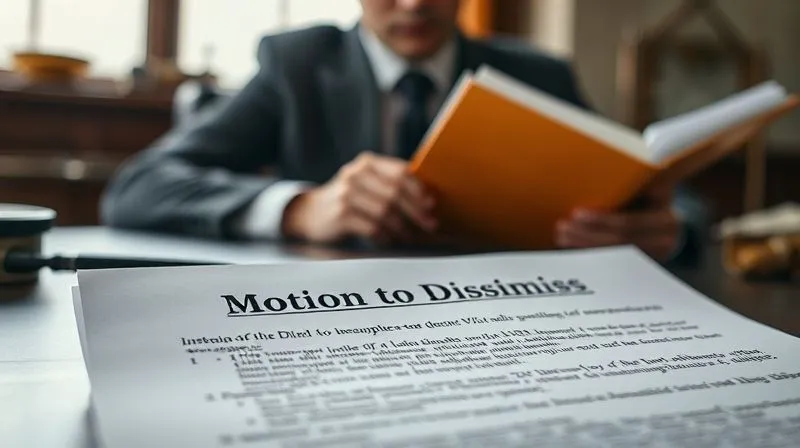
Step 5: Preparing for Court – Depositions, Mediation, and Trial
The legal process can involve several stages beyond discovery. Depending on the complexity of your case and the court's procedures, you might encounter depositions, mediation, and eventually, a trial. Each stage requires careful preparation.
Depositions: These are out-of-court, sworn testimonies taken from parties or witnesses. If you are deposed, the opposing attorney will ask you questions under oath. Your attorney will prepare you for this, ensuring you understand the process and how to answer truthfully and effectively without inadvertently harming your case. I always advise clients to be honest, concise, and never guess.
Mediation: Many courts require or offer mediation as a way to settle disputes outside of trial. A neutral third party (the mediator) helps both sides explore settlement options. This can be an excellent opportunity to negotiate a dismissal, a reduced settlement, or a payment plan, especially if the debt collector realizes their case is weak due to lack of documentation. Your attorney's negotiation skills are paramount here.
Trial: If no settlement is reached, the case proceeds to trial. This is where both sides present their evidence, call witnesses, and make arguments to a judge or jury. For an undocumented debt, your attorney will focus on the plaintiff's inability to produce the necessary documents to prove ownership and the amount of the debt. This is where all your discovery efforts pay off.
Throughout this process, organization is key. Keep all documents, correspondence, and notes meticulously organized. Your attorney will guide you, but an informed and prepared client is always an asset.
Step 6: Counterclaims – Turning the Tables on Violating Collectors
Sometimes, the best defense is a good offense. If the debt collector suing you has violated your rights under the Fair Debt Collection Practices Act (FDCPA) or state consumer protection laws, you might be able to file a counterclaim against them. This means you sue them within the same lawsuit they filed against you.
FDCPA violations are common among aggressive debt collectors. Examples include:
- Calling you at unreasonable hours (before 8 AM or after 9 PM).
- Calling you repeatedly with intent to annoy or harass.
- Threatening you with violence or arrest.
- Using obscene or profane language.
- Making false statements about the amount or legal status of the debt.
- Contacting third parties about your debt (other than to locate you).
- Suing you on a time-barred debt, knowing it's past the Statute of Limitations.
- Failing to provide proper debt validation notices.
If you can prove FDCPA violations, you could be entitled to statutory damages (up to $1,000), plus actual damages (for emotional distress, lost wages, etc.), and importantly, your attorney's fees and court costs. This potential liability can be a powerful incentive for a debt collector to drop their lawsuit or settle on very favorable terms for you. I've seen many cases where a debt collector's aggressive tactics backfire, leading to them paying the consumer, not the other way around. For more details on FDCPA violations and your rights, the Federal Trade Commission (FTC) is an excellent resource.

Step 7: Beyond the Lawsuit: Rebuilding Your Financial Footing
Winning a lawsuit against a debt collector, or getting the case dismissed, is a significant victory, but your journey doesn't end there. It's crucial to address the aftermath and ensure your financial footing is secure. This often involves reviewing and potentially correcting your credit report.
A lawsuit, even if dismissed, might appear on your credit report. If the debt was inaccurate, unproven, or dismissed, you have the right to dispute those entries with the credit bureaus (Experian, Equifax, and TransUnion). Provide them with copies of court orders or dismissal notices. If the information is inaccurate or cannot be verified by the creditor, it must be removed.
Furthermore, this experience should be a catalyst for proactive financial planning. Take steps to understand your current financial situation, create a realistic budget, and build an emergency fund. Consider credit counseling if you feel overwhelmed. The goal is not just to defeat a debt collector but to emerge from the experience with greater financial resilience and knowledge.
Remember, this entire process is about protecting your consumer rights. You have the right to demand proof, to defend yourself, and to ensure that only legitimate, verifiable debts are collected. This experience, while challenging, can be a powerful lesson in financial literacy and self-advocacy.

Frequently Asked Questions (FAQ)
Q1: Can a debt collector sue me without any documents? Yes, they can file a lawsuit, but it doesn't mean they will win. Many debt collectors, especially debt buyers, often sue with minimal documentation, hoping for a default judgment. Your defense strategy will hinge on demanding proof through discovery and asserting their 'lack of standing' if they cannot provide it.
Q2: What's the difference between a debt validation letter and an answer to a lawsuit? A debt validation letter is a request, typically sent to a debt collector outside of court, asking them to prove the debt's legitimacy. While you can send one even after being sued, it doesn't replace the need for a formal legal response. An 'Answer' to a lawsuit is a mandatory court document filed with the court, responding to each specific allegation in the plaintiff's complaint and asserting your legal defenses. Failing to file an Answer will result in a default judgment.
Q3: What if I can't afford a lawyer? Many legal aid organizations offer free or low-cost legal services for consumers, especially in debt defense cases. Some attorneys also offer pro bono (free) services or work on a contingency basis if you have a strong counterclaim for FDCPA violations. Don't assume you can't afford representation; explore all options, including contacting your local bar association for referrals or searching online for consumer law clinics.
Q4: How does the Statute of Limitations apply to undocumented debt? The Statute of Limitations is a time limit set by state law for how long a creditor or debt collector has to sue you for a debt. If the debt is 'time-barred' (meaning the period has expired), you can use this as an absolute defense, even if you owe the debt. It's crucial to determine the last activity date on the account to calculate if the debt is time-barred. This defense is often very effective, especially for older, undocumented debts.
Q5: Will this lawsuit ruin my credit score permanently? Not necessarily. While a collection account or a civil judgment can negatively impact your credit score, winning a lawsuit or getting it dismissed can mitigate or even reverse some of that damage. If the lawsuit is dismissed, you can dispute any related negative entries on your credit report with the credit bureaus, providing them with documentation of the dismissal. Timely action and professional guidance can help protect and rebuild your credit.
Key Takeaways and Final Thoughts
Being sued by a debt collector for an undocumented debt is undoubtedly a stressful experience, but it is far from a hopeless situation. As an industry veteran, I’ve seen countless consumers successfully defend themselves, often turning the tables on collectors who thought they could win by default. Your proactive engagement and informed defense are your most powerful assets.
- Never Ignore a Summons: Respond promptly to avoid default judgments.
- Seek Legal Counsel: A consumer law attorney is your strongest ally.
- Demand Proof: Utilize debt validation and discovery to expose missing documentation.
- Know Your Defenses: Lack of standing and the Statute of Limitations are potent tools.
- Consider Counterclaims: If FDCPA violations occurred, you might be able to sue the collector.
- Document Everything: Maintain meticulous records of all correspondence and court documents.
Remember, the legal system is designed to be fair, and the burden of proof rests squarely on the party bringing the lawsuit. By understanding your rights, acting strategically, and leveraging expert guidance, you can navigate this challenge, protect your financial integrity, and emerge stronger and more financially resilient. Don't let fear paralyze you; empower yourself with knowledge and action.
Recommended Reading
- 5 Proven Strategies: Mitigating Tail Risk in Multi-Asset Portfolios
- Stuck Refund? 7 Steps to Expedite Your Client's Federal Tax Money Now
- Secure Your Web3 Future: Ultimate Guide to Crypto Wallet Security
- 7 Proven Strategies: Minimize Tax Liabilities Selling Your Profitable Business
- 7 Steps: Proving Redlining in Mortgage Applications & Your Rights





Comments
Leave a comment below. Your email will not be published. Required fields marked with *