



What to Do When Commercial Property Occupancy Drops Below 50%?
For over two decades in the commercial real estate sector, I've witnessed firsthand the cyclical nature of the market, the exhilarating highs, and the challenging lows. One of the most critical junctures a property owner or asset manager can face is when their commercial property occupancy drops below 50%. This isn't just a red flag; it's a blaring alarm, signaling that immediate, strategic intervention is required to prevent further value erosion and potential financial distress.
The pain point is palpable: dwindling rental income, escalating operating costs per occupied square foot, and the looming threat of loan covenant breaches. Empty corridors and vacant suites don't just represent lost revenue; they project an image of decline, deterring potential tenants and negatively impacting property valuation. This situation demands more than just incremental adjustments; it calls for a holistic, aggressive, and data-driven turnaround strategy.
In this comprehensive guide, I will share the frameworks, actionable steps, and expert insights I've developed and applied over the years to navigate and reverse such dire occupancy trends. We will delve into strategic market analysis, tenant engagement, financial optimization, and even the difficult decisions of repositioning or divestment, offering a clear roadmap for precisely what to do when commercial property occupancy drops below 50% and how to restore your asset to profitability and vitality.
1. Conduct a Deep-Dive Market Analysis and Property Audit
When occupancy tanks, the first step isn't to slash rents, but to understand why. A superficial glance won't suffice; you need a granular understanding of both the external market dynamics and the internal performance of your asset. This comprehensive audit serves as the foundation for every subsequent decision.
- External Market Scan: Analyze current and projected economic indicators, local job growth, demographic shifts, and competitive supply pipeline. Look at lease rates, absorption rates, and vacancy trends for comparable properties in your submarket. Are new developments offering superior amenities or pricing?
- Internal Property Performance Review: Scrutinize your property's historical performance. Which tenant types have left? What were their reasons? What is your current tenant retention rate? Evaluate your building's physical condition, infrastructure, and amenities. Is it outdated? Does it meet modern tenant demands for technology, sustainability, or wellness?
- Competitor Analysis: Identify your direct competitors. What are their strengths and weaknesses? What are they offering in terms of incentives, lease terms, and tenant experiences? Mystery shop their properties if possible to gain firsthand insight.
- SWOT Analysis: Perform a detailed Strengths, Weaknesses, Opportunities, and Threats analysis specific to your property within its current market context. Be brutally honest about your property's deficiencies.
According to a recent report by Deloitte's Commercial Real Estate Outlook, properties that proactively adapt to changing tenant needs, often identified through thorough market analysis, are better positioned to weather economic downturns and maintain higher occupancy. Ignoring these signals is a recipe for continued decline.

"Understanding the 'why' behind your declining occupancy is paramount. Without a precise diagnosis, any 'cure' you attempt will be a shot in the dark, potentially wasting valuable resources and time."
2. Re-evaluate Your Tenant Mix and Value Proposition
Once you understand the market and your property's current standing, it's time to critically assess who you're targeting and what you're offering. The traditional office market, for instance, has been irrevocably altered by remote work, demanding a shift in focus from mere square footage to flexible spaces and enriched tenant experiences. Your value proposition must resonate with today's—and tomorrow's—commercial tenants.
Case Study: The Phoenix Tower's Transformation
I recall a client, the owner of a mid-sized office tower, "The Phoenix Tower," which saw its occupancy plummet to 40% post-pandemic. Their tenant base was predominantly traditional law firms and financial services, many of whom had downsized or adopted hybrid models. Our market analysis revealed a strong demand for flexible workspaces, tech-enabled meeting rooms, and amenities catering to younger, more dynamic companies. Instead of chasing the same shrinking pool of tenants, we advised them to reposition. They invested in converting two floors into high-quality co-working spaces, added a state-of-the-art fitness center, and a vibrant rooftop lounge. They also revamped their ground-floor retail to include a popular local coffee shop and a healthy eatery. This strategic shift attracted a new wave of tech startups and creative agencies, boosting occupancy to 75% within 18 months and significantly increasing rental income per square foot due to higher demand for premium amenities.
Consider whether your property's current tenant mix aligns with market demand. Are you attracting the right industries? Are your amenities competitive? Harvard Business Review often emphasizes the importance of employee experience, which directly translates to tenant demand for high-quality, amenity-rich workspaces.
| Tenant Type | Space Needs | Amenities Sought | Market Trend |
|---|---|---|---|
| Traditional Office (Pre-50% Drop) | Large, fixed offices; long leases | Basic utilities, parking | Declining demand, remote work impact |
| Modern Office/Flex Space | Flexible layouts, collaboration zones | High-speed internet, wellness, co-working, retail | Growing demand for hybrid models, experiential spaces |
| Medical/Specialized Services | Specific build-outs, accessibility | Patient comfort, easy access | Stable/growing, demographic-driven |
| Creative/Tech Hub | Open plan, collaborative, vibrant | Community events, unique design, tech infrastructure | Strong growth in innovation hubs |
This table illustrates the potential mismatch between an outdated offering and evolving tenant expectations. A successful repositioning often involves a complete overhaul of your value proposition, moving beyond just square footage to offering a comprehensive "experience."
3. Implement Aggressive Marketing and Leasing Strategies
With a clear understanding of your target tenants and a refined value proposition, the next step is to execute a relentless marketing and leasing campaign. This isn't about passive advertising; it's about proactive, multi-channel engagement designed to generate leads and convert them efficiently. When occupancy is below 50%, every lead counts.
- Digital Presence Overhaul: Ensure your property has a professional, modern website with high-quality photos, virtual tours, and detailed floor plans. Optimize for local SEO so potential tenants can find you easily. Utilize targeted social media campaigns on platforms like LinkedIn.
- Broker Engagement & Incentives: Re-engage with top local commercial real estate brokers. Offer competitive co-broking fees and performance-based bonuses for bringing in quality tenants. Provide them with comprehensive marketing materials and a clear understanding of your new value proposition.
- Targeted Outreach: Develop a list of ideal prospective tenants based on your market analysis. Conduct direct outreach via email, phone, and even personalized mailers. Highlight how your property specifically addresses their business needs.
- Tenant Incentives & Flexible Terms: In a low-occupancy environment, you may need to offer attractive incentives such as free rent periods, tenant improvement allowances, or flexible lease terms (e.g., shorter initial terms with renewal options, expansion clauses). Be creative but ensure incentives align with your long-term financial goals.
- Community & Event Hosting: Host open houses, industry networking events, or even local community gatherings at your property. This generates buzz, showcases the space, and allows potential tenants to experience the environment firsthand.
I've consistently found that properties that invest in professional photography, drone footage, and immersive virtual tours see significantly higher engagement from prospective tenants. It's about selling a vision, not just an empty space.

Remember, the goal is to create a sense of desirability and urgency. Your marketing should not just inform, but inspire. It's not just about filling space; it's about curating a vibrant ecosystem that attracts and retains businesses.
4. Optimize Operating Costs and Capital Expenditures
While driving revenue through increased occupancy is paramount, managing expenses becomes equally critical when income streams are constrained. Every dollar saved on operating costs directly impacts your net operating income (NOI), providing crucial breathing room and demonstrating fiscal responsibility to potential lenders and investors. This is a battle fought on two fronts: reducing unnecessary spending and making smart, value-add capital investments.
Begin with a meticulous line-item review of all operating expenses. Can you renegotiate service contracts for cleaning, security, or landscaping? Are there opportunities for energy efficiency upgrades that offer a rapid return on investment, such as LED lighting conversions, smart HVAC systems, or improved insulation? These measures not only reduce costs but also make your property more attractive to environmentally conscious tenants.
Conversely, critically evaluate your capital expenditure budget. While it might be tempting to defer all CapEx, strategic investments can be crucial for attracting new tenants. Prioritize improvements that directly enhance tenant experience or address critical deferred maintenance issues that could deter prospects. This might include modernizing lobbies, upgrading common areas, or improving internet infrastructure. As Forbes Advisor frequently highlights, smart cost-cutting isn't about deprivation; it's about optimization and strategic allocation of resources.
"In a low-occupancy environment, every penny saved on operations is a penny earned. But never cut corners on essential maintenance or value-add improvements that directly impact tenant appeal."
Consider implementing a robust property management software that can track utility consumption, maintenance schedules, and tenant requests more efficiently. Automation and data analytics can reveal hidden cost-saving opportunities and improve operational workflows, leading to a leaner, more effective property management team.
5. Explore Repositioning or Adaptive Reuse Opportunities
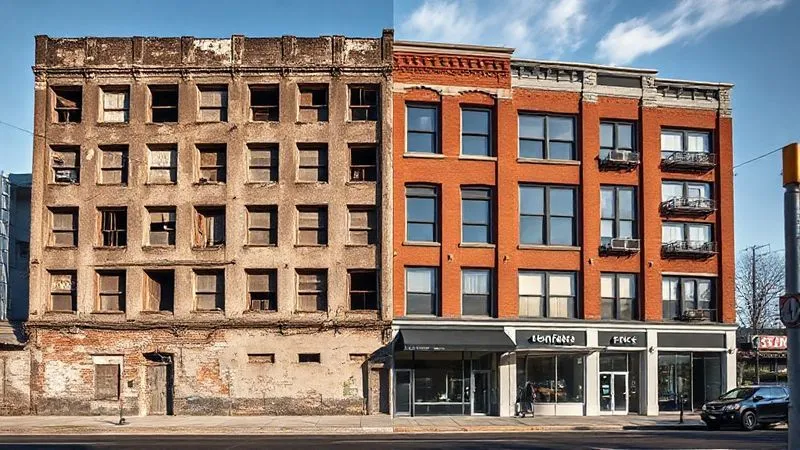
Sometimes, the market has shifted so fundamentally that your property's original purpose is no longer viable. When commercial property occupancy drops below 50% and shows no signs of natural recovery, it's time to consider a more radical transformation: repositioning or adaptive reuse. This involves reimagining the property's highest and best use, potentially converting it to a completely different asset class.
Could your underperforming office building be converted into residential apartments, particularly in areas with housing shortages? Is there demand for specialized medical office space, a data center, or even vertical farming? Repositioning might involve a lighter touch, such as converting traditional offices into flexible co-working spaces, or a complete structural overhaul for adaptive reuse. This strategy requires extensive market research, feasibility studies, and often, navigating complex zoning and permitting processes. However, the potential upside can be substantial, unlocking new revenue streams and significantly increasing property value.
| Original Use | Potential Adaptive Reuse 1 | Potential Adaptive Reuse 2 | Potential Adaptive Reuse 3 | Key Challenge |
|---|---|---|---|---|
| Traditional Office Building | Residential Apartments | Life Sciences Lab/Medical Office | Flex/Co-working Space | Zoning, structural, capital cost |
I've seen obsolete retail centers successfully transformed into last-mile distribution hubs, and old factories revitalized as vibrant mixed-use developments. This isn't for the faint of heart, but it's a powerful tool in your arsenal when conventional strategies fail. The key is to identify genuine market demand for an alternative use and assess the financial and regulatory feasibility. Research from institutions like the Urban Institute frequently highlights the economic and social benefits of adaptive reuse in revitalizing urban cores.
"Don't be afraid to challenge the status quo of your property's purpose. Sometimes, the greatest value is unlocked by seeing it through an entirely new lens, aligning with the evolving needs of the market."
6. Engage Stakeholders: Lenders, Investors, and Property Managers
When facing a significant drop in occupancy, transparency and proactive communication with all stakeholders are not just advisable; they are essential. Your lenders, investors, and even your property management team need to be fully informed and brought into the strategy development process. Ignoring them can lead to distrust, panic, and potentially more severe financial repercussions.
Schedule regular, honest meetings with your lenders. Present them with your detailed market analysis, your turnaround strategy, and realistic financial projections. Be prepared to discuss potential covenant breaches and explore options like temporary interest-only payments, loan modifications, or even additional capital infusions. Demonstrating a clear, credible plan of action can instill confidence and open doors to solutions that might otherwise be unavailable. Lenders are typically more willing to work with borrowers who are transparent and proactive, rather than those who hide problems until it's too late. Organizations like the Commercial Real Estate Finance Council (CREFC) often provide guidance on navigating distressed asset scenarios, emphasizing communication.
Similarly, keep your investors informed. They need to understand the challenges, the strategic response, and the potential impact on their returns. Your property management team, being on the ground, possesses invaluable insights into tenant feedback, operational challenges, and local market nuances. Empower them, listen to their input, and ensure they are fully aligned with your repositioning and leasing efforts. They are your eyes and ears and crucial for executing your strategy effectively.
A unified front, built on trust and shared understanding, significantly enhances your ability to navigate the crisis and implement solutions efficiently. It also allows for collective problem-solving and leveraging diverse expertise.
7. Consider Strategic Divestment or Partnership
Despite best efforts, there are situations where retaining full ownership of an underperforming asset, especially when commercial property occupancy drops below 50%, might no longer be the optimal strategy. This is a difficult conversation, but a necessary one. Strategic divestment or seeking a partnership can sometimes be the most financially prudent decision, allowing you to cut losses, reallocate capital, and preserve overall portfolio health.
A strategic divestment doesn't necessarily mean a fire sale. It means proactively seeking out buyers who might be better equipped to manage the asset's challenges, perhaps due to different investment mandates, greater capital resources for repositioning, or specialized expertise in a niche market. This requires a clear-eyed assessment of the property's future potential versus the capital and effort required to realize it. Sometimes, selling at a discount today prevents greater losses tomorrow.
Alternatively, consider a joint venture or partnership. Bringing in a partner with capital, specific market expertise (e.g., adaptive reuse specialists), or a strong tenant network can inject new life into the asset. This allows you to share the risk and the reward, leveraging combined strengths to turn the property around. This path often requires careful structuring to align interests and ensure clear governance. Academic research on distressed asset resolution, such as studies found in journals like the Journal of Property Management, often explores the nuances of strategic sales and partnerships in challenging markets.

The decision to divest or partner is a complex one, requiring careful financial modeling, tax implications analysis, and a realistic assessment of market conditions. It's about making the tough call to protect your overall investment strategy and move forward, even if it means letting go of an asset that has become a significant drain.
Frequently Asked Questions (FAQ)
Q: How quickly can I expect to see results from these strategies? A: The timeline for recovery can vary significantly based on market conditions, the extent of the occupancy drop, and the capital available for investment. While some marketing efforts can yield quick leads, a full turnaround, especially involving repositioning or adaptive reuse, can take anywhere from 12 to 36 months. Consistency and patience are key, but immediate action on all fronts is crucial to stop the bleeding.
Q: Should I offer aggressive rent concessions to attract tenants? A: Rent concessions can be a necessary tool in a low-occupancy market, but they should be strategic. Excessive concessions can devalue your asset and attract financially weaker tenants. Focus on value-add incentives like tenant improvement allowances, flexible lease terms, or amenity access rather than just slashing base rent. Always calculate the net effective rent to understand the true financial impact.
Q: What role does technology play in improving occupancy? A: A significant role. Modern tenants expect smart building technologies, high-speed internet, and robust digital infrastructure. Implementing smart access control, energy management systems, and tenant engagement apps can enhance the tenant experience, improve operational efficiency, and differentiate your property in a competitive market. Technology is no longer a luxury but a necessity for attracting and retaining tenants.
Q: How do I handle existing tenants when occupancy is low? A: Existing tenants are your most valuable asset during a crisis. Focus on retention by ensuring their satisfaction, addressing maintenance issues promptly, and fostering a sense of community. Consider offering incentives for renewals or for referring new tenants. Their positive experience and continued presence are crucial for maintaining the property's reputation and generating positive word-of-mouth.
Q: When is it time to consider selling the property rather than trying to turn it around? A: This is a critical decision. It's time to consider selling when your comprehensive market analysis indicates a fundamental, long-term shift in demand for your property type in its location, when the capital required for a successful turnaround far exceeds the potential return, or when your financial situation (e.g., loan covenants) makes continued ownership untenable. A realistic assessment of future cash flows and alternative investment opportunities should guide this decision.
Key Takeaways and Final Thoughts
- Act Decisively, Not Impulsively: A drop below 50% occupancy demands immediate, but well-thought-out, strategic action based on deep analysis.
- Understand Your Market & Asset: A thorough audit of external market conditions and internal property performance is the bedrock of any successful turnaround.
- Reimagine Your Value: Be prepared to redefine your property's value proposition, tenant mix, and even its core purpose through repositioning or adaptive reuse.
- Aggressive Execution: Implement targeted marketing, flexible leasing strategies, and smart cost optimization with unwavering commitment.
- Engage All Stakeholders: Foster transparent communication and collaboration with lenders, investors, and your property management team.
- Be Prepared for Tough Decisions: Strategic divestment or partnership may be the most prudent path if a turnaround is not feasible or too costly.
The challenge of low commercial property occupancy is formidable, but it is not insurmountable. I've guided numerous clients through these difficult waters, transforming struggling assets into thriving enterprises by applying these very principles. Remember, every crisis presents an opportunity for transformation. By embracing a proactive, data-driven, and adaptable approach, you can navigate these challenges, restore your asset's value, and emerge stronger than before. Your property's next chapter starts with your next strategic move.
Recommended Reading
- Mastering P2P Lending: 7 Strategies to Cut Business Loan Default Rates by 25%
- Stop Lifestyle Creep: 7 Strategies to Keep Your Promotion Pay Raise
- Unlock Smarter Lending: How Explainable AI Improves Banking Decisions
- 7 Steps to Prove Predatory Lending Intent in Subprime Mortgages
- 7 Legal Ways High-Earners Slash Taxes on Passive Income




Comments
Leave a comment below. Your email will not be published. Required fields marked with *