



What to do if you underpaid small business estimated taxes?
For over two decades specializing in small business taxation, I've personally witnessed the quiet panic of countless entrepreneurs realizing they’ve underpaid their estimated taxes. It’s a common, often unintentional oversight that can cast a long shadow of anxiety, especially as tax deadlines loom or, worse, after they’ve passed.
The immediate thought is often, “Am I going to face huge penalties? Is the IRS coming for me?” This stress is palpable, stemming from a fear of the unknown and the complex nature of tax regulations. Many small business owners, understandably focused on growing their ventures, find themselves caught off guard by the intricacies of the “pay-as-you-go” system.
But here’s the crucial insight I want to impart: while underpayment can lead to penalties, it’s far from an unfixable disaster. In this definitive guide, I will walk you through a clear, actionable framework — drawing from my extensive experience — to address <b>what to do if you underpaid small business estimated taxes</b>. We’ll cover everything from precise calculation methods and penalty mitigation strategies to proactive measures that will safeguard your business from future surprises.
Understanding Estimated Tax Penalties: Why It Matters
First, let's demystify why estimated taxes exist and why underpaying them triggers penalties. The U.S. tax system operates on a "pay-as-you-go" principle. This means you're expected to pay income tax as you earn or receive income throughout the year, rather than in one lump sum at tax time. For employees, this is handled through payroll withholding. For small business owners, freelancers, and self-employed individuals, this responsibility falls on estimated tax payments.
The IRS assesses penalties for underpayment because failing to pay enough tax throughout the year essentially means you've used government funds interest-free. These penalties are designed to encourage timely and accurate payments. It's not about punishment, but about ensuring the system works as intended. Understanding this fundamental principle is the first step toward regaining control.
Expert Insight: "The IRS isn't trying to make your life difficult; they're upholding the integrity of a complex financial system. Think of estimated taxes as your business's quarterly contribution to keeping that system running smoothly. Underpayment is a deviation, and penalties are the mechanism to correct that deviation."
The penalty itself isn't a fixed amount; it's calculated based on several factors, including the amount of underpayment, the period of underpayment, and the applicable interest rate set by the IRS. It's crucial to understand these variables to assess your potential exposure.
| Factor | Description |
|---|---|
| Underpayment Amount | The difference between what you should have paid and what you actually paid for each quarter. |
| Period of Underpayment | How long the payment was late. Penalties accrue from the due date of the estimated payment until the tax is paid. |
| IRS Interest Rate | The IRS sets a quarterly interest rate (federal short-term rate plus 3 percentage points) applied to the underpaid amount. |
| Payment Due Dates | Penalties are calculated separately for each estimated tax installment due date (April 15, June 15, Sept 15, Jan 15 of next year). |
As you can see, the longer an underpayment persists and the larger the amount, the more significant the penalty can become. This underscores the urgency of addressing the situation promptly.
Step 1: Calculate Your True Tax Liability and Underpayment
The very first, non-negotiable step is to gain absolute clarity on your actual tax situation. You can't fix a problem if you don't fully understand its scope. This involves meticulously reviewing your income, deductions, and credits for the entire tax year in question. Many entrepreneurs make estimated payments based on projections that later prove inaccurate, especially in years of unexpected growth or significant expenses.
Here's how to approach this critical recalculation:
- Gather All Financial Records: Collect bank statements, income reports, expense receipts, payroll records (if applicable), and any other financial documentation for the entire tax year. This includes revenue from all business activities, passive income, and capital gains.
- Categorize Income and Expenses: Ensure all business income is properly accounted for and all legitimate business expenses are categorized and totaled. Don't forget deductions like home office expenses, business mileage, and health insurance premiums for the self-employed.
- Identify All Applicable Credits: Review potential tax credits your small business might qualify for, such as research and development credits, energy credits, or credits for hiring specific types of employees. These can significantly reduce your tax liability.
- Recalculate Your Total Taxable Income: Subtract your total deductions from your total income to arrive at your net taxable income.
- Determine Your Actual Tax Liability: Apply the current tax rates to your taxable income. Factor in self-employment taxes (Social Security and Medicare) if you're a sole proprietor or partner.
- Compare to Payments Made: Subtract the total estimated tax payments you *actually* made throughout the year from your newly calculated actual tax liability. The resulting figure is your underpayment amount.
This detailed exercise provides the foundational data you need to move forward. Without it, any further steps would be guesswork, and in tax matters, guesswork is a recipe for more problems.
Step 2: Explore Penalty Waivers and Exceptions
Once you know your underpayment amount, your next move is to investigate if you qualify for any penalty waivers or exceptions. The IRS isn't always a rigid, unyielding entity; they do provide provisions for certain circumstances. Knowing these can significantly reduce or even eliminate your underpayment penalty. This is a crucial aspect of <b>what to do if you underpaid small business estimated taxes</b>.
Common grounds for penalty waivers include:
- Unusual Circumstances: If the underpayment was due to a casualty, disaster, or other unusual circumstances (e.g., severe illness, death of a spouse), you might qualify for a waiver.
- Retirement or Disability: If you retired after reaching age 62 or became disabled during the tax year for which estimated payments were due, and the underpayment was due to reasonable cause and not willful neglect, you might be eligible.
Beyond waivers, there are specific "safe harbor" rules that, if met, can protect you from penalties even if your actual tax liability was higher than your estimated payments.
- 90% Rule: You generally won't face a penalty if you paid at least 90% of your current year's tax liability through estimated payments.
- 100% (or 110%) Prior Year Rule: Alternatively, you can avoid a penalty if you paid 100% of your prior year's tax liability (or 110% if your Adjusted Gross Income in the prior year was over $150,000) through estimated payments. This is often the safest bet for businesses with fluctuating income.
Case Study: Sarah's Startup and the Safe Harbor
Sarah launched "EcoGrow," a sustainable gardening supply e-commerce business, in late 2022. Based on modest initial projections, she diligently made her 2023 estimated tax payments using the 100% prior year rule, as her 2022 income was minimal. However, EcoGrow exploded in popularity in Q3 and Q4 of 2023, far exceeding her initial forecasts. By year-end, her actual tax liability was significantly higher than her estimated payments.
Initially, Sarah was panicked about a hefty underpayment penalty. But because she had met the <b>100% prior year safe harbor</b> rule — having paid 100% of her 2022 tax liability through her 2023 estimated payments — she was able to avoid the underpayment penalty entirely, despite owing a substantial amount at tax filing. This demonstrated the power of understanding and utilizing safe harbor provisions, even in a year of unexpected growth.

Always review these exceptions and safe harbors carefully, as they can provide significant relief. If you believe you qualify, you'll generally use Form 2210 to explain your situation to the IRS.
Step 3: Make an Additional Payment Immediately
If you've identified an underpayment and don't qualify for a full waiver, the next critical action is to make an additional payment as soon as possible. Why the urgency? Because underpayment penalties accrue interest from the due date of the estimated payment until the tax is paid. Every day counts.
By making an immediate payment, you stop the clock on further penalty accumulation. While it won't erase penalties for past periods, it will prevent them from growing larger. Think of it as plugging a leak — you're stopping the damage from getting worse.
How to make an additional payment:
- IRS Direct Pay: This is the easiest and fastest way to pay directly from your checking or savings account. You can schedule payments up to 365 days in advance.
- EFTPS (Electronic Federal Tax Payment System): If you're a business, you likely already use EFTPS. It's a secure way to make federal tax payments electronically.
- Mail a Check: You can still mail a check or money order with Form 1040-ES, Estimated Tax for Individuals, payment voucher. Be sure to send it to the correct address for your state.
When making this payment, clearly indicate that it's for the tax year in which the underpayment occurred. While this payment will reduce the penalty, it won't resolve the need to file Form 2210 later, which formally explains your underpayment and any applicable waivers.
Step 4: Adjust Your Remaining Estimated Payments
Addressing past underpayments is vital, but equally important is preventing future ones within the same tax year. Once you've recalculated your true tax liability (from Step 1) and made an additional payment (from Step 3), you need to adjust your estimated payments for the remaining quarters of the current tax year.
This is where proactive tax planning comes into play. In my experience, many small business owners make the mistake of setting their estimated payments at the beginning of the year and never revisiting them. Business income, however, is rarely static.
Consider these factors when adjusting:
- Seasonal Income Fluctuations: Does your business have peak seasons? Adjust payments to reflect higher income in those quarters.
- Unexpected Expenses: Large, unforeseen business expenses (e.g., equipment breakdown, significant repairs) can reduce your taxable income, potentially allowing for lower future estimated payments.
- Growth or Contraction: If your business is growing faster than anticipated, increase your payments. If it's slowing down, you might be able to reduce them.
- New Deductions or Credits: Have you incurred new deductible expenses or become eligible for new tax credits since your initial projections? Factor these in.

You can use the IRS Form 1040-ES worksheet or tax software to help you re-estimate your income and deductions for the remainder of the year. The goal is to ensure that by year-end, your total payments (including any additional payments made in Step 3) will meet one of the safe harbor rules, thereby preventing further penalties.
Step 5: File Form 2210, Underpayment of Estimated Tax by Individuals, Estates, and Trusts
This is the formal step where you communicate with the IRS about your underpayment and any reasons for it. Even if you've made an additional payment, you'll likely still need to file Form 2210, Underpayment of Estimated Tax by Individuals, Estates, and Trusts, with your annual tax return (Form 1040).
Form 2210 serves several crucial purposes:
- Penalty Calculation: It helps you calculate the precise amount of the underpayment penalty.
- Waiver Explanation: It allows you to explain if you qualify for any of the penalty waivers mentioned in Step 2.
- Annualized Income Method: If your income was not received evenly throughout the year (e.g., seasonal business), Form 2210 allows you to use the annualized income method. This method can often reduce or eliminate penalties by matching your payments more closely to when you actually earned the income.
Most tax software will guide you through Form 2210, but it's essential to understand its role. If you don't file Form 2210, the IRS will automatically calculate your penalty and send you a bill. By filing it yourself, you ensure that any waivers or the annualized income method are applied correctly, potentially leading to a lower or no penalty.
For detailed instructions and to download the form, always refer to the official IRS website: IRS Form 2210 and Instructions.
Proactive Strategies to Prevent Future Underpayments
Once you've navigated the immediate challenge of <b>what to do if you underpaid small business estimated taxes</b>, the real victory lies in implementing strategies to prevent this from happening again. In my professional experience, proactive planning is the cornerstone of stress-free small business taxation.
Here are some key strategies I recommend to my clients:
- Regular Financial Reviews: Don't wait until tax season. Schedule quarterly or even monthly reviews of your profit and loss statements. This allows you to track income and expenses in real-time and adjust your estimated payments accordingly.
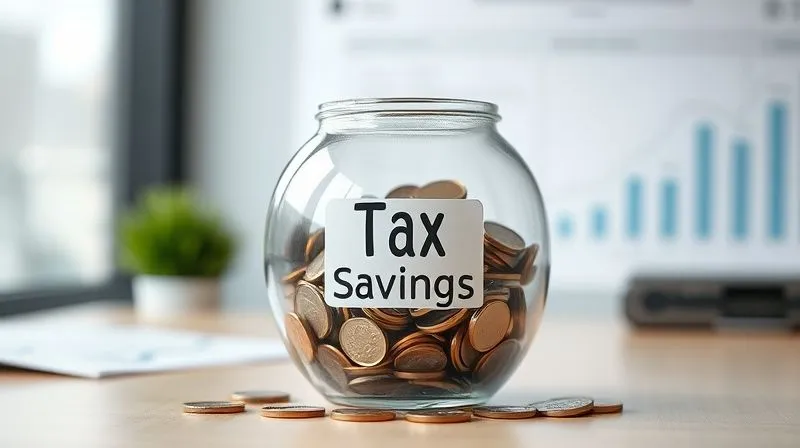
- Set Aside a "Tax Savings" Account: Open a separate bank account specifically for taxes. As income comes in, immediately transfer a percentage (e.g., 25-35%, depending on your income level and state taxes) into this account. This ring-fences your tax money, preventing you from accidentally spending it.
- Utilize Technology: Accounting software like QuickBooks, Xero, or FreshBooks can help you track income and expenses, generate financial reports, and even estimate your tax liability throughout the year.
- Understand Your "Safe Harbor": Know whether the 90% current year rule or the 100% (or 110%) prior year rule is more advantageous for your business, and aim to meet that threshold with your estimated payments.
- Build a Buffer: If possible, pay slightly more than your estimated minimum. A small overpayment is far better than an underpayment, as you'll simply get the excess back as a refund.
Expert Insight: "The most successful small businesses I've worked with treat tax planning not as an annual chore, but as an ongoing, integral part of their financial health. It's about consistent vigilance, not last-minute heroics."
By integrating these practices into your business operations, you transform estimated tax payments from a source of anxiety into a routine, manageable financial process.
When to Seek Professional Guidance
While this guide provides a comprehensive roadmap, there are times when the complexity of your situation warrants professional assistance. Knowing when to call in an expert isn't a sign of weakness; it's a mark of smart business acumen.
Consider consulting a tax professional if:
- Your Underpayment is Substantial: If the amount you underpaid is very large, the potential penalties can be significant, and an expert can help you explore all possible mitigation strategies.
- Your Business Structure is Complex: S-corps, partnerships, and multi-state operations often have more intricate tax requirements that are best handled by a professional.
- You Have Fluctuating or Irregular Income: If your income varies widely throughout the year, calculating estimated taxes and applying the annualized income method can be challenging. A CPA or Enrolled Agent can optimize these calculations.
- You're Facing Other IRS Issues: If the underpayment is part of a larger tax problem, professional representation is crucial.
- You Simply Want Peace of Mind: The emotional burden of tax issues can be immense. Offloading this to a trusted professional allows you to focus on running your business.
A qualified tax professional — such as a Certified Public Accountant (CPA) or an Enrolled Agent (EA) — can provide tailored advice, help you accurately calculate your liability, identify applicable waivers, and even represent you before the IRS if necessary. They have the expertise to navigate the nuances of tax law that can be overwhelming for a business owner.
You can find reputable tax professionals through organizations like the National Association of Enrolled Agents (NAEA) or the American Institute of CPAs (AICPA).
Frequently Asked Questions (FAQ)
Question: Can I avoid penalties completely if I underpaid my small business estimated taxes?
Answer: It's possible, but not guaranteed. You can avoid penalties if you meet one of the "safe harbor" rules (paid 90% of current year's tax or 100% of prior year's tax — 110% if your AGI was over $150,000). Additionally, specific waivers exist for unusual circumstances like casualty, disaster, or if you retired/became disabled during the tax year. Filing Form 2210 is crucial to claim these.
Question: What happens if I can't afford to pay the additional tax and penalty?
Answer: If you genuinely cannot afford to pay, do not ignore the issue. The IRS offers payment options, such as a short-term payment plan (up to 180 days) or an installment agreement (monthly payments for up to 72 months). You may also be able to request an Offer in Compromise (OIC) if you can prove you cannot pay your full tax liability. It's critical to contact the IRS promptly to arrange one of these options; penalties and interest will continue to accrue until the balance is paid.
Question: Is the underpayment penalty calculated quarterly or annually?
Answer: The underpayment penalty is calculated separately for each estimated tax installment due date. If you underpaid a specific quarter, the penalty generally applies from that quarter's due date until the underpayment is paid. Form 2210 helps the IRS determine if you paid enough estimated tax by each of the four due dates.
Question: Does my business structure (sole prop, S-corp, partnership) affect estimated taxes?
Answer: Yes, significantly. Sole proprietors and partners pay self-employment tax and income tax through estimated payments. S-corp shareholders generally pay estimated taxes based on their salary and any pass-through income. C-corporations have their own estimated tax rules and typically use Form 1120-W. Understanding your specific entity's requirements is key to accurate payments.
Question: What's the "annualized income method" and when should I use it?
Answer: The annualized income method is used if your income varies significantly throughout the year (e.g., seasonal businesses). Instead of assuming your income is earned evenly, this method allows you to calculate your tax liability and estimated payments based on your actual income earned up to each payment period. This can help reduce or eliminate underpayment penalties by matching your payments more closely to when you actually receive income. You elect to use this method by filing Form 2210, Schedule AI.
Key Takeaways and Final Thoughts
Realizing you’ve underpaid your small business estimated taxes can be unsettling, but it's a manageable situation with a clear path forward. As an experienced industry specialist, I've guided countless business owners through this challenge, and I can assure you that proactive, informed action is your best defense.
- Act Quickly and Accurately: Calculate your true liability immediately and make additional payments to stop penalty accrual.
- Explore All Avenues: Don't overlook penalty waivers or the safe harbor rules; they can significantly reduce your burden.
- Adjust and Plan Proactively: Use this experience to refine your future estimated payments and implement robust financial tracking.
- Don't Hesitate to Seek Expertise: For complex situations, a qualified tax professional is an invaluable asset.
Remember, the goal isn't just to fix the current issue, but to build a stronger, more resilient financial foundation for your small business. By taking these steps, you not only address the underpayment but also gain invaluable knowledge and systems to prevent future tax surprises. Your financial peace of mind, and your business's health, are worth the effort. For more resources on small business tax compliance, visit the SBA's tax guidance for small businesses.

Recommended Reading
- Unlock Financial Freedom: Your Ultimate Guide to a Sustainable Student Budget
- Decoding High Deductible Health Plans: Your Ultimate Guide
- 5 Strategies: Revive Team Morale After Zero-Based Budgeting Setbacks
- Breaking a Business CD Early? 5 Tax Implications You Must Know
- Unlock the Mystery: Why Do Your Insurance Premiums Skyrocket Annually?




Comments
Leave a comment below. Your email will not be published. Required fields marked with *