



Urgent Home Repair: How Professionals Access Emergency Funds?
For over 15 years in the financial planning and emergency fund sector, I've witnessed firsthand the devastating impact unexpected home repairs can have on individuals and families. It’s not just the financial blow; it's the immense stress, the feeling of helplessness, and the disruption to daily life. I vividly recall a client, a seemingly well-prepared couple, who were blindsided by a sudden burst pipe that flooded their entire basement. Their general emergency fund was robust, but they hadn't specifically earmarked or strategized for such a significant, urgent home repair. The panic was palpable.
The core problem isn't always a lack of funds, but rather a lack of a professional strategy for accessing and deploying those funds specifically for high-stakes, urgent home repairs. Many homeowners lump all emergencies into one generic savings pot, leaving them vulnerable when a major structural issue, a furnace breakdown in winter, or a failing roof demands immediate, substantial capital. This reactive approach often leads to hasty, expensive decisions, high-interest debt, or even prolonged living in unsafe conditions.
This article isn't just about telling you to save money; it's about equipping you with the same frameworks and insights I teach my most financially savvy clients. We'll delve into multi-tiered funding strategies, the smart use of home equity, leveraging insurance effectively, and even the strategic deployment of credit. My goal is to transform your approach to 'Urgent home repair: how professionals access emergency funds?' from a reactive scramble into a confident, pre-planned execution.
The Pro Mindset: Beyond a Simple Savings Account
When I work with clients, one of the first things we address is the mental shift required for true financial resilience. A "simple savings account" for emergencies, while a good start, is often insufficient for the scale and urgency of home repairs. Professionals understand that different emergencies require different types of funds, accessible at varying speeds and costs. It's about creating a robust financial ecosystem, not just a single reservoir.
Differentiating Repair Funds from General Savings
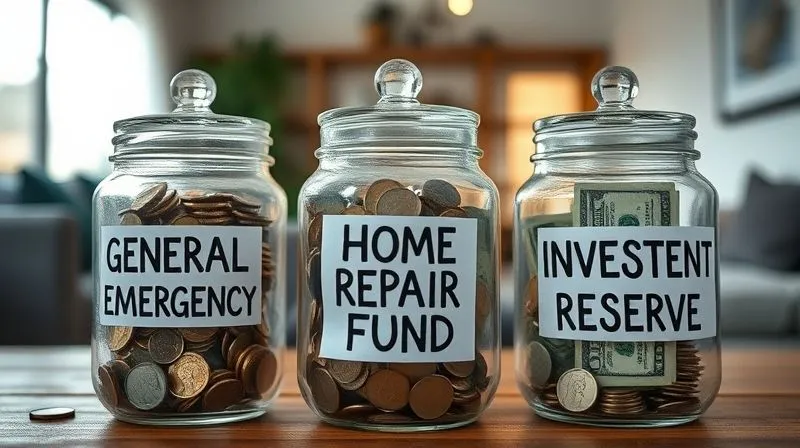
Think of your emergency funds as having different "buckets." Your general emergency fund covers job loss, medical emergencies, or unexpected travel. A dedicated home repair fund, however, is specifically for your property. This segregation is crucial for clarity and prevents you from depleting your primary safety net for a new roof. I've seen countless times where a homeowner dips into their general fund for a major repair, only to be left exposed when a job loss follows shortly after.
Actionable Steps for Setting Up Dedicated Accounts:
- Assess Your Home's Vulnerabilities: Consider the age of your roof, HVAC system, water heater, and major appliances. Research common repair costs for these items in your area. This helps you estimate a realistic target for your home repair fund.
- Open a Separate High-Yield Savings Account (HYSA): Designate this account solely for home repairs. The psychological barrier of a separate account makes it harder to dip into for non-repair emergencies. HYSAs also offer better returns than traditional savings accounts, helping your money grow, albeit slowly.
- Automate Contributions: Set up an automatic transfer from your checking account to your home repair HYSA each payday. Even small, consistent contributions add up significantly over time. Treat it like a non-negotiable bill.
- Review and Adjust Annually: As your home ages or your financial situation changes, revisit your repair fund target and adjust your contributions accordingly.
"The greatest mistake in emergency planning isn't failing to save, but failing to categorize and strategize those savings. A professional understands that a job loss requires a different financial response than a burst pipe."
Unlocking Tiered Emergency Funds: A Professional Approach
Professional financial planners don't just recommend a lump sum; they advocate for a tiered approach to emergency funds. This ensures liquidity when needed, while also allowing some funds to work harder for you. It's about optimizing accessibility versus growth, a critical balance when considering 'Urgent home repair: how professionals access emergency funds?'.
Tier 1: Immediate Liquidity (Cash, High-Yield Savings Accounts)
This tier is your first line of defense, designed for instant access for smaller, immediate repairs or initial deposits. It should be highly liquid and easily accessible, typically 1-3 months of estimated repair costs. This is where your dedicated HYSA comes in, or even a small amount of physical cash for truly urgent, cash-only situations.
Tier 2: Accessible but Growth-Oriented (Money Market Accounts, Short-Term CDs)
Once your Tier 1 is adequately funded, Tier 2 holds funds that you might need within a few days or weeks. These accounts offer slightly better interest rates than HYSAs but might have minor restrictions or penalties for early withdrawal. This tier is suitable for larger repairs that aren't necessarily "day-of" emergencies but still require substantial funds quickly.
Tier 3: Strategic Reserves (Home Equity Line of Credit (HELOC), Investment Lines of Credit)
This tier represents your deepest reserves, typically for very large, unexpected repairs that exceed your liquid funds. A HELOC can be pre-approved and provides a line of credit against your home's equity, offering a flexible borrowing option. Investment lines of credit, secured by your investment portfolio, are another option for those with substantial assets, though they come with their own risks. These are not "savings" in the traditional sense but rather pre-arranged access to capital.
Comparing Emergency Fund Tiers for Home Repairs:
| Tier | Fund Type | Accessibility | Interest/Growth | Use Case |
|---|---|---|---|---|
| 1 (Immediate) | High-Yield Savings, Cash | Instant | Low | Small, urgent repairs (e.g., minor plumbing, appliance fix) |
| 2 (Medium-Term) | Money Market, Short-Term CDs | Days to Weeks | Moderate | Mid-sized repairs (e.g., HVAC replacement, water heater) |
| 3 (Strategic) | HELOC, Investment LOC | Pre-approved, days | N/A (borrowing) | Major structural repairs (e.g., roof replacement, foundation issues) |
Leveraging Home Equity Wisely: HELOCs and Home Equity Loans
For significant, unexpected home repairs that go beyond your liquid emergency funds, tapping into your home equity can be a professional and strategic move. However, it's crucial to understand the nuances between a Home Equity Line of Credit (HELOC) and a Home Equity Loan.
A Home Equity Line of Credit (HELOC) is a revolving line of credit, much like a credit card, but secured by your home. You can draw funds as needed, up to a certain limit, and only pay interest on the amount you've borrowed. This flexibility makes it ideal for uncertain repair costs or ongoing projects. The interest rates are typically variable, which is a consideration.
A Home Equity Loan, on the other hand, provides a lump sum of money upfront. You receive the full amount and begin repaying it immediately with fixed monthly payments over a set term. This is often better for a large, single, well-defined repair project where you know the exact cost. Both options put your home at risk if you default, so they should be approached with caution and a clear repayment plan.
In my experience, a pre-approved HELOC is a fantastic "Tier 3" emergency fund for home repairs. It sits there, ready, costing you nothing unless you draw from it. It's the ultimate financial parachute for major structural issues. However, the discipline to use it only for true emergencies is paramount. For more on the specifics of HELOCs and their appropriate use, I often refer clients to reputable financial resources like the Consumer Financial Protection Bureau's guide on HELOCs.

The Role of Insurance: Beyond Basic Coverage
Many homeowners view insurance as a static requirement, a necessary evil. Professionals see it as a dynamic, crucial component of their emergency fund strategy for home repairs. It's not just about having a policy; it's about having the right policy and understanding its limits and benefits before disaster strikes.
Reviewing Your Policy for Unexpected Damage
The first step is to thoroughly review your homeowner's insurance policy. Does it cover sudden and accidental damage from burst pipes? What about wind damage to your roof, or tree falls? Are there specific exclusions for things like mold, flood (which typically requires separate flood insurance), or earthquake damage? I've seen too many clients discover their coverage gaps only after an event, leading to immense financial strain. A quick annual review with your agent can save you hundreds, if not thousands, in out-of-pocket expenses.
Understanding Deductibles and Payouts
Your deductible is the amount you pay out-of-pocket before your insurance kicks in. A higher deductible means lower premiums but a larger initial cost during an emergency. Understanding this balance is key. Professionals factor their deductible into their Tier 1 or Tier 2 emergency funds. Furthermore, comprehending how payouts work (actual cash value vs. replacement cost) can significantly impact the funds you receive for repairs. For a deeper dive into understanding your homeowner's insurance, a trusted source like the Insurance Information Institute offers invaluable insights.
"Your insurance policy is a contract, not a guarantee of full coverage. Understanding its nuances is as critical as having the policy itself when facing urgent home repairs."
Strategic Credit Utilization: When to Use Credit Cards (and How)
While I generally advocate against using high-interest credit cards for large, unexpected expenses, there are specific, strategic instances where they can play a role in managing 'Urgent home repair: how professionals access emergency funds?'. This is not about accumulating debt, but about bridging a gap or leveraging short-term benefits.
For very immediate, smaller repairs where other funds aren't instantly accessible – perhaps a plumber requires payment on the spot before your HYSA transfer clears – a credit card can be a lifeline. The key is to have a plan to pay it off immediately when your dedicated funds become available. This prevents high-interest charges from eroding your financial stability.
Another strategic use can be with a 0% APR introductory offer credit card. If you know you have a large repair coming, and you're confident you can pay off the entire balance within the promotional period (typically 12-18 months), this can provide an interest-free loan. However, this strategy requires exceptional financial discipline and a robust repayment plan. Falling behind means facing retroactive interest charges that can quickly spiral out of control. Always prioritize paying off these balances well before the promotional period ends. As Forbes Advisor often highlights, careful planning is essential for 0% APR cards.
- Pros: Immediate access to funds, potential for 0% APR periods, convenience for small purchases.
- Cons: High-interest rates if not paid off quickly, potential to accumulate debt, negative impact on credit score if balances are high.
Case Study: Sarah's Basement Flood & Her Multi-Tiered Response
How Sarah Mastered Her Urgent Home Repair Funding
Let me share a real-world (though anonymized) example. Sarah, a client I worked with, owned an older home in a climate prone to heavy rainfall. We had established a comprehensive, multi-tiered emergency fund strategy for her. Her Tier 1 HYSA held $5,000 for immediate home repairs. Her Tier 2 money market account contained $15,000 for larger, but less immediate, issues. Critically, she also had a pre-approved HELOC for $50,000 as her Tier 3 strategic reserve.
One spring, torrential rains led to a sudden, catastrophic basement flood, damaging her furnace, hot water heater, and requiring extensive drywall replacement and mold remediation. The initial estimate was $28,000. Sarah didn't panic. She immediately accessed her Tier 1 fund for the $1,000 insurance deductible and to pay the initial emergency plumber. She then filed her insurance claim, which, after assessment, covered $18,000 of the damage.
This left her with an $9,000 gap ($28,000 repair - $1,000 deductible - $18,000 insurance payout). Instead of depleting her general emergency fund or resorting to high-interest loans, she drew $9,000 from her Tier 2 money market account. The funds were available within two business days, allowing her to pay contractors promptly and avoid delays. Her Tier 3 HELOC remained untouched, a testament to her robust planning. This resulted in her basement being fully restored within weeks, with minimal financial stress and no high-interest debt.

Building a Robust Emergency Fund: Actionable Steps for Homeowners
Now that we've explored the 'Urgent home repair: how professionals access emergency funds?' mindset and mechanisms, let's consolidate the actionable steps you can take to build your own robust system. This isn't a one-time setup; it's an ongoing commitment to your home's and your family's financial security.
- Calculate Your Home Repair Needs: Based on your home's age, condition, and local repair costs, estimate how much you'd need for major repairs (e.g., roof, HVAC, foundation). Aim for 1-3% of your home's value annually in your repair fund, or a lump sum equivalent to 3-6 months of major repair expenses.
- Establish Dedicated Accounts: Open a separate high-yield savings account exclusively for home repairs. This psychological barrier is incredibly effective.
- Automate Savings: Set up recurring transfers from your checking account to your home repair fund. Consistency is key, even if it's a small amount.
- Review and Optimize Insurance: Annually review your homeowner's policy with your agent. Understand your coverage, deductibles, and exclusions. Consider additional riders for specific risks in your area (e.g., flood, earthquake).
- Explore a HELOC (Pre-emptive Measure): If you have substantial home equity, consider applying for a HELOC as a Tier 3 strategic reserve. You don't have to use it, but having it in place provides immense peace of mind.
- Maintain Your Home Proactively: Regular maintenance is the best "preventative emergency fund." Small, consistent maintenance costs prevent large, sudden repair bills.
- Track Your Progress: Regularly check your emergency fund balances. Celebrate milestones and adjust your contributions as your financial situation evolves.
Avoiding Common Pitfalls: What Professionals Never Do
While knowing what to do is important, understanding what not to do is equally critical when addressing 'Urgent home repair: how professionals access emergency funds?'. These are the mistakes I've seen derail even well-intentioned homeowners.
Relying Solely on Credit Cards for Major Repairs
As discussed, credit cards have a tactical role, but they are not a substitute for a dedicated emergency fund, especially for significant home repairs. The high-interest rates can quickly turn a manageable repair into a suffocating debt burden, impacting your credit score and overall financial health. Professionals always prioritize liquid, low-cost funds first.
Underestimating Repair Costs and Timelines
Home repairs rarely come in under budget or ahead of schedule. Always factor in a contingency buffer, typically 10-20% above the initial estimate, especially for older homes or complex issues. Professionals understand the inherent uncertainties and plan accordingly, ensuring they have sufficient reserves to cover unexpected overruns.
Neglecting Regular Home Maintenance
This is perhaps the most overlooked aspect of emergency fund planning. Many urgent repairs stem from neglected maintenance. A leaky faucet ignored becomes water damage. A clogged gutter turns into a compromised foundation. Professionals understand that proactive maintenance is the cheapest form of "emergency fund" for home repairs, preventing many crises before they even begin. Investing a small amount regularly in maintenance saves exponentially on future urgent repairs.

Frequently Asked Questions (FAQ)
How much should be in an emergency fund specifically for home repairs? As a general guideline, I recommend saving 1-3% of your home's value annually for maintenance and unexpected repairs. For a $300,000 home, that's $3,000-$9,000 per year. Alternatively, aim for a lump sum equivalent to 3-6 months of major repair expenses, depending on the age and condition of your home. Older homes or those with complex systems will require more.
Is it ever okay to use a 401k for urgent home repairs? Generally, no. Tapping into your 401k for home repairs should be an absolute last resort. Early withdrawals (before age 59½) are subject to income tax and a 10% penalty, significantly eroding your retirement savings. While some plans allow for hardship withdrawals, the long-term cost to your retirement security is usually far too high. Prioritize all other funding tiers first.
What's the difference between a HELOC and a home equity loan for emergencies? A HELOC (Home Equity Line of Credit) is a revolving line of credit, like a credit card, where you borrow as needed up to a limit and only pay interest on the drawn amount. It's flexible for unknown costs. A Home Equity Loan provides a lump sum upfront, with fixed payments over a set term, ideal for known, large repair costs. Both use your home as collateral, so careful consideration is vital.
How often should I review my home repair emergency fund plan? I recommend an annual review, ideally at the same time you review your homeowner's insurance policy. This allows you to adjust your savings goals based on your home's aging, any new major appliances, or changes in your financial situation. It's also a good time to check interest rates on your savings accounts or HELOC.
Can I get government assistance for urgent home repairs? Potentially, yes. Various federal, state, and local programs exist, especially for low-income homeowners, seniors, or those in disaster-declared areas. Programs like USDA Rural Development loans, HUD grants, or local housing rehabilitation initiatives can offer assistance. It's worth researching options through your local housing authority or relevant government websites, but these often have eligibility requirements and can take time to process, making them less suitable for truly "urgent" needs.
Key Takeaways and Final Thoughts
- Adopt a Professional Mindset: Differentiate home repair funds from general emergency savings.
- Implement Tiered Funding: Utilize a multi-tiered approach (immediate, medium-term, strategic) for optimal access and growth.
- Leverage Home Equity Wisely: A pre-approved HELOC can be a powerful Tier 3 safety net.
- Master Your Insurance: Understand your policy's coverage, deductibles, and payout mechanisms.
- Use Credit Strategically: Credit cards can bridge gaps for small, immediate repairs, but avoid high-interest debt for large expenses.
- Prioritize Proactive Maintenance: Prevention is the best and cheapest form of emergency preparedness.
Navigating 'Urgent home repair: how professionals access emergency funds?' doesn't have to be a source of panic. By adopting these professional strategies, you transform potential financial crises into manageable challenges. Building this resilience takes time and discipline, but the peace of mind it offers is invaluable. Start today, establish your tiers, review your policies, and empower yourself to face any home repair with confidence and a clear financial plan.
Recommended Reading
- Unlock Your Future: Proven Strategies to Avoid Student Loan Default Consequences
- Secure Your Family Legacy After Retirement: The Ultimate Guide
- Unlock the Secrets: Staying Motivated While Paying Off Large Debts
- Unlock the Secret: Should You Pay Off Credit Cards Before Statement?
- Reduce University Tuition Fees: The Ultimate Guide for Students





Comments
Leave a comment below. Your email will not be published. Required fields marked with *