



Urgent: Bridge Healthcare Gap Before Medicare in Early Retirement?
For over two decades in financial planning, particularly with those eyeing an early exit from the workforce, I've witnessed a recurring anxiety: the looming healthcare gap before Medicare eligibility. It's a critical oversight that can derail even the most meticulously planned early retirement, leaving individuals vulnerable to unforeseen medical costs.
The dream of early retirement is often painted with images of freedom and leisure, but beneath that idyllic vision lies a formidable challenge: securing affordable, comprehensive health coverage for years, sometimes even a decade or more, before the safety net of Medicare kicks in. This isn't just a financial hurdle; it's a source of profound stress, leading many to delay their retirement dreams or enter early retirement ill-prepared.
This article isn't just about identifying the problem; it's about providing a clear, actionable roadmap. I'll share expert insights, practical strategies, and real-world examples to help you confidently navigate and bridge this crucial healthcare gap, ensuring your early retirement is as healthy and secure as you envision.
Understanding the Pre-Medicare Healthcare Landscape
The period between leaving employment and becoming eligible for Medicare at age 65 is often dubbed the 'healthcare gap.' For early retirees, this can be a significant stretch, potentially lasting many years. Unlike employer-sponsored plans, which often subsidize a large portion of premiums, individual health insurance can be astronomically expensive, especially if you have pre-existing conditions or live in an area with limited competitive options.
Understanding the landscape means acknowledging the financial reality. A recent study by Fidelity estimated that an average retired couple age 65 in 2023 may need approximately $315,000 saved (after tax) to cover healthcare expenses in retirement. While this figure is for post-Medicare, it underscores the substantial financial commitment healthcare demands. For those pre-Medicare, the costs are often even higher due to a lack of subsidies and comprehensive employer contributions.
The High Stakes of Unplanned Coverage
Without a solid plan to bridge this healthcare gap, early retirees face immense risks. A single unexpected medical emergency, a chronic illness diagnosis, or even routine medical care can quickly deplete carefully accumulated retirement savings. This isn't just about paying for doctor visits; it's about protecting your entire financial future from unforeseen health crises.
"Ignoring your pre-Medicare healthcare strategy is like building a dream home without a solid foundation. It might look good on the surface, but it's inherently vulnerable to collapse under pressure."
I've seen countless individuals forced back into the workforce or into financial hardship because they underestimated the cost and complexity of pre-Medicare healthcare. The key is to be proactive and informed, exploring all available options well before your planned early retirement date.

Strategy 1: Leveraging COBRA for Short-Term Coverage
The Consolidated Omnibus Budget Reconciliation Act (COBRA) offers a temporary lifeline for many who leave their jobs. It allows you to continue your existing employer-sponsored health coverage for a limited period, typically 18 months, but sometimes longer under specific circumstances. For some, COBRA can be a crucial part of the plan to bridge healthcare gap before Medicare in early retirement.
The primary advantage of COBRA is continuity. You keep the same plan, doctors, and prescription coverage you had while employed, which can be invaluable if you have ongoing medical treatments or prefer stability. However, this convenience comes at a significant cost. When you elect COBRA, you're responsible for paying the entire premium, including the portion your former employer used to cover, plus a small administrative fee (up to 2%). This can easily amount to $1,000-$2,000 or more per month for an individual, and substantially more for a family.
Who Qualifies for COBRA?
To be eligible for COBRA, your employer must have 20 or more employees, and you must have been covered by their health plan. Qualifying events include voluntary or involuntary job termination (except for gross misconduct) or reduction in hours. You generally have 60 days from the date of your qualifying event or the date you receive your COBRA election notice (whichever is later) to elect coverage.
While COBRA is expensive, it serves as an excellent short-term bridge, especially if you anticipate enrolling in another plan soon, or if you need to maintain specific coverage for a medical procedure already underway. It buys you time to research and secure a more permanent, potentially more affordable, solution.
| Option | Pros | Cons | Best For |
|---|---|---|---|
| COBRA | Continuity of coverage, familiar plan, no new deductibles/out-of-pocket maximums | Very expensive (employer + admin costs), limited duration (18-36 months), no subsidies | Short gaps (e.g., waiting for ACA open enrollment), specific ongoing medical needs, high-income individuals not qualifying for ACA subsidies |
Strategy 2: The Affordable Care Act (ACA) Marketplace & Subsidies
For many early retirees, the Affordable Care Act (ACA) Marketplace (often referred to as Obamacare) is the most viable and often most affordable path to comprehensive health coverage. The ACA offers individual and family health insurance plans, and crucially, provides premium tax credits (subsidies) that can significantly reduce your monthly costs, based on your income.
The key to maximizing ACA affordability in early retirement is managing your Modified Adjusted Gross Income (MAGI). Since you're no longer earning a salary, you have more control over your income sources, such as withdrawals from retirement accounts (401k, IRA), capital gains, or other taxable income. By strategically managing these, you can often qualify for substantial premium tax credits, making quality health insurance surprisingly affordable.
Calculating Your Eligibility for ACA Subsidies
Your eligibility for ACA subsidies is primarily determined by your household income relative to the Federal Poverty Level (FPL). You must estimate your annual income for the year you need coverage. It's a delicate balance: earn too much, and your subsidies decrease or disappear; earn too little, and you might fall into the 'Medicaid gap' in states that didn't expand Medicaid (though this is less common for early retirees with assets).
The 'subsidy cliff' was a concern where income just over 400% FPL meant losing all subsidies. The Inflation Reduction Act of 2022 eliminated this cliff until 2025, ensuring that no one pays more than 8.5% of their household income for a benchmark Silver plan, regardless of income. This change makes ACA plans much more attractive for early retirees with moderate incomes.
Choosing the Right ACA Plan
ACA plans are categorized into 'metal tiers': Bronze, Silver, Gold, and Platinum. These tiers indicate the percentage of medical costs the plan pays, on average:
- Bronze: Low monthly premiums, but high deductibles and out-of-pocket maximums. Best for healthy individuals who don't expect much medical care, but want protection from catastrophic events.
- Silver: Moderate premiums and deductibles. Crucially, if your income is below 250% FPL, you may qualify for "Cost-Sharing Reductions" (CSRs) with a Silver plan, which lowers your deductibles, co-pays, and out-of-pocket maximums, making it significantly more valuable.
- Gold/Platinum: High monthly premiums, but low deductibles and out-of-pocket maximums. Best for those who anticipate needing frequent medical care or have ongoing health conditions.
When selecting a plan, consider not just the premium, but also the deductible, co-pays, and the out-of-pocket maximum. Don't forget to check if your preferred doctors and hospitals are in the plan's network. For more detailed information on how these plans work, visit HealthCare.gov.
Strategy 3: Health Savings Accounts (HSAs) – A Triple Tax Advantage
Health Savings Accounts (HSAs) are one of the most powerful and often underutilized tools for addressing healthcare costs, especially when planning to bridge healthcare gap before Medicare in early retirement. To be eligible for an HSA, you must be enrolled in a High-Deductible Health Plan (HDHP) and not be enrolled in Medicare.
HSAs offer a unique triple tax advantage: 1) Contributions are tax-deductible (or pre-tax if through payroll), reducing your taxable income. 2) The money grows tax-free through investments. 3) Withdrawals are tax-free when used for qualified medical expenses, including deductibles, co-payments, prescription drugs, and even dental and vision care.
Many early retirees use their HSA as a long-term investment vehicle, paying for current medical expenses out-of-pocket if they can afford to, and letting their HSA grow. This allows the funds to compound tax-free for decades, creating a substantial pool of money specifically for future healthcare needs.
Using Your HSA in Early Retirement
The beauty of an HSA for early retirement planning is its flexibility. Once you turn 65 and enroll in Medicare, you can no longer contribute to an HSA. However, you can continue to withdraw funds tax-free for qualified medical expenses, including Medicare premiums (Part B, C, and D, but not Medigap), deductibles, co-pays, and prescription costs. If you need to withdraw funds for non-medical expenses before age 65, they will be subject to income tax and a 20% penalty. After age 65, non-medical withdrawals are taxed as ordinary income, similar to a traditional IRA.
"An HSA isn't just a savings account; it's a powerful investment vehicle for future healthcare costs, especially during your pre-Medicare years. It's truly a 'stealth IRA' for health."
I always advise clients to maximize their HSA contributions if they're eligible. It's one of the few accounts that offers such comprehensive tax benefits, making it an indispensable part of any early retirement healthcare strategy. The funds can literally be your bridge to Medicare, covering costs that other plans might leave exposed.

Strategy 4: Exploring Short-Term Health Insurance & Other Niche Options
While often not ideal for long-term solutions, short-term health insurance plans can play a very specific, limited role for some early retirees looking to bridge healthcare gap before Medicare. These plans are designed to provide temporary coverage for unexpected illnesses or injuries, typically for a few months up to a year, though some states allow longer.
The appeal of short-term plans lies in their significantly lower premiums compared to ACA-compliant plans. However, it's crucial to understand their limitations. They are not regulated by the ACA, meaning they don't have to cover essential health benefits (like maternity care, mental health services, or prescription drugs), can deny coverage for pre-existing conditions, and have annual and lifetime coverage limits. They are also not eligible for government subsidies.
When Short-Term Plans Make Sense (and When They Don't)
Short-term plans might be considered if you:
- Are in excellent health with no pre-existing conditions.
- Need coverage for a very brief, defined period (e.g., 3-6 months) while waiting for another plan to start.
- Are comfortable with the risk of limited coverage and high out-of-pocket costs for anything beyond basic emergency care.
They are generally *not* recommended as a primary, long-term solution for early retirees due to their restrictive nature and lack of comprehensive benefits. The risks far outweigh the cost savings for most individuals.
Health Sharing Ministries: A Different Approach
Another niche option gaining traction are health sharing ministries. These are organizations where members, typically sharing a common religious faith, contribute a monthly amount, and funds are then used to pay for other members' medical needs. It's important to understand that health sharing ministries are *not* insurance. They are not regulated by state insurance departments, do not guarantee payment of claims, and may have strict rules about what conditions they will or won't 'share' expenses for, especially pre-existing conditions.
While they can offer lower monthly costs, they come with significant risks and are best suited for individuals who fully understand their limitations and are comfortable with the faith-based principles. For more information, Forbes Advisor provides a detailed look at Health Sharing Ministries.
Strategy 5: Spousal Coverage & Employer Retiree Benefits
Sometimes, the best solution to bridge the healthcare gap isn't an individual plan at all, but leveraging existing resources. If your spouse is still working, their employer-sponsored health plan is often the most cost-effective and comprehensive option. Adding you to their plan typically involves a family premium, which, while higher than an individual premium, is usually significantly less expensive than purchasing two separate individual plans or relying on COBRA.
This strategy requires careful coordination with your spouse's employer and an understanding of their open enrollment periods and eligibility rules for dependents. It can be a seamless way to maintain excellent coverage until both partners are eligible for Medicare, or until a more permanent individual solution is found.
The Power of a Working Spouse's Plan
I've often guided clients through scenarios where one spouse delays early retirement by a few years specifically to maintain health coverage for both. The financial benefit of this can be enormous, potentially saving tens of thousands of dollars in premiums and out-of-pocket costs that would otherwise be spent on less comprehensive individual plans. It's a strategic decision that prioritizes health security over immediate full retirement for both partners.
Navigating Employer Retiree Health Plans
While increasingly rare, some larger employers, particularly in government or certain traditional industries, still offer retiree health benefits. These plans can vary widely in cost, coverage, and eligibility requirements (e.g., years of service). If you worked for such an employer, thoroughly investigate any available retiree health options. They might offer a subsidized plan that could be an excellent bridge to Medicare, or even a stipend to help you pay for an ACA plan.
Don't assume these benefits exist; actively inquire with your former HR department or benefits administrator well in advance of your retirement date. Understanding these potential resources is a critical step in building your comprehensive healthcare strategy.
Case Study: The Millers' Strategic Coverage
The Millers, both aiming for early retirement at 58 and 60 respectively, faced the daunting healthcare gap. John, 58, was ready to retire, but Sarah, 60, decided to work for another two years specifically to maintain her employer's excellent health coverage. This strategic delay allowed John to be added to her plan, saving them an estimated $25,000 annually compared to individual ACA plans. By the time Sarah retired at 62, they had accumulated enough in their HSA to cover their ACA premiums for the remaining three years until Medicare. This resulted in a seamless transition and significant peace of mind, allowing them to truly enjoy their early retirement without health worries.
Proactive Planning: Your Healthcare Bridge Blueprint
The common thread woven through all these strategies is the absolute necessity of proactive planning. You cannot afford to wait until the last minute to address how you will bridge healthcare gap before Medicare in early retirement. This should be a core component of your overall financial retirement strategy, ideally starting years before your anticipated retirement date.
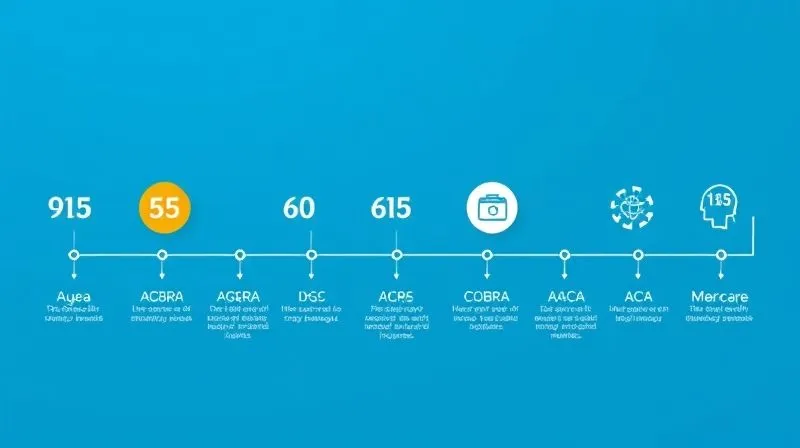
Begin by creating a detailed timeline. Map out your expected retirement date, your spouse's if applicable, and both of your 65th birthdays. For each year in between, research and identify the most likely and cost-effective healthcare options. This might involve a phased approach: COBRA for the first 18 months, then transition to an ACA plan, all while maximizing HSA contributions.
Building Your Personalized Healthcare Timeline
- Assess Your Current Health: Be realistic about your health status and potential future medical needs. This will influence your choice between high-deductible plans and more comprehensive coverage.
- Estimate Your Income: Project your Modified Adjusted Gross Income (MAGI) for each year of early retirement. This is critical for estimating ACA subsidies. Consider tax-efficient withdrawal strategies from retirement accounts.
- Research Local Options: Visit HealthCare.gov to see available ACA plans and estimated subsidies in your area. Get quotes for COBRA from your employer.
- Budget for the Worst: Always factor in potential out-of-pocket maximums when budgeting for healthcare costs, even with insurance. Unexpected medical events happen.
- Consult an Expert: Work with a financial advisor specializing in retirement planning to integrate healthcare costs into your overall financial model.
Don't Forget Dental and Vision!
A common oversight in healthcare planning is forgetting dental and vision coverage. Most medical insurance plans, including those from the ACA Marketplace, do not include comprehensive dental and vision benefits. You'll likely need to purchase separate standalone plans, or budget for these expenses out-of-pocket. Regular dental check-ups and vision care are crucial for overall health and well-being in retirement.
Understanding how much you'll need for these often-overlooked expenses is part of a complete picture. For more insights on estimating overall healthcare costs in retirement, including dental and vision, resources like Fidelity's healthcare cost estimates can be invaluable.
Frequently Asked Questions (FAQ)
Can I just go without health insurance for a few years if I'm healthy? Absolutely not. While tempting to save on premiums, even a minor accident or unexpected illness can lead to catastrophic medical debt, wiping out your retirement savings in an instant. The financial risk of going uninsured far outweighs any premium savings, and it's a gamble I strongly advise against. Comprehensive coverage is non-negotiable for financial security.
How do I accurately estimate my healthcare costs in early retirement? Start by reviewing your current out-of-pocket expenses and prescription costs. Research average premiums for various plan types (COBRA, ACA) in your state. Use online calculators from reputable sources like HealthCare.gov or Fidelity. Factor in potential inflation (historically higher than general inflation for healthcare) and always over-estimate rather than under-estimate your budget. Don't forget dental and vision.
What if my income fluctuates, affecting my ACA subsidies? This is a common concern. You must report any significant income changes to the Marketplace promptly. Large fluctuations can adjust your subsidy amount, potentially leading to a tax credit repayment or additional credits at tax time. Careful income management, especially with capital gains or withdrawals from taxable accounts, is crucial to avoid surprises. Consider working with a tax professional or financial advisor to manage this.
Is it possible to retire early and then return to work part-time just for health benefits? Yes, this is a viable strategy for some. Many companies offer health benefits to part-time employees working a certain number of hours per week. It can be a great way to secure affordable, employer-subsidized coverage while still enjoying a semi-retired lifestyle. However, you'll need to weigh the income impact on potential ACA subsidies if you were relying on those.
What role do financial advisors play in bridging this gap? A skilled financial advisor specializing in retirement planning is invaluable. They can help you project costs, structure your income to maximize ACA subsidies, evaluate different coverage options, and integrate healthcare planning into your overall financial strategy. Their expertise can provide immense peace of mind and ensure you don't overlook critical details.
Key Takeaways and Final Thoughts
Navigating the complex waters of healthcare before Medicare in early retirement requires foresight, strategy, and a willingness to explore all available options. As an industry specialist, I've seen firsthand how crucial this planning is to a truly successful and stress-free early retirement.
- Proactive Planning is Paramount: Don't wait until the last minute; healthcare planning should be an integral, early component of your early retirement strategy.
- Explore Multiple Avenues: COBRA, ACA Marketplace plans, HSAs, short-term plans, and spousal coverage each have their place. Understand their pros and cons for your unique situation.
- Leverage Tax Advantages: HSAs offer a powerful triple-tax benefit for healthcare savings. Maximize contributions while eligible to build a robust fund for future medical needs.
- Income Management Matters: Your Modified Adjusted Gross Income (MAGI) directly impacts ACA subsidy eligibility. Plan withdrawals and income sources carefully to optimize your subsidies.
- Seek Expert Guidance: A financial advisor specializing in retirement can provide invaluable, personalized advice, helping you build a comprehensive and resilient healthcare bridge.
Bridging the healthcare gap before Medicare in early retirement is undoubtedly one of the most significant challenges, but it's far from insurmountable. By adopting a proactive, informed, and strategic approach, you can secure the comprehensive coverage you need, transforming potential anxiety into confidence. Your early retirement dream is within reach – ensure it's a healthy one.
Recommended Reading
- 7 Steps: Advise Clients & Recover Funds Lost to Sophisticated Crypto Scams
- 7 Steps to Refinance Multiple Investment Properties for Optimal Cash Flow
- 5 Ways Your Good Personal Credit Secures Better Business Loans
- 5 Steps to Seamlessly Merge Personal & Business Budgets for Growth
- Unlock Elite Wealth Management: Should High Net Worth Use a Family Office?




Comments
Leave a comment below. Your email will not be published. Required fields marked with *