



Protecting 529 Plan Assets from Market Crash Before Enrollment?
For over two decades in the student finance landscape, I've had the privilege of guiding countless families through the often-complex journey of saving for college. One of the most common anxieties I encounter, especially as a child approaches college age, is the looming threat of market volatility. Parents, having diligently saved in their 529 plans, suddenly face the chilling prospect of a market downturn eroding years of hard work just as tuition bills draw near.
This isn't just a hypothetical fear; it's a very real and understandable pain point. Imagine having a significant sum earmarked for your child's education, only to watch a substantial portion vanish due to an unforeseen market correction right before they enroll. The emotional and financial stress this can cause is immense, potentially forcing difficult decisions about college choices, student loans, or even delaying enrollment.
But here's the crucial insight: you are not powerless against these market forces. In this definitive guide, I will share seven actionable strategies, born from years of experience and deep financial expertise, designed to help you proactively safeguard your 529 plan assets. We'll explore practical frameworks, delve into real-world scenarios, and equip you with the knowledge to navigate market uncertainty with confidence, ensuring those hard-earned college savings are protected when they matter most.
Understanding the 529 Plan's Vulnerability Zone
Before we dive into solutions, it's vital to understand the nature of the challenge. A 529 plan, while an incredible tax-advantaged savings vehicle, is fundamentally an investment account. Like any investment, its value fluctuates with the market. The 'vulnerability zone' for 529 plans typically emerges as your child approaches college enrollment, usually within five years of needing the funds.
The "Glide Path" and Its Limitations
Many 529 plans offer age-based portfolios, often touted as a 'set it and forget it' solution. These portfolios automatically adjust their asset allocation, becoming more conservative as the beneficiary ages. This concept is known as a "glide path." While generally effective over long horizons, it's not a foolproof shield against every market shock.
The glide path's de-risking process is gradual. If a significant market downturn occurs late in the game, say 1-3 years before enrollment, the automatic adjustments might not be sufficient to protect the accumulated principal. I've seen situations where families, relying solely on the age-based model, were caught off guard by sharp market corrections, realizing substantial losses just before tuition payments were due.
Why Near-Term Funds Are Most at Risk
The closer you are to needing the money, the less time you have for your investments to recover from a downturn. Long-term investors can often ride out market volatility, knowing that historically, markets recover and trend upwards over decades. However, for funds needed in 1-5 years, that recovery period might not be available. This is why the traditional investment advice of 'time in the market, not timing the market' needs a nuanced approach when it comes to near-term college savings.
Think of it like landing an airplane. You don't want to be making aggressive maneuvers just before touchdown. Similarly, your college savings need to transition from an aggressive growth phase to a capital preservation phase as enrollment approaches. Ignoring this transition can expose your hard-earned funds to unacceptable levels of risk.
Strategy 1: Re-evaluating Your Age-Based Portfolio Allocation
While age-based portfolios are convenient, they are not always perfectly aligned with your specific risk tolerance or your child's exact enrollment timeline. My first piece of advice is always to become an active participant in managing your 529, especially as college nears.
Age-based portfolios typically shift from a higher allocation in equities (stocks) to a higher allocation in fixed income (bonds) and cash as the beneficiary gets older. This automatic de-risking is a good starting point, but it's often based on broad assumptions that might not fit your family's unique situation. For instance, some age-based plans might remain more aggressive than you're comfortable with even in the final years before college.
Expert Insight: "Don't blindly trust the default settings. Your 529 plan's age-based allocation is a general guideline, not a personalized financial plan. Proactive review and adjustment are crucial as enrollment approaches."
When to Intervene: The Pre-Enrollment Window
I generally advise families to start critically examining their 529 allocation when their child is about 3-5 years away from college enrollment. This is your intervention window. You might find that the age-based portfolio is still holding a significant percentage in equities, which could be problematic if a market crash occurs.
Your goal should be to gradually shift a larger portion of the funds you expect to use in the first 1-2 years of college into more conservative investments. This doesn't mean pulling everything out of equities, but rather strategically de-risking the funds that are most immediately needed.
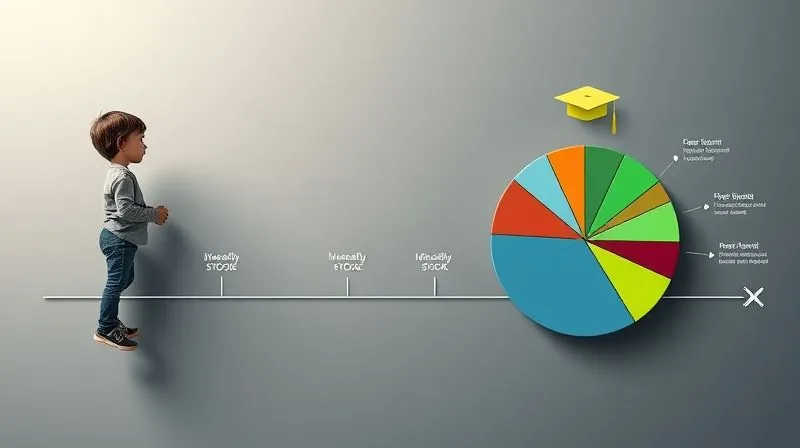
Strategy 2: Shifting to More Conservative Investment Options
Once you've identified the need to de-risk, the next step is to understand your options for more conservative investments within your 529 plan. Most plans offer a range of choices beyond the age-based portfolios.
Exploring Stable Value and Money Market Funds
The primary conservative options typically available within 529 plans are stable value funds, money market funds, and sometimes short-term bond funds.
- Money Market Funds: These invest in highly liquid, short-term debt instruments. They offer very low risk and aim to maintain a stable net asset value (NAV) of $1 per share. Returns are typically very modest, but capital preservation is high.
- Stable Value Funds: Often found in employer-sponsored retirement plans but sometimes available in 529s, these funds aim to provide capital preservation and consistent returns that are higher than money market funds, with less volatility than bond funds. They typically invest in conservative fixed-income securities and use contracts to smooth out returns.
- Short-Term Bond Funds: These invest in bonds with shorter maturities, making them less sensitive to interest rate fluctuations than long-term bond funds. They offer a balance between modest returns and lower volatility compared to equity funds.
The Trade-off: Lower Risk, Lower Potential Return
It's crucial to understand that moving to these conservative options means accepting lower potential returns. You're sacrificing growth potential for capital preservation. This is a deliberate strategic choice when nearing enrollment, prioritizing the safety of your principal over further appreciation. The goal is no longer aggressive growth, but rather ensuring the funds are there when you need them, unaffected by market downturns.
- Assess Your Timeline: Determine exactly how many years until the funds will be needed for the first year of college.
- Review Your Plan's Options: Log into your 529 plan account and explore the available investment options. Look for stable value, money market, or conservative fixed-income portfolios.
- Calculate Immediate Needs: Estimate the tuition, fees, and other qualified expenses for the first 1-2 years of college.
- Initiate a Fund Exchange: Most 529 plans allow you to exchange funds between investment options twice per calendar year without tax implications. Carefully select the amount you want to move into more conservative choices.
- Monitor Regularly: Even after making a shift, continue to monitor your portfolio and the market conditions. This isn't a one-and-done decision.
Strategy 3: The Power of Diversification Beyond Your 529
While the 529 plan is an excellent tool, it doesn't have to be your *only* tool. True financial resilience comes from diversification, and that includes diversifying your college savings across different types of accounts, especially as the enrollment date approaches.
Complementary Savings Vehicles
Consider using other savings vehicles alongside your 529 plan, particularly for funds that you want to keep extremely safe or that exceed 529 contribution limits. These might include:
- High-Yield Savings Accounts (HYSAs): For funds needed within 1-2 years, an HYSA offers liquidity and FDIC insurance, providing absolute capital preservation, albeit with modest returns.
- Certificates of Deposit (CDs): CDs offer slightly higher interest rates than HYSAs in exchange for locking up your money for a specific term. You can ladder CDs to ensure liquidity as needed.
- Custodial Accounts (UGMA/UTMA): While these have their own complexities (e.g., impact on financial aid, child's control at majority), they can serve as a supplemental savings vehicle. However, their investment options are broad, so you'd still need to de-risk within them.
The "Bucket Strategy" for College Funds
I'm a big proponent of the "bucket strategy" for college savings as enrollment nears. This involves segmenting your college funds into different "buckets" based on when they will be needed, each with a corresponding risk profile.
| Bucket | Purpose | Investment Strategy | Risk Level |
|---|---|---|---|
| Bucket 1 (Years 1-2) | Immediate expenses | Cash, HYSAs, CDs, 529 Money Market | Very Low |
| Bucket 2 (Years 3-5) | Mid-term expenses | Short-term bond funds, balanced 529 options | Low to Moderate |
| Bucket 3 (Years 6+) | Long-term growth | Growth-oriented 529 options, diversified equities | Moderate to High |
By implementing this strategy, you protect the funds you'll need soonest from market fluctuations, while still allowing longer-term funds to grow. This provides a layered defense against market crashes.
Strategy 4: Leveraging Tax-Advantaged Withdrawals Strategically
Understanding how and when to make withdrawals from your 529 plan can also be a subtle but effective strategy for managing risk, especially if a market downturn has already occurred or is anticipated.
Understanding Qualified Education Expenses
First, always ensure your withdrawals are for qualified education expenses to maintain the tax-free status of your earnings. These include tuition, fees, books, supplies, equipment, and room and board (if the student is enrolled at least half-time). Knowing what's covered allows you to plan your withdrawals precisely.
Timing Withdrawals to Minimize Market Exposure
If you're in a period of market uncertainty or a downturn, consider taking withdrawals for upcoming expenses sooner rather than later, especially if the funds are in an investment option that is still exposed to the market. For instance, if you know tuition is due in three months and your 529 is still in a balanced fund, withdrawing the necessary amount now and holding it in a cash account for those three months can shield it from any further market dips.
While this isn't a "protection" strategy in the sense of changing allocation, it's a "risk avoidance" strategy. You're effectively taking the money off the table before it has a chance to be negatively impacted by short-term market movements. This strategy is particularly useful for the funds in your "Bucket 1" (immediate expenses).
Strategy 5: The Emergency Fund for Education – A Crucial Buffer
Just as you have an emergency fund for unexpected life events, I strongly advocate for creating a dedicated 'Education Emergency Fund' as your child nears college enrollment. This isn't part of your 529, but rather a separate, highly liquid buffer.
Why a Dedicated Education Emergency Fund?
Imagine a scenario: your child is starting college next fall, and the market experiences a sharp, sudden decline in the spring. If all your immediate college funds are still tied up in 529 investments that have taken a hit, you're faced with a painful choice: either sell at a loss to pay tuition or scramble for other funds. An education emergency fund prevents this.
This fund provides a safety net, allowing your 529 assets more time to recover if a market downturn occurs. It gives you the flexibility to delay tapping into a devalued 529 account, instead using the emergency fund for immediate expenses until the market (and your 529) hopefully rebounds.
How Much to Allocate and Where to Keep It
I recommend aiming to have at least one full year's worth of college expenses (tuition, fees, room, board, books) in this dedicated emergency fund. This amount should be held in a highly liquid and secure account, such as a high-yield savings account or a short-term CD ladder, completely separate from market fluctuations.
This fund serves as your ultimate market crash protection for immediate needs. It's not about growth; it's about guaranteed access to funds. According to a recent study by Sallie Mae, the average cost of college continues to rise, making such a buffer increasingly important. Source: Sallie Mae

Case Study: The Johnson Family's Pre-College Pivot
Situation: Daughter nearing enrollment, market concerns.
Meet the Johnson family. Their daughter, Emily, was three years away from starting college, and they had diligently saved $120,000 in a 529 plan, mostly in an age-based portfolio. While the portfolio had performed well, Mr. Johnson was increasingly anxious about market volatility as Emily's enrollment date approached. He worried about a potential market crash eroding their savings just before they needed them.
Action: Implemented conservative shift and bucket strategy.
After reviewing their 529 statement with a financial advisor, they realized the age-based plan still had 40% allocated to equities. This was too aggressive for their comfort given the short timeline. They decided to implement a two-pronged approach:
- 529 Reallocation: They shifted funds within their 529. The portion needed for Emily's first two years of college (estimated at $60,000) was moved from the age-based portfolio into the plan's money market and stable value options. The remaining $60,000, intended for later college years, remained in a moderately conservative bond-heavy portfolio.
- Education Emergency Fund: They also established a separate high-yield savings account and deposited $30,000, enough to cover Emily's first year of tuition and living expenses, creating a liquid buffer outside the market.
Outcome: Protected assets, peace of mind.
Six months after their adjustments, the market experienced a significant 15% downturn. While the portion of their 529 still in bonds saw a minor dip, the $60,000 they had moved to money market and stable value funds, along with their $30,000 emergency fund, remained completely untouched by the market crash. They were able to pay Emily's first year's tuition without selling any devalued assets, giving the remaining 529 funds time to recover. The Johnson family felt immense relief, knowing they had proactively protected their investment.

Strategy 6: Understanding and Utilizing 529 Rollover Options
The flexibility of 529 plans has expanded over the years, offering more avenues for strategic asset protection, particularly with the advent of recent legislative changes.
From One 529 to Another: A De-risking Move?
Did you know you can roll over funds from one 529 plan to another? This can be a useful strategy if your current plan lacks the conservative investment options you desire, or if another state's plan offers better fees or more suitable choices. For example, if your current plan's money market fund yields are low, you might find another state's plan with a more attractive stable value option. You can typically do one 529-to-529 rollover per 12-month period for the same beneficiary without tax consequences. This allows you to "shop around" for a plan that best meets your de-risking needs.
New Flexibility: Roth IRA Rollovers (SECURE 2.0)
The SECURE Act 2.0, passed in late 2022, introduced a groundbreaking new feature: the ability to roll over unused 529 plan funds to a Roth IRA for the beneficiary. This provides an incredible safety net against having "too much" saved in a 529, and can also be used as a de-risking strategy for a portion of funds.
Key rules for this rollover:
- The 529 plan must have been open for at least 15 years.
- The rollover limit is the aggregate lifetime contribution limit for Roth IRAs ($35,000).
- The rollover amount cannot exceed the amount of contributions (not earnings) made to the 529 plan in the last five years.
- The rollover is subject to the Roth IRA annual contribution limits, meaning it can take multiple years to transfer the full $35,000.
Expert Insight: "The 529-to-Roth IRA rollover is a game-changer. It transforms 'excess' college savings into a powerful retirement vehicle, offering a flexible and tax-advantaged exit strategy that wasn't available before SECURE 2.0. Consider this for any funds you realize might not be used for qualified education expenses, potentially shielding them from market risk if left in the 529."
While primarily for 'unused' funds, understanding this option reduces the pressure of over-saving in a 529. If you de-risk a portion of your 529 aggressively, and then realize you have more than needed, this Roth IRA option provides a tax-efficient path forward, rather than having to withdraw non-qualified funds and pay taxes and penalties.
Strategy 7: Seeking Professional Financial Guidance
While these strategies provide a robust framework, the nuances of your personal financial situation, risk tolerance, and college funding goals are unique. This is where the value of a qualified financial advisor becomes indispensable.
When to Consult a Financial Advisor
I always recommend engaging with a financial advisor, especially one specializing in college planning, when you are:
- Within 5-7 years of your child starting college.
- Feeling overwhelmed by the investment options or market volatility.
- Considering significant changes to your 529 allocation or overall college savings strategy.
- Navigating complex financial aid implications alongside your savings.
- Unsure about the tax implications of specific moves or rollovers.
A good advisor can help you create a personalized college funding plan that integrates your 529 with other assets, assesses your true risk tolerance, and guides you through the process of de-risking your portfolio effectively.
Questions to Ask Your Advisor
When you meet with an advisor, come prepared with specific questions:
- "Based on our timeline and risk tolerance, what is the optimal asset allocation for our 529 plan right now?"
- "What specific conservative investment options within our 529 plan do you recommend, and why?"
- "Should we consider a 'bucket strategy' for our college savings, and how would that look for our family?"
- "What are the potential financial aid impacts of de-risking our 529 or using other savings vehicles?"
- "How often should we review our college savings strategy as enrollment approaches?"
- "Can you help us understand the implications of the SECURE 2.0 Act for our 529 plan and potential Roth IRA rollovers?"

Frequently Asked Questions (FAQ)
How far out from enrollment should I start de-risking my 529 plan? In my experience, a good rule of thumb is to begin critically evaluating and gradually de-risking your 529 plan when your child is about 3-5 years away from their anticipated college enrollment. This provides enough time to make strategic shifts without being forced into rushed decisions, while still being close enough to the target date to prioritize capital preservation over aggressive growth. The exact timing can depend on market conditions and your personal risk tolerance.
Can I lose all my money in a 529 plan? While it's highly unlikely to lose *all* your money in a well-diversified 529 plan, especially one that includes conservative options, it is possible to lose a significant portion of your investment if your plan is heavily weighted in equities during a severe market downturn. 529 plans are investment accounts, and like all investments, they carry market risk. This is precisely why de-risking strategies are so crucial as you approach the need for the funds. Funds held in money market or stable value options within a 529 are designed for capital preservation and carry very low risk of loss.
What are the tax implications of changing 529 investments? One of the great advantages of a 529 plan is that you can exchange funds between investment options within the plan without any immediate tax implications. The IRS allows two such changes per calendar year for the same beneficiary. This flexibility is key to implementing de-risking strategies. Only withdrawals that are not used for qualified education expenses are subject to income tax and a 10% penalty on the earnings portion.
Should I just pull my money out of the 529 entirely if I'm worried about a crash? Generally, no. Pulling money out of a 529 plan and not using it for qualified education expenses will result in the earnings portion being subject to ordinary income tax and a 10% penalty, which can significantly erode your savings. Instead of a full withdrawal, focus on moving your funds within the 529 plan to the most conservative investment options available (like money market or stable value funds) or consider the Roth IRA rollover option if applicable under SECURE 2.0. These strategies protect your capital while preserving the tax benefits of the 529.
How does SECURE 2.0 impact 529 plan flexibility for market crash protection? The SECURE 2.0 Act enhances 529 plan flexibility primarily through the new provision allowing rollovers of unused 529 funds to a Roth IRA for the beneficiary. While not a direct market crash protection, it serves as an excellent 'escape hatch' for funds that might otherwise sit exposed in the 529 or be subject to non-qualified withdrawal penalties. If you've de-risked and still have excess funds, this offers a tax-advantaged way to repurpose them for retirement, indirectly reducing the pressure to perfectly time market withdrawals for college and offering peace of mind about over-saving.
Key Takeaways and Final Thoughts
Navigating the complexities of college savings, especially as market volatility looms, can feel daunting. But as we've explored, there are concrete, expert-backed strategies you can employ to proactively protect your hard-earned 529 plan assets. Remember these critical takeaways:
- Proactive De-risking is Essential: Don't rely solely on age-based portfolios as enrollment nears. Take an active role in adjusting your asset allocation.
- Embrace Conservative Options: Shift funds needed in the short term into stable value, money market, or short-term bond funds within your 529.
- Diversify Your Strategy: Consider a "bucket strategy" and supplementary savings vehicles like high-yield savings accounts or CDs for immediate college expenses.
- Create an Education Emergency Fund: A separate, liquid fund for at least one year's expenses provides a crucial buffer against market shocks.
- Leverage New Flexibility: Understand 529-to-529 rollovers and the powerful new 529-to-Roth IRA rollover under SECURE 2.0.
- Seek Professional Guidance: A qualified financial advisor can provide personalized insights and help you tailor these strategies to your unique situation.
The goal isn't to perfectly time the market – that's a fool's errand. Instead, it's about smart, strategic planning that reduces your exposure to risk when it matters most. By implementing these strategies, you're not just protecting your investments; you're safeguarding your child's educational future and securing your own peace of mind. Take control, plan wisely, and build that bridge to college with confidence, knowing you've done everything in your power to protect your family's financial aspirations.
Recommended Reading
- Unmasking Deflation: How Does It Affect the Global Economy's Future?
- Emergency Shield: 7 Urgent Steps to Protect Business Finances from Identity Theft Hacks
- Ultimate Guide: Best Real Estate Agent Financial Strategies
- 7 Proven Strategies: Engaging Next-Gen in Family Philanthropic Giving Decisions
- Build Your First Investment Portfolio: A Busy Professional's 5-Step Guide





Comments
Leave a comment below. Your email will not be published. Required fields marked with *