



Maximizing After-Tax Returns Using Strategic Asset Location?
For over two decades in wealth management, I've observed a recurring challenge for even the most astute investors: the insidious drag of taxes on their hard-earned investment returns. Many diligently focus on asset allocation – deciding what to invest in – but often overlook a equally critical, yet frequently underestimated, component: asset location. It's the strategic art of deciding where to hold those investments across various account types, a nuance that can significantly impact your portfolio's long-term after-tax growth.
The pain point is palpable: you execute a brilliant investment strategy, only to see a substantial portion of your gains siphoned off by annual income taxes, capital gains taxes, or future distribution taxes. It feels like running a race with ankle weights, perpetually hindering your progress. This isn't just about minimizing taxes; it's about optimizing your entire financial ecosystem to ensure every dollar you earn works as efficiently as possible for you, both today and in retirement.
In this definitive guide, I will peel back the layers of complexity surrounding asset location, offering you a clear, actionable framework to transform your investment approach. We'll move beyond generic advice, diving into specific asset types, account structures, and real-world scenarios. My goal is to equip you with the expert insights and practical steps needed for maximizing after-tax returns using strategic asset location, empowering you to build a truly robust and tax-efficient portfolio.
Understanding the Tax Drag: Why Asset Location Matters
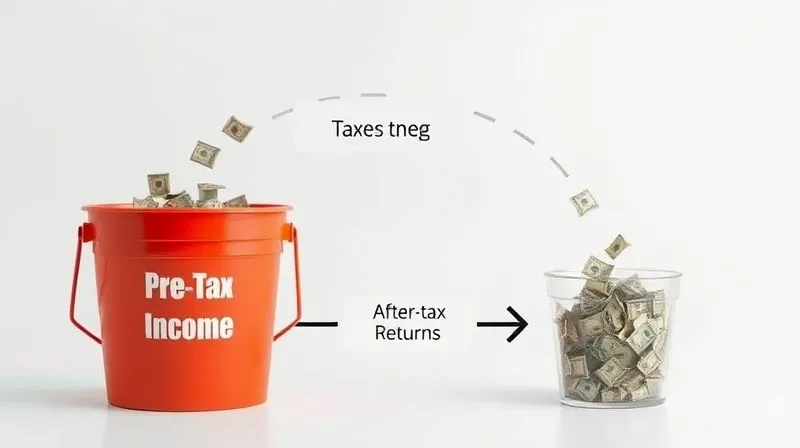
Before we delve into solutions, it's crucial to grasp the problem's magnitude. Taxes are not a flat fee; they vary dramatically based on the asset, the account it's held in, and your personal income situation. This variability creates both challenges and opportunities. Ignoring asset location is akin to leaving money on the table – money that could be compounding for years, accelerating your wealth accumulation.
Consider the different ways investments are taxed: ordinary income for dividends and interest, short-term capital gains (taxed at ordinary income rates), and long-term capital gains (often at preferential rates). Then, overlay this with the tax treatment of various accounts: taxable brokerage accounts, tax-deferred accounts like Traditional IRAs and 401(k)s, and tax-exempt accounts like Roth IRAs and Roth 401(k)s. The permutations are extensive, and without a deliberate strategy, you could inadvertently be placing your most tax-inefficient assets in your most tax-exposed accounts.
According to a study published by Vanguard, effective asset location can add 0.15% to 0.75% annually to a portfolio's after-tax return, depending on the investor's tax bracket and asset mix. While these percentages might seem small, the power of compounding over decades means this translates into tens, if not hundreds, of thousands of dollars in additional wealth. This isn't just theory; it's a proven strategy that discerning investors leverage to gain a significant edge.
The Core Principle: Taxable vs. Tax-Advantaged Accounts
At the heart of strategic asset location lies a fundamental understanding of your available account types. Each serves a unique purpose in the tax landscape, and knowing their individual characteristics is paramount to effective placement.
- Taxable Brokerage Accounts: These are the most flexible but also the most tax-exposed. Investment income (dividends, interest) and capital gains are generally taxed annually, unless specifically tax-exempt (like municipal bonds).
- Tax-Deferred Accounts (Traditional IRA, 401(k), 403(b)): Contributions are often pre-tax, growing tax-deferred until withdrawal in retirement. All withdrawals are then taxed as ordinary income. This defers the tax drag but doesn't eliminate it.
- Tax-Exempt Accounts (Roth IRA, Roth 401(k)): Contributions are made with after-tax dollars, but qualified withdrawals in retirement are entirely tax-free. This offers the ultimate tax shield for growth.
The goal is to maximize the benefit of each account's tax characteristics. You want to shield your most tax-inefficient assets from annual taxation, allowing them to compound untouched. Conversely, assets that are naturally tax-efficient can reside in taxable accounts without incurring excessive drag. This strategic matching is the cornerstone of maximizing after-tax returns using strategic asset location.
Expert Insight: "Thinking about asset location is not just about reducing your tax bill today; it's about projecting your future tax liability and structuring your portfolio to minimize it over your entire investment horizon. It's a forward-looking strategy that pays dividends for decades."
Which Assets Go Where? A Strategic Placement Guide
Now, let's get specific. The efficacy of asset location hinges on understanding how different asset classes behave from a tax perspective. Here’s a breakdown of optimal placement strategies:
High-Turnover & Income-Generating Assets: Taxable Accounts' Nemesis
These are the assets that generate significant taxable events annually, making them prime candidates for tax-advantaged accounts:
- High-Dividend Stocks & REITs: While some dividends are "qualified" and taxed at lower long-term capital gains rates, many are not. REITs, in particular, often distribute non-qualified dividends, taxed as ordinary income.
- High-Yield Bonds & Bond Funds: The interest income from corporate bonds is taxed as ordinary income each year, regardless of whether you reinvest it. This annual tax hit can severely impede compounding.
- Actively Managed Funds with High Turnover: These funds frequently buy and sell securities, generating capital gains distributions (both short and long-term) that are passed on to shareholders, even if you haven't sold your shares.
Recommendation: Place these assets primarily in tax-deferred accounts (Traditional IRA/401(k)). The tax deferral allows the interest and dividends to compound without annual taxation, and when distributions occur in retirement, your tax rate might be lower. If you have space, Roth accounts are even better, as the growth and distributions will be completely tax-free.
Growth-Oriented & Tax-Efficient Assets: Ideal for Taxable Accounts
These assets are generally more amenable to being held in taxable accounts due to their lower annual tax drag:
- Tax-Efficient Equity ETFs/Index Funds: These funds typically have very low turnover, meaning fewer capital gains distributions. They also generate mostly qualified dividends, taxed at lower rates.
- Individual Growth Stocks: If held for the long term, these primarily generate unrealized capital gains, which are not taxed until the asset is sold. If you hold them until death, your heirs receive a step-up in basis, potentially eliminating capital gains tax entirely.
- Municipal Bonds: Interest income from municipal bonds is exempt from federal income tax and often from state and local taxes if you reside in the issuing state. They are a natural fit for taxable accounts.
Recommendation: These assets are well-suited for your taxable brokerage accounts. Their inherent tax efficiency minimizes the annual tax burden, and you retain liquidity and control over when gains are realized.
High-Growth Assets: Unleashing Potential in Roth Accounts
For assets with the highest expected long-term growth, the Roth account is unparalleled:
- Small-Cap Growth Stocks/Funds: These have the potential for explosive growth over time.
- Emerging Markets Funds: High risk, high reward, making them excellent candidates for tax-free growth.
Recommendation: Place your highest-conviction, highest-growth potential assets in your Roth IRA or Roth 401(k). The magic here is that all that significant growth, no matter how substantial, will be entirely tax-free upon qualified withdrawal in retirement. This is a powerful strategy for maximizing after-tax returns using strategic asset location, especially for younger investors with a long time horizon.
Fixed Income & Tax-Deferred Growth: The Power of Traditional Accounts
Traditional tax-deferred accounts are excellent for assets that generate significant ordinary income or benefit from compounding without annual taxation:
- Corporate Bonds & Bond Funds: As discussed, their interest is taxed as ordinary income. Deferring this tax is a major advantage.
- REITs: Again, their non-qualified dividends are best shielded.
Recommendation: Utilize your Traditional IRA or 401(k) for these income-heavy assets. They grow tax-deferred, and you only pay taxes when you take distributions, potentially at a lower tax bracket in retirement. This is particularly effective for investors in higher current tax brackets who anticipate being in a lower bracket during retirement.

Building Your Asset Location Strategy: A Step-by-Step Approach
Implementing an effective asset location strategy requires a systematic approach. It's not a one-time fix but an ongoing optimization process.
-
Step 1: Inventory Your Accounts and Assets
List all your investment accounts (taxable brokerage, Traditional IRA/401(k), Roth IRA/401(k), HSAs, etc.) and all the assets within them. Understand the cost basis of your taxable assets.
-
Step 2: Understand Each Asset's Tax Efficiency
For each asset, determine its tax characteristics: Does it generate ordinary income (interest, non-qualified dividends)? Qualified dividends? Capital gains (short-term, long-term)? Is it actively managed with high turnover?
-
Step 3: Prioritize Placement Based on Tax Implications
Based on the principles outlined above, mentally (or physically on a spreadsheet) reallocate your assets. Start by placing your most tax-inefficient assets (high-yield bonds, REITs, high-turnover funds) into your tax-deferred or tax-exempt accounts. Then, place your highest-growth assets into Roth accounts. Fill your taxable accounts with tax-efficient assets (index funds, municipal bonds, individual growth stocks).
-
Step 4: Rebalance with Asset Location in Mind
As your portfolio grows and market conditions change, you'll need to rebalance. When rebalancing, prioritize selling assets in accounts where it minimizes tax impact. For example, if you need to sell appreciated assets, consider doing so in a tax-advantaged account first. When buying, ensure new purchases align with your asset location strategy.
-
Step 5: Consider Future Tax Brackets and Withdrawals
Think about your likely tax bracket in retirement. If you expect to be in a higher bracket, Roth accounts become even more valuable. If lower, Traditional accounts might offer more upfront tax savings. This long-term perspective is vital for maximizing after-tax returns using strategic asset location.
This systematic approach ensures that your portfolio is not just diversified, but also strategically optimized for tax efficiency. It requires diligence, but the rewards in enhanced after-tax returns are substantial.
| Account Type | Ideal Assets | Why |
|---|---|---|
| Taxable Brokerage | Tax-Efficient Index Funds/ETFs, Individual Growth Stocks, Municipal Bonds | Low turnover, qualified dividends, tax-exempt interest, control over gain realization. |
| Traditional IRA/401(k) | High-Yield Bonds, Corporate Bond Funds, REITs, Actively Managed Funds | Shields ordinary income and frequent capital gains from annual taxation; defers taxes until retirement. |
| Roth IRA/401(k) | Aggressive Growth Stocks/Funds, Small-Cap Growth, Emerging Markets | Allows highest potential growth to compound and be withdrawn entirely tax-free in retirement. |
Case Study: The Johnson Family's After-Tax Returns Transformation
Case Study: How Strategic Asset Location Boosted the Johnsons' Wealth
Meet the Johnsons, a couple in their late 40s with a combined income placing them in a 24% federal tax bracket. They had a diversified portfolio across a taxable brokerage account, a Traditional 401(k), and Roth IRAs. However, their asset allocation was haphazard:
- Before: Their taxable account held high-dividend stocks and an actively managed bond fund, generating significant ordinary income and capital gains distributions annually. Their Roth IRAs held conservative bond funds, and their 401(k) had a mix of everything.
After consulting with a wealth manager focused on asset location, they made strategic adjustments:
- Action: They moved their high-dividend stocks and actively managed bond fund from their taxable account into their Traditional 401(k). They then rebalanced their Roth IRAs to hold aggressive growth ETFs and small-cap funds, leveraging the tax-free growth potential. Their taxable account was repopulated with broad-market S&P 500 index ETFs and some municipal bonds.
Result: Over the next five years, the Johnsons saw a significant reduction in their annual taxable investment income by approximately $3,500. This meant less money paid in taxes each year and more money compounding within their tax-advantaged accounts. Projecting this over their remaining 20 years until retirement, and assuming a modest 7% average annual return, their portfolio is projected to be approximately $180,000 wealthier on an after-tax basis than if they had maintained their original, unoptimized asset location. This demonstrates the profound impact of maximizing after-tax returns using strategic asset location.

Common Pitfalls and How to Avoid Them
While asset location offers immense benefits, it's not without its potential traps. I've seen investors make well-intentioned mistakes that undermine their efforts. Here are some common pitfalls and how to navigate them:
- Ignoring Transaction Costs and Capital Gains: Moving assets between accounts, especially from taxable to tax-advantaged, can trigger capital gains taxes. Don't let the cure be worse than the disease. Plan transfers carefully, perhaps using new contributions to direct assets to the correct accounts or waiting for tax-loss harvesting opportunities.
- Over-Optimization: Don't let the pursuit of perfection lead to undue complexity. A simplified, strategic approach is often more effective than trying to micro-manage every single basis point. Focus on the big wins first.
- Neglecting Your Overall Asset Allocation: Asset location is a complement to, not a replacement for, sound asset allocation. Your desired mix of stocks, bonds, and other assets should always be the primary driver of your portfolio construction. Asset location simply optimizes where those assets reside.
- Forgetting About State Taxes: Some states have income taxes on investment earnings, while others don't. Municipal bonds from your home state can offer double or triple tax exemption, making them even more attractive for taxable accounts. Always consider your state's tax laws.
- Not Reviewing Periodically: Life changes, tax laws change, and your investment goals evolve. What was optimal five years ago might not be today. Review your asset location strategy annually or whenever there's a significant life event or tax law change.
Expert Insight: "The biggest mistake investors make with asset location is letting the 'perfect' be the enemy of the 'good.' Start with the most impactful changes, and refine over time. Consistency in applying the principles is far more valuable than initial flawless execution."
Beyond the Basics: Advanced Considerations for Savvy Investors
Once you've mastered the fundamentals of maximizing after-tax returns using strategic asset location, there are several advanced considerations that can further refine your strategy:
- Tax-Loss Harvesting: This strategy involves selling investments at a loss to offset capital gains and potentially a limited amount of ordinary income. It's primarily done in taxable accounts and can create opportunities to rebalance and relocate assets without triggering new taxes.
- Qualified Charitable Distributions (QCDs): For those over 70.5 who take RMDs (Required Minimum Distributions), QCDs from Traditional IRAs can be a highly tax-efficient way to make charitable donations, satisfying RMDs without increasing taxable income. This indirectly frees up other assets for more flexible location.
- Backdoor Roth Conversions: If your income is too high to contribute directly to a Roth IRA, a backdoor Roth conversion allows you to contribute to a non-deductible Traditional IRA and then convert it to a Roth, subject to the pro-rata rule if you have other pre-tax IRA money. This opens up Roth space for high-growth assets.
- Mega Backdoor Roth: For those with 401(k) plans that allow after-tax contributions and in-service distributions, this strategy enables massive contributions to a Roth 401(k) or Roth IRA, significantly expanding your tax-free growth potential.
- Anticipating Future Tax Rates: This is a challenging but crucial aspect. If you believe tax rates will be higher in the future, maximizing Roth contributions now is a powerful hedge. If you expect lower future rates, deferring taxes via Traditional accounts might be more appealing. This requires a long-term economic outlook.
These advanced tactics require careful planning and often the guidance of a financial advisor who specializes in tax-efficient wealth management. They are not for everyone, but for those with significant assets and complex financial situations, they can unlock considerable additional after-tax wealth.
Frequently Asked Questions (FAQ)
Q: Is asset location only for high-net-worth individuals? No, absolutely not. While the dollar amounts saved might be larger for high-net-worth individuals, the principles of asset location apply to anyone with multiple account types (e.g., a 401(k) and a Roth IRA). Even with modest balances, optimizing your portfolio for tax efficiency means more money working for you over time. It's about maximizing after-tax returns using strategic asset location for everyone.
Q: How often should I review my asset location strategy? I recommend an annual review, ideally alongside your general portfolio review. Additionally, re-evaluate your strategy after any significant life event (marriage, divorce, new job, retirement) or major changes in tax law. Consistency is key, but so is adaptability.
Q: Can I use asset location if I only have a 401(k) and a taxable brokerage account? Yes, you absolutely can! Even with just these two account types, you can implement effective asset location. Focus on putting high-income-generating and high-turnover assets into your 401(k) (tax-deferred) and keeping tax-efficient assets like broad-market index funds or individual growth stocks in your taxable account. The principles remain the same.
Q: What if moving assets triggers a large capital gain in my taxable account? This is a critical consideration. If moving an asset from a taxable account to a tax-advantaged one would realize a significant capital gain, it might be counterproductive. In such cases, consider directing new contributions to the appropriate accounts, or wait for a tax-loss harvesting opportunity where you can sell other assets at a loss to offset the gain. Sometimes, the best strategy is to leave existing appreciated assets where they are and optimize future investments.
Q: Should I prioritize asset allocation or asset location? Always prioritize asset allocation first. Determining the right mix of asset classes (stocks, bonds, cash, etc.) that aligns with your risk tolerance and financial goals is foundational. Once that's established, asset location becomes the powerful tool to implement that allocation in the most tax-efficient way possible, thereby maximizing after-tax returns using strategic asset location. They work in tandem, but allocation is the 'what' and location is the 'where'.
Key Takeaways and Final Thoughts
The journey to building substantial wealth is multifaceted, and while many focus on investment selection and market timing, the often-overlooked strategy of asset location can be a silent yet powerful accelerator for your portfolio. By intelligently placing your various asset classes into the most tax-advantageous accounts, you can significantly reduce the drag of taxes, allowing your wealth to compound more efficiently.
- Understand the unique tax characteristics of each account type: taxable, tax-deferred, and tax-exempt.
- Match your most tax-inefficient assets (e.g., high-yield bonds, REITs) with tax-advantaged accounts (Traditional IRA/401(k)).
- Leverage Roth accounts for your highest-growth potential assets to benefit from tax-free withdrawals in retirement.
- Utilize tax-efficient index funds and municipal bonds in your taxable brokerage accounts.
- Regularly review and rebalance your portfolio with asset location in mind, adapting to life changes and tax law updates.
Remember, this isn't about tax evasion; it's about smart, legal, and ethical tax optimization. It's about empowering your money to work harder for you, ensuring that more of your investment gains remain in your pocket, propelling you closer to your financial aspirations. Start implementing these strategies today, and watch your after-tax returns flourish over the long term. Your future self will thank you for the diligence you put into maximizing after-tax returns using strategic asset location.
Recommended Reading
- 7 Smart Strategies to Optimize Home Equity for Wealth Transfer
- 7 Expert Strategies: Minimize Capital Gains Tax on Professional Stock Options
- 7 Proven Strategies: How to Recover Impermanent Loss in Volatile DeFi Pools?
- 7 Proven Strategies: How to Prevent ML Model Drift in Real-Time Financial Markets?
- Unlock Financial Freedom: How to Safely Diversify Concentrated Stock Wealth





Comments
Leave a comment below. Your email will not be published. Required fields marked with *