



How to Value Unprofitable High-Growth Tech Stocks Accurately?
For over 15 years in the investment landscape, I've seen countless investors grapple with a fundamental challenge: how to accurately assess the true worth of high-growth tech companies that are yet to turn a profit. It's a common mistake to apply traditional valuation models designed for mature, profitable businesses, only to find them woefully inadequate for the disruptive, forward-looking nature of today's tech innovators.
The pain point is palpable. You see a company with immense potential, a rapidly expanding user base, and a technology that could redefine an industry, yet its balance sheet screams 'unprofitable.' This dichotomy creates a valuation dilemma, leading to either missed opportunities on genuinely transformative companies or costly investments in overhyped ventures.
In this definitive guide, I will share the frameworks, insights, and practical methodologies I've developed and refined over decades. You'll learn not just theoretical concepts, but actionable steps and expert perspectives on how to value unprofitable high-growth tech stocks accurately, empowering you to make confident and informed investment decisions.
The Core Challenge: Why Traditional Metrics Fail
When we talk about valuing a business, many investors instinctively reach for metrics like Price-to-Earnings (P/E) ratios or Earnings Per Share (EPS). These are fantastic tools for established companies with predictable cash flows and a history of profitability. However, for high-growth tech companies, especially those in their early stages, these metrics are often meaningless or even misleading.
Unprofitable tech stocks are typically in an aggressive growth phase, prioritizing market share expansion, product development, and customer acquisition over immediate profitability. Every dollar earned is often reinvested to fuel further growth, meaning current earnings are either negative or negligible. Focusing on present earnings for such companies is akin to judging a marathon runner's potential based solely on their sprint time at the starting line.
"Valuing high-growth tech is less about what a company earns today and more about its potential to dominate tomorrow. It requires a forward-looking lens, a deep understanding of market dynamics, and a healthy dose of strategic foresight."
The market often values these companies based on their future potential, their Total Addressable Market (TAM), their competitive moat, and their ability to eventually achieve scale and profitability. Ignoring these forward-looking indicators in favor of backward-looking financial statements is a recipe for misjudgment.

Framework 1: Total Addressable Market (TAM) Analysis & Market Share Potential
One of the foundational steps in valuing an unprofitable high-growth tech stock is to understand the size of the prize: its Total Addressable Market (TAM). TAM represents the maximum revenue a company could generate if it captured 100% of its market. For disruptive tech, this often requires imagining a future where their technology is ubiquitous.
To estimate TAM, I typically break it down into a top-down and bottom-up approach. The top-down involves looking at industry reports and macroeconomic data, while the bottom-up approach calculates the potential market by considering the number of potential customers and their likely spend. Remember, for high-growth tech, TAM isn't static; it can expand as the company innovates and creates new market segments.
Case Study: Valuing a Disruptive AI Startup
Consider 'SynapseAI,' a fictional startup developing a novel B2B AI solution for automating complex legal document review. Initially, their TAM might seem limited to law firms. However, a deeper analysis reveals potential applications across financial services, government, and even healthcare, significantly expanding their perceived market. My team projected their TAM to grow from $5 billion to $50 billion over ten years, shifting our valuation perspective dramatically.
- Market Size: What is the current market size for the problem the company solves?
- Growth Rate: How fast is this market growing? Is it expanding due to new technologies or changing consumer behaviors?
- New Market Creation: Does the company's innovation create entirely new market segments that didn't exist before?
- Geographic Expansion: What are the opportunities for international growth?
- Competitive Landscape: Who are the current players, and what market share can the new company realistically capture over time?
By rigorously analyzing TAM, you begin to quantify the future revenue potential, even if current revenues are modest. This allows you to forecast potential market share and, consequently, future revenue streams years down the line.
Framework 2: Unit Economics & Customer Acquisition Cost (CAC) to Lifetime Value (LTV)
For many unprofitable high-growth tech companies, especially those with subscription or platform-based models, understanding their unit economics is paramount. This involves dissecting the profitability of a single customer or a single transaction. The core relationship to scrutinize is the Customer Acquisition Cost (CAC) versus the Customer Lifetime Value (LTV).
Customer Acquisition Cost (CAC) is the total cost associated with acquiring a new customer, including marketing and sales expenses, divided by the number of new customers acquired. Customer Lifetime Value (LTV) is the predicted revenue a customer will generate throughout their relationship with a company. A healthy LTV:CAC ratio (ideally 3:1 or higher) indicates a sustainable business model that can eventually scale profitably.
"Unprofitable today doesn't mean unprofitable forever. Strong unit economics are the clearest signal that a company's aggressive investment in growth is building a fundamentally sound, long-term profitable business."
You also need to consider the Payback Period – how long it takes for a company to recoup the cost of acquiring a customer. A shorter payback period (e.g., under 12-18 months for SaaS) is generally more favorable, as it frees up capital for further growth.
- Calculate Average Revenue Per User (ARPU): Divide total revenue by the number of customers over a period.
- Estimate Churn Rate: The percentage of customers who stop using the service over a given period.
- Project Customer Lifespan: Typically 1 / Churn Rate.
- Calculate Gross Margin Per Customer: ARPU minus direct costs to serve that customer.
- Determine LTV: (ARPU * Gross Margin) / Churn Rate.
- Compare with CAC: Ensure LTV significantly outweighs CAC.
These metrics provide a granular view into the operational efficiency and future profitability of each customer cohort, offering crucial insights into how to value unprofitable high-growth tech stocks accurately.
| Metric | Q1 2023 | Q2 2023 | Q3 2023 | Q4 2023 |
|---|---|---|---|---|
| Customer Acquisition Cost (CAC) | $150 | $145 | $140 | $135 |
| Customer Lifetime Value (LTV) | $450 | $465 | $490 | $520 |
| LTV:CAC Ratio | 3.0x | 3.2x | 3.5x | 3.8x |
| Payback Period (Months) | 12 | 11 | 10 | 9 |
Framework 3: Discounted Cash Flow (DCF) with a Growth-Adjusted Terminal Value
While traditional DCF can be challenging for unprofitable companies due to negative free cash flows, a modified approach remains indispensable. The key is to project free cash flows far enough into the future (often 7-10+ years) until the company is expected to achieve stable profitability and growth. This longer projection period inherently carries more uncertainty, necessitating robust scenario analysis.
For high-growth tech, the Terminal Value – the value of the company beyond the explicit forecast period – often constitutes a significant portion of the total valuation. Instead of assuming a perpetual growth rate close to the GDP, which is common for mature companies, you might use a higher, but still conservative, growth rate that reflects the company's sustained competitive advantage and market position. Alternatively, a terminal multiple (e.g., EV/EBITDA or EV/Sales) can be applied to the final year's projected metrics.
The Power of Scenario Planning
Given the inherent uncertainty, I always advocate for extensive scenario planning. Model a base case, an optimistic case, and a pessimistic case. Adjust key drivers like revenue growth rates, gross margins, operating expenses, and capital expenditures for each scenario. This provides a range of potential valuations rather than a single point estimate, which is far more realistic for high-growth tech.
It's also crucial to use a higher discount rate (Weighted Average Cost of Capital - WACC) to reflect the increased risk associated with unprofitable, early-stage ventures. This ensures that future cash flows are appropriately de-risked. For deeper insights into managing financial models under uncertainty, I often recommend exploring resources like those found on Harvard Business Review, which offers excellent articles on strategic financial planning.
Framework 4: Revenue Multiples & Comparable Company Analysis (CCA)
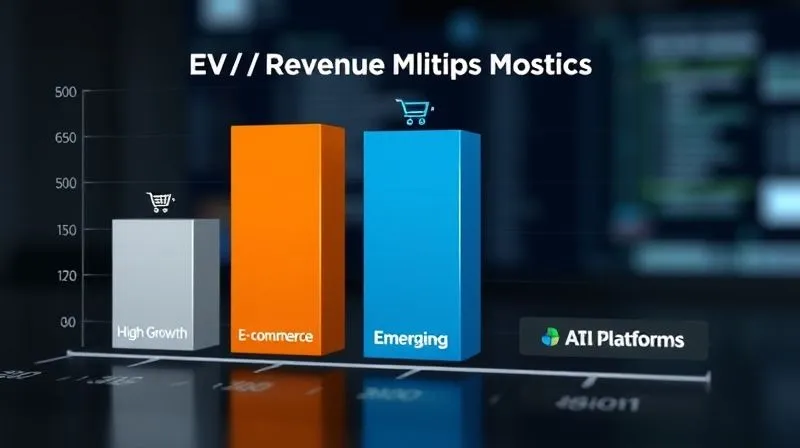
When earnings are non-existent or highly volatile, revenue multiples become a practical alternative. The most common metric is Enterprise Value to Revenue (EV/Revenue). This approach assumes that companies in similar industries, with similar growth profiles and business models, should trade at comparable multiples of their revenue.
The challenge lies in selecting truly appropriate comparables. You can't compare a 10% growth SaaS company to one growing at 50%+. Focus on:
- Growth Rates: Match companies with similar year-over-year revenue growth.
- Business Model: SaaS, e-commerce, advertising, marketplace – these all have different margin profiles and valuation norms.
- Market Maturity: Early-stage companies often command higher multiples due to greater future growth potential.
- Geographic Focus: Local market dynamics can influence valuations.
- Gross Margins: Higher gross margins generally justify higher revenue multiples.
Once you have a set of comparables, calculate their average or median EV/Revenue multiple and apply it to your target company's projected revenue. It's vital to make adjustments for any significant differences in competitive advantage, management quality, or market opportunity. This method offers a quick, market-based snapshot to help you understand how to value unprofitable high-growth tech stocks accurately in relation to their peers.
"Revenue multiples are a powerful heuristic, but they are not a substitute for deep fundamental analysis. They tell you what the market *is* doing, not necessarily what it *should* be doing. Always dig deeper into the 'why'."
Framework 5: Strategic Valuation – Intangible Assets & Competitive Moats
Beyond the numbers, a significant portion of a high-growth tech company's value often lies in its intangible assets and the strength of its competitive moat. These are the qualitative factors that protect a company from competition and allow it to sustain profitability in the long run. When learning how to value unprofitable high-growth tech stocks accurately, these factors are often overlooked but are critical.
Consider:
- Network Effects: Does the product become more valuable as more users join? (e.g., social media platforms, marketplaces).
- Proprietary Technology/IP: Patents, unique algorithms, or exclusive data sets that are difficult to replicate.
- Brand Recognition: A strong brand can command premium pricing and customer loyalty.
- Switching Costs: How difficult or costly is it for customers to switch to a competitor?
- Talent Pool: A world-class team of engineers, designers, and executives is a massive asset.
- Data Advantage: Exclusive access to valuable data that can be used to improve products or services.
These elements create barriers to entry and provide sustainable competitive advantages, which might not be reflected in current financial statements but are crucial for long-term value creation. Michael Porter's work on competitive strategy, particularly his Five Forces framework, offers an excellent foundation for assessing these qualitative aspects.
| Moat Factor | Strength (1-5) | Description |
|---|---|---|
| Network Effects | 5 | Product value increases exponentially with each new user. |
| Proprietary Tech/IP | 4 | Unique algorithms and patented processes offer significant advantage. |
| Switching Costs | 3 | Moderate costs for users to migrate to competitor platforms. |
| Brand/Reputation | 4 | Strong industry recognition and trusted brand identity. |
| Cost Advantage | 2 | Limited cost advantage due to heavy R&D investment. |
Beyond the Numbers: Qualitative Factors & Management Assessment
While frameworks provide structure, investing in high-growth tech, especially unprofitable ones, requires a keen eye for qualitative factors. The leadership team, their vision, execution capabilities, and company culture are often the most significant determinants of success or failure.
- Visionary Leadership: Does the management team have a clear, compelling vision for the future?
- Execution Track Record: Have they consistently hit milestones and adapted to challenges?
- Team & Culture: Are they attracting and retaining top talent? Is the culture innovative and resilient?
- Market Timing: Is the company entering the market at the right time, or is it too early/late?
- Regulatory Environment: Are there potential regulatory hurdles or tailwinds?
I've personally witnessed brilliant technologies fail due to poor execution or a lack of market understanding, and conversely, seen seemingly modest ideas flourish under exceptional leadership. Assessing management is more art than science, requiring due diligence, reference checks, and a critical evaluation of their past decisions. A strong management team can pivot, innovate, and navigate challenges that would sink lesser companies. For more on leadership and its impact on growth, I often refer to insights from sources like Forbes Leadership.

Common Pitfalls and How to Avoid Them
Even with robust frameworks, valuing unprofitable high-growth tech stocks accurately comes with its share of traps. I've seen investors make these mistakes repeatedly:
- Over-Optimistic Projections: Assuming exponential growth will continue indefinitely without considering competitive pressures, market saturation, or execution risks. Always stress-test your growth assumptions.
- Ignoring Dilution: Unprofitable companies often raise multiple rounds of funding, which dilutes existing shareholders. Factor in potential future dilution when considering your ownership percentage and return.
- Falling for Hype: Distinguish between genuine innovation and clever marketing. A compelling narrative without underlying strong unit economics or a clear path to profitability is a red flag.
- Underestimating Competition: Even with a strong moat, competitors will emerge. Always consider how sustainable the company's advantage truly is.
- Neglecting Exit Strategy: How will you eventually realize your investment? Will it be through acquisition or sustained profitability? Understanding potential exit paths influences your entry valuation.
By being aware of these common pitfalls, you can approach your valuation with a more critical and realistic perspective, significantly improving your chances of success.
Frequently Asked Questions (FAQ)
What's the biggest mistake investors make when valuing unprofitable high-growth tech stocks? The single biggest mistake is applying traditional, backward-looking valuation metrics like P/E ratios. These companies are valued on future potential, not past performance. Investors must adopt forward-looking frameworks that account for TAM, unit economics, and strategic advantages.
How do I adjust for market volatility when valuing these stocks? Market volatility is inherent. For valuation, use a higher discount rate (WACC) to account for increased risk. More importantly, conduct extensive scenario analysis (base, optimistic, pessimistic cases) to understand the range of potential outcomes. This provides a more robust valuation that can withstand market fluctuations.
When should I reconsider an investment in an unprofitable tech stock? Reconsider if the company consistently misses growth targets without a clear explanation, if unit economics deteriorate (e.g., LTV:CAC ratio worsens), if the competitive landscape shifts dramatically against them, or if management's execution falters. These are signs that the underlying assumptions of your valuation may be breaking down.
Are there specific metrics for SaaS companies that are particularly important? Absolutely. For SaaS, beyond LTV:CAC, pay close attention to Net Dollar Retention (NDR), Gross Dollar Retention (GDR), churn rates (both logo and revenue churn), and Magic Number (measures sales efficiency). These metrics provide deep insight into customer satisfaction, expansion potential, and sales scalability.
How important is management quality compared to the technology itself? In my experience, management quality is often as, if not more, important than the technology, especially for high-growth, unprofitable companies. A visionary, adaptable, and execution-focused management team can turn a good technology into a great company, while a poor team can squander even the most groundbreaking innovation. Assess their track record, vision, and ability to attract talent.
Key Takeaways and Final Thoughts
Mastering how to value unprofitable high-growth tech stocks accurately is a critical skill in today's dynamic market. It demands a departure from conventional wisdom and an embrace of forward-looking, strategic thinking. Here are the most critical pieces of advice:
- Embrace Forward-Looking Metrics: Prioritize TAM, unit economics (LTV:CAC), and long-term DCF projections over traditional P/E or EPS.
- Utilize Multiple Frameworks: No single model is perfect. Combine DCF, revenue multiples, and strategic valuation for a holistic view.
- Focus on Competitive Moats: Intangible assets like network effects, proprietary tech, and strong brands are often the true drivers of long-term value.
- Assess Management Rigorously: The team's vision, execution, and ability to adapt are paramount for success in high-growth environments.
- Practice Scenario Analysis: Acknowledge uncertainty by modeling optimistic, base, and pessimistic outcomes to understand the range of potential valuations.
Investing in unprofitable high-growth tech companies is not for the faint of heart, but with the right analytical frameworks and a disciplined approach, it offers some of the most compelling opportunities for outsized returns. Arm yourself with these insights, conduct your due diligence diligently, and you'll be well-equipped to navigate this exciting, albeit complex, segment of the market. The future of finance belongs to those who can accurately foresee the value in tomorrow's disruptors.

Recommended Reading
- 7 Proven Strategies: How to Reduce Unexpected Campus Living Costs
- Uncover the Truth: Is Sustainable Investing Truly Profitable Long-Term?
- 7 Strategies to Shield Your Multi-Unit Portfolio from Rising Rates
- Advisor Not Optimizing Business Wealth? 7 Steps to Fix It Now
- Day Trading Drawdown: 7 Steps to Recover 20% Capital Losses





Comments
Leave a comment below. Your email will not be published. Required fields marked with *