



How to Save Aggressively for a House Down Payment in a HCOL City?
For over two decades in personal finance, I've had countless conversations with aspiring homeowners in high-cost-of-living (HCOL) cities. The dream of owning a home often feels like an insurmountable peak, especially when you're staring down a six-figure down payment requirement, sometimes even seven figures for luxury properties. I've witnessed the frustration, the near-despair, but also the incredible triumphs of those who committed to an aggressive, disciplined savings strategy.
The reality is stark: rising property values, coupled with wage growth that often lags significantly behind, make saving for a down payment in places like San Francisco, New York, London, or Vancouver an extraordinary challenge. It's not just about cutting back on lattes; it's about a strategic, often uncomfortable, yet ultimately rewarding overhaul of your entire financial life. Many feel trapped, believing homeownership is forever out of reach in these vibrant, competitive markets.
This guide isn't about modest budgeting tips or wishful thinking; it's a deep dive into the aggressive, often unconventional, yet proven strategies I've seen clients successfully implement. We’ll explore actionable frameworks, real-world case studies, and expert insights to transform that daunting down payment goal into a tangible reality. Get ready to shift your mindset and accelerate your journey to homeownership.
1. Master Your Budget: The Foundation of Aggressive Savings
Before any grand strategy can be implemented, you must have an unflinching, granular understanding of where every dollar goes. This isn't just about tracking; it's about control, intention, and redirection. In a HCOL environment, every penny truly counts.
The Zero-Based Budgeting Power Play
I advocate for zero-based budgeting when saving aggressively. This means assigning every dollar a job. Instead of simply tracking what you spent, you decide proactively where your money will go before you spend it. This method forces you to be intentional with your funds, ensuring that a significant portion is earmarked for your down payment.
“A budget is telling your money where to go instead of wondering where it went.” – Dave Ramsey. This philosophy is amplified when you’re saving for a goal as substantial as a HCOL down payment. Every dollar must serve a purpose, especially the one leading you to homeownership.
- Clarity: You see exactly how much you can allocate to savings.
- Control: You gain complete mastery over your spending habits.
- Efficiency: Eliminates wasteful spending by forcing prioritization.
- Accountability: You're constantly aware of your financial commitments.
Identifying and Eliminating "Lifestyle Creep"
Lifestyle creep is the silent killer of savings. As your income rises, so too do your expenses – often unconsciously. In HCOL cities, this is particularly insidious, as there's a constant pressure to keep up with trends, dining experiences, and social norms that come with a hefty price tag. Be ruthless in identifying these areas.
- Dining Out: Even one meal out in a HCOL city can cost the equivalent of several home-cooked meals.
- Subscriptions: Audit all recurring subscriptions, from streaming services to gym memberships you rarely use.
- Impulse Purchases: Online shopping and spontaneous buys add up rapidly.
- Transportation: Can you walk, bike, or use public transport more often instead of ride-shares or personal vehicles?

Automate Your Savings, Aggressively
The easiest way to save is to make it automatic and non-negotiable. Set up an automatic transfer from your checking account to a dedicated high-yield savings account (HYSA) the moment your paycheck hits. Treat this transfer like a bill you absolutely must pay – because it’s a bill to your future self. Start with a percentage that feels challenging but achievable, then incrementally increase it every few months. For aggressive saving, this percentage should be significantly higher than the typical 10-15% often recommended for general savings.
2. Supercharge Your Income: Beyond the Paycheck
While cutting expenses is crucial, there's often a ceiling to how much you can cut. Boosting your income, however, has no such limit. This is where many successful HCOL homebuyers differentiate themselves.
The Side Hustle Imperative
In today's gig economy, there are more opportunities than ever to earn extra income. This isn't just about making a few extra bucks; it's about systematically generating significant additional funds that go directly to your down payment. Think strategically about leveraging your existing skills or learning new ones that are in demand.
- Consulting/Freelancing: Offer your professional skills (marketing, writing, design, coding) on platforms like Upwork or directly to small businesses.
- Teaching/Tutoring: Share your expertise in a subject or skill.
- Delivery Services: Food or grocery delivery can offer flexible hours and quick cash.
- Online Courses/Content Creation: If you have a niche skill, consider creating digital products.
“Your income is your most powerful wealth-building tool.” This rings especially true when tackling a HCOL down payment. Don't underestimate the compounding effect of consistent, additional income directed solely towards your goal.
Negotiate for More: Your Primary Income
Don't overlook the power of your primary job. Many people leave thousands of dollars on the table by not negotiating their salary effectively or by not seeking regular raises. Do your research on industry benchmarks for your role and experience level, especially in your HCOL market. Practice your negotiation skills and be prepared to articulate your value. A 5-10% raise can translate to thousands of extra dollars annually for your down payment. For expert advice on this, I often refer clients to resources like the Harvard Business Review on salary negotiation: Harvard Business Review: How to Negotiate Your Salary.
Monetizing Underutilized Assets
Look around your current living situation. Do you have a spare room? A parking spot? A car that sits idle? In HCOL cities, these can be valuable assets. Renting out a spare room on a short-term basis (Airbnb) or to a long-term roommate can significantly offset your housing costs, freeing up more of your primary income for savings. Similarly, renting out a parking spot or even your car when you're not using it can provide a steady stream of income. This requires a willingness to adapt your lifestyle, but the financial gains can be substantial.

3. Strategic Debt Management: Freeing Up Cash Flow
High-interest debt is a significant drain on your financial resources, especially when every dollar needs to be maximized for a down payment. Tackling debt aggressively is a non-negotiable step.
The Avalanche vs. Snowball Method for High-Interest Debt
While both the debt avalanche (paying highest interest first) and debt snowball (paying smallest balance first) methods are effective, for aggressive savings, I almost always recommend the debt avalanche method. By targeting debts with the highest interest rates first (credit cards, personal loans), you minimize the total interest paid over time, freeing up more cash flow faster. The psychological boost of the snowball method is appealing, but the financial efficacy of the avalanche is superior for this specific goal.
The opportunity cost of high-interest debt is immense. Every dollar you pay in interest is a dollar that could have been earning interest for your down payment. Eliminate this drain as quickly as possible.
Refinancing and Consolidation Options
Explore options to refinance or consolidate high-interest debts, such as student loans or credit card balances, into a lower-interest loan. This can drastically reduce your monthly payments or the total interest paid, thus accelerating your ability to save. Always compare the terms carefully and be wary of fees, but a smart consolidation can be a game-changer. Organizations like the National Foundation for Credit Counseling (NFCC) offer valuable, trustworthy advice on debt management: National Foundation for Credit Counseling.
4. Optimize Your Living Situation: HCOL Realities
Your largest expense in a HCOL city is almost certainly housing. Making strategic, sometimes uncomfortable, choices here can unlock massive savings.
Embrace the Roommate Life (Again)
Even if you're in your 30s or 40s, or have been living independently for years, consider taking on roommates. Moving from a one-bedroom apartment to sharing a larger space can save you hundreds, if not thousands, of dollars per month. This is a temporary sacrifice for a significant long-term gain. It requires humility and a clear focus on your end goal, but it's one of the most effective ways to slash your largest expense.
Downsizing or Moving to a Cheaper Adjacent Area
Could you temporarily move to a smaller apartment? Or perhaps to a slightly less expensive neighborhood or even a suburb just outside the core HCOL zone? The commute might be longer, or the amenities fewer, but the savings can be transformative. This strategy is about proximity to your financial goal, not necessarily proximity to the city center. Many HCOL cities have "commuter towns" that offer significantly lower rents and property prices.
Short-term sacrifices in comfort or convenience are often the fastest path to long-term financial freedom. View these adjustments not as deprivations, but as strategic maneuvers.
Case Study: Sarah's HCOL Down Payment Breakthrough
Sarah, a 32-year-old marketing manager in Seattle, faced the daunting prospect of a $150,000 down payment for a starter condo. Earning $80,000 annually, she felt stuck. After our consultation, she implemented an aggressive plan:
- She moved from her $2,000/month 1-bedroom apartment to a shared 3-bedroom house, cutting her rent to $900/month.
- She took on freelance social media management work, earning an extra $800-$1,200/month.
- She adopted zero-based budgeting, reducing discretionary spending by $400/month.
- She refinanced her high-interest credit card debt, freeing up $150/month.
Within 2.5 years, Sarah saved $70,000 by herself. Combined with her partner's savings and a first-time homebuyer grant, they reached their goal. Her biggest lever was the drastic reduction in housing costs.
| Expense Category | Before Aggressive Saving | After Aggressive Saving | Monthly Savings |
|---|---|---|---|
| Rent | $2,000 | $900 | $1,100 |
| Discretionary Spending | $1,000 | $600 | $400 |
| Debt Payments (Interest) | $250 | $100 | $150 |
| Side Hustle | $0 | $1,000 | $1,000 |
| N/A | N/A | $2,650 |
5. Leverage Investment Vehicles for Growth (Carefully)
While the primary focus is on saving, strategic use of certain investment vehicles can help your down payment grow faster, especially if your timeline is a few years out. However, caution is paramount for short-term goals.
High-Yield Savings Accounts (HYSA)
For money you'll need within 1-3 years, a High-Yield Savings Account is your best friend. These accounts offer significantly higher interest rates than traditional savings accounts, often 10-20 times more. While not a get-rich-quick scheme, the extra interest can add up, especially on a large down payment fund. Look for online banks that typically offer the best rates and have FDIC (or equivalent) insurance. You can learn more about HYSAs from reputable sources like Investopedia: Investopedia: High-Yield Savings Account.
Short-Term Investment Strategies (CDs, Money Market)
If your down payment timeline is slightly longer (3-5 years) and you're comfortable with slightly less liquidity, Certificates of Deposit (CDs) or Money Market accounts can offer slightly better returns than HYSAs. CDs lock in your money for a fixed period (e.g., 1-5 years) in exchange for a guaranteed interest rate. Money market accounts offer a blend of checking and savings features with competitive interest rates. The key here is to prioritize capital preservation and liquidity over aggressive growth, as market volatility is a risk you cannot afford with your down payment funds.
Understanding the Risk of Market Investments for Short-Term Goals
As a seasoned financial specialist, I strongly advise against investing your down payment funds in volatile assets like individual stocks or even broad market index funds if you anticipate needing the money within the next five years. The stock market is excellent for long-term wealth building (10+ years), but short-term fluctuations could decimate your carefully saved funds just when you need them. The risk of a market downturn outweighs the potential for higher returns for such a critical, time-sensitive goal.
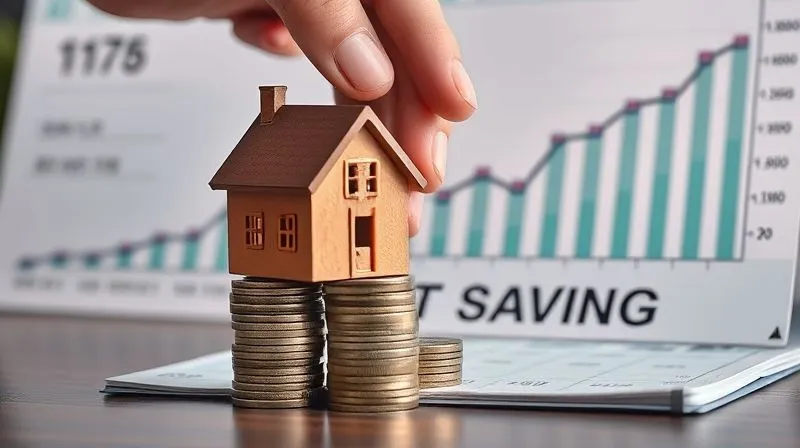
6. Unlock Down Payment Assistance Programs & Grants
Many aspiring homeowners in HCOL cities overlook or underestimate the power of down payment assistance (DPA) programs. These can significantly reduce the amount you need to save out-of-pocket, sometimes providing tens of thousands of dollars.
Federal, State, and Local Programs
There's a vast landscape of DPA programs available, often targeted at first-time homebuyers, low-to-moderate income earners, or specific professions (e.g., teachers, first responders). These can come in the form of grants (money you don't have to repay), second mortgages with deferred payments, or forgivable loans. Research is key, and programs vary wildly by location. Start with resources like HUD's website: U.S. Department of Housing and Urban Development (HUD).
- Grants: Non-repayable funds.
- Second Mortgages: Low-interest loans that can be deferred or forgivable.
- Tax Credits: Reduce your federal tax liability.
- Bond Programs: State or local housing finance agencies issue bonds to fund DPA.
Employer-Assisted Housing Programs
Don't assume your employer doesn't offer assistance. Some larger companies, particularly in HCOL areas, offer housing benefits to help employees afford to live closer to work. These can include down payment assistance, low-interest loans, or even home-buying education. It's always worth checking with your HR department.
First-Time Homebuyer Tax Credits
While less common than in previous years, some states or localities still offer tax credits for first-time homebuyers. These credits directly reduce the amount of tax you owe, effectively putting more money back in your pocket that can be redirected to your down payment. Consult a tax professional or your state's housing finance agency for current opportunities.
7. The Mental Game: Discipline and Resilience
Saving aggressively for a down payment in a HCOL city isn't just a financial challenge; it's a marathon of discipline, delayed gratification, and resilience. Your mindset will be your most powerful asset.
Visualize Your Goal: The Power of Clarity
Keep your goal front and center. Create a vision board with images of your dream home or the neighborhood you aspire to live in. Track your savings progress religiously – seeing that number grow can be incredibly motivating. Use apps or even a simple spreadsheet to chart your journey. This constant reminder helps you stay focused during moments of temptation or discouragement.
Build a Support System
You don't have to do this alone. Share your goal with trusted friends, family, or a financial mentor. Having an accountability partner can provide encouragement when you feel like straying from your plan. They can also offer practical advice or simply be a listening ear when the journey feels overwhelming. Consider joining online communities focused on aggressive saving or personal finance.
Celebrate Milestones, Stay Motivated
The path to a HCOL down payment is long. Break your ultimate goal into smaller, achievable milestones (e.g., saving the first $10,000, hitting 25% of your target). When you reach these smaller goals, celebrate them in a way that doesn't derail your savings. A nice dinner cooked at home, a small indulgence that's been budgeted for, or a weekend getaway to a nearby park can be enough to recharge your motivation without breaking the bank.
The journey of saving aggressively for a house down payment in a HCOL city is as much about mental fortitude as it is about financial strategy. Cultivate patience, celebrate progress, and never lose sight of the ultimate reward.

Frequently Asked Questions (FAQ)
Q: Is it realistic to save a down payment in a HCOL city on an average income? A: It's incredibly challenging, but absolutely realistic with aggressive strategies. It often requires significant lifestyle changes, like taking on roommates, embracing side hustles, and being extremely disciplined with budgeting. It also hinges on defining what 'average income' means in that specific HCOL city and whether you're open to leveraging down payment assistance programs. It's less about the 'average' and more about the 'aggressive'.
Q: How much should I aim to save monthly for a HCOL down payment? A: This depends entirely on your income, expenses, and desired timeline. For aggressive saving, I've seen clients commit 30-50% or even more of their net income to their down payment fund, especially when combining primary income savings with substantial side hustle earnings. Calculate your total down payment goal, subtract any anticipated assistance, and divide by your desired months to determine a target.
Q: What if I have student loan debt in addition to wanting to save for a home? A: Student loan debt is a common hurdle. Prioritize paying down high-interest debt first, as outlined in the debt avalanche method. If your student loan interest rates are low, you might be able to save for your down payment simultaneously. Explore refinancing options for student loans to reduce monthly payments or interest. Some DPA programs are also available to borrowers with student debt.
Q: Should I use my retirement savings (401k/IRA) for a down payment? A: This is a complex decision and generally a last resort. While some retirement accounts allow penalty-free withdrawals for a first-time home purchase (e.g., up to $10,000 from an IRA), you lose out on significant long-term compound growth. For a 401k, you might be able to take a loan, but it needs to be repaid. I always advise exhausting all other options before touching retirement savings, as it can severely impact your financial future. Consult a financial advisor for personalized guidance.
Q: How long does this aggressive saving usually take in a HCOL city? A: The timeline varies widely based on individual circumstances, income, and the specific HCOL market. However, with the aggressive strategies outlined – significant income boosting, drastic expense cutting, and leveraging assistance – many of my clients have achieved their down payment goals within 2 to 5 years. Without such aggression, it could easily take a decade or more.
Key Takeaways and Final Thoughts
Saving aggressively for a house down payment in a HCOL city is not for the faint of heart, but it is undeniably achievable with the right strategy and unwavering commitment. It demands a holistic approach, touching every aspect of your financial life from income generation to expense reduction and smart asset utilization.
- Master your budget: Implement zero-based budgeting and ruthlessly cut lifestyle creep.
- Boost your income: Embrace side hustles and negotiate your primary salary.
- Eliminate high-interest debt: Free up cash flow by tackling debt strategically.
- Optimize living costs: Consider roommates or moving to a more affordable adjacent area.
- Leverage smart savings vehicles: Use HYSAs and short-term, low-risk investments.
- Explore assistance programs: Don't leave free money or beneficial loans on the table.
- Cultivate a resilient mindset: Stay focused, visualize your goal, and celebrate milestones.
The path to homeownership in a high-cost environment is a testament to your determination. It will require sacrifices, discipline, and a willingness to step outside your comfort zone. But the reward – owning a piece of the world in a city you love – is immeasurable. Start today, stay consistent, and remember that every dollar saved is a step closer to unlocking your dream. Your future self will thank you for this journey.
Recommended Reading
- Secure Your Future: Building an Emergency Fund for Unexpected Crises
- Unlock Your Dream Home: How to Get Financing for an Auctioned Foreclosed Home
- Unlock True Value: 7 Steps to Accurately Value Distressed Commercial Property
- Seamless Fintech API Integration: 7 Steps for Legacy Banking Platforms
- 7 Expert Strategies: Navigating Sudden Zoning Changes in Land Investment





Comments
Leave a comment below. Your email will not be published. Required fields marked with *