



How to Reverse Declining Monthly Recurring Revenue for My Startup?
For over 15 years in the entrepreneurial finance space, I’ve witnessed countless startups ride the exhilarating wave of early growth, only to hit a terrifying trough: declining Monthly Recurring Revenue (MRR). It’s a moment that can feel like the ground is crumbling beneath your feet, sparking panic and doubt.
This isn't just a numerical dip; it's a symptom of deeper issues – perhaps a weakening product-market fit, an eroding customer experience, or an overlooked shift in market dynamics. The fear of failure, the pressure from investors, and the uncertainty for your team can be overwhelming.
But here’s the critical insight: declining MRR is a signal, not a death sentence. In this definitive guide, I will share the actionable frameworks, real-world strategies, and expert insights I’ve used to help startups not just halt the decline, but orchestrate a powerful reversal, turning a crisis into an opportunity for resilient growth. You'll learn exactly how to reverse declining monthly recurring revenue for your startup.
1. Diagnosing the Root Cause of Your MRR Decline
Before you can fix the problem, you must understand it. A common mistake I see is founders jumping to solutions without truly understanding *why* MRR is declining. This phase is about forensic analysis, peeling back the layers of your business data.
Analyzing Key Metrics: Beyond the Surface
Your dashboard tells a story, but you need to read between the lines. Look beyond the aggregate MRR number and dive into its components: new MRR, expansion MRR, churn MRR, and contraction MRR. Each tells a different tale.
Are you losing existing customers (churn)? Are existing customers downgrading or reducing usage (contraction)? Or is your acquisition engine sputtering (low new MRR)? Pinpointing the specific component that’s underperforming is your first critical step.
“Data is not just numbers; it’s the voice of your customers and the heartbeat of your business. Listen intently.”
I recommend comparing your current performance against historical trends and industry benchmarks. This gives you context and helps identify anomalies. Are your churn rates suddenly spiking, or has your average revenue per user (ARPU) been steadily eroding?
| Metric | Last Quarter | Current Quarter | Benchmark |
|---|---|---|---|
| Churn Rate | 5.2% | 8.9% | 3-5% |
| Expansion MRR | $15,000 | $7,200 | 10-15% of MRR |
| New MRR | $25,000 | $18,000 | Growth Target Specific |
| ARPU | $95 | $88 | N/A (Industry Specific) |
Customer Segmentation for Deeper Insights
Not all customers are created equal, and neither are their reasons for leaving. Segment your customer base by various attributes: acquisition channel, subscription tier, tenure, industry, usage patterns, and even geographic location.
This segmentation often reveals specific cohorts that are disproportionately contributing to the MRR decline. For instance, you might find that customers acquired through a particular low-cost channel have a much higher churn rate, or that a specific industry vertical is struggling to find value in your product.
Understanding these granular trends allows for targeted interventions, rather than broad, ineffective strokes. It’s about precision, not just volume, when addressing your revenue challenges. Harvard Business Review emphasizes the importance of understanding customer loyalty and segmentation for sustainable growth.

2. Fortifying Your Customer Retention Strategy
It's an old adage but eternally true: acquiring a new customer costs significantly more than retaining an existing one. When MRR is declining, your retention strategy becomes your most powerful lever. This isn't just about preventing churn; it's about building lasting customer relationships.
Enhancing Onboarding to Maximize First-Value Realization
Churn often begins not when a customer leaves, but shortly after they join. A poor onboarding experience leaves customers confused, frustrated, and unable to realize the core value of your product. They never truly get started, making them prime candidates for early churn.
- Map the Customer Journey: Identify every touchpoint from sign-up to first successful usage.
- Simplify & Streamline: Remove unnecessary steps. Can you automate a welcome email, a product tour, or a quick-start guide?
- Highlight 'Aha!' Moments: Guide users to the features that deliver immediate value. What's the quickest way for them to experience success?
- Provide Proactive Support: Offer in-app tutorials, tooltips, and readily accessible help resources. Don't wait for them to get stuck.
Proactive Customer Success and Engagement
Customer success isn't just reactive support; it's about actively ensuring your customers achieve their desired outcomes using your product. This involves regular check-ins, usage monitoring, and offering timely advice.
I've seen tremendous success with tiered customer success models, where high-value customers receive dedicated account managers, while others benefit from automated engagement flows and self-service resources. Proactive outreach can identify potential issues before they escalate into churn.
The Power of Feedback Loops: Listening and Adapting
Your customers are constantly telling you what they need, what they like, and what frustrates them. Are you listening? Implement robust feedback mechanisms: in-app surveys, NPS (Net Promoter Score) surveys, customer interviews, and user forums.
Crucially, act on this feedback. Show your customers that their input directly influences product improvements and service enhancements. This builds trust and makes them feel valued, significantly reducing their likelihood of seeking alternatives.
Case Study: How ConnectFlow Reversed Churn with Proactive Engagement
ConnectFlow, a B2B SaaS platform for project management, faced a troubling 7% monthly churn rate, contributing heavily to their declining MRR. After a deep dive, they realized many customers weren't fully utilizing key features.
They implemented a new proactive customer success strategy:
- Automated alerts for low feature adoption.
- Personalized email sequences offering tutorials and best practices based on usage.
- Bi-weekly 'power user' webinars for advanced features.
Within six months, ConnectFlow reduced its churn rate to 3.5%, directly impacting their MRR. This resulted in a 15% increase in their overall MRR within a year, proving that proactive engagement is a powerful antidote to decline.
3. Optimizing Your Product-Market Fit and Value Proposition
Sometimes, declining MRR isn't about how you sell, but what you sell. Your product might no longer perfectly align with market needs, or your value proposition has become diluted. This requires an honest, often uncomfortable, re-evaluation.
Revisiting Your Core Value Proposition
What unique problem do you solve for your customers? How clearly do you articulate that solution? As markets evolve, so do customer needs and competitive landscapes. What was once a compelling value proposition might now be table stakes.
Conduct interviews with both existing (happy and unhappy) and prospective customers. Ask them why they chose you, what they value most, and what alternatives they considered. Their answers will provide invaluable insights into whether your perceived value still resonates.
Iterative Product Development Based on User Needs
A static product in a dynamic market is a recipe for decline. Your product roadmap should be a living document, heavily influenced by customer feedback, market trends, and competitive analysis. Don't be afraid to pivot features or even entire product lines if the data suggests it.
I advocate for a rapid iteration cycle: build, measure, learn. Release minimum viable features, gather feedback, and iterate quickly. This agile approach ensures your product remains relevant and continues to deliver increasing value, which is crucial for reversing declining monthly recurring revenue.

4. Strategic Pricing and Packaging Adjustments
Pricing is often a sensitive topic, but it's a critical lever for MRR. Incorrect pricing can lead to high churn (too expensive for perceived value) or leave money on the table (too cheap for value delivered). It's about finding the sweet spot where value and cost align for your target customer.
Understanding Value-Based Pricing Models
Move away from cost-plus pricing and embrace value-based pricing. This means your price reflects the value your customer *receives*, not just your internal costs. If your product helps a client save $10,000 annually, charging $500 for it is a steal, and you're likely underpricing.
Research your competitors, but don't just copy them. Understand their pricing strategies and how they position their value. Your unique value proposition should justify your pricing. Forbes highlights the immense power of value-based pricing for SaaS companies.
Tiered Pricing and Upsell Opportunities
If you only have one pricing tier, you're missing out. Tiered pricing allows you to capture different segments of your market based on their needs and willingness to pay. A basic tier for small businesses, a professional tier with more features, and an enterprise tier with advanced integrations and dedicated support.
Crucially, design your tiers to encourage upsells. Make sure the value difference between tiers is clear and compelling. Offer add-ons or premium features that customers can purchase à la carte, increasing expansion MRR without forcing a full tier upgrade.
5. Re-engaging Dormant Customers and Reducing Churn
While prevention is key, some customers will inevitably churn. However, these aren't lost causes. They represent a significant opportunity to recover lost MRR and gain invaluable insights.
Crafting Effective Win-Back Campaigns
Don't let churned customers simply disappear. Develop targeted win-back campaigns. These campaigns should be personalized and address the likely reasons for their departure.
- Segment Churned Users: Group them by reason for churn (if known), tenure, or last active date.
- Offer Specific Incentives: This could be a discount, access to a new feature that addresses their pain point, or a personalized offer to resolve their specific issue.
- Showcase Improvements: Highlight new features or product enhancements that directly address past complaints.
- Make Rejoining Easy: Streamline the process for them to reactivate their account.
A well-executed win-back campaign can recover a surprising percentage of lost revenue and provide a second chance to prove your value.
Leveraging Exit Data to Prevent Future Churn
When a customer churns, it's not just a loss; it's a learning opportunity. Implement exit surveys or conduct brief interviews with churning customers. Ask them directly: Why are you leaving? What could we have done better? What alternative are you considering?
The insights gathered from exit data are gold. They often reveal systemic issues in your product, pricing, or customer experience that you might not have identified otherwise. Use this feedback to reinforce your product, improve your service, and prevent future customers from making the same decision. This proactive learning is fundamental to reversing declining monthly recurring revenue.
6. Diversifying Revenue Streams and Expanding Market Reach
While fixing the core product and retention is paramount, smart startups also look at expanding their horizons. Diversifying revenue streams can provide stability and new growth avenues, mitigating the impact of future declines in any single area.
Exploring Complementary Products or Services
Think about what other problems your current customer base faces that you could solve. Can you offer premium support packages, consulting services, integrations with other tools, or even a complementary product that enhances the value of your core offering?
For example, a project management SaaS might offer certified training courses or templates as an additional revenue stream. These adjacent offerings can increase customer lifetime value (CLTV) and provide new sources of MRR without needing to acquire entirely new customer segments.
Strategic Partnerships for Growth
Partnerships can be a powerful way to expand your market reach and tap into new customer bases without significant upfront investment. Look for companies that serve your target audience but offer non-competing products or services.
This could involve co-marketing efforts, referral programs, or even deep product integrations that create a more comprehensive solution for mutual customers. A well-chosen partner can open doors to new markets and drive new customer acquisition, directly contributing to new MRR.
7. Sales and Marketing Funnel Optimization
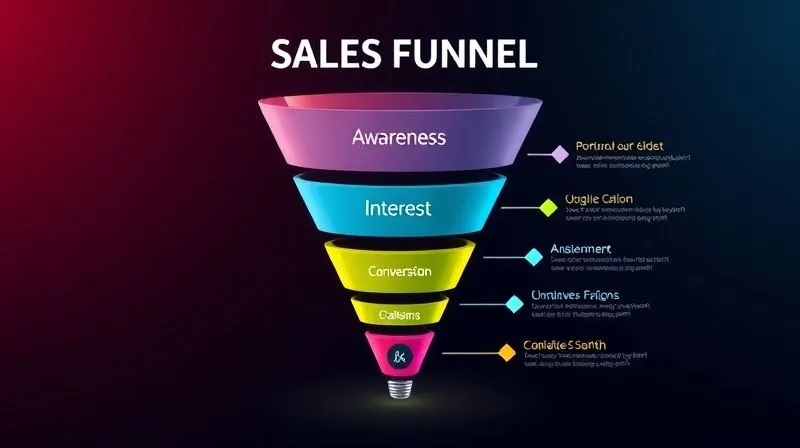
Even with a stellar product and robust retention, a leaky sales and marketing funnel can starve your business of new MRR. Optimizing this funnel is about ensuring you're attracting the right leads and converting them efficiently.
Improving Lead Quality and Qualification
It's not just about getting more leads; it's about getting *better* leads. Poorly qualified leads waste sales team time and often churn quickly. Re-evaluate your lead generation channels and criteria.
Are your marketing messages attracting your ideal customer? Are your qualification processes rigorous enough to filter out those unlikely to convert or find long-term value? Focus on quality over quantity. Gartner's research consistently shows that improving lead quality is more impactful than simply increasing lead volume.
Streamlining Your Sales Conversion Process
Once you have qualified leads, how efficient is your sales process? Map out every step from initial contact to closed-won. Look for bottlenecks, unnecessary delays, or points of friction.
This could involve optimizing your sales demos, refining your proposal process, or improving your follow-up cadence. A smoother, more efficient sales process means quicker conversions and a faster injection of new MRR, helping to reverse declining monthly recurring revenue.
Building a Resilient Company Culture Focused on Customer Value
Ultimately, reversing declining MRR isn't just about strategies and tactics; it's about people. Your team's mindset and commitment to customer value are the bedrock of sustainable growth. I've observed that companies with strong, customer-centric cultures are far more resilient to market fluctuations and churn.
Fostering a Customer-Centric Mindset
Every single person in your organization, from engineering to marketing to finance, should understand their role in delivering customer value. This means regular communication about customer feedback, celebrating customer success stories, and tying individual efforts back to customer outcomes.
When everyone feels responsible for the customer experience, issues are identified and resolved faster, and opportunities for delight are seized. This collective ownership transforms the entire business into a retention-driving machine.
Empowering Teams to Drive Retention
Give your teams the autonomy and resources to make decisions that benefit the customer. Front-line support staff, for example, should have the flexibility to offer small gestures of goodwill or escalate issues effectively without unnecessary bureaucratic hurdles. Empowered employees are more engaged and more effective at preventing churn.
Regular training, clear goals tied to customer success metrics, and a culture of continuous learning reinforce this empowerment. As McKinsey research suggests, a customer-centric culture directly correlates with improved business performance.
Frequently Asked Questions (FAQ)
How quickly can I expect to see results from these strategies? While some changes like pricing adjustments or win-back campaigns can show immediate impact, fundamental shifts in retention and product-market fit take time. Expect to see initial positive indicators within 1-3 months, with significant MRR reversal becoming evident over 6-12 months, depending on the depth of the decline and the speed of your execution. Consistency is key.
What if my startup is too small for all these strategies? Where should I start? For smaller startups, focus on the fundamentals: deeply understand your customer, perfect your onboarding, and relentlessly pursue product-market fit. Prioritize the strategies that address your biggest MRR leak. If churn is high, focus on retention. If new acquisition is stagnant, optimize your funnel. Don't try to do everything at once; iterate and learn.
How do I prioritize which strategies to implement first when my MRR is declining? Start with diagnosis (Section 1). Pinpoint the biggest leak in your MRR bucket. Is it churn, contraction, or low new acquisition? Once identified, focus on the strategies that directly address that primary issue. For example, if churn is rampant, prioritize enhancing onboarding and customer success before diversifying revenue streams.
Should I focus more on new customer acquisition or retention when trying to reverse declining MRR? While both are important, when MRR is declining, retention is almost always the more urgent and cost-effective focus. Fixing the 'leaky bucket' first ensures that any new customers you acquire aren't simply replacing those you're losing. Once retention stabilizes, then aggressively scale new acquisition.
What role does funding play in reversing MRR decline? Funding can provide the runway and resources needed to implement these strategies (e.g., hiring customer success managers, investing in product development, marketing spend). However, funding alone won't solve the problem. It's the strategic allocation of those funds towards solving the root causes of declining MRR that matters. Without a clear strategy, more money can just accelerate a failing model.
Key Takeaways and Final Thoughts
Reversing declining monthly recurring revenue for your startup is a challenging but entirely achievable feat. It demands an honest assessment, strategic thinking, and relentless execution. It's not about quick fixes but about building a more resilient, customer-centric business.
- Diagnose Accurately: Understand the specific drivers of your MRR decline through deep data analysis and segmentation.
- Prioritize Retention: Fortify your onboarding, customer success, and feedback loops to keep existing customers engaged.
- Validate Value: Continuously optimize your product-market fit and value proposition based on evolving customer needs.
- Strategize Pricing: Ensure your pricing reflects the value you deliver and offers clear upgrade paths.
- Learn from Losses: Implement win-back campaigns and leverage exit data to recover revenue and prevent future churn.
- Optimize Your Funnel: Improve lead quality and streamline sales processes to drive efficient new MRR.
- Cultivate Culture: Foster a customer-centric mindset across your entire organization.
This journey will test your resolve, but by systematically addressing these areas, you won't just reverse the decline; you'll build a stronger, more sustainable startup poised for long-term success. Embrace the challenge, empower your team, and focus on delivering undeniable value to your customers. The path to recovery is within your grasp.
Recommended Reading
- Navigating Bitcoin Volatility: 7 Strategies for Corporate Treasuries
- 5 Urgent Steps: Quickly Replenish Your Business's Depleted Safety Net
- 7 Reasons Your Short-Term Trading Strategy Fails: Fix It Now
- Unlock Your Investing Potential: Understanding Risk Tolerance in Portfolio Planning
- 5 Proven Ways: Quality Business Hotels Within Strict Per Diem Limits?





Comments
Leave a comment below. Your email will not be published. Required fields marked with *