


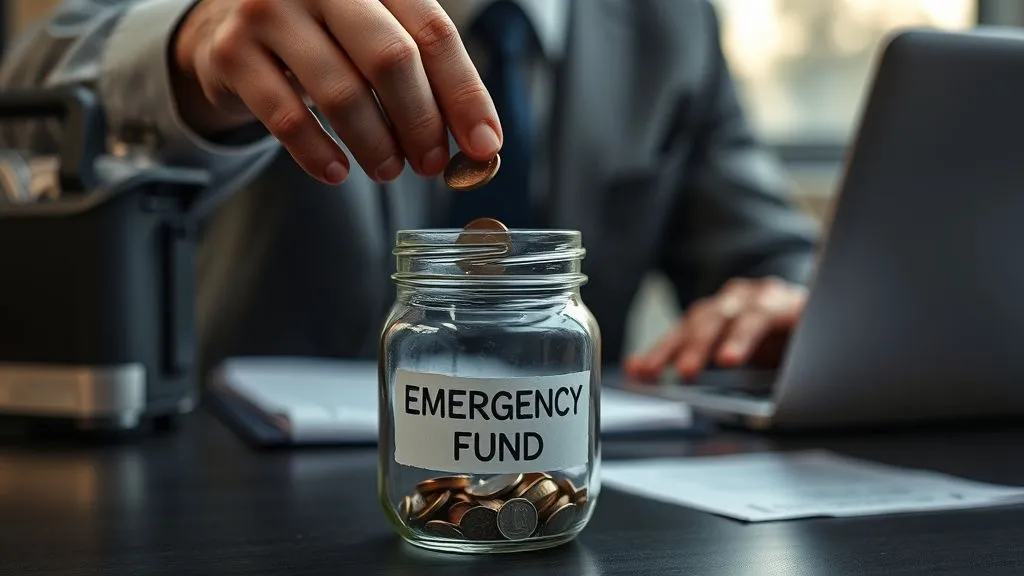
How to Replenish Emergency Fund After Professional Setback?
For over two decades in the finance industry, I've guided countless individuals through economic downturns, market volatility, and personal career crises. One recurring theme I've observed, time and again, is the profound and often devastating impact a professional setback can have on even the most meticulously planned financial safety nets. It's a situation I've witnessed firsthand, both professionally and, in some instances, personally through the experiences of close friends and family.
The sudden loss of income, a significant pay cut, an unexpected career pivot, or even a prolonged period of underemployment can quickly deplete an emergency fund, leaving many feeling vulnerable, stressed, and profoundly uncertain about their future. It's a deeply unsettling experience, where the very foundation of your financial security seems to crumble, and the path forward can feel obscured by anxiety and doubt. The emotional toll can be as heavy as the financial one, making clear-headed decision-making a challenge.
But I'm here to tell you that recovery is not only possible but entirely within your control. This comprehensive guide will walk you through a proven, actionable framework, leveraging my extensive experience and insights, to help you not just replenish your emergency fund after a professional setback, but to emerge stronger, more financially resilient, and with a renewed sense of confidence. We'll explore practical strategies, real-world examples, and expert advice to put you back on solid ground, faster than you might think.
Assess the Damage: Your Current Financial Reality
Before you can begin to rebuild, you must first understand the landscape of your current financial situation. This isn't about dwelling on what went wrong, but rather gaining clarity on where you stand today. As a mentor in finance, I always emphasize that ignorance is not bliss when it comes to money; knowledge is the ultimate power. This initial assessment is your foundation.
I've seen countless individuals try to skip this step, hoping to just 'save more,' but without a clear picture, their efforts often lack direction and impact. You need to know your exact numbers to make informed decisions. This means looking at both your assets and your liabilities, and critically, your new monthly cash flow.
Actionable Steps for Financial Assessment:
- List All Assets: Detail everything you own that has value – checking and savings accounts, investment portfolios (even if you don't plan to touch them), retirement accounts (as a last resort, but know their value), real estate equity, and any other significant possessions.
- Itemize All Liabilities: Document every single debt you have – credit cards, personal loans, student loans, car loans, mortgages, and any other outstanding balances. Include interest rates and minimum payments.
- Calculate Your New Net Worth: Subtract your total liabilities from your total assets. This number gives you a snapshot of your financial health today. While it might be lower than before your setback, it's a starting point.
- Track Current Income & Expenses: For at least one month, meticulously track every dollar coming in and going out. This includes any temporary income, unemployment benefits, or severance pay. Categorize your expenses into 'needs' (housing, food, utilities, essential transportation) and 'wants' (dining out, entertainment, subscriptions, non-essential shopping).
- Determine Your 'Burn Rate': This is how much money you absolutely need to cover your essential expenses each month. Knowing this number is critical for understanding how long your remaining funds (if any) will last and how aggressively you need to save.
“In my experience, the clearer you are about your financial situation, no matter how challenging, the more empowered you become to change it. Don't fear the numbers; confront them with a plan.”
This assessment will likely highlight areas where you're spending unnecessarily and reveal the true impact of your income reduction. It's not always easy to face, but it's an essential step on your journey to replenish emergency fund after professional setback.

Cut Deep, Cut Smart: Aggressive Budgeting Strategies
Once you understand your financial reality, the next immediate step is to implement an aggressive, temporary budget. This isn't about deprivation for the sake of it, but about redirecting every possible dollar towards your emergency fund. Think of it as a financial detox – short-term pain for long-term gain. I've guided clients through this phase, and while challenging, it's often the most impactful in the initial rebuild.
An effective aggressive budget differentiates ruthlessly between needs and wants. Many expenses that felt essential before a professional setback suddenly become luxuries. This is where your detailed expense tracking from the previous step becomes invaluable. According to a recent survey by National Foundation for Credit Counseling (NFCC), a significant portion of household budgets are often consumed by discretionary spending that can be temporarily cut.
Strategies for Aggressive Budgeting:
- Identify and Eliminate Non-Essentials: Review your 'wants' list from your expense tracking. Cancel all non-essential subscriptions (streaming services, gym memberships you rarely use, premium apps). Pause dining out, expensive coffees, and entertainment. Even small, daily expenditures add up significantly over a month.
- Negotiate and Reduce Fixed Costs: Don't assume your bills are set in stone. Call your internet, cable, and phone providers to inquire about lower-cost plans or promotional rates. Explain your situation; you might be surprised by their flexibility. Review your insurance policies to see if you can increase deductibles for lower premiums (though be mindful of potential risks).
- Temporary Lifestyle Adjustments: Embrace frugality. Cook all meals at home, pack lunches, carpool or use public transport, and look for free entertainment options. If possible, consider a temporary downgrade in housing or even staying with family if your situation is dire and geographically feasible.
- Sell Unused Items: Declutter your home and turn unused possessions into cash. Clothing, electronics, furniture, books – platforms like eBay, Facebook Marketplace, or local consignment shops can provide a quick influx of funds directly for your emergency fund.
- Pause Retirement Contributions: While generally not advisable long-term, temporarily pausing 401(k) or IRA contributions can free up significant cash flow during an emergency fund rebuild. The goal is to restart these as soon as your emergency fund is sufficiently robust.

Case Study: Alex's Aggressive Fund Rebuild
Alex, a marketing professional, faced an unexpected layoff that wiped out 70% of his emergency fund within three months. Feeling overwhelmed, he initially struggled to make headway. After adopting an aggressive budgeting strategy I recommended, he paused his 401(k) contributions, canceled three streaming services, cut all restaurant spending, and even sold a high-end camera he rarely used. Within two months, these actions, combined with temporary freelance work, freed up an additional $1,200 per month. This allowed him to stabilize his finances and rapidly accelerate his emergency fund replenishment, giving him critical breathing room while he searched for a new full-time role.
Boost Your Income: Diversifying & Accelerating Earning
While cutting expenses is crucial, focusing solely on reducing outflows can only get you so far. To truly accelerate your emergency fund rebuild, you must also explore ways to boost your income. This isn't just about finding a new primary job, though that's often the ultimate goal. It's about diversifying your income streams, even temporarily, to inject more cash into your financial safety net. I've found that people who actively pursue this dual approach recover much faster.
In today's gig economy, there are more opportunities than ever to generate additional income, even if it's just for a few hours a week. Don't be afraid to think creatively and leverage your existing skills or even learn new ones quickly. This proactive approach can significantly shorten the time it takes to replenish emergency fund after professional setback.
Strategies for Income Generation:
- Temporary & Freelance Work: Explore platforms like Upwork, Fiverr, or LinkedIn for freelance gigs that match your professional skills. Even short-term contracts or project-based work can provide a vital income bridge. Look for temporary staffing agencies in your field.
- Gig Economy Opportunities: Consider driving for ride-sharing services, delivering food, pet-sitting, or offering local services like tutoring, yard work, or house cleaning. These can provide immediate, flexible cash.
- Monetize Hobbies or Skills: Do you have a talent for graphic design, writing, coding, photography, or crafting? Offer your services to friends, family, or local businesses. Turn a hobby into a temporary income stream.
- Sell Services or Products: Beyond selling unused items, consider creating and selling a product if you have a niche skill. This could range from digital products like e-books or templates to handmade goods.
- Leverage Your Network: Inform your professional and personal network that you are actively seeking opportunities. Often, the best leads come from people you know. Be specific about the kind of work you're open to.
“The most resilient individuals I've worked with understand that income isn't a single stream, especially during recovery. It's about opening multiple faucets, even if some are temporary, to flood your emergency fund back to health.”
Remember, the goal here is not necessarily long-term career fulfillment but rapid cash generation for your emergency fund. Every extra dollar earned is a step closer to financial security.

Strategic Debt Management: Freeing Up Cash Flow
When you're working to replenish an emergency fund after a professional setback, every dollar counts. This means looking at your debt obligations not just as payments, but as potential sources of freed-up cash flow. I often advise clients that managing debt strategically during this period is as important as earning more or spending less. It's a critical component of regaining financial stability.
The temptation might be to ignore debt or just make minimum payments, but a proactive approach can yield significant benefits. The objective is to reduce the burden of debt payments as much as possible, either by lowering interest rates, deferring payments, or strategically paying down high-interest balances to free up more money for your emergency savings. For those struggling, organizations like the Federal Trade Commission (FTC) offer guidance on choosing reputable credit counseling services.
Debt Management Strategies During Recovery:
- Prioritize High-Interest Debt: If you have any funds available beyond essential living expenses, direct them towards credit cards or personal loans with the highest interest rates. Reducing these balances quickly will save you money on interest and free up more cash in the long run.
- Contact Creditors for Hardship Programs: Don't be afraid to reach out to your credit card companies, lenders, or mortgage providers. Many offer hardship programs, temporary deferrals, or reduced payment plans for individuals facing financial difficulties. Explain your situation clearly and professionally.
- Consider Debt Consolidation (with Caution): If you have multiple high-interest debts, a debt consolidation loan with a lower interest rate could simplify payments and reduce your overall monthly outflow. However, be extremely cautious and ensure the new loan doesn't come with hidden fees or extend your repayment period unnecessarily.
- Avoid New Debt: This is paramount. Do everything in your power to avoid taking on any new debt, especially high-interest credit card debt. If you must use a credit card, ensure you can pay it off in full each month.
- Review Student Loan Options: If you have federal student loans, explore income-driven repayment plans or temporary forbearance options. For private loans, contact your lender to discuss potential relief programs.
By strategically managing your debt, you create more breathing room in your budget, allowing you to allocate a larger portion of your income towards rebuilding your emergency fund. This dual approach of reducing expenses and managing debt aggressively is key to a swift recovery.
| Debt Type | Interest Rate | Minimum Payment | Strategy |
|---|---|---|---|
| Credit Card A | 22.9% | $75 | Aggressive Payoff (Avalanche Method) |
| Personal Loan | 10.5% | $150 | Maintain payments, explore refinance options |
| Student Loan (Federal) | 4.5% | $200 | Explore Income-Driven Repayment |
| Car Loan | 3.9% | $300 | Maintain payments |
Automate Your Rebuild: Consistency is Key
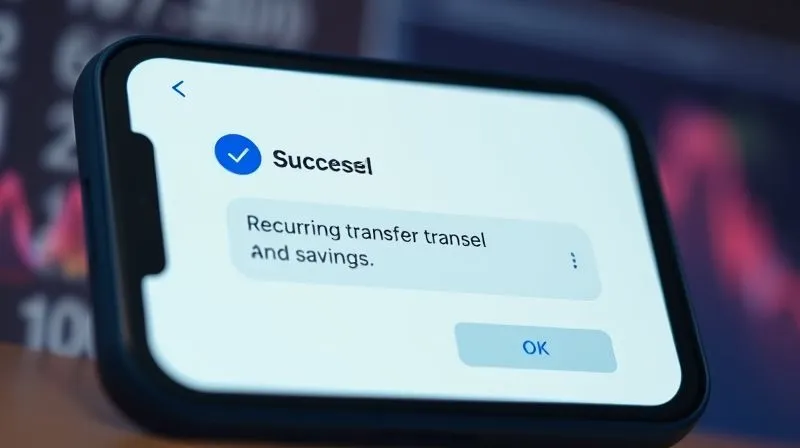
Once you've stabilized your income and implemented your aggressive budget, the next critical step is to automate your emergency fund contributions. In my experience, consistency is the single most powerful factor in successful financial rebuilding. Relying on willpower alone often leads to missed contributions, especially when other financial pressures arise. Automation removes the decision-making process and ensures steady progress.
Think of your emergency fund as a non-negotiable bill. Just as you wouldn't forget to pay your rent or mortgage, you shouldn't forget to pay yourself. This strategy works because it leverages human psychology – once money is automatically transferred, you tend to adjust your spending around what's left, rather than trying to save what's left after spending.
Implementing Automation for Your Emergency Fund:
- Set Up Automatic Transfers: As soon as your paycheck hits your bank account, have a predetermined amount automatically transferred to a separate, dedicated emergency savings account. Even if it's a small amount initially, consistency is paramount.
- Use a Separate Account: Keep your emergency fund in a separate, easily accessible, but distinct high-yield savings account. This prevents you from accidentally spending it and often offers a slightly better interest rate.
- Increase Contributions Gradually: As your income stabilizes or increases, or as you pay down debt, gradually increase the automated transfer amount. Review your budget monthly or quarterly to see where you can find extra funds to boost your contributions.
- Treat it as a Bill: Mentally categorize your emergency fund contribution as a fixed expense, just like your rent or utilities. It's a payment to your future self.
- Leverage Direct Deposit: If your employer allows, you can often split your direct deposit, sending a portion directly to your emergency fund account and the remainder to your checking account. This makes saving truly 'out of sight, out of mind.'
“Automation is your silent partner in financial recovery. It's the disciplined action that ensures your emergency fund grows steadily, even when life gets busy or willpower wanes. Set it and forget it, then watch your security grow.”
This automated approach simplifies the process of how to replenish emergency fund after professional setback, making it a sustainable habit rather than a sporadic effort. It builds momentum and confidence, which are invaluable during a financial rebuild.
Leveraging Unexpected Windfalls for Fund Growth
During the process of rebuilding your emergency fund, any unexpected influx of cash can feel like a lifeline. These 'windfalls' – whether a tax refund, a work bonus, a small inheritance, or even a thoughtful monetary gift – present a unique opportunity to significantly accelerate your savings goals. I've seen clients make incredible progress by dedicating these sums entirely to their emergency fund, rather than letting them get absorbed into everyday spending.
The key here is discipline and foresight. It's easy to view a windfall as 'extra' money to spend on something you've been wanting. However, during a financial recovery, every dollar should be strategically deployed to fortify your safety net. This is a moment to prioritize long-term security over immediate gratification.
Maximizing Windfalls for Your Emergency Fund:
- Immediate Allocation: As soon as a windfall arrives, immediately transfer a significant portion, or even the entire amount, directly into your emergency fund. Don't let it sit in your checking account where it's vulnerable to impulse spending.
- Resist Lifestyle Creep: It's tempting to upgrade your lifestyle or make a large purchase when you have extra cash. Remind yourself of your primary goal: rebuilding your financial safety net.
- Small Indulgence (Optional, with Limits): If the windfall is substantial, you might allow yourself a very small percentage (e.g., 5-10%) for a modest treat, but only after the bulk has been allocated to your emergency fund. This can help prevent feelings of deprivation.
- Tax Refunds as Savings: For many, a tax refund is the most common windfall. Plan ahead by adjusting your W-4 withholdings to ensure you're not overpaying taxes throughout the year, but if you do receive a refund, earmark it for your emergency fund.
- Bonus or Commission: If your profession includes bonuses or commissions, treat these as opportunities to supercharge your savings. Consider allocating a higher percentage of these variable incomes to your emergency fund than your regular paycheck.
By strategically directing these unexpected funds, you can dramatically shorten the timeline required to replenish emergency fund after professional setback, providing a much-needed boost to your financial confidence.
Building a Resilient Financial Mindset: Beyond the Numbers
While the practical steps of budgeting, earning, and saving are crucial, I've learned over my career that true financial resilience extends beyond just the numbers. A professional setback can take a significant toll on your mental and emotional well-being, leading to stress, anxiety, and even feelings of shame. Cultivating a strong, positive financial mindset is as vital as any spreadsheet or savings plan. As financial psychology expert Dr. Brad Klontz often highlights, our money behaviors are deeply rooted in our beliefs and emotions.
Overcoming the psychological hurdles is key to sustaining your efforts and preventing future setbacks from derailing your progress. This isn't about ignoring the reality of your situation, but rather approaching it with a constructive, growth-oriented perspective. A resilient mindset helps you stay disciplined, make rational decisions, and maintain hope even when challenges persist.
Cultivating a Resilient Financial Mindset:
- Practice Self-Compassion: Understand that professional setbacks are often beyond your control and do not reflect your worth. Be kind to yourself through this process. Negative self-talk can hinder progress.
- Focus on Progress, Not Perfection: Celebrate small wins. Every dollar saved, every expense cut, every extra hour worked is a step forward. Don't get discouraged if you have a bad spending day; simply get back on track.
- Educate Yourself Continuously: The more you understand about personal finance, the more confident you'll become. Read reputable financial blogs, books, and articles. Knowledge empowers you to make better decisions.
- Seek Support (If Needed): Don't hesitate to talk to trusted friends, family, or a professional financial advisor. If financial stress is impacting your mental health, consider seeking support from a therapist or counselor specializing in financial wellness. Resources like the American Psychological Association (APA) offer insights into managing financial stress.
- Visualize Your Success: Regularly imagine your emergency fund fully replenished and the sense of security that brings. This positive visualization can be a powerful motivator to keep you on track.
- Learn from the Experience: Use this setback as an opportunity to reinforce healthier financial habits and build an even stronger financial safety net for the future. What lessons can you take forward?
Remember, rebuilding your emergency fund is a marathon, not a sprint. A strong mindset will be your most valuable asset in navigating the journey and ensuring you not only recover but thrive financially in the long run.
Frequently Asked Questions (FAQ)
Q: How long does it typically take to rebuild an emergency fund after a professional setback? The timeline varies significantly based on the severity of the setback, your income-generating capacity, and your discipline in budgeting and saving. In my experience, with aggressive budgeting and income-boosting strategies, many individuals can replenish a substantial portion of their fund within 6-12 months. For a full rebuild to 3-6 months of expenses, it might take 1-2 years, especially if the initial fund was completely depleted. Consistency is more important than speed.
Q: Should I prioritize paying off debt or replenishing my emergency fund? This is a common dilemma. As an expert, I generally advise a hybrid approach. First, establish a mini-emergency fund of $1,000-$2,000 to cover immediate small emergencies. Then, tackle high-interest debt (e.g., credit cards) aggressively while simultaneously making small, consistent contributions to your main emergency fund. Once high-interest debt is managed, shift your focus fully to rebuilding your emergency fund to its target level. This protects you from new debt while reducing existing burdens.
Q: What if I can only save a very small amount each month? Is it even worth it? Absolutely, yes! Every single dollar you save contributes to your financial safety net. Even $10 or $20 a week, consistently saved, adds up. The goal is to build the habit and momentum. As your financial situation improves, you can gradually increase those contributions. The psychological benefit of consistent saving, no matter how small, is immense.
Q: Are there government programs or resources that can help me during this time? Yes, depending on your specific situation. You might be eligible for unemployment benefits, which can provide a crucial income bridge. Explore local and state assistance programs for food, housing, or utility support. The USA.gov benefits search tool is an excellent starting point to identify federal programs. Additionally, non-profit credit counseling agencies can offer free or low-cost guidance on debt management.
Q: How much should my emergency fund ultimately hold after I've rebuilt it? The standard recommendation is 3-6 months' worth of essential living expenses. However, I often advise clients, especially those who've experienced a significant setback, to aim for 6-9 months, or even 12 months if their income is highly variable or their industry is prone to instability. The 'right' amount is ultimately what helps you sleep soundly at night, knowing you're protected against future unforeseen events.
Key Takeaways and Final Thoughts
Navigating a professional setback and the subsequent challenge of how to replenish emergency fund after professional setback is undoubtedly one of the toughest financial journeys you might face. But as an industry specialist, I've seen firsthand that with a clear plan, unwavering discipline, and a resilient mindset, it's a journey that can lead to profound financial growth and an even stronger foundation for your future.
- Assess Rigorously: Understand your current financial reality with precision before taking any action.
- Budget Aggressively: Implement a temporary, strict budget to maximize savings and minimize unnecessary outflows.
- Boost Income Actively: Explore all avenues for additional income, even temporary ones, to accelerate your rebuild.
- Manage Debt Strategically: Prioritize high-interest debt and communicate with creditors to free up cash flow.
- Automate for Consistency: Set up automatic transfers to ensure steady, reliable growth of your emergency fund.
- Leverage Windfalls: Dedicate any unexpected cash infusions directly to your emergency savings.
- Cultivate Resilience: Nurture a positive financial mindset to stay motivated and make sound decisions.
Remember, this process is not just about accumulating money; it's about rebuilding your confidence, reinforcing healthy financial habits, and ultimately, securing your peace of mind. The lessons you learn during this period of recovery will serve you well for the rest of your life, making you more financially astute and prepared for whatever challenges may come your way. You have the power to turn this setback into a powerful launchpad for a more secure financial future. Start today, stay consistent, and trust the process. For further guidance on long-term financial planning, consider exploring resources from reputable financial institutions like Investopedia.
Recommended Reading
- Ethical Investments & Top Returns: 7 Strategies for Conscious Wealth
- Unmasking the Perils: What Are the Risks of Investing in Structured Notes?
- Is the Debt Snowball Method Right for Your Finances? The Ultimate Guide
- 5 Steps: Professionals' Fast Track to Unsecured Credit Card Graduation
- 7 Immediate Steps: What to do when your solo travel budget runs out unexpectedly?





Comments
Leave a comment below. Your email will not be published. Required fields marked with *