



How to Quantify Geopolitical Risk in Portfolio Market Analysis?
For over two decades in the investment trenches, I've observed a recurring blind spot in even the most sophisticated portfolio strategies: the elusive, often underestimated beast of geopolitical risk. Many investors acknowledge its presence, yet few possess a systematic framework to truly quantify its potential impact, leaving their portfolios vulnerable to sudden, seismic shifts.
The challenge isn't just identifying a potential conflict or policy change; it's translating that complex, often qualitative information into actionable, measurable metrics that can inform asset allocation, hedging strategies, and overall risk appetite. This gap between awareness and quantification is precisely where portfolios can suffer unexpected and significant drawdowns.
In this definitive guide, I'll walk you through a multi-faceted approach to demystify and quantify geopolitical risk. We'll move beyond mere speculation to build robust frameworks, leverage data-driven insights, and integrate sophisticated analytical tools that will empower you to make more informed, resilient investment decisions in an increasingly volatile world.
Understanding the Nuance of Geopolitical Risk in Modern Portfolios
Before we dive into quantification, it's crucial to grasp what geopolitical risk truly entails in the context of a diversified investment portfolio. It's far more than just wars or coups; it encompasses a broad spectrum of political, economic, and social events that originate at a state or inter-state level, carrying implications for global markets.
Think of trade disputes, cyberattacks, significant policy shifts (like energy transitions or regulatory changes), demographic pressures, humanitarian crises, or even climate change-induced migrations. These events, often interconnected, can disrupt supply chains, alter consumer demand, trigger capital flight, impact commodity prices, and fundamentally shift investor sentiment across entire regions or sectors.
In my experience, the biggest mistake investors make is treating geopolitical risk as an 'exogenous shock' rather than an ongoing, evolving force that requires continuous monitoring and integration into their core risk models. It's not a black swan event that happens once; it's a flock of grey swans constantly circling.
Unlike traditional market risks like interest rate fluctuations or credit defaults, geopolitical risks are often harder to model using historical data, as their drivers are complex, non-linear, and frequently unprecedented. They demand a different analytical lens, one that blends qualitative foresight with quantitative rigor.

The Limitations of Traditional Risk Models
Many quantitative models commonly used in portfolio management, such as Value-at-Risk (VaR) or Conditional VaR (CVaR), are excellent for assessing market risk under 'normal' conditions. However, they typically fall short when confronted with severe geopolitical shocks. Why?
Firstly, these models are often heavily reliant on historical data, assuming that future market behavior will resemble the past. Geopolitical events, by their very nature, often break historical patterns, introducing novel correlations and unprecedented volatility. As a prominent economist once stated, "History doesn't repeat itself, but it often rhymes." Geopolitical events, however, can introduce entirely new verses.
Secondly, traditional models often struggle with 'tail risk' – the probability of extreme, low-frequency events. Geopolitical crises often manifest as tail events, where correlations between assets can suddenly spike to 1 or -1, rendering traditional diversification benefits temporarily nullified. A prime example is how global equities can tumble simultaneously during a major international crisis, regardless of underlying economic fundamentals.
Thirdly, these models often don't explicitly incorporate political or social variables. They are designed to measure market responses to economic data, earnings reports, or interest rate changes, not the fallout from a sudden border dispute or a disruptive technological breakthrough driven by state policy. This is where a more bespoke, integrated approach becomes indispensable.
Deconstructing Geopolitical Risk: A Multi-Dimensional Framework
To quantify geopolitical risk effectively, we must first break it down into manageable, measurable components. I advocate for a multi-dimensional framework that considers several key pillars:
- Political Stability & Governance: This includes factors like election cycles, regime type, policy predictability, corruption levels, and the rule of law. Instability here can lead to policy reversals, nationalizations, or social unrest.
- Economic Interdependence & Trade: Assessing a country's reliance on specific trade routes, key commodities, or major trading partners. Vulnerabilities here can be exposed by sanctions, tariffs, or supply chain disruptions.
- Social Cohesion & Demographics: Factors like income inequality, ethnic tensions, religious divides, aging populations, or rapid urbanization can fuel internal instability and impact long-term economic growth.
- Security & Conflict: Direct threats from interstate conflict, civil war, terrorism, cyber warfare, or regional proxy battles. These have immediate and often severe market impacts.
- Environmental & Resource Stress: The impact of climate change, water scarcity, energy security, or competition over critical minerals. These can become catalysts for broader geopolitical tensions and economic disruption.
By dissecting geopolitical risk in this manner, we move from a vague concept to a set of identifiable, albeit complex, variables that can be qualitatively assessed and, eventually, quantitatively mapped.
Phase 1: Qualitative Assessment – Identifying the 'Known Unknowns'
The first step in quantification is a thorough qualitative assessment. This is where we identify the specific geopolitical risks relevant to our portfolio and begin to understand their potential pathways to impact.
Monitoring Key Indicators
I recommend establishing a disciplined routine for monitoring a diverse set of indicators. This isn't just reading the headlines; it's about discerning trends and anticipating potential inflection points:
- Political Calendars: Track major elections, referendums, and leadership transitions in key regions.
- Policy Announcements: Pay close attention to white papers, legislative agendas, and statements from central banks, trade ministries, and international bodies.
- Social Unrest Trackers: Utilize resources that monitor protests, strikes, and social movements.
- Economic Sanctions & Tariffs: Keep a live list of current and potential sanctions, and understand their scope and targets.
- Military & Security Alerts: Monitor defense spending, troop movements, and intelligence reports for escalating tensions.
Expert Opinion & Scenario Planning
No single investor can be an expert in every geopolitical hotspot. This is where leveraging external expertise becomes invaluable.
Engage with geopolitical consulting firms, think tanks like Chatham House or the Council on Foreign Relations, or even subscribe to specialized intelligence reports. These sources provide deep dives into regional dynamics and potential future scenarios. For instance, understanding the nuances of a specific regional conflict might require insights from a specialist covering that area for decades.
Scenario planning is a powerful qualitative tool. Instead of predicting a single future, you construct several plausible alternative futures based on different geopolitical outcomes. For each scenario, you analyze:
- What are the key drivers?
- What are the potential market impacts (e.g., commodity prices, currency movements, equity valuations)?
- Which assets in my portfolio are most exposed or resilient?

Phase 2: Quantitative Approaches – Translating Risk into Numbers
Once we've qualitatively identified and understood the risks, the next, more challenging step is to translate them into quantifiable metrics. This involves a blend of direct measurement, proxy analysis, and advanced modeling.
Geopolitical Risk Indices (GRIs) and Their Application
Several organizations and academic institutions have developed Geopolitical Risk Indices (GRIs) that attempt to quantify global or regional geopolitical stress. These indices typically aggregate various qualitative and quantitative indicators into a single numerical score.
For example, the World Bank's Worldwide Governance Indicators (WGI) or the Geopolitical Risk (GPR) Index developed by economists at the Federal Reserve can provide a macro-level view. While not perfect, these indices can serve as a starting point for correlation analysis with your portfolio's returns. You can analyze how your portfolio, or specific assets within it, performs when these indices spike or decline.
The Brookings Institution also publishes research that often touches upon geopolitical risk and its economic implications, which can be useful for contextualizing GRI movements.Proxy Asset Analysis and Correlation Studies
When direct quantification is difficult, proxy assets can offer valuable insights. Certain assets tend to react predictably to geopolitical stress, acting as a barometer:
- Gold and Safe-Haven Currencies (e.g., JPY, CHF): Often appreciate during times of heightened uncertainty.
- Defense Stocks: May see increased demand during periods of conflict.
- Energy Commodities (e.g., Oil, Natural Gas): Price volatility is often directly linked to Middle Eastern or Russian geopolitical events.
- Specific Country/Region ETFs: Can serve as direct proxies for the economic health and stability of a particular area.
By studying the correlation between these proxy assets and your portfolio, especially during past geopolitical events, you can infer your portfolio's sensitivity. It's not just about the correlation in 'normal' times, but how correlations shift under stress. For instance, if your portfolio has a high positive correlation with emerging market equities, and those equities have a strong inverse correlation with a rising GPR index, you have a quantifiable link.
Case Study: The Impact of a Fictional Trade Dispute on 'GlobalTech Inc.'
Let's consider 'GlobalTech Inc.', a multinational semiconductor manufacturer heavily reliant on supply chains stretching across East Asia. In 2023, a fictional escalation of trade tensions between two major economic blocs led to the imposition of new tariffs and export restrictions on critical components.
GlobalTech Inc. had previously quantified its exposure to such a scenario. Their analysis identified specific raw materials and manufacturing nodes at risk. By creating a 'Trade War Impact' score, they estimated a 15% increase in production costs and a 10% reduction in sales for a 'moderate' dispute scenario, and up to 30% cost increase with 25% sales reduction for a 'severe' scenario. This quantification allowed them to pre-position inventory, diversify suppliers, and even explore domestic manufacturing alternatives, mitigating the eventual impact. Without this quantification, the sudden tariffs would have caught them completely off guard, leading to significant profit erosion and stock price decline.
| Metric | Moderate Scenario | Severe Scenario |
|---|---|---|
| Production Cost Increase | 15% | 30% |
| Sales Reduction | 10% | 25% |
| Affected Revenue (Est.) | $500M | $1.2B |
| Profit Margin Impact | -3% | -8% |
Machine Learning and AI in Geopolitical Risk Prediction
The frontier of geopolitical risk quantification is increasingly leveraging machine learning and artificial intelligence. These technologies can process vast amounts of unstructured data – news articles, social media feeds, diplomatic cables – to identify patterns, sentiment shifts, and early warning signals that human analysts might miss.
Natural Language Processing (NLP) models can analyze millions of news articles daily, identifying mentions of key geopolitical terms, tracking sentiment around specific regions or leaders, and even predicting the likelihood of certain events based on historical textual patterns. While still evolving, these tools offer the potential for more dynamic, real-time geopolitical risk assessment, moving beyond static indices to predictive analytics.
Integrating Geopolitical Risk into Portfolio Construction
Quantifying geopolitical risk is not an academic exercise; its ultimate purpose is to inform and strengthen your portfolio construction and management.
Stress Testing and Tail Risk Management
Once you have quantified potential impacts, integrate them into your stress testing scenarios. Don't just stress test for interest rate hikes or recessions; run your portfolio through specific geopolitical scenarios you've identified and quantified.
- Scenario A: Major trade war escalation between US and China.
- Scenario B: Regional conflict in the Middle East causing oil price spike.
- Scenario C: Cyberattack on critical infrastructure in a developed nation.
By running these tests, you can identify which parts of your portfolio are most vulnerable and estimate potential losses. This allows you to proactively adjust exposures or implement hedging strategies. This proactive approach is a hallmark of truly sophisticated risk management.
The true measure of a robust portfolio isn't how well it performs in calm waters, but how resilient it is when the geopolitical storms hit. Stress testing with quantified geopolitical scenarios is your lighthouse.
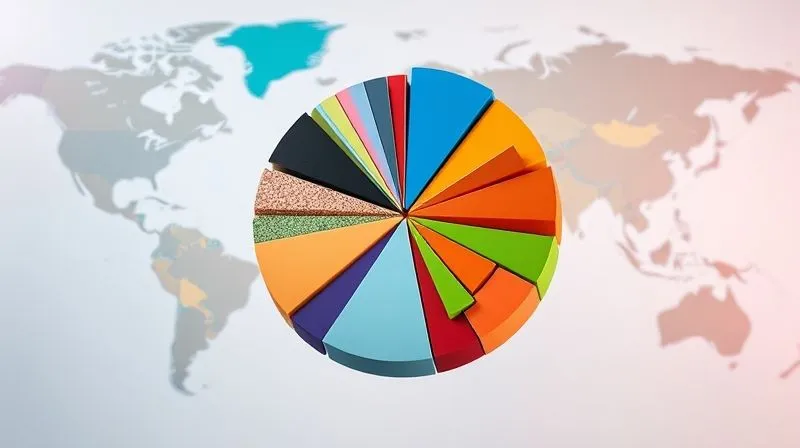
Diversification Beyond Traditional Asset Classes
Traditional diversification across stocks and bonds, or even different industries, may not be sufficient to mitigate geopolitical risk, as these correlations can break down during crises. Consider diversifying along these lines:
- Geographic Diversification: Beyond just country allocation, consider regional political blocs, resource dependencies, and differing geopolitical allegiances.
- Sectoral Diversification: Identify sectors that are historically more resilient or even benefit from specific geopolitical events (e.g., cybersecurity, defense, certain commodities).
- Alternative Assets: Consider assets like real estate in stable jurisdictions, infrastructure projects, or even certain private equity investments that might have lower correlation to public market geopolitical shocks.
- Currency Diversification: Hold a basket of currencies, including traditional safe havens, to buffer against sudden currency devaluations linked to regional instability.
The Role of Hedging and Derivatives
For specific, quantifiable geopolitical risks, derivatives can be powerful tools for hedging. This requires precise identification of the risk and its potential financial impact.
- Currency Forwards/Options: If you've quantified a risk of devaluation in a specific currency due to political instability, these can protect your international holdings.
- Commodity Futures/Options: If a geopolitical event is likely to impact oil or gas prices, these can hedge against price spikes or drops.
- Equity Index Options: For broader market downturns linked to geopolitical events, put options on major indices can provide downside protection.
- Credit Default Swaps (CDS): While more complex, CDS can be used to hedge against the sovereign default of a country experiencing severe political or economic instability.
It's crucial to use these tools judiciously, as they come with their own costs and complexities. They are most effective when the underlying geopolitical risk has been clearly identified and its financial impact reasonably quantified.
The Council on Foreign Relations provides in-depth analysis of global political and economic issues, which can help in understanding the context for potential hedging strategies.Continuous Monitoring and Adaptation
Geopolitical risk is not static; it's a dynamic, ever-evolving landscape. Therefore, your quantification and mitigation strategies must also be dynamic. This is an ongoing process, not a one-time exercise.
Regularly revisit your geopolitical risk assessments. Are your initial assumptions still valid? Have new risks emerged? Have existing risks escalated or de-escalated? Integrate this continuous monitoring into your quarterly or even monthly portfolio reviews.
Establish clear triggers for action. For example, if a specific GRI crosses a certain threshold, or if a monitored political indicator signals a heightened risk, what are the predefined steps you will take? This pre-planning prevents reactive, emotional decisions during times of crisis. The goal is to build a resilient portfolio that can weather the unexpected, rather than being constantly surprised by it.
| Action | Frequency | Responsible |
|---|---|---|
| Review Geopolitical Risk Indices (GRIs) | Monthly | Risk Team |
| Update Scenario Planning Models | Quarterly | Portfolio Managers |
| Monitor Key Policy Announcements | Weekly | Analysts |
| Assess Proxy Asset Correlations | Bi-Monthly | Quant Team |
| Evaluate Hedging Effectiveness | Quarterly | Trading Desk |
Frequently Asked Questions (FAQ)
Question: Is it truly possible to quantify something as unpredictable as geopolitical risk? While perfect prediction is impossible, quantification aims to assign probabilities and potential impact ranges, transforming vague threats into measurable variables. It's about 'risk-sizing' the unknown, not eliminating it. By breaking down complex geopolitical situations into their component parts and using proxies, indices, and scenario analysis, we can move from purely qualitative assessments to more data-driven estimations of financial impact.
Question: What's the biggest mistake investors make when dealing with geopolitical risk? The most common mistake is either ignoring it entirely or treating it as an unmanageable 'black swan' event. This leads to paralysis or reactive, panicked decisions. Another significant error is not differentiating between macro-level geopolitical noise and specific, actionable risks that genuinely impact their portfolio. Not all geopolitical events are created equal in terms of financial impact.
Question: How often should I update my geopolitical risk assessment? Geopolitical dynamics are constantly shifting. I recommend a multi-tiered approach: daily monitoring of key news and alerts, weekly review of relevant indices and expert analyses, and a comprehensive quarterly reassessment that feeds into your portfolio strategy. Major events, of course, warrant immediate re-evaluation.
Question: Can small investors effectively quantify geopolitical risk, or is this only for large institutions? While large institutions have more resources, the frameworks and principles discussed here are scalable. Small investors can leverage publicly available GRIs, track proxy assets, and conduct basic scenario planning for their holdings. The key is adopting a systematic, disciplined approach rather than relying solely on headlines. Focus on the geopolitical risks most relevant to your specific investments.
Question: How do I balance the cost of hedging against the potential benefit of mitigating geopolitical risk? This is a critical cost-benefit analysis. Hedging costs can eat into returns. The decision to hedge should be based on your quantified risk assessment: the probability of a geopolitical event occurring, its estimated financial impact on your portfolio, and the cost of the hedge. Only hedge when the potential downside loss, weighted by probability, significantly outweighs the hedging cost. Consider 'no-regret' strategies first, like robust diversification, before resorting to costly derivatives.
Key Takeaways and Final Thoughts
- Geopolitical risk is a multi-dimensional, dynamic force requiring a systematic approach, not just intuition.
- Traditional risk models often fall short; a bespoke framework integrating qualitative insights with quantitative tools is essential.
- Deconstruct risk into political stability, economic interdependence, social cohesion, security, and environmental factors.
- Start with thorough qualitative assessment, monitoring indicators, and robust scenario planning.
- Quantify using Geopolitical Risk Indices, proxy asset correlation analysis, and increasingly, machine learning.
- Integrate quantified risks into portfolio stress testing, enhancing diversification, and strategically employing hedging tools.
- Geopolitical risk management is a continuous process of monitoring, adaptation, and proactive decision-making.
In an investment landscape increasingly shaped by global political currents, the ability to quantify geopolitical risk is no longer a niche skill but a fundamental requirement for portfolio resilience. By embracing these frameworks and tools, you're not just protecting your investments; you're gaining a strategic edge, transforming uncertainty into a measurable, manageable factor. Equip yourself with these insights, and navigate the complex geopolitical terrain with confidence and clarity.
Recommended Reading
- Quantify Your Impact: Measuring Values-Based Investments' Real Effect
- 5 Steps to High-Impact Ethical Funds: Grow Wealth, Do Good
- Unlock the Power: Best Ways to Ethically Invest in Community Development?
- 7 Steps to Re-Prioritize & Budget for Shifting Financial Goals
- 5 Proven Strategies: Bridge Your Early Retirement Income Gap From Corporate




Comments
Leave a comment below. Your email will not be published. Required fields marked with *