



How to Prevent Payroll Misclassification for US Remote Contractors?
For over 15 years in the finance and entrepreneurship space, I've seen countless promising businesses stumble, or even collapse, due to a seemingly minor oversight: incorrect worker classification. It's a silent killer, often underestimated until the IRS or state labor department comes knocking, turning what seemed like a smart cost-saving measure into a catastrophic financial burden.
The rise of the gig economy and remote work has blurred lines, making it incredibly easy for well-intentioned entrepreneurs to misclassify a US remote contractor as an independent contractor when, by law, they should be an employee. This isn't just a technicality; it exposes your business to significant back taxes, penalties, interest, and even costly legal battles that can cripple your operations and tarnish your brand.
But fear not. In this definitive guide, I'll walk you through a robust, seven-step framework derived from my years of experience. We'll delve into the nuances of US worker classification laws, provide actionable strategies, and share expert insights to ensure your remote workforce is compliant, protecting your business from unnecessary risk. You'll gain the confidence to manage your remote contractors correctly, fostering growth without the looming threat of misclassification.
Understanding the Core Difference: Employee vs. Independent Contractor
Before we dive into prevention, it's crucial to grasp the fundamental distinction between an employee and an independent contractor. This isn't about what you call someone in a contract; it's about the reality of the working relationship, as defined by federal and state laws. Getting this wrong is the root cause of misclassification.
The IRS Common Law Rules: Control is King
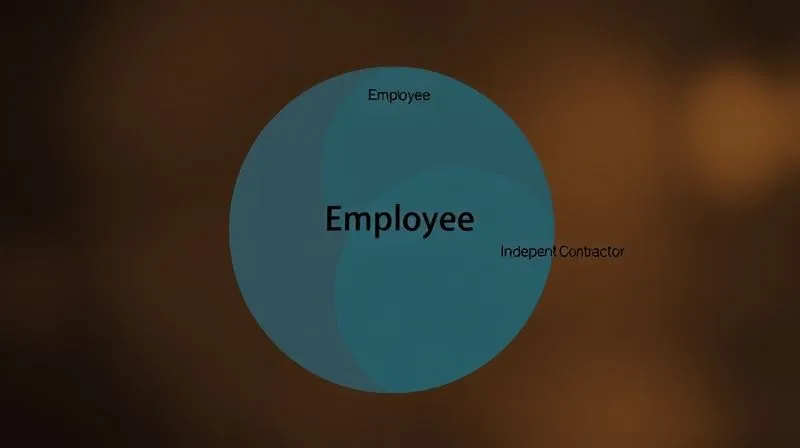
The IRS uses three main categories, often referred to as 'common law rules,' to determine a worker's status. These are behavioral control, financial control, and the type of relationship. Think of it as a spectrum, where more control exerted by your business pushes the worker towards employee status.
- Behavioral Control: Does your business control or have the right to control what the worker does and how the worker does his or her job? This includes instructions, training, and evaluation methods. If you dictate specific work hours, provide detailed instructions on *how* to perform tasks, or offer continuous training, these lean towards an employer-employee relationship.
- Financial Control: Does your business control the business aspects of the worker's job? This includes how the worker is paid, whether expenses are reimbursed, and who provides tools and supplies. If you reimburse all expenses, pay a regular salary, or provide all necessary equipment, this suggests an employee. Contractors typically manage their own expenses, invest in their own tools, and have the potential for profit or loss.
- Type of Relationship: Are there written contracts or employee-type benefits (e.g., pension plan, insurance, vacation pay)? Is the relationship expected to be permanent? Is the work performed a key aspect of the business? A long-term, exclusive relationship with benefits, where the work is integral to your core operations, often indicates employment.
"The IRS isn't looking at your intent; they're scrutinizing the reality of your day-to-day interaction. If you treat a contractor like an employee, expect them to be classified as one, regardless of what your contract says."
State-Specific Nuances: The ABC Test and Beyond
While the IRS common law rules are federal, many states have their own, often stricter, tests for worker classification, especially for unemployment and workers' compensation purposes. The most prominent example is California's "ABC Test," codified by Assembly Bill 5 (AB5).
Under the ABC Test, a worker is presumed to be an employee unless the hiring entity can prove *all three* of the following conditions:
- The worker is free from the control and direction of the hiring entity in connection with the performance of the work, both under the contract for the performance of the work and in fact.
- The worker performs work that is outside the usual course of the hiring entity's business.
- The worker is customarily engaged in an independently established trade, occupation, or business of the same nature as the work performed for the hiring entity.
Failing even one of these conditions means the worker is an employee. Many other states, like Massachusetts and New Jersey, have similar ABC tests. This patchwork of regulations means that even if you meet federal guidelines, you could still be non-compliant at the state level, particularly for your US remote contractors who might reside in different states.
The High Stakes: Why Misclassification is a Business Killer
I've witnessed firsthand the devastation misclassification can wreak. It's not just a slap on the wrist; it's a potential death blow for small and mid-sized businesses. The financial and legal ramifications are severe, often compounding over time.
IRS Penalties and Back Taxes: A Costly Oversight
When the IRS determines misclassification, your business can be liable for all the taxes you should have withheld and paid as an employer. This includes:
- Unpaid Federal Income Tax Withholding: If you failed to withhold income tax, you could be liable for 100% of the amount.
- FICA Taxes (Social Security and Medicare): You'll owe both the employer and employee portions of FICA taxes, plus penalties and interest.
- FUTA Taxes (Federal Unemployment Tax Act): You'll be liable for these taxes, which fund unemployment benefits.
- Penalties: Significant penalties for failure to file information returns (like Form 1099-NEC), failure to pay taxes, and accuracy-related penalties.
According to the IRS, if you intentionally misclassify workers, you could face criminal charges, including fines and imprisonment. Even unintentional misclassification can lead to substantial financial penalties. The IRS provides detailed guidance, but navigating it can be complex.
State Labor Law Violations: Wage & Hour Claims
Beyond federal taxes, states can impose their own penalties. Misclassified employees are often denied benefits they would have received, such as:
- Overtime pay (under the Fair Labor Standards Act, FLSA, and state laws)
- Minimum wage protections
- Workers' compensation coverage
- Unemployment insurance
- Health insurance and retirement plan contributions
- Reimbursement for business expenses
This can lead to individual or class-action lawsuits from former contractors seeking back wages, benefits, and punitive damages. These cases are often expensive, time-consuming, and can result in significant payouts. I've advised clients who faced claims totaling hundreds of thousands of dollars, simply because they didn't properly classify their remote workers.
Reputational Damage and Employee Morale
The financial and legal costs are tangible, but the damage to your business's reputation can be equally devastating. News of misclassification lawsuits or IRS audits can:
- Hurt Talent Acquisition: Top talent, both employees and legitimate contractors, will be wary of working for a company with a questionable legal track record.
- Damage Brand Trust: Customers and partners may view your business as unethical or unstable, impacting sales and partnerships.
- Lower Employee Morale: Existing employees might feel undervalued if they see others treated unfairly, leading to decreased productivity and higher turnover.
Protecting your business from these multi-faceted risks requires a proactive, informed approach. Let's explore how.
Proactive Strategy 1: The Robust Contractor Agreement
Your independent contractor agreement is your first line of defense. It's not just a formality; it's a legally binding document that should clearly define the nature of the relationship, reinforcing the independent contractor status. A weak or generic contract can undermine your entire classification strategy.
Here are the key clauses I insist my clients include in their agreements for US remote contractors:
- Clear Statement of Independent Contractor Status: Explicitly state that the worker is an independent contractor, not an employee, and is responsible for their own taxes, insurance, and benefits.
- Scope of Work and Deliverables: Define specific projects, tasks, or deliverables rather than ongoing job duties. Avoid language that implies continuous employment. Focus on the *results* expected, not the *methods* of achieving them.
- Control and Independence: Clearly state that the contractor has sole control over the methods, means, and hours of work, consistent with project deadlines. Avoid requiring specific work hours or locations (beyond general project availability).
- Payment Terms: Specify payment per project, milestone, or fixed fee, rather than an hourly wage that mimics an employee's salary. State that no taxes will be withheld.
- Expenses: Clarify that the contractor is responsible for their own business expenses, equipment, and supplies. If you provide specific tools for project needs, ensure it's framed as a provision for the project, not a general benefit.
- Intellectual Property (IP): Address ownership of work product and IP created during the engagement. Typically, the hiring entity owns the IP.
- Term and Termination: Define the project duration or conditions for termination, reinforcing the project-based nature of the relationship.
- Indemnification: Protect your business from liability arising from the contractor's actions.
- Governing Law: Specify which state's laws will govern the agreement, especially critical for remote contractors across different states.
| Clause | Included | Notes |
|---|---|---|
| Independent Status Declaration | Yes/No | Must be explicit and comprehensive |
| Scope of Work/Deliverables | Yes/No | Focus on outcomes, not methods |
| Control & Independence | Yes/No | Emphasize contractor's autonomy |
| Payment Structure | Yes/No | Project-based, no tax withholding |
| Expense Responsibility | Yes/No | Contractor bears own costs |
| Intellectual Property | Yes/No | Ownership clearly defined |
| Term & Termination | Yes/No | Project-specific, not at-will |
| Governing Law | Yes/No | Crucial for multi-state remote workers |
Remember, a well-drafted contract serves as strong evidence of your intent to establish an independent contractor relationship. However, the contract alone isn't enough; your actual conduct must align with its terms.
Proactive Strategy 2: Diligent Vetting and Onboarding Protocols
The classification process begins even before a contractor starts work. Your vetting and onboarding procedures are critical touchpoints where you can establish and reinforce the independent nature of the relationship. This goes far beyond simply checking references; it's about assessing their true business independence.
Behavioral Control Assessment: What to Look For
When vetting a potential remote contractor, consider these behavioral indicators:
- Instructions: Does the worker require extensive instructions on *how* to do the work, or do they primarily receive instructions on the *outcome* expected? Contractors should generally be able to achieve the outcome using their own methods.
- Training: Do you offer or require them to attend training that employees would typically receive? Contractors should already possess the skills needed for the project.
- Equipment: Do they provide their own tools, software, and office equipment? While you might provide access to specific platforms essential for project integration (e.g., your project management software), they should largely be self-sufficient.
"A true independent contractor operates as a separate business entity. They bring their own expertise, tools, and methodologies to the table, and they should be able to complete the project without constant oversight on the 'how'."
Financial Control Assessment: Who Bears the Risk?
Evaluate the financial independence of the prospective contractor:
- Business Expenses: Do they incur significant unreimbursed business expenses (e.g., office space, software licenses, marketing)? This demonstrates they are running their own business.
- Investment: Have they invested in their own business (e.g., advertising, equipment purchases)?
- Opportunity for Profit/Loss: Does the contractor have the ability to make a profit or suffer a loss? For instance, taking on multiple clients or having fixed-price projects where efficiency can lead to higher profit.
Relationship Type: Long-Term vs. Project-Based
Consider the nature and permanency of the engagement:
- Multiple Clients: Does the contractor work for multiple clients simultaneously? This is a strong indicator of independence.
- Public Availability: Do they market their services to the general public (e.g., via a website, LinkedIn, or business cards)?
- Benefits: Are you offering them employee-type benefits? Absolutely do not.
- Exclusivity: While not always a deal-breaker, an exclusive relationship where a contractor works only for your company can be a red flag, especially if combined with other employee indicators.

Proactive Strategy 3: Consistent Monitoring and Reassessment
Worker classification isn't a one-and-done decision. The relationship can evolve, and what started as a legitimate contractor arrangement could inadvertently shift into an employment scenario over time. Consistent monitoring and periodic reassessment are vital, especially for long-term remote engagements.
Regular Audits and Reviews
I advise my clients to conduct annual or project-end reviews of their contractor relationships. This isn't about distrust; it's about diligence. Here’s a simple process:
- Review the Original Agreement: Does the current working relationship still align with the terms of the independent contractor agreement?
- Assess Day-to-Day Interactions: Have you started giving detailed instructions, setting specific hours, or providing equipment that wasn't initially agreed upon?
- Check for Scope Creep: Has the contractor's role expanded beyond the initial project scope, moving into core, ongoing functions of your business?
- Document Changes: If the nature of the work or relationship changes, update the contract or consider reclassification.
Case Study: TechSolutions Inc.'s Classification Turnaround
TechSolutions Inc., a growing SaaS startup, initially hired several remote developers as independent contractors. For the first year, this worked well. However, as the company grew, these 'contractors' became deeply embedded in daily stand-ups, were given company email addresses, and were often the first point of contact for customer support—all typical employee functions. A routine internal audit, prompted by my guidance, flagged these issues.
Instead of waiting for an external audit, TechSolutions proactively reclassified these individuals as employees, offering them competitive benefits and adjusting their payroll. While this meant higher costs, it prevented potentially devastating IRS penalties and state labor claims that could have amounted to millions. The key was their willingness to monitor and adjust before regulators intervened, transforming a potential liability into a compliant, stable workforce.
Proactive Strategy 4: Leveraging Technology and Expert Advice
In today's complex regulatory landscape, relying solely on manual processes or guesswork is a recipe for disaster. Smart entrepreneurs leverage technology and expert advice to navigate the intricacies of payroll management and worker classification, especially for a distributed US remote workforce.
Specialized Payroll & HR Platforms
Many modern HR and payroll platforms offer features specifically designed to help manage independent contractors compliantly:
- 1099-NEC Automation: Automate the collection of W-9 forms and the generation and filing of 1099-NEC forms, ensuring timely and accurate reporting to the IRS.
- Payment Processing: Streamline payments to contractors while keeping clear records separate from employee payroll.
- Compliance Checklists: Some platforms offer built-in checklists or guides to help assess contractor status based on federal and state guidelines.
- Document Management: Securely store contractor agreements, invoices, and communication logs.
While these tools don't make the classification decision for you, they significantly reduce the administrative burden and provide an organized framework for compliance.
Engaging Legal and Tax Professionals
This is arguably the most crucial piece of advice I can offer. When in doubt, consult. An experienced attorney specializing in employment law and a tax professional familiar with worker classification can provide invaluable guidance, especially when:
- You're engaging a remote contractor in a new state with unfamiliar labor laws.
- The work being performed is highly integral to your core business operations.
- The relationship has evolved, and you're unsure if reclassification is necessary.
- You're considering converting a contractor to an employee (or vice-versa).
Proactive legal and tax advice is an investment that pales in comparison to the costs of misclassification. Organizations like the American Bar Association's Section of Labor and Employment Law can be a starting point for finding qualified counsel.
Proactive Strategy 5: Educating Your Team and Stakeholders
Misclassification often happens not due to malicious intent, but a lack of understanding within the organization. Hiring managers, project leads, and even founders might inadvertently create an employer-employee dynamic with contractors if they're not aware of the legal distinctions. Education is a powerful preventative tool.
Training for Hiring Managers
Your hiring managers are on the front lines. They need to understand:
- The IRS common law rules and any relevant state-specific tests (like the ABC Test).
- The financial and legal risks of misclassification to the company.
- How to properly vet potential contractors (as discussed in Strategy 2).
- The appropriate language and expectations to use when communicating with contractors.
- When to flag a potential classification issue for HR or legal review.
This training should be mandatory, recurring, and include real-world examples to illustrate the nuances. It helps create a culture of compliance from the ground up.
Clear Internal Guidelines
Develop and disseminate clear, accessible internal guidelines for engaging and managing independent contractors. This document should outline:
- The company's policy on worker classification.
- A decision-making flowchart or checklist for classifying new workers.
- Procedures for onboarding and offboarding contractors.
- Guidelines for day-to-day interaction with contractors (e.g., avoiding terms like "employee," not requiring attendance at company-wide social events unless it's a specific deliverable, not providing performance reviews).
- A point of contact for classification questions (e.g., HR or legal department).

Proactive Strategy 6: Documentation, Documentation, Documentation
If you ever face an audit or legal challenge, your documentation will be your strongest defense. It provides tangible evidence of your intent and the actual nature of your working relationships. In the world of compliance, if it's not documented, it didn't happen.
Maintaining Comprehensive Records
For every independent contractor, maintain a dedicated file (digital or physical) that includes:
- The fully executed Independent Contractor Agreement: This is paramount. Ensure it's signed by both parties and dated.
- W-9 Form: Collected from the contractor to obtain their Taxpayer Identification Number (TIN) for 1099-NEC reporting.
- Invoices and Payment Records: Documenting the project-based or milestone-based payments made to the contractor.
- Project Deliverables: Records of the specific work products or services provided by the contractor, aligning with the scope of work.
- Communications: Key emails or other communications that reinforce the independent nature of the relationship (e.g., discussions about project outcomes, not methods; contractor managing their own schedule).
- Proof of Contractor's Independent Business: If available, documentation like the contractor's business license, website, or marketing materials can be highly persuasive.
| Document Type | Purpose | Retention Period |
|---|---|---|
| Independent Contractor Agreement | Defines terms, establishes IC status | 7+ years after termination |
| W-9 Form | Taxpayer ID for 1099-NEC reporting | 7+ years after last payment |
| Invoices & Payment Records | Proof of payments, project-based compensation | 7+ years |
| Project Deliverables/Records | Evidence of work performed per contract | 7+ years |
| Relevant Communications | Reinforces IC relationship, project focus | 7+ years |
| Contractor's Business Proof (Optional) | Additional evidence of independence | As long as practical |
Organized, complete records demonstrate due diligence and can significantly strengthen your position if challenged. I've seen cases where solid documentation turned a potential penalty into a mere inquiry.
Proactive Strategy 7: The Voluntary Classification Settlement Program (VCSP)
What if you've already made a mistake? What if, after reading this, you realize you might have misclassified some of your US remote contractors? The good news is that the IRS offers a lifeline: the Voluntary Classification Settlement Program (VCSP).
Understanding the VCSP
The VCSP is an optional program that allows taxpayers to voluntarily reclassify their workers as employees for future tax periods with partial relief from federal employment taxes. It's designed for businesses that want to come into compliance without facing the full brunt of past penalties.
Key aspects of the VCSP:
- Eligibility: Generally, you must have consistently treated the workers as nonemployees in the past, and you must not be currently under audit by the IRS concerning the classification of these workers.
- Benefits: If accepted into the program, you agree to prospectively treat the workers as employees. In return, you pay a reduced amount of federal employment taxes for the most recent tax year, with no interest or penalties.
- Process: You apply to the IRS using Form 8952, Application for Voluntary Classification Settlement Program.
"The VCSP is a golden opportunity to correct past errors without catastrophic consequences. It demonstrates good faith and a commitment to compliance, which the IRS often views favorably. Don't wait for an audit; take control of your compliance narrative."
While the VCSP offers significant relief, it's a complex process that absolutely warrants consultation with a tax attorney or CPA experienced in employment tax matters. They can help you determine eligibility, calculate the financial implications, and navigate the application process to ensure you maximize the benefits and minimize future risks. The IRS website provides introductory information, but professional guidance is paramount.

Frequently Asked Questions (FAQ)
Question? What are the biggest red flags for misclassification that the IRS looks for? The IRS primarily scrutinizes the degree of control your business exercises over the worker. Major red flags include providing extensive training, dictating work hours, supplying all tools and equipment, offering employee benefits, and the worker performing core functions of your business without marketing their services to others. A lack of a clear, project-based contract or the worker having no opportunity for profit or loss also raises alarms.
Question? Can I reclassify a contractor as an employee without causing problems? Yes, but it must be done carefully and correctly. The best approach is to proactively reclassify before an audit. This typically involves updating your payroll system, offering employee benefits, changing your day-to-day interactions to reflect an employer-employee relationship, and providing appropriate tax forms (W-2 instead of 1099-NEC). For past periods, consider the IRS Voluntary Classification Settlement Program (VCSP) to mitigate penalties. Always consult with legal and tax professionals before making such a change.
Question? Does the remote contractor's location within the US affect classification? Absolutely. While federal IRS rules apply nationwide, each state has its own labor laws, which can include different worker classification tests (like California's ABC Test). A contractor who is properly classified in one state might be considered an employee in another. It's crucial to understand the specific laws of the state where your remote contractor resides and performs their work. This is where legal counsel becomes invaluable for a distributed workforce.
Question? How often should I review my contractor classifications? I recommend a formal review at least annually, or whenever there's a significant change in the scope of work, the terms of the engagement, or the contractor's responsibilities. If a contractor's role evolves to become more integral to your core operations or if you start exerting more control, an interim review is warranted. Regular monitoring ensures you catch potential issues before they become liabilities.
Question? What if a contractor insists on being 1099 despite meeting employee criteria? This is a common dilemma, but the worker's preference does not override legal classification. The IRS and state labor departments base their decisions on the actual working relationship, not on what the parties agree to. If a worker meets the criteria for an employee, you must classify them as such, regardless of their preference. Failing to do so at their insistence still exposes your business to all the associated risks and penalties. It's your responsibility as the business owner to ensure compliance.
Key Takeaways and Final Thoughts
- Control is the Core: The IRS and state agencies primarily look at the degree of behavioral, financial, and relationship control you exert over a worker.
- Contract is Crucial, But Not Enough: A robust independent contractor agreement is vital, but your actual day-to-day conduct must align with it.
- Proactive is Protective: Implement diligent vetting, consistent monitoring, and regular reassessments to catch issues early.
- Educate Your Team: Ensure all hiring managers and stakeholders understand classification rules and company policies.
- Document Everything: Maintain thorough records for every contractor as your primary defense.
- Leverage Experts & Programs: Don't hesitate to consult legal and tax professionals, and be aware of programs like the IRS VCSP for correcting past errors.
Navigating the complexities of worker classification for US remote contractors can feel daunting, but it's an absolutely non-negotiable aspect of responsible entrepreneurship. By implementing these seven proactive strategies, you're not just avoiding penalties; you're building a compliant, resilient business foundation that fosters growth and attracts top talent. Take these steps seriously, invest in the right advice, and you'll protect your venture from one of the most significant, yet often overlooked, financial threats. Your future self, and your balance sheet, will thank you.
Recommended Reading
- 7 Proven Strategies: Restructure Professional Practice Debt, Avoid Closure
- Liquidate Luxury Assets Discreetly: Divorce-Proof Your Finances
- Unlock the Secret: How to Identify Undervalued Growth Stocks for Beginners
- Unmasking Fraud: How Big Data Finance Revolutionizes Protection
- Cut Social Security Taxes: 7 Expert Strategies to Lower Provisional Income





Comments
Leave a comment below. Your email will not be published. Required fields marked with *