



How to Optimize Financial Aid to Offset Rising Tuition Fees
For over two decades in the student finance landscape, I’ve witnessed firsthand the escalating anxieties of families grappling with the ever-increasing cost of higher education. What was once a manageable investment has, for many, transformed into a daunting financial Everest, with tuition fees climbing relentlessly year after year.
The burden of these rising costs isn't just a number on a statement; it's the weight of deferred dreams, the stress of endless calculations, and the very real threat of crippling student debt. I’ve seen countless bright, ambitious students hesitate to pursue their ideal college or even forgo higher education altogether, simply because they felt overwhelmed by the financial maze.
But here’s what I’ve also learned: the system, while complex, isn't insurmountable. There are powerful, often overlooked, strategies on how to optimize financial aid to offset rising tuition fees. In this definitive guide, I’ll share my expert insights, actionable frameworks, and real-world strategies to help you navigate this challenge, turning potential debt into tangible savings and securing your educational future.
Understanding the Financial Aid Landscape: Beyond the Sticker Price
Before we dive into optimization, we must first understand the battlefield. Many families make the critical mistake of only looking at a college’s sticker price. This figure, while alarming, rarely reflects what most students actually pay. The true cost is a nuanced calculation, heavily influenced by your financial aid package.
The True Cost of Attendance (COA)
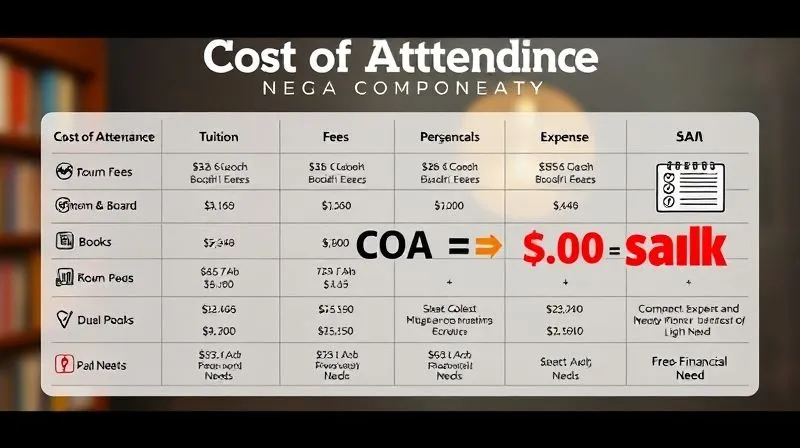
The Cost of Attendance (COA) is more than just tuition. It's an estimate by the college of what it will cost to attend for one academic year. It includes:
- Tuition and Fees: The direct costs for instruction and campus services.
- Room and Board: Housing and meal plans, whether on or off campus.
- Books and Supplies: Estimated costs for textbooks, software, and other materials.
- Transportation: The cost of getting to and from school.
- Personal Expenses: Laundry, toiletries, entertainment, and other miscellaneous costs.
Understanding your COA is the first step in determining your financial need and, subsequently, your potential financial aid. It’s the benchmark against which all aid is measured.
Deconstructing Your Expected Family Contribution (EFC) / Student Aid Index (SAI)
At the heart of financial aid calculations lies the Expected Family Contribution (EFC), which is transitioning to the Student Aid Index (SAI) with the FAFSA Simplification Act. This is the amount the government believes your family can reasonably contribute to your college costs for one year. It's not necessarily what you’ll pay, but it's a crucial number.
The EFC/SAI is calculated using a complex formula that considers:
- Parental and student income
- Parental and student assets (excluding primary home and retirement accounts for FAFSA)
- Family size
- Number of students in college
The fundamental equation for determining your need-based aid is straightforward: COA – EFC/SAI = Financial Need. The higher your financial need, the more aid you are potentially eligible for.
Expert Insight: Your EFC/SAI is not a bill. It's an index. Many families find their actual out-of-pocket costs are higher or lower than their EFC/SAI, depending on the generosity of the institution and the specific aid package offered. Never let a high EFC/SAI deter you from applying for aid.
Understanding these foundational elements is paramount. Without a clear grasp of COA and EFC/SAI, you're navigating the financial aid landscape blindfolded. My experience has shown that families who truly understand these metrics are far better equipped to strategize and advocate for themselves.
Mastering the FAFSA and CSS Profile: Your Gateway to Aid
The Free Application for Federal Student Aid (FAFSA) and the College Scholarship Service (CSS) Profile are the two primary applications that unlock financial assistance. Getting these right is not just important; it's absolutely critical.
Accuracy and Timeliness: Non-Negotiables
I’ve seen countless students miss out on aid simply because of errors or late submissions. These applications are not something to rush through. Every detail matters, and deadlines are firm. Federal and institutional aid often operates on a first-come, first-served basis, especially for limited funds like grants and work-study.
Here are my top actionable steps for mastering these applications:
- Gather All Documents Early: Before you even start, collect tax returns (for both parents and student), W-2s, bank statements, investment account statements, and records of untaxed income. Having everything organized prevents errors and speeds up the process.
- Use the IRS Data Retrieval Tool (DRT): For FAFSA, this tool directly imports your tax information, significantly reducing errors and simplifying the process. Always use it if you’re eligible.
- Understand FAFSA Dependency Status: Most undergraduates are considered dependent for FAFSA purposes, meaning parental information is required. Review the dependency questions carefully.
- Complete the FAFSA Annually: Financial situations change. You must re-apply for FAFSA every year you plan to attend college to be considered for federal aid.
- Pay Attention to the CSS Profile: If your chosen colleges require it, the CSS Profile asks for significantly more detailed financial information than the FAFSA, including home equity, small business values, and non-custodial parent information. Be prepared for a more in-depth application.
My advice is always to complete the FAFSA as soon as it opens (October 1st for the following academic year), and the CSS Profile shortly thereafter. Even if you think you won't qualify, apply anyway. You never know what you might be eligible for, especially with institutional aid.
| Feature | FAFSA | CSS Profile |
|---|---|---|
| Purpose | Determine eligibility for federal and some institutional aid | Determine eligibility for institutional aid from private colleges |
| Cost | Free | Fee-based (waivers available) |
| Information Required | Basic financial info (income, assets, family size) | Detailed financial info (home equity, small business, non-custodial parents) |
| Colleges Using It | All colleges for federal aid | Approximately 200 private colleges and universities |
| Deadlines | Oct 1st annually (federal, state, and institutional deadlines vary) | Varies by institution, typically earlier than FAFSA |
Unlocking Free Money: Scholarships and Grants
This is where the real optimization begins. Scholarships and grants are essentially free money that doesn't need to be repaid. Maximizing your access to these funds is perhaps the most impactful way on how to optimize financial aid to offset rising tuition fees.
Targeted Scholarship Search Strategies
Forget the myth that scholarships are only for straight-A students or star athletes. There are scholarships for virtually every niche you can imagine. The key is a targeted, systematic search.
- Start Local: Your community foundations, local businesses, civic organizations (Rotary, Kiwanis), and high school guidance counselors are excellent resources for local scholarships. These often have fewer applicants and higher success rates.
- Explore Your Interests: Are you left-handed? Do you love pickles? Is your parent a veteran? There are scholarships for these specific criteria. Look into professional organizations related to your intended major, religious groups, or even your parents' employers.
- Use Reputable Online Databases: Websites like Fastweb, Scholarship.com, College Board's BigFuture, and Niche are powerful tools. Create a detailed profile and dedicate time weekly to searching and applying.
- Don't Disregard Small Scholarships: Many students only apply for large, national scholarships. A $500 or $1,000 scholarship might seem small, but several of these can add up significantly.
- Craft Compelling Essays: Many scholarships require essays. Treat each one as an opportunity to tell your unique story. Be authentic, proofread meticulously, and tailor your essay to the scholarship's mission.
Grants: Need-Based vs. Merit-Based
Grants are typically awarded based on financial need, while scholarships can be need-based, merit-based, or a combination. The most well-known federal grant is the Pell Grant, available to students with exceptional financial need. State governments and individual colleges also offer grants.
For institutional grants, the CSS Profile plays a vital role. Colleges use this detailed financial picture to award their own institutional grants, which can be incredibly generous, especially at well-endowed private universities. Don't underestimate the power of applying to schools that meet a high percentage of demonstrated financial need.

Strategic Loan Management: Borrowing Smart, Not More
While the goal is to minimize borrowing, for many, student loans are an unavoidable part of the college funding equation. The key is to borrow strategically and responsibly, ensuring you understand the terms and avoid unnecessary debt.
Prioritizing Federal Loans Over Private
This is a non-negotiable rule I emphasize to every family I advise. Federal student loans offer significantly better terms and protections than private loans:
- Fixed Interest Rates: Predictable payments throughout the life of the loan.
- Income-Driven Repayment Plans: Payments are adjusted based on your income and family size, offering a safety net if your post-graduation income is low.
- Deferment and Forbearance Options: The ability to temporarily postpone payments during periods of financial hardship.
- Loan Forgiveness Programs: Programs like Public Service Loan Forgiveness (PSLF) can discharge remaining balances after a certain number of qualifying payments for those in public service.
- No Credit Check (for most): Direct Subsidized and Unsubsidized loans don't require a credit check for the student.
Private student loans, on the other hand, often have variable interest rates, fewer repayment protections, and typically require a creditworthy co-signer. Only consider private loans as a last resort, and always compare multiple lenders to secure the best possible terms.
Understanding Interest Rates and Repayment Options
Before you sign on the dotted line, fully understand the interest rates, when interest accrues, and your repayment start date. For instance, Direct Subsidized Loans don't accrue interest while you're in school at least half-time, during the grace period, or during deferment. Direct Unsubsidized Loans, however, accrue interest from the moment they are disbursed.
Expert Insight: If you have unsubsidized loans and can afford to, make interest-only payments while in school. This can significantly reduce the total amount you repay over the life of the loan by preventing interest capitalization (when accrued interest is added to your principal balance).
Also, familiarize yourself with standard repayment, graduated repayment, and various income-driven repayment plans. Knowing your options empowers you to manage your debt effectively and prevent default.
Leveraging Work-Study and On-Campus Opportunities
Federal Work-Study is a fantastic component of a well-optimized financial aid package. It allows students to earn money to help pay for educational expenses, rather than borrowing more.
The Dual Benefit of Work-Study
Work-study isn't just about the paycheck; it offers invaluable professional experience. These jobs are often related to your field of study or provide transferable skills, which can be a significant boost to your resume after graduation. Unlike other earnings, work-study earnings are generally excluded from the FAFSA EFC/SAI calculation for the following year, making it a truly advantageous form of aid.
If you're offered work-study, actively seek out positions that align with your career goals. Don't just take the first job offered. Many departments have work-study positions that can provide mentorship and networking opportunities.
Exploring Departmental Aid and Assistantships
Beyond federal work-study, many colleges offer their own institutional employment programs. For graduate students, particularly, research assistantships (RAs) and teaching assistantships (TAs) can be game-changers. These positions often come with a stipend and, crucially, a full or partial tuition waiver.
While primarily for graduate students, some undergraduate programs, especially honors colleges or specific departments, may offer similar research or peer-mentoring roles that include tuition assistance. It's always worth inquiring with your academic department about such opportunities. This proactive approach is a key part of how to optimize financial aid to offset rising tuition fees.
Negotiating Your Financial Aid Package: Don't Be Afraid to Ask
This is perhaps the most overlooked, yet potentially powerful, strategy. Many families assume that the financial aid package they receive is final. This is simply not true. Colleges have discretion, and with the right approach, you can often negotiate for a better offer.
Gathering Your Evidence: The Appeal Letter
An appeal isn't a demand; it's a polite, well-reasoned request for reconsideration based on new information or a significant change in circumstances. Here’s how to approach it:
- Document Changes in Circumstance: Did a parent lose a job? Experience a significant medical expense? Have a sibling unexpectedly enroll in college? These are all valid reasons for an appeal. Provide documentation for everything.
- Highlight Competing Offers: If you received a better financial aid package from a comparable institution, use it as leverage. Colleges want to attract good students and may be willing to match or improve an offer.
- Write a Professional Appeal Letter: Address it to the Financial Aid Director. Be clear, concise, and respectful. State your case, provide evidence, and clearly articulate what you are requesting (e.g., more grant money, a reduction in the EFC/SAI).
- Focus on the ‘Why’: Explain why this particular college is your top choice and how additional aid would make attendance possible. Emphasize your academic achievements and contributions you would bring to the campus community.
- Follow Up: If you don't hear back within a reasonable timeframe, follow up politely via email or phone.
Based on my experience, a well-crafted appeal can yield significant results. It requires courage and preparation, but the potential financial benefit is immense.
Case Study: Sarah's Successful Appeal
Case Study: How Sarah Secured an Extra $5,000 in Grants
Sarah, a talented student admitted to her dream university, received an initial financial aid package that included a significant loan component, leaving her with a $15,000 gap. She also had an offer from a slightly less selective university that provided $10,000 more in grant aid.
Following my advice, Sarah drafted a compelling appeal letter to her dream university's financial aid office. She politely acknowledged their initial offer but highlighted the competing package, emphasizing her strong academic record, her specific interest in their unique engineering program, and how the financial gap was the only barrier to her enrollment. She attached a copy of the competing offer.
Within two weeks, the university responded, increasing her institutional grant aid by $5,000, effectively narrowing her gap to $10,000. This additional grant money, secured through a simple appeal, made her dream university financially feasible and allowed her to reduce her student loan burden significantly.

Exploring Alternative Funding and Cost-Saving Measures
Sometimes, optimizing traditional financial aid isn't enough. It's crucial to think outside the box and consider alternative funding avenues and smart cost-saving strategies to further reduce the financial burden.
Community College First: A Smart Start
One of the most effective ways to save money is to attend community college for the first one or two years, then transfer to a four-year institution. Community college tuition is significantly lower, and you can often complete general education requirements that will transfer to your target university. This strategy can save tens of thousands of dollars.
I've guided many students through this path, and those who plan carefully, ensuring their credits are transferable, find it to be an incredibly wise financial decision without sacrificing the quality of their eventual degree.
Employer Tuition Assistance Programs
Many companies offer tuition reimbursement or assistance programs for their employees, especially for courses or degrees related to their job. If you or your parents are employed, investigate this benefit. It’s essentially free money that can directly reduce your out-of-pocket costs. Some employers even offer tuition benefits for dependents.
Accelerated Degree Programs & Dual Enrollment
Consider accelerated programs that allow you to complete your bachelor's degree in less than four years, or dual enrollment programs in high school where you earn college credit. Both can significantly cut down on the number of semesters you pay tuition for.
| Strategy | Potential Savings | Considerations |
|---|---|---|
| Community College Transfer | Up to 50% on first two years' tuition | Ensure credit transferability, plan academic path carefully |
| Employer Tuition Assistance | Varies, often up to several thousand dollars annually | Job relevance, employment duration requirements |
| Accelerated Degree/Dual Enrollment | Equivalent to 1-2 semesters of tuition | Academic rigor, time commitment |
| Live at Home (if possible) | Average $12,000-$15,000 annually (room & board) | Commute time, impact on college experience |

Long-Term Financial Planning: Beyond Graduation
Optimizing financial aid isn't just about getting into college; it's also about setting yourself up for financial success post-graduation. The decisions you make now will have a lasting impact on your future.
Budgeting and Financial Literacy
Throughout your college years, practice sound financial habits. Create a budget, track your spending, and avoid unnecessary credit card debt. Financial literacy is a skill that will serve you far beyond your degree. Many universities offer financial literacy workshops or resources; take advantage of them.
Understanding the impact of interest, the value of saving, and the dangers of overspending will be crucial as you transition into your career and begin repaying any student loans.
Impact of Debt on Future Goals
Every dollar you save on tuition today, or every dollar you avoid borrowing, is a dollar that won't accumulate interest and won't need to be repaid. This directly translates to more freedom after graduation – freedom to pursue your dream job (even if it pays less initially), freedom to save for a down payment on a home, or freedom to start a family without the crushing weight of excessive student loan payments.
As Forbes Advisor often highlights, the average student loan debt is substantial. By proactively implementing strategies on how to optimize financial aid to offset rising tuition fees, you are investing not just in your education, but in your entire financial future.
Frequently Asked Questions (FAQ)
What if my EFC/SAI is too high, and I don't qualify for much need-based aid? Even with a high EFC/SAI, you should always complete the FAFSA. You might still qualify for unsubsidized federal loans, which are often better than private loans. Crucially, focus your efforts on merit-based scholarships and grants, which are not tied to financial need. Also, consider colleges known for offering generous institutional aid, regardless of federal need calculations. Some colleges 'gap' students, meaning they don't meet 100% of demonstrated need, so a strong merit package can fill that gap.
Can I apply for financial aid after the deadline has passed? While it's always best to apply by the priority deadlines, especially for state and institutional aid, you can still apply for federal student aid through the FAFSA late in the academic year. However, federal Pell Grants and other limited funds might be exhausted. For institutional aid, some colleges have rolling deadlines, but your chances are significantly reduced. My advice: always apply, even if late, but prioritize early submission moving forward.
Are private scholarships counted against my financial aid package? Yes, generally they are. Colleges are required to factor in all sources of aid when determining your financial aid package. If you receive a private scholarship, it may reduce your eligibility for other forms of aid, typically loans or work-study, before reducing grants. However, some generous institutions might allow you to keep the private scholarship and reduce your self-help aid (loans/work-study) first, effectively increasing your overall free money. Always check with your college's financial aid office.
How often should I re-evaluate my financial aid strategy? You should re-evaluate your strategy annually. Your financial situation, college costs, and available aid programs can change year to year. Make sure to complete the FAFSA every year you are in college. Additionally, if there's a significant change in your family's financial circumstances (e.g., job loss, major medical expenses), reach out to your financial aid office immediately to see if your aid package can be adjusted. Proactive communication is key.
What's the biggest mistake students and families make with financial aid? In my professional opinion, the biggest mistake is not applying for aid because you assume you won't qualify, or not understanding the difference between federal, state, and institutional aid. Many families leave significant money on the table due to misconceptions or lack of information. Another major error is not actively searching for and applying to scholarships, or not appealing aid offers. Every step you take to understand and engage with the financial aid process can translate into substantial savings.
Key Takeaways and Final Thoughts
Navigating the rising tide of tuition fees demands a proactive, informed, and strategic approach. It's a journey that requires diligence, but one that promises significant rewards in the form of reduced debt and greater financial freedom.
- Understand the Full Picture: Go beyond the sticker price. Grasp COA and your EFC/SAI.
- Master the Applications: Submit FAFSA and CSS Profile accurately and on time, every year.
- Prioritize Free Money: Aggressively pursue scholarships and grants from all sources.
- Borrow Smart: Choose federal loans over private, and understand repayment terms.
- Leverage Work-Study: Seek out opportunities for both income and experience.
- Don't Be Afraid to Negotiate: Appeal your aid package if circumstances warrant it.
- Explore Alternatives: Consider community college, employer aid, or accelerated programs.
Remember, your education is an investment, and like any smart investor, you need to optimize your resources. By applying the strategies I've outlined, you're not just hoping for the best; you're actively taking control of your financial future. The path to an affordable education is within reach, and with these tools, you are well-equipped to forge it. Go forth and secure your financial future!
Recommended Reading
- Unlock Global Savings: Your Ultimate Guide to Avoiding International ATM Fees
- Unlock Your Financial Freedom: Ultimate Tips for Managing Student Financial Aid Effectively
- Replace Your High-Salary Job: 5 Sustainable Income Strategies
- Facing a Sales Tax Audit? How to Cut Liabilities by 30%
- 5 Proven Ways to Protect Business Profits from High Personal Income Tax





Comments
Leave a comment below. Your email will not be published. Required fields marked with *