



How to optimize ETF capital gains deferral in client portfolios?
For over two decades in the investment advisory space, I've witnessed countless financial professionals grapple with a pervasive challenge: effectively managing the tax implications of Exchange Traded Funds (ETFs) within their clients' portfolios. While ETFs are often lauded for their tax efficiency, the reality is far more nuanced. Without a deliberate, strategic approach, those seemingly minor capital gains distributions can erode long-term returns and significantly impact a client's wealth accumulation.
The core problem isn't the ETFs themselves, but rather the failure to fully leverage their inherent structural advantages and apply proactive tax management techniques. Advisors often focus on asset allocation and expense ratios, overlooking the profound impact that optimizing capital gains deferral can have. This oversight can lead to unexpected tax bills for clients, hindering their financial goals and, frankly, undermining the trust they place in their advisor.
This article isn't just another theoretical rundown. Based on my extensive experience and deep dives into portfolio mechanics, I'll walk you through actionable frameworks, expert insights, and even a practical case study. You'll learn precisely how to optimize ETF capital gains deferral in client portfolios, ensuring your strategies genuinely enhance after-tax returns and solidify your position as a truly value-adding financial partner.
Understanding the Nuances of ETF Capital Gains
Before we dive into optimization, it's crucial to truly understand how capital gains manifest in ETFs. Many assume ETFs are inherently 'tax-free' from capital gains distributions, which is a dangerous oversimplification. While their structure offers significant advantages, it's not a magic bullet.
What Makes ETFs Different? The Creation/Redemption Mechanism
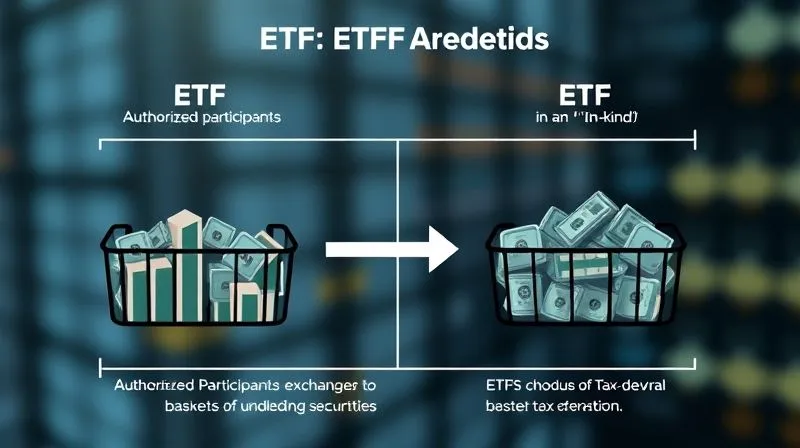
The primary reason ETFs are generally more tax-efficient than traditional mutual funds lies in their unique creation and redemption mechanism. Unlike mutual funds, which typically buy and sell underlying securities to meet investor redemptions, ETFs use an 'in-kind' process with Authorized Participants (APs).
- When an AP wants to redeem ETF shares, they exchange a block of ETF shares for a basket of the underlying securities. Crucially, these underlying securities are often those with the lowest cost basis (i.e., the largest unrealized gains).
- This 'in-kind' transfer is generally not a taxable event for the ETF, allowing the fund to purge low-basis shares without realizing capital gains that would be distributed to shareholders.
- This mechanism effectively defers capital gains realizations, pushing them down the road until the investor sells their own ETF shares.
However, this mechanism isn't foolproof. If an ETF experiences significant net inflows, or if the index it tracks undergoes a rebalance requiring the sale of appreciated securities that cannot be offloaded via the in-kind redemption process, the ETF itself may realize and distribute capital gains to its shareholders. It's less common than with mutual funds, but it absolutely can happen.
The Illusion of "Tax-Free" ETFs and Realized Distributions
While the in-kind mechanism helps defer *internal* capital gains realizations, ETFs still distribute income. This can include dividends from underlying stocks, interest from bonds, and yes, sometimes even capital gains if the fund manager (or index rebalancing) necessitates selling appreciated assets. These distributions are taxable in the year they are received, unless held in a tax-advantaged account.
"The smartest advisors understand that tax efficiency isn't about avoiding taxes entirely, but about controlling when and how they're paid, maximizing the power of compounding for their clients."
Understanding these nuances is the first step. The next is implementing strategies that proactively leverage the ETF structure to your clients' advantage.
Strategic Asset Location: Your First Line of Defense
One of the most powerful, yet often underutilized, strategies for optimizing ETF capital gains deferral is strategic asset location. This isn't just about diversification; it's about placing assets in the right type of account (taxable vs. tax-advantaged) to minimize tax drag.
Taxable Accounts vs. Tax-Advantaged Accounts
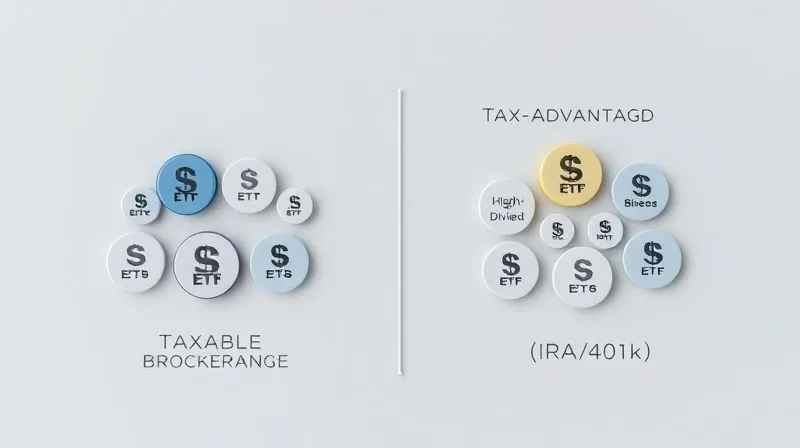
The fundamental principle is to hold assets that generate significant taxable income or frequently realize capital gains in tax-advantaged accounts (like IRAs, 401(k)s, or 529 plans). Conversely, hold assets that are more tax-efficient in taxable brokerage accounts.
Think of it as a strategic game of chess. Each piece (asset) has different tax characteristics, and its placement on the board (account type) dictates its overall effectiveness. For clients with both taxable and tax-advantaged accounts, this becomes a critical lever.
Prioritizing High-Turnover or Income-Generating ETFs
When considering asset location for ETFs, prioritize as follows:
- High-Turnover Active ETFs: Even though active ETFs have their own tax-efficient structure, if they frequently buy and sell underlying securities, they might still generate more short-term capital gains distributions. These are best placed in tax-advantaged accounts.
- Bond ETFs: These generally distribute interest income, which is taxed as ordinary income (unless it's a municipal bond ETF). Placing bond ETFs in tax-deferred accounts protects this income from annual taxation.
- High-Dividend Equity ETFs: While qualified dividends receive preferential tax treatment, they still represent annual taxable events. Shifting these to tax-advantaged accounts can defer taxation until withdrawal.
- Low-Turnover, Broad-Market Equity ETFs: These are typically the most tax-efficient and are ideal for taxable accounts. Their minimal internal capital gains distributions and focus on long-term appreciation make them excellent candidates for compounding growth without annual tax drag.
By carefully mapping your clients' ETF holdings to their account types, you can significantly reduce their annual tax burden and allow more capital to compound tax-free or tax-deferred. According to a study published by Vanguard, proper asset location can add 15 to 75 basis points to annual returns, depending on the portfolio and tax bracket. Read more on Vanguard's perspective on asset location.
Mastering Tax Loss Harvesting (TLH) with ETFs
Tax Loss Harvesting is a classic, yet incredibly effective, strategy for managing capital gains. With ETFs, it becomes even more versatile, offering opportunities to reduce current tax liabilities or defer future gains.
The Basics of TLH for ETFs
The core idea is simple: sell investments at a loss to offset capital gains. If losses exceed gains, up to $3,000 can be used to offset ordinary income, with any remaining losses carried forward indefinitely to offset future gains. For ETFs, this is particularly useful because you can sell an ETF that has declined in value and immediately purchase a similar, but not substantially identical, ETF to maintain market exposure.
Avoiding Wash Sale Rules
This is where the 'not substantially identical' rule becomes critical. The IRS wash sale rule states that if you sell an investment at a loss and buy a substantially identical one within 30 days before or after the sale, the loss is disallowed. For ETFs, this means you can't sell an S&P 500 ETF (e.g., SPY) and immediately buy the exact same S&P 500 ETF (SPY). However, you *can* often sell SPY and buy a different S&P 500 ETF (e.g., IVV or VOO) or a total stock market ETF (e.g., VTI), as these are generally considered not substantially identical by the IRS, though this can be a grey area and professional advice is always recommended. Consult IRS Publication 550 for detailed wash sale rules.
Actionable Steps for ETF Tax Loss Harvesting:
- Identify Losses: Regularly review client portfolios for ETFs trading below their cost basis.
- Execute the Sale: Sell the ETF at a loss.
- Replace Strategically: Immediately purchase a 'similar but not substantially identical' ETF to maintain the desired asset allocation and market exposure. Document your rationale carefully.
- Track Losses: Ensure all realized losses are accurately recorded for tax reporting.
- Repeat Annually: Make TLH a regular practice, especially towards year-end, but also opportunistically throughout the year if significant losses occur.
This proactive management can significantly reduce a client's taxable income, effectively deferring capital gains liabilities and freeing up capital that would otherwise go to taxes. It's a key component in optimizing ETF capital gains deferral in client portfolios.
| Strategy | Benefit | Key Challenge | Frequency |
|---|---|---|---|
| Tax Loss Harvesting | Offset current gains/income, defer future gains | Wash sale rules, identifying similar ETFs | Opportunistic/Annual |
| Asset Location | Minimize annual taxable distributions | Client account diversity, rebalancing considerations | Portfolio setup/Rebalancing |
| Specific Share ID | Maximize loss or minimize gain on partial sales | Record-keeping intensity | Upon partial sale |
Leveraging Active ETFs and ESG Funds for Deferral
The landscape of ETFs is constantly evolving, and new structures offer fresh avenues for tax efficiency. Active ETFs and certain ESG (Environmental, Social, and Governance) funds present unique opportunities for capital gains deferral.
The Tax Efficiency of Active ETF Structures
Historically, active management was primarily associated with mutual funds, which are notorious for generating significant capital gains distributions due to frequent trading. However, the advent of active ETFs, particularly those using a 'non-transparent' or 'semi-transparent' structure, has changed the game.
- Non-Transparent Active ETFs: These funds don't disclose their full portfolio holdings daily, protecting their proprietary strategies. Crucially, they still utilize the in-kind creation/redemption mechanism, allowing them to offload low-basis shares without realizing capital gains for the fund. This means active management can now be executed with a similar level of tax efficiency to passive index ETFs.
- Traditional Active ETFs: Even fully transparent active ETFs benefit from the in-kind mechanism, making them generally more tax-efficient than their mutual fund counterparts, provided their turnover isn't excessively high.
For clients seeking alpha through active management, these structures offer a compelling way to pursue that goal while mitigating the immediate tax drag often associated with it. I've found that educating clients on these structural advantages can significantly enhance their understanding and appreciation of your advice.
ESG and Thematic ETFs: A Double Benefit?
ESG and thematic ETFs are gaining significant traction. While their primary appeal is often alignment with values or exposure to specific growth trends, many of these funds are also structured as highly tax-efficient vehicles. They often track indexes with low turnover or invest in companies with a long-term growth horizon, leading to fewer realized capital gains within the fund.
Furthermore, many investors in ESG funds are long-term holders, which naturally aligns with a capital gains deferral strategy. By combining a client's desire for values-aligned investing with tax-efficient structures, you can deliver a 'double benefit' that strengthens both their financial and personal objectives.
The Role of Low-Cost, Broad-Market Index ETFs
While the focus here is on optimization, it's essential not to overlook the foundational elements of ETF tax efficiency. Low-cost, broad-market index ETFs remain the gold standard for tax deferral in taxable accounts.
Inherent Tax Efficiency
These ETFs, by their very nature, are designed for tax efficiency:
- Low Turnover: They typically track broad indices (like the S&P 500 or total stock market) that have very low turnover. This means the fund itself rarely buys and sells securities, minimizing internal capital gains realizations.
- Passive Management: The lack of active management decisions further reduces trading activity that could trigger taxable events.
- Dividend Reinvestment: While dividends are taxable, many investors choose to reinvest them, allowing for further compounding within the tax-efficient structure.
For the core of a client's taxable portfolio, especially for long-term growth, these ETFs are almost unparalleled in their ability to defer capital gains until the investor decides to sell their own shares.
Minimizing Portfolio Turnover
Beyond the internal efficiency of the ETF, the advisor's role in minimizing client portfolio turnover is paramount. Every time you sell an ETF at a gain in a taxable account, you trigger a capital gains event. While rebalancing is necessary, consider strategies like:
- Rebalancing with New Contributions: Instead of selling appreciated assets, direct new contributions to underperforming asset classes to bring the portfolio back into balance.
- Targeted Sales: If sales are necessary, prioritize selling assets with losses (for TLH) or those with long-term gains over short-term gains, where possible.
The goal is to let your clients' investments compound for as long as possible without triggering taxable events, thus maximizing the benefits of compound interest and deferral.
Advanced Strategies: Specific Share Identification and Charitable Giving
For sophisticated clients and those with philanthropic goals, two advanced strategies can further optimize ETF capital gains deferral.
Specific Share Identification (SpecID)
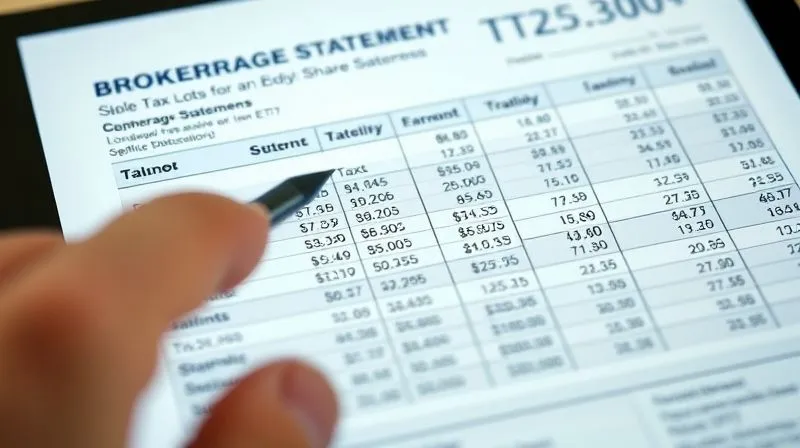
When an investor sells only a portion of their ETF holdings, they typically have a choice of accounting methods: FIFO (First-In, First-Out), average cost, or specific share identification. SpecID allows you to choose which specific tax lots to sell, giving you granular control over the tax outcome.
- Selling High-Cost Basis Shares: If a client needs to raise cash, you can choose to sell the shares with the highest cost basis, thereby minimizing the capital gain realized.
- Selling Low-Cost Basis Shares for Gifting: Conversely, if a client is gifting appreciated shares to charity, you would select the lowest cost basis shares to maximize the tax deduction for the charitable contribution and remove the largest unrealized gain from the portfolio.
SpecID requires meticulous record-keeping and careful execution, but it offers a powerful tool for precise tax management. This is a strategy I've personally used to great effect for clients with complex portfolios and diverse financial needs.
Gifting Appreciated ETF Shares
For charitably inclined clients, gifting appreciated ETF shares directly to a qualified charity can be a highly tax-efficient strategy. Rather than selling the shares, realizing a capital gain, and then donating the cash, the client can donate the shares directly.
- The client typically receives a charitable deduction for the fair market value of the shares (provided they've been held for more than one year).
- They avoid paying capital gains tax on the appreciation.
- The charity, being tax-exempt, can sell the shares without incurring capital gains tax.
This strategy effectively eliminates the capital gains liability for the client and maximizes the impact of their charitable giving. It's a win-win that showcases the value of holistic financial planning.
Case Study: Optimizing the "Growth-Focused" Client Portfolio
Case Study: How Sarah Maximized Deferral in Her Growth Portfolio
Sarah, a 45-year-old tech executive, came to me with a rapidly growing taxable portfolio heavily concentrated in several U.S. large-cap growth equity ETFs and a few sector-specific technology ETFs. She had significant unrealized capital gains and was concerned about future tax liabilities, especially as she approached her peak earning years. Her primary goal was aggressive long-term growth with minimal tax drag.
The Challenge: Sarah's portfolio had experienced substantial appreciation, but it was all in taxable accounts. She also had some smaller, underperforming positions in international equity ETFs. Her current advisor hadn't implemented any proactive tax management beyond basic rebalancing.
My Approach:
- Asset Location Audit: First, we analyzed her existing accounts. We identified that her bond holdings and a high-dividend equity ETF were in her taxable account, generating annual income tax. We moved these to her 401(k) and IRA, respectively, where they could compound tax-deferred.
- Tax Loss Harvesting Initiative: We identified the underperforming international equity ETFs with unrealized losses. We systematically sold these, harvesting losses to offset some of her current year's capital gains from rebalancing, and carried forward the remaining losses. We replaced them with similar, but not substantially identical, international ETFs to maintain diversification.
- Strategic Rebalancing: Instead of selling appreciated U.S. growth ETFs to rebalance, we directed Sarah's significant new contributions towards building out her international and value equity exposure, thereby avoiding triggering additional capital gains.
- Specific Share Identification for Partial Sales: When Sarah needed to make a down payment on a new home, requiring a partial sale of her U.S. large-cap growth ETF, we utilized Specific Share Identification. We carefully selected the highest cost basis shares to sell, minimizing the immediate capital gains realized from the transaction.
The Outcome: Over the next three years, Sarah's portfolio saw a significant reduction in annual capital gains distributions, largely due to better asset location and proactive TLH. Her net after-tax returns improved by an estimated 0.75% annually. The judicious use of SpecID for her home purchase saved her thousands in immediate capital gains taxes, reinforcing her trust in a tax-aware approach to wealth management. This hands-on, strategic management of 'How to optimize ETF capital gains deferral in client portfolios?' truly made a tangible difference.
The Advisor's Due Diligence: Continuous Monitoring and Education
Optimizing ETF capital gains deferral isn't a one-time event; it's an ongoing process that requires continuous monitoring, proactive adjustments, and client education.
Regular Portfolio Reviews
Schedule regular, at least annual, deep dives into client portfolios specifically focusing on tax implications. This includes:
- Reviewing all realized gains and losses.
- Assessing unrealized gains and identifying potential TLH opportunities.
- Checking for any unexpected capital gains distributions from ETFs.
- Revisiting asset location strategy in light of market movements and client life changes.
These reviews are your opportunity to proactively manage the tax picture, rather than react to it at year-end. They demonstrate your commitment to holistic wealth management.
Staying Abreast of Tax Law Changes
Tax laws are not static. Changes in capital gains rates, wash sale rules, or even new regulations regarding specific ETF structures can significantly impact your deferral strategies. Regularly consult reputable tax resources and professional publications. Subscribing to industry updates from organizations like the Journal of Financial Planning or the Tax Foundation is invaluable. Explore the Journal of Financial Planning for expert insights.
"In the complex world of investing, an advisor's true value isn't just in picking good investments, but in expertly navigating the tax landscape to allow those investments to truly flourish after taxes."
Educating your clients about these strategies is equally important. When clients understand the 'why' behind your tax-aware decisions, they gain confidence and appreciate the depth of your expertise. This transparency builds stronger, more enduring client relationships. After all, helping clients truly understand 'How to optimize ETF capital gains deferral in client portfolios?' is a cornerstone of long-term success.

Frequently Asked Questions (FAQ)
Q: Do all ETFs distribute capital gains? No, not all ETFs distribute capital gains. While they are designed to be more tax-efficient than mutual funds due to their in-kind creation/redemption mechanism, it's not a guarantee. If an ETF's underlying index requires significant rebalancing, or if the fund experiences large net inflows requiring the sale of appreciated assets that cannot be purged through the in-kind process, it may realize and distribute capital gains. Broad market index ETFs typically have very low to no capital gains distributions, but it's essential to check each fund's annual tax statements (Form 1099-DIV).
Q: How does the creation/redemption mechanism actually defer gains? The mechanism defers gains by allowing the ETF to remove appreciated securities from its portfolio without selling them on the open market. When an Authorized Participant (AP) redeems ETF shares, they receive a basket of underlying securities from the ETF. The ETF manager strategically selects the lowest cost basis (most appreciated) securities for these in-kind transfers. Since this is an exchange of securities for shares, not a sale, the ETF itself doesn't realize a taxable gain, thus preventing capital gains distributions to shareholders. The tax liability is effectively transferred to the AP, who then manages their own cost basis.
Q: What's the impact of short-term vs. long-term capital gains on ETFs? This distinction is crucial for both ETF-level distributions and individual investor sales. If an ETF *does* distribute capital gains, any portion classified as short-term will be taxed at the investor's ordinary income rate, which is typically higher. Long-term capital gains distributions from an ETF are taxed at preferential long-term capital gains rates. Similarly, when an individual investor sells their ETF shares, gains on shares held for less than a year are short-term, while those held for over a year are long-term. Optimizing deferral aims to push any realized gains into the long-term category for lower tax rates.
Q: Can I use TLH with ETFs even if I'm not selling at a loss? Tax Loss Harvesting (TLH) specifically involves selling an investment at a loss. Therefore, you cannot literally "use TLH" if you are not selling at a loss. However, the broader principle of tax-aware investing still applies. If you need to sell an ETF that has appreciated, you can use strategies like Specific Share Identification to sell the highest cost basis shares first, minimizing the recognized gain. You can also strategically offset any gains by harvesting losses from other positions in the portfolio, if available, or by utilizing carried-over losses from previous years.
Q: Are bond ETFs as tax-efficient as equity ETFs? Generally, bond ETFs are less tax-efficient than broad-market equity ETFs, primarily because their distributions are typically interest income, which is taxed at ordinary income rates. Equity ETFs primarily distribute qualified dividends (taxed at lower rates) and have a greater ability to defer capital gains through the in-kind mechanism due to less frequent rebalancing. However, municipal bond ETFs are a notable exception, as their interest income is often exempt from federal income tax and sometimes state and local taxes for residents of the issuing state. For taxable accounts, municipal bond ETFs are highly tax-efficient, while other bond ETFs are best held in tax-advantaged accounts.
Key Takeaways and Final Thoughts
Optimizing ETF capital gains deferral in client portfolios is not merely a technical exercise; it's a profound value-add that can significantly enhance your clients' after-tax wealth and strengthen your advisory relationship. As we've explored, a multifaceted approach is required, leveraging the inherent advantages of ETFs while employing proactive tax management strategies.
- Understand the ETF Structure: Leverage the in-kind creation/redemption mechanism to your advantage.
- Prioritize Asset Location: Strategically place high-turnover or income-generating ETFs in tax-advantaged accounts.
- Master Tax Loss Harvesting: Proactively identify losses and execute swaps to offset gains, carefully navigating wash sale rules.
- Embrace New ETF Structures: Utilize active and ESG ETFs that offer enhanced tax efficiency.
- Lean on Broad-Market ETFs: Recognize the foundational tax benefits of low-cost, passive index funds.
- Employ Advanced Tactics: Use Specific Share Identification and charitable gifting for tailored tax management.
- Commit to Continuous Diligence: Regularly review portfolios and stay informed on tax law changes.
By integrating these strategies into your practice, you move beyond mere investment selection to become a true wealth architect. You're not just helping clients grow their money; you're helping them keep more of it, allowing the power of compounding to work its magic over the long term. This expertise is what truly differentiates a good advisor from an exceptional one, solidifying client trust and ensuring their financial future is as tax-efficient as it is prosperous. Embrace these insights, and you'll be well-equipped to guide your clients toward optimal after-tax outcomes.
Recommended Reading
- Unlock Your Loan: How Does Credit Score Impact Personal Loan Approval?
- Stop the Bleed: 7 Ways to Fix Small Business Expenses Outpacing Revenue
- Prevent Sophisticated ATM Skimming: 7 Steps for Large Networks
- The Hidden Costs: Are Budget Airlines Truly Cheaper in the Long Run?
- Unlock Your Retirement Savings: When Can You Withdraw From Your IRA Without Penalty?





Comments
Leave a comment below. Your email will not be published. Required fields marked with *