


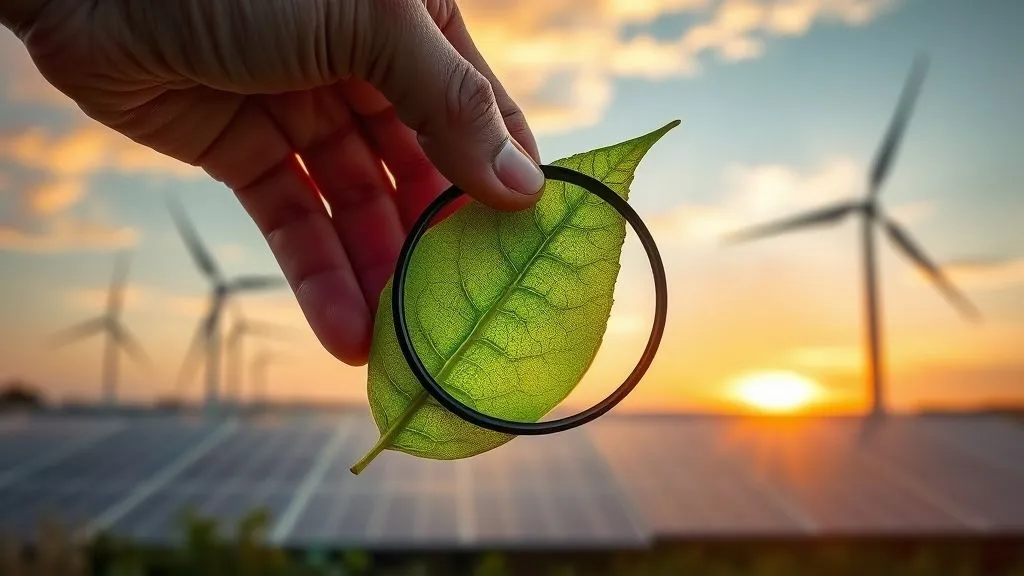
How to identify truly sustainable clean energy investment opportunities?
For over 15 years, immersed in the intricate world of ethical investing, particularly within the burgeoning clean energy sector, I've witnessed a concerning trend. The rush towards 'green' investments has inadvertently created a fertile ground for companies that are green in name only, or whose sustainability claims don't stand up to rigorous scrutiny.
Many investors, driven by a genuine desire to make a positive impact and capitalize on future growth, find themselves overwhelmed by the sheer volume of options and the sophisticated marketing of those who merely 'greenwash.' It's a significant pain point: how do you cut through the noise and truly identify the clean energy opportunities that are not just profitable, but genuinely sustainable and impactful?
In this comprehensive guide, I'll share my proprietary framework – refined over years of hands-on experience – to help you navigate this complex landscape. You'll learn actionable steps, gain insights from real-world scenarios, and discover the critical metrics and considerations that separate truly sustainable ventures from mere pretenders. My goal is to equip you with the expertise to build a clean energy portfolio that aligns with both your financial aspirations and your ethical compass.
The Greenwashing Gauntlet: Why Discernment is Crucial
The term 'clean energy' itself can be a broad brush, encompassing everything from utility-scale solar farms to nascent hydrogen technologies. While the overarching goal is laudable, the reality is that not all 'green' investments are created equal. I've seen countless instances where a company touts its environmental credentials, yet a deeper dive reveals significant issues in its supply chain, operational practices, or even its core business model.
This phenomenon, known as greenwashing, isn't always malicious. Sometimes, it's a lack of understanding or transparency. Other times, it's a deliberate attempt to capitalize on investor sentiment without making a true commitment to sustainability. As ethical investors, our challenge is to pierce through these layers and uncover the authentic opportunities that genuinely contribute to a cleaner, more sustainable future.

Without a robust framework for due diligence, you risk not only financial underperformance but also inadvertently supporting practices that contradict your values. My experience has taught me that true sustainability is multifaceted, requiring a holistic assessment that goes far beyond a company's marketing claims. It demands an understanding of their entire value chain, their long-term vision, and their verifiable impact.
Pillar 1: Beyond the Brochure – Scrutinizing a Company's Core Business Model
The first step in identifying truly sustainable clean energy investment opportunities is to look past the superficial marketing and deeply analyze a company's core business model. Is their primary revenue stream genuinely derived from sustainable activities, or is it a small, peripheral part of a larger, less sustainable operation? I've often found that companies with a strong, singular focus on clean energy solutions tend to be more authentic.
Examining Revenue Streams and Technology Maturity
A crucial aspect here is understanding the purity of their 'green' revenue. For instance, a company that generates 90% of its revenue from developing and operating solar farms is fundamentally different from a fossil fuel giant that has a small, experimental clean energy division. Look for businesses where clean energy isn't just an add-on, but the very essence of their existence.
Furthermore, assess the maturity and scalability of their core technology. Is it a proven solution with a clear path to market dominance, or is it a speculative venture still in its infancy? While innovation is vital, for a truly sustainable investment, I prioritize technologies that are either established or have strong, demonstrable potential to scale and deliver tangible environmental benefits efficiently. This means understanding the competitive landscape and technological differentiation.
Case Study: The 'Biofuel' Company That Wasn't Quite Green
Early in my career, I encountered 'GreenFuel Innovations,' a company heavily marketing its advanced biofuel technology. On the surface, it seemed like a perfect ethical investment. However, upon closer inspection, I discovered that their primary feedstock required significant land-use changes, leading to deforestation in certain regions. Moreover, the energy input for their refining process was substantial, largely derived from conventional sources, negating much of the carbon benefit.
By applying a rigorous assessment of their entire lifecycle, from feedstock sourcing to final energy output, it became clear that their environmental claims were, at best, exaggerated. This experience solidified my belief that true sustainability demands a deep dive into every aspect of a company's operations, not just its stated mission.
Expert Insight: Never take 'green' at face value. Demand granular details on how a company generates its revenue and how its core technology contributes to the energy transition. Authenticity lies in the details of execution, not just in the vision.
Pillar 2: ESG Metrics Decoded – Verifying Environmental, Social, and Governance Integrity
Once you're confident in a company's core clean energy business, the next critical step is to scrutinize its Environmental, Social, and Governance (ESG) performance. These are the three pillars that define a truly responsible and sustainable enterprise. My experience shows that strong ESG performance correlates with long-term resilience and reduced risk.
Environmental Impact: Lifecycle Assessments and Resource Efficiency
Beyond the clean energy product itself, how does the company operate environmentally? This involves looking at their manufacturing processes, supply chain, and waste management. Key questions I ask include: Do they conduct Life Cycle Assessments (LCAs) for their products? What are their energy and water consumption metrics? Do they have ambitious targets for reducing their operational footprint?
Resource efficiency is paramount. A solar panel manufacturer, for example, should not only produce clean energy technology but also strive to minimize waste in its production, source materials responsibly, and ideally, have a plan for end-of-life recycling. Look for certifications and transparent reporting on these metrics.
Social Responsibility: Supply Chains and Community Engagement
A truly sustainable company cares about its people and its communities. This pillar often gets overlooked, but it's crucial. I investigate their labor practices: Are workers paid fairly? Are safety standards robust? Is there any evidence of forced labor or human rights abuses in their supply chain? This often requires delving into their supplier audits and corporate policies.
Community engagement is also vital. Does the company contribute positively to the communities where it operates? Are they transparent about any potential negative impacts and how they mitigate them? A strong social license to operate is a significant indicator of long-term viability and ethical standing. Organizations like the UN Global Compact provide excellent frameworks for these principles.
Governance Standards: Transparency and Ethical Leadership
Finally, robust governance ensures that the company is run ethically and transparently. I look for independent board oversight, clear executive compensation structures, and a strong culture of integrity. Are there mechanisms for whistleblower protection? Is there diversity on the board and in senior management?
Transparency in reporting, particularly concerning ESG metrics, is a hallmark of good governance. Companies that are hesitant to share their data or whose reports lack detail often raise red flags in my assessment. Strong governance provides the foundation upon which genuine sustainability can thrive.
Pillar 3: The Power of Data – Quantifying Impact and Performance
In the world of ethical investing, good intentions are not enough; we need verifiable data. This pillar focuses on how to quantify a company's impact and financial performance using objective metrics. My experience has shown that companies committed to sustainability are also committed to measuring and reporting their progress rigorously.
Key Performance Indicators (KPIs) for Clean Energy
For clean energy investments, specific KPIs go beyond traditional financial metrics. These might include:
- Renewable Energy Generation Capacity: For producers (e.g., megawatts installed).
- Carbon Emissions Avoided: Quantifying the CO2 equivalent saved.
- Energy Efficiency Improvements: For companies providing solutions.
- Waste Diversion Rates: For manufacturers and recyclers.
- Water Usage Intensity: Per unit of output.
- R&D Investment as % of Revenue: Indicating commitment to innovation.
These KPIs, when tracked consistently over time, provide a clear picture of a company's actual contribution to a sustainable future. It's not just about what they say they do, but what the numbers demonstrably prove.
Utilizing Reputable ESG Data Providers
Collecting and analyzing all this data independently can be daunting. That's why I strongly advocate for utilizing reputable ESG data and ratings providers. Firms like MSCI ESG Research, Sustainalytics, and CDP (formerly Carbon Disclosure Project) specialize in assessing companies' ESG performance. They offer granular data and ratings that can significantly streamline your due diligence process.
While no single rating is perfect, using these resources provides a valuable external perspective and often highlights risks or opportunities you might otherwise miss. Always cross-reference their findings with a company's own sustainability reports and financial disclosures to form a comprehensive view.
| Criterion | Key Questions | Risk Factor |
|---|---|---|
| Core Business Model | Is revenue genuinely green? Technology mature and scalable? | High Greenwashing, Tech Obsolescence |
| ESG Performance | Robust environmental footprint? Ethical supply chain? Transparent governance? | Reputational, Regulatory |
| Financial Health | Strong balance sheet? Sustainable growth? Competitive advantage? | Market Volatility, Business Failure |
| Innovation & Adaptability | R&D investment? Future-proof strategy? Circular economy principles? | Disruption, Stagnation |
Pillar 4: Regulatory Landscape and Policy Alignment
The clean energy sector is heavily influenced by government policies, incentives, and regulations. Understanding this landscape is not just about compliance; it's about identifying companies that are strategically positioned to benefit from evolving policy frameworks and those that might be vulnerable to shifts. In my experience, policy tailwinds can significantly amplify the growth trajectory of genuinely sustainable enterprises.
Understanding Global and Local Incentives
Governments worldwide are implementing policies to accelerate the energy transition, from tax credits for renewable energy projects to carbon pricing mechanisms. A truly sustainable clean energy investment opportunity often lies with companies that are adept at navigating and leveraging these incentives. Research the specific regions where a company operates. Are they in areas with strong government support for renewables, or are they facing regulatory hurdles?
Conversely, be wary of companies whose profitability is almost entirely dependent on short-term subsidies. True sustainability implies a business model that can thrive even as incentives evolve or diminish, driven by fundamental economic advantages and technological superiority. This requires a forward-looking perspective on policy trends.
Navigating Emerging Carbon Markets
Carbon markets, both voluntary and compliance-based, are becoming increasingly important. Companies that effectively measure, reduce, and potentially trade carbon credits can add significant value. Understanding a company's strategy regarding carbon emissions and its participation (or potential participation) in these markets can be a strong indicator of its commitment to and profitability within a low-carbon economy. The World Bank's Carbon Pricing Dashboard is a great resource for tracking these developments.

Pillar 5: Long-Term Vision and Adaptability to Innovation
The clean energy sector is characterized by rapid technological advancement. What's cutting-edge today might be obsolete tomorrow. Therefore, a truly sustainable investment isn't just about current performance; it's about a company's capacity for innovation, its long-term vision, and its ability to adapt to future challenges and opportunities. I always look for signs of forward-thinking leadership.
Assessing R&D and Strategic Partnerships
Does the company invest significantly in Research and Development (R&D)? A strong R&D pipeline is a crucial indicator of a company's commitment to staying at the forefront of clean energy innovation. Look at their patent portfolio, their collaborations with research institutions, and their track record of bringing new solutions to market.
Strategic partnerships are equally important. Are they collaborating with other industry leaders, academic institutions, or even competitors to accelerate innovation and market penetration? Such collaborations often signal a robust strategy for long-term growth and resilience in a rapidly changing environment. The ability to form synergistic alliances is a key differentiator.
The Role of Circular Economy Principles
Beyond simply producing clean energy, truly sustainable companies are increasingly embracing circular economy principles. This means designing products for longevity, ease of repair, and ultimate recyclability, minimizing waste throughout the product lifecycle. For example, a battery manufacturer that also has a robust battery recycling program demonstrates a deeper commitment to sustainability than one that solely focuses on production.
Ask: What is their end-of-life strategy for their products? How do they minimize raw material extraction? Companies that embed circularity into their business model are not only more sustainable but often more resilient to resource scarcity and regulatory pressures.

Building Your Ethical Clean Energy Portfolio: A Step-by-Step Framework
Bringing all these pillars together, here's a concise, actionable framework I use to identify truly sustainable clean energy investment opportunities:
- Define Your Impact Goals: Before you even look at companies, clarify what 'sustainable' means to you. Is it carbon reduction, social equity, circularity, or a combination? This will guide your screening process.
- Initial Screening – Pure Play vs. Diversified: Filter companies based on their core business. Prioritize 'pure-play' clean energy companies where sustainability is central, not peripheral. Use industry classifications and reputable ESG databases.
- Deep Dive into Business Model & Technology: Analyze revenue streams for genuine greenness. Assess technology maturity, competitive advantages, and scalability. Look for proven solutions or highly promising, well-funded innovations.
- Comprehensive ESG Due Diligence: Scrutinize environmental footprint (LCA, resource efficiency), social responsibility (supply chain, labor, community), and governance (transparency, ethical leadership). Utilize third-party ESG ratings but always verify with company reports.
- Quantify Impact with KPIs: Demand clear, verifiable data on environmental and social impact. Look for companies that set ambitious, measurable targets and report on them transparently. Compare performance against industry benchmarks.
- Assess Regulatory Alignment & Risk: Understand how government policies and carbon markets impact the company. Favor those strategically positioned to benefit from current and future regulations, and less reliant on expiring subsidies.
- Evaluate Long-Term Vision & Innovation: Examine R&D investment, strategic partnerships, and commitment to circular economy principles. Look for adaptable companies with a clear path for future growth and resilience in a dynamic market.
By following these steps, you'll move beyond superficial claims and build a portfolio of clean energy investments that are not only financially sound but genuinely contribute to a sustainable future. It's a rigorous process, but the rewards—both financial and ethical—are immense.
Frequently Asked Questions (FAQ)
Q: How can I be sure a company isn't just 'greenwashing' their investment proposition? The key is deep due diligence across all five pillars. Don't rely solely on marketing materials. Look for third-party verification, detailed ESG reports, quantifiable KPIs, and transparency in their operations and supply chain. If a company is vague or reluctant to provide detailed data, it's a significant red flag. My framework is specifically designed to help you cut through greenwashing by focusing on verifiable facts and comprehensive analysis.
Q: Are smaller, innovative clean energy startups too risky for ethical investors? Not necessarily, but they require a different approach. While they might not have extensive historical ESG data, you can assess their founding principles, the integrity of their leadership, the potential for their technology to deliver significant impact, and their commitment to building sustainable practices from the ground up. The risk profile is higher, but the potential for transformative impact and financial returns can also be greater if chosen wisely. Diversification is key when including these.
Q: What are the most promising clean energy sectors to focus on for long-term sustainability? While trends evolve, sectors like advanced energy storage (batteries, hydrogen), smart grid technologies, offshore wind, sustainable agriculture tech (agrivoltaics), and circular economy solutions (e.g., waste-to-energy, advanced recycling) show significant long-term potential. These areas address critical challenges beyond just energy generation, contributing to broader systemic sustainability. Always consider the specific technological maturity and market adoption rates.
Q: How important is the geographical location of a clean energy investment? Extremely important. Policy support, regulatory stability, resource availability (e.g., wind, sun), and local community engagement vary significantly by region. A clean energy project in a country with strong environmental regulations and government incentives might be more viable and genuinely sustainable than a similar project in a region with weak oversight or political instability. Always factor in geopolitical and local market dynamics.
Q: Can individual investors truly make a difference with ethical clean energy investments? Absolutely. Every investment decision sends a signal to the market. By directing your capital towards genuinely sustainable clean energy companies, you contribute to their growth, encourage more ethical practices across the industry, and help accelerate the global energy transition. Collective individual actions create powerful market forces that drive systemic change. Your investment isn't just financial; it's a vote for the future you want to see.
Key Takeaways and Final Thoughts
Identifying truly sustainable clean energy investment opportunities requires a blend of financial acumen, ethical conviction, and rigorous due diligence. It's a journey that demands patience and a commitment to looking beyond the surface. But in my years in this field, I've seen firsthand the profound impact that thoughtful, ethical investing can have – not just on portfolios, but on the planet.
- Go Beyond Marketing: Always scrutinize a company's core business and revenue streams for genuine green credentials.
- Embrace ESG Holistically: Environmental, Social, and Governance factors are intertwined and critical for long-term resilience.
- Demand Data: Rely on verifiable KPIs and reputable third-party ESG ratings to quantify impact and performance.
- Understand Policy: Recognize that regulatory landscapes and incentives significantly shape the clean energy market.
- Prioritize Innovation: Invest in companies with a clear long-term vision, strong R&D, and adaptability to future challenges.
- Use a Structured Framework: My 7-step process provides a robust guide to navigate complexity and reduce risk.
The transition to a clean energy future is one of humanity's greatest challenges and opportunities. By applying these principles, you're not just making an investment; you're making a statement and contributing to a more sustainable, equitable world. I encourage you to embark on this journey with confidence, armed with the knowledge to make truly impactful choices. The future of our planet, and your portfolio, can both be brighter for it.
Recommended Reading
- Fix Credit Report Errors FAST: 5 Steps to Accurate Scores
- 5 Expert Strategies: How to Resolve High-Value Commercial Insurance Claim Disputes
- Unlock Your Wealth: How to Adjust Investment Strategy for Inflation Now!
- Unmasking the Code: How to Avoid Smart Contract Vulnerabilities Now
- Overcoming 5 Critical Challenges in Bank Digital Wallet Interoperability





Comments
Leave a comment below. Your email will not be published. Required fields marked with *