



For over two decades in the finance and insurance sector, particularly within the dynamic tech landscape, I’ve witnessed countless startups surge with innovation, only to falter when a cyber incident exposes a gaping hole in their risk mitigation strategy. The most common culprit? An inadequate cyber insurance policy. It's a mistake I've seen play out with devastating consequences, time and again.
Many founders, understandably focused on product development and market fit, view insurance as a mere checkbox item. They sign off on what appears to be comprehensive coverage, unaware of the subtle exclusions, insufficient limits, or critical services missing from their policy. This oversight transforms a protective shield into a false sense of security, leaving them vulnerable to catastrophic financial and reputational damage just when they're gaining traction.
In this definitive guide, I’ll leverage my deep industry experience to walk you through a systematic framework designed to help you, as a tech startup leader, proactively identify and rectify those hidden cyber insurance policy gaps. We’ll delve into the nuances of policy language, explore critical coverage areas often overlooked, and provide actionable steps to ensure your startup is truly protected against the ever-evolving threat landscape.
Why Standard Policies Fall Short for Tech Startups
Tech startups operate in a fundamentally different risk environment than traditional businesses. Their core assets are often intangible – intellectual property, customer data, proprietary algorithms – and their operations are almost entirely digital. This makes them uniquely susceptible to cyber threats that can bypass conventional insurance protections.
"The digital frontier is constantly expanding, and so are the attack surfaces for tech companies. Relying on a 'one-size-fits-all' insurance policy in this environment is akin to bringing a knife to a gunfight."
Consider these specific risks that set tech startups apart:
- High-Value Data: Startups often handle vast amounts of sensitive customer data (P.I.I., financial, health), making them prime targets for data breaches.
- Intellectual Property (IP): Proprietary code, algorithms, and trade secrets are the lifeblood of a tech startup, yet they are extremely vulnerable to theft or sabotage.
- Cloud Dependency: Heavy reliance on cloud infrastructure introduces shared responsibility complexities and potential supply chain vulnerabilities.
- Rapid Iteration & Development: Fast-paced development cycles can inadvertently introduce security vulnerabilities if not managed meticulously.
- Regulatory Scrutiny: Compliance with data privacy regulations like GDPR, CCPA, and others carries significant financial penalties for non-compliance.
- Business Interruption: An outage of a SaaS platform or critical service can halt operations entirely, leading to massive revenue loss and reputational damage.
The Illusion of 'Comprehensive' Coverage
Many general business insurance policies may include a rudimentary 'cyber endorsement' or a small sub-limit for cyber events. However, these are almost universally inadequate for a tech startup. They often lack the depth and breadth of coverage required to address the specific, high-stakes risks that digital-native companies face. The language is typically broad, and the limits are woefully insufficient for the true cost of a significant cyber incident.

Deconstructing Policy Language: What to Scrutinize Beyond the Headlines
The devil, as they say, is in the details – and nowhere is this truer than in insurance policy wording. As an industry veteran, I can tell you that the summary provided by a broker or the catchy policy name means little compared to the actual definitions, conditions, and exclusions buried deep within the policy document. This is where hidden gaps truly lie.
Understanding Exclusions and Limitations
Exclusions are clauses that specifically limit or deny coverage for certain events or circumstances. They are the most common source of hidden gaps. For tech startups, some critical exclusions to watch out for include:
- Nation-State or War Exclusions: Some policies may exclude damages resulting from cyberattacks attributed to nation-states or acts of cyber warfare, which are increasingly common.
- Prior Acts Exclusions: If an incident began before the policy's effective date, even if discovered later, it might not be covered.
- Failure to Maintain Security: Vague clauses requiring 'reasonable security' can be problematic. What constitutes 'reasonable' can be subjective and disputed by an insurer.
- Known Vulnerabilities: If an incident exploits a vulnerability that was known to the insured but not remediated, coverage could be denied.
- Supply Chain Exclusions: Policies might not adequately cover incidents originating from third-party vendors or service providers, leaving a massive gap.
- Fines and Penalties: Not all policies cover regulatory fines (e.g., GDPR), only the legal costs associated with defending against them.
Defining 'Cyber Incident' and 'Breach'
The precise definitions of terms like 'cyber incident,' 'security breach,' 'denial of service attack,' or 'ransomware event' can significantly impact when and how your policy triggers coverage. A policy might cover a 'data breach' but not a 'system disruption' that doesn't involve data exfiltration, even if both cause significant business interruption. Always ensure these definitions align with the broad spectrum of cyber risks your startup faces.
Geographic and Jurisdictional Scope
For tech startups with global ambitions or distributed teams, the geographic scope of your policy is paramount. Does it cover incidents that occur outside your primary operating country? What about data stored in servers located internationally? Furthermore, consider the jurisdictional scope – which legal system governs the policy, and will it respond to claims brought under foreign privacy laws?
Case Study: ByteGuard Innovations' Near Miss
ByteGuard Innovations, a promising SaaS startup specializing in secure communication tools, experienced a sophisticated phishing attack. An employee unknowingly downloaded malware, leading to the encryption of critical internal development servers. When they filed a claim for business interruption and data recovery, their insurer initially pushed back. The policy had a subtle exclusion for 'incidents primarily caused by employee negligence if a clear security protocol was not followed.' While ByteGuard had protocols, the insurer argued the training wasn't sufficiently rigorous.
Thankfully, ByteGuard's founder had worked with a specialist broker who had previously highlighted the ambiguity in this clause. They had secured an endorsement clarifying that 'reasonable security protocols' included documented training and regular audits, even if a single employee error occurred. This foresight saved ByteGuard from a multi-million-dollar uninsured loss, emphasizing the importance of scrutinizing every word and seeking specific endorsements.
Critical Coverage Areas Tech Startups Often Overlook
Beyond the general framework, there are specific coverage elements that are absolutely non-negotiable for a tech startup. These are often the areas where standard policies fall dramatically short.
Business Interruption & Dependent Business Interruption
For a SaaS company, an outage can be devastating. Business interruption coverage pays for lost profits and ongoing expenses if a cyber event disrupts your operations. Dependent Business Interruption is even more crucial for tech, covering losses when a critical third-party service provider (like your cloud host, payment processor, or key API provider) suffers a cyber incident that impacts your ability to operate. This is a common, yet often overlooked, vulnerability.
Ransomware and Extortion Coverage
Ransomware attacks are a constant threat. Your policy must explicitly cover ransomware demands, including the cost of cryptocurrency if paid, negotiation services, and the expenses associated with restoring systems and data. Look for clear language regarding the insurer's involvement in the negotiation process and whether they provide expert resources.
Intellectual Property (IP) Infringement & Theft
Your IP is your crown jewel. While some general liability policies might offer limited coverage for advertising injury related to copyright infringement, dedicated cyber policies can cover the costs associated with investigating, defending, and remediating the theft or infringement of your proprietary code, algorithms, or trade secrets due to a cyber event. This is distinct from patent infringement, which is typically not covered.
Cloud Service Provider (CSP) Liability
The shared responsibility model of cloud computing means that while your CSP handles the security of the cloud, you are responsible for security in the cloud. Your cyber policy needs to address incidents where your misconfiguration or a flaw in your application within the cloud environment leads to a breach. Furthermore, ensure your policy can respond even if the incident originates from a vulnerability within the CSP's infrastructure, especially if your contracts with the CSP don't fully indemnify you.
Regulatory Fines & Penalties (GDPR, CCPA)
Data privacy regulations globally carry hefty fines. Many policies will cover the legal costs of defending against regulatory investigations but might exclude the actual fines or penalties levied. For a tech startup, especially one handling consumer data, explicit coverage for these fines is paramount. For instance, GDPR fines can reach up to €20 million or 4% of annual global turnover, whichever is higher.
Pre-Breach Services & Post-Breach Response
A robust cyber policy isn't just about paying after an incident; it's about minimizing the impact. Look for coverage that includes:
- Pre-Breach Services: Proactive measures like vulnerability assessments, penetration testing, and employee security training.
- Post-Breach Response: Immediate access to forensic investigators, legal counsel specializing in cyber law, public relations crisis management, credit monitoring services for affected individuals, and data restoration experts. The speed and quality of this response can significantly reduce financial and reputational damage.
| Service Category | Examples | Policy Importance |
|---|---|---|
| Pre-Breach | Vulnerability Scans, Employee Training | Proactive Risk Reduction |
| Post-Breach | Forensics, Legal Counsel, PR, Credit Monitoring | Mitigating Damage & Recovery |
The Role of Risk Assessment in Policy Customization
You cannot effectively insure what you do not understand. Before even looking at policy options, a comprehensive cyber risk assessment is the foundational step for any tech startup. This isn't just a compliance exercise; it's a strategic imperative that directly informs how to identify hidden cyber insurance policy gaps for a tech startup and tailor your coverage.
Conducting a Comprehensive Cyber Risk Assessment
I advise every startup to undertake a structured risk assessment. Here’s a simplified approach:
- Identify Critical Assets: What are your startup's most valuable digital assets? This includes customer data, source code, proprietary algorithms, development environments, and critical servers.
- Analyze Threat Vectors: How could these assets be compromised? Think about phishing, malware, ransomware, insider threats, DDoS attacks, supply chain attacks, and physical breaches.
- Assess Vulnerabilities: Where are your weaknesses? This could be unpatched software, weak authentication, lack of employee training, cloud misconfigurations, or reliance on vulnerable third-party components.
- Quantify Potential Impact: If an incident occurs, what would be the financial cost (lost revenue, recovery costs, fines), reputational damage, and operational disruption?
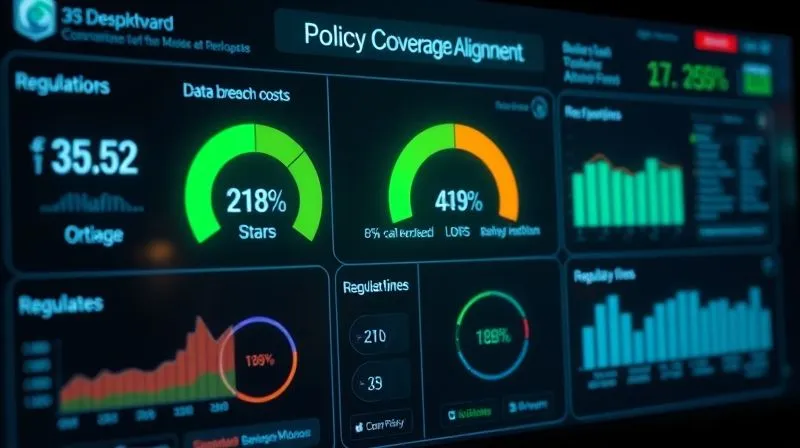
Aligning Policy Limits with Real-World Exposure
Once you have a clear understanding of your potential financial exposure from the risk assessment, you can make an informed decision about policy limits. Don't just pick an arbitrary number. Consider:
- The average cost of a data breach for companies your size (e.g., IBM's Cost of a Data Breach Report is a valuable resource).
- Your potential business interruption losses for a week, a month, or even longer.
- The maximum possible regulatory fines you could face.
- The cost of forensic investigation, legal defense, and public relations.
These calculations provide a data-driven basis for setting appropriate policy limits, preventing you from being underinsured.
Vendor Management & Supply Chain Cyber Risks
In today's interconnected ecosystem, your startup's cyber resilience is only as strong as its weakest link. For tech startups, this often means their third-party vendors and supply chain. I've seen countless incidents where a breach wasn't directly at the startup, but at a critical service provider, leading to significant disruption and liability for the startup.
Reviewing Vendor Contracts and Insurance Requirements
Every contract with a third-party vendor (cloud providers, payment processors, analytics tools, CRMs, etc.) should include robust security clauses and clear indemnification language. Insist on seeing proof of their cyber insurance coverage and ensure their limits are adequate to cover potential damages they could cause to your business. This due diligence is crucial.
Ensuring Adequate Third-Party Coverage
Even with strong vendor contracts, your own cyber insurance policy needs to anticipate third-party risks. Look for:
- Dependent Business Interruption: As mentioned, this covers your losses if a critical vendor suffers an outage.
- Supply Chain Attack Coverage: Explicitly addresses incidents where malware or a breach originates from a supplier and propagates to your systems.
- Contractual Liability Coverage: Ensures your policy responds if you are held liable for a vendor's breach due to contractual obligations.
"Your vendors are an extension of your attack surface. A robust cyber insurance strategy must account for the vulnerabilities introduced by your supply chain, not just your internal systems."
Proactive Steps: How to Conduct a Thorough Policy Review
Once you understand your risks and the typical coverage areas, it's time to roll up your sleeves and scrutinize your actual policy. This isn't a one-time event; it's an ongoing process to truly identify hidden cyber insurance policy gaps for a tech startup.
Step 1: Gather All Relevant Documents
Collect your entire cyber insurance policy package. This includes:
- The main policy form.
- All endorsements (additions or modifications to the policy).
- The declarations page (summarizes limits, deductibles, and insured parties).
- Any riders or amendments.
Read them all, front to back. Don't rely on summaries.
Step 2: Create a Risk-Policy Matrix
This is an invaluable tool I recommend to all my clients. Create a spreadsheet with the following columns:
- Identified Risk: List all the specific cyber risks you identified in your risk assessment (e.g., ransomware, data breach, cloud outage, IP theft).
- Policy Clause Covered: For each risk, identify the specific section(s) and clause(s) in your policy that *appear* to provide coverage.
- Potential Gap/Exclusion: Critically examine if there are any exclusions, limitations, or vague definitions within those clauses that could negate or reduce coverage for that specific risk. Note down any ambiguities.
- Action Needed: What steps do you need to take? (e.g., 'clarify definition with broker,' 'seek endorsement for X,' 'increase limits for Y').
| Identified Risk | Policy Clause Covered | Potential Gap/Exclusion | Action Needed |
|---|---|---|---|
| Ransomware Attack | Cyber Extortion, Business Interruption | Crypto payment limits, specific attack vectors not covered | Review limits, seek endorsement for specific attack types |
| Cloud Outage (CSP) | Dependent Business Interruption | Exclusion for 'known' vulnerabilities, shared responsibility clause | Clarify CSP liability, negotiate specific endorsements |
Step 3: Engage with an Expert Broker
While you should do your homework, a specialist cyber insurance broker is an indispensable ally. They understand the intricacies of policy language, market trends, and the specific risks faced by tech startups. They can help you interpret complex clauses, identify potential gaps you might miss, and negotiate better terms and endorsements with insurers. Don't settle for a generalist; find someone who lives and breathes tech cyber insurance. For guidance on selecting the right partner, consider resources like this article on how to choose an insurance broker.
Step 4: Regular Policy Reviews and Updates
Your startup is dynamic, and so is the cyber threat landscape. Your cyber insurance policy should not be static. Conduct annual reviews, or even more frequently if there are significant changes to your business:
- Launch of a new product or service.
- Expansion into new markets or geographies.
- Significant increase in customer data or IP.
- Major changes to your tech stack or infrastructure.
- Acquisitions or mergers.
Each of these events can introduce new risks or alter your existing exposure, necessitating a re-evaluation of your coverage.

Building a Cyber Resilient Culture
While a robust cyber insurance policy is a critical safety net, it's just one component of a comprehensive cyber resilience strategy. Insurance cannot prevent an attack, nor can it fully restore lost customer trust or brand reputation. It's a financial recovery tool, not a preventative one.
Employee Training and Awareness
The human element remains the weakest link in cybersecurity. Regular, engaging, and up-to-date employee training on phishing awareness, strong password practices, social engineering, and incident reporting is fundamental. A well-trained workforce is your first line of defense.
Incident Response Planning
Having a detailed, tested incident response plan is paramount. This plan outlines the steps your startup will take before, during, and after a cyber incident. It includes who to contact, what actions to take, how to communicate with stakeholders, and how to recover systems. A well-executed plan can significantly reduce the impact of a breach and demonstrates to insurers your commitment to managing risk, potentially leading to better policy terms.
"Cyber insurance is not a substitute for good cybersecurity practices. It's the essential financial component of a holistic defense strategy that prioritizes prevention, detection, and rapid response."
Frequently Asked Questions (FAQ)
What's the difference between first-party and third-party cyber coverage, and why do tech startups need both? First-party coverage protects your startup from its own direct losses resulting from a cyber incident, such as the cost of data recovery, business interruption, forensic investigation, and public relations. Third-party coverage protects you from liability claims brought by others (e.g., customers, vendors, regulators) due to a cyber incident originating from your systems, covering legal defense costs, settlements, and regulatory fines. Tech startups absolutely need both because they not only incur significant internal costs from an attack but also face substantial liability for compromised customer data or service disruptions affecting others.
Can my general liability or property insurance cover cyber risks? No, almost never sufficiently. While some general liability policies might have minimal 'advertising injury' coverage that *might* touch on digital content, and property insurance covers physical assets, neither is designed for the complex, intangible nature of cyber risks. Most explicitly exclude cyber-related losses or provide sub-limits that are far too low for a tech startup's exposure. Relying on these policies for cyber protection is a critical hidden gap.
How does the 'retroactive date' or 'prior acts' clause impact my coverage, especially for a new startup? The 'retroactive date' specifies the earliest date an incident can have occurred to be covered by your policy. If an incident started before this date, even if discovered during your policy period, it won't be covered. For a new startup, it's crucial to have a retroactive date that aligns with your operational history, ideally covering all past acts. If you're switching insurers, ensure there's no gap in coverage between the retroactive dates of your old and new policies, or you could face uninsured prior acts.
My startup uses open-source software extensively. Are there specific cyber insurance concerns I should be aware of? Yes. Open-source software, while beneficial, can introduce vulnerabilities if not properly managed and updated. Some cyber policies might have clauses related to 'known vulnerabilities' or 'failure to maintain security standards.' If a breach occurs due to an unpatched open-source vulnerability that was publicly known, an insurer might argue it falls under such an exclusion. It's crucial to have robust vulnerability management processes for all software, including open source, and to discuss your open-source usage with your broker to ensure your policy doesn't have restrictive clauses.
What role do cyber security certifications (e.g., SOC 2, ISO 27001) play in securing better cyber insurance terms? Cyber security certifications like SOC 2 or ISO 27001 demonstrate that your startup has implemented recognized best practices for information security. Insurers view these certifications favorably because they indicate a lower risk profile and a proactive approach to security. While not a guarantee, having such certifications can lead to lower premiums, broader coverage options, higher limits, and a more streamlined underwriting process. They are a tangible way to prove your commitment to cyber resilience.
Key Takeaways and Final Thoughts
Navigating the complex world of cyber insurance for a tech startup can feel daunting, but it is an absolutely essential endeavor. The digital economy moves fast, and so do the threats. Proactive protection isn't just a best practice; it's a survival strategy.
- Don't treat cyber insurance as a commodity. It requires deep understanding and customization.
- Scrutinize policy language, especially exclusions, definitions, and limitations. These are where hidden gaps reside.
- Tailor coverage to your specific tech risks. Generic policies are insufficient for a digital-native business.
- Prioritize critical areas like business interruption, IP theft, and regulatory fines. These are often the most financially damaging.
- Conduct thorough cyber risk assessments regularly. This is the foundation for informed policy decisions.
- Engage with an expert cyber insurance broker. Their specialized knowledge is invaluable.
- Integrate insurance with a broader cyber resilience strategy. It's part of a complete defense, not the whole solution.
By taking these actionable steps, you'll move beyond a false sense of security and gain genuine peace of mind, knowing that you've diligently worked to identify hidden cyber insurance policy gaps for a tech startup. Your innovation deserves robust protection. Be proactive, be informed, and safeguard your startup's future in the digital age.
Recommended Reading
- 5 Strategies: How to Mitigate Sovereign Debt Risk from Global Rate Hikes?
- Stop Corporate Travel Overspending: 7 Ways to Avoid Hidden Budget Airline Fees
- Dividend Stocks for Monthly Income: A Beginner's Guide to Success
- Sudden Tax Bill? 7 Expert Strategies to Cut Liability Before Year-End
- 7 Strategies: Optimize Student Loan Payments for Career Growth?





Comments
Leave a comment below. Your email will not be published. Required fields marked with *