


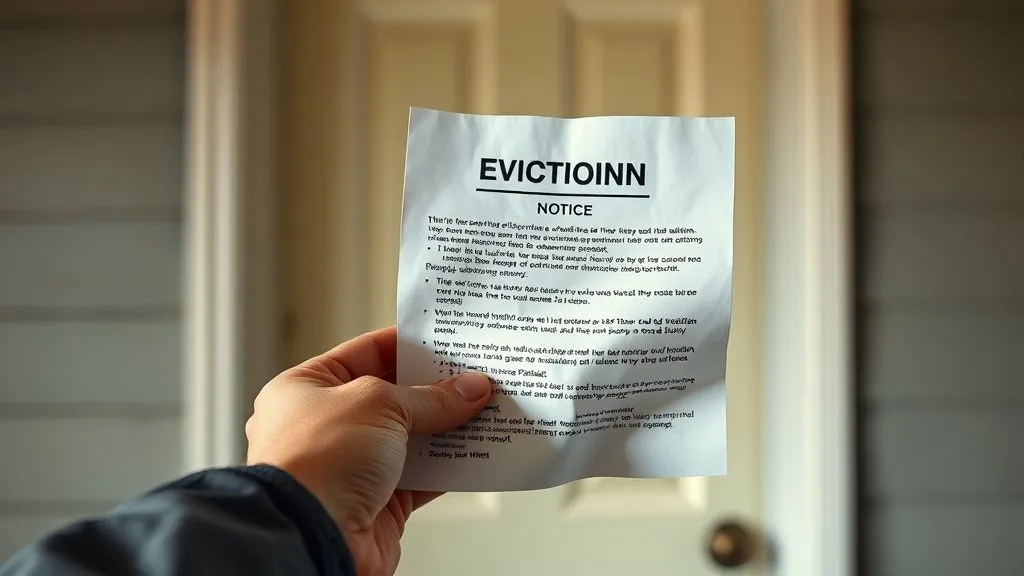
How to Handle a Tenant Refusing to Move Out After Lease End?
For over 18 years in the real estate investment and property management sector, I've witnessed firsthand the myriad challenges landlords face. Few, however, are as universally dreaded and potentially damaging as a tenant refusing to move out after their lease officially ends. It's a situation that can quickly escalate from an inconvenience to a costly legal battle, eating into your profits and peace of mind.
This isn't just about a missed rent payment; it's about a fundamental breach of contract and, more critically, a direct threat to your property's operational continuity and financial health. The emotional toll can be significant, as you navigate a complex legal landscape while feeling your property is held hostage. Many landlords, understandably, feel frustrated, powerless, and unsure of their next move.
That's precisely why I've crafted this definitive guide. You're not just getting a list of legal procedures; you're gaining access to a strategic framework, born from years of experience and countless landlord-tenant interactions. We'll explore proactive measures, immediate actions, legal pathways, and critical pitfalls to avoid, ensuring you have a clear, actionable plan for when a tenant is refusing to move out after lease end, protecting your investment every step of the way.
Understanding the "Holdover Tenant" Situation
Before we delve into solutions, it's crucial to understand the terminology and implications. When a tenant remains on your property after their lease agreement has expired, without your explicit consent, they become what's known as a "holdover tenant." This isn't merely an annoyance; it triggers specific legal statuses and obligations for both parties, which vary significantly by jurisdiction.
What Constitutes a Holdover?
A holdover tenancy officially begins the moment the original lease term ends and the tenant has not vacated the premises. If you, as the landlord, accept rent from them after the lease expiration, you might inadvertently create a new tenancy, often a month-to-month agreement, depending on your state's laws. This is a critical point we'll revisit, as it can severely complicate your ability to regain possession.
The Financial and Legal Ramifications
The immediate financial impact is obvious: lost rent from a new tenant, potential damages to the property, and the mounting costs of legal counsel. Legally, a holdover tenant can force you into an eviction lawsuit, known as an "unlawful detainer" action in many states. This process is time-consuming, expensive, and emotionally draining. Moreover, mishandling the situation, such as attempting "self-help" eviction, can lead to severe penalties, including fines and even criminal charges. According to NOLO, a leading legal resource, understanding your local landlord-tenant laws is paramount to avoiding these pitfalls and navigating the situation effectively. NOLO's landlord-tenant guides are an excellent starting point for general information.
Step 1: Proactive Prevention – Your First Line of Defense
While this guide focuses on resolution, my experience has taught me that the best defense is a good offense. Many holdover situations can be mitigated, or even prevented, by strong foundational practices.
Robust Lease Agreements
Your lease agreement is your most powerful tool. It should contain clear, unambiguous clauses regarding:
- Lease Term: Exact start and end dates.
- Notice to Vacate: A requirement for the tenant to provide written notice (e.g., 30 or 60 days) if they intend to move out, and your right to provide notice if you do not intend to renew.
- Holdover Clause: Explicitly state the consequences of holding over, such as rent increasing to 1.5x or 2x the normal rate, and the tenant's liability for all damages and legal fees incurred by the landlord due to their holdover.
- Automatic Renewal: Clearly state whether the lease automatically converts to month-to-month or terminates outright. Avoid ambiguity.
As housing expert Emily J. Smith often emphasizes, "A well-drafted lease isn't just a contract; it's a preventative legal strategy."
Effective Communication & Relationship Building
Maintaining open lines of communication throughout the tenancy can often prevent misunderstandings. A few months before the lease expires, reach out to your tenant. Ask about their intentions. If they plan to move, offer assistance or resources. If they wish to renew, initiate the renewal process promptly. A tenant who feels respected and heard is less likely to create problems.
Step 2: Immediate Actions When Lease Ends & Tenant Stays
Despite your best preventative efforts, you find yourself with a tenant who is refusing to move out after lease end. This is where precision and adherence to legal protocol become paramount.
Document Everything Meticulously
From this point forward, every interaction, every attempt at communication, and every observation must be documented. This includes:
- Date and Time: Record when each event occurred.
- Communication Logs: Keep copies of all emails, text messages, certified mail receipts, and notes from phone calls.
- Photographic/Video Evidence: If possible and legal, document the condition of the property at the lease end date.
- Witnesses: If you have any interactions in person, have a third party present if appropriate.
This documentation will be your strongest ally if the situation escalates to court. Remember, in legal disputes, the party with the most credible evidence often prevails.
Formal Notice to Vacate (and Why It's Crucial)
Even if your lease states the tenant must move out, sending a formal "Notice to Vacate" or "Notice to Quit" is often the critical first step in legally regaining possession. This notice serves several purposes:
- Legal Requirement: Many jurisdictions require specific notice periods before you can file for eviction.
- Clarity: It formally informs the tenant that their tenancy has ended and they are required to leave by a specific date.
- Proof of Attempt: It demonstrates to a court that you followed proper procedure and gave the tenant an opportunity to comply.
The type of notice (e.g., 3-day, 30-day, 60-day) and the method of delivery (e.g., certified mail, personal service) are highly state-specific. Do not guess; consult your local landlord-tenant laws or an attorney. Failure to provide proper notice is a common reason eviction cases are dismissed.

Step 3: Understanding Your Legal Options – State-Specific Laws
This is where the "one size fits all" approach completely breaks down. Landlord-tenant laws are primarily governed at the state and sometimes even municipal level. What's legal in Texas might be illegal in California, and vice-versa.
Consulting Legal Counsel: When and Why
As soon as you realize a tenant is refusing to move out after lease end, and especially after sending your formal notice, it's time to consult an attorney specializing in landlord-tenant law. I've seen countless landlords try to navigate this alone, only to make costly mistakes that delay the process or jeopardize their case. An attorney can:
- Confirm you've followed all local notice requirements.
- Advise on the specific eviction process in your jurisdiction.
- Prepare and file the necessary legal documents.
- Represent you in court.
Think of it as an investment in protecting your larger asset. The U.S. Department of Housing and Urban Development (HUD) provides state-specific resources that can help you find local legal aid or understand your rights, though they do not provide direct legal advice. Explore HUD's state resources here.
The Eviction Process: A General Overview (and its variations)
While specifics vary, the general eviction process for a holdover tenant typically involves these stages:
- Notice to Vacate/Quit: As discussed, this is the formal demand for the tenant to leave.
- Filing an Unlawful Detainer Lawsuit: If the tenant doesn't leave, you file a complaint with the appropriate court.
- Service of Process: The tenant is formally served with the lawsuit documents.
- Tenant's Response: The tenant has a set period to respond to the lawsuit.
- Court Hearing: Both parties present their case to a judge.
- Judgment: The judge rules on the case. If in your favor, an eviction order (Writ of Possession) is issued.
- Enforcement: Law enforcement (sheriff/marshal) physically removes the tenant if they still refuse to leave.
Each step has strict timelines and procedures. Any misstep can result in delays or even dismissal of your case. Below is a simplified, illustrative table of how eviction timelines can vary by state, highlighting the importance of local legal advice.
| State | Typical Notice Period (Holdover) | Estimated Eviction Court Process | Self-Help Eviction |
|---|---|---|---|
| California | 30-60 Days | 30-90 Days | Illegal |
| Texas | 3 Days | 15-30 Days | Illegal |
| New York | 30-90 Days | 60-120+ Days | Illegal |
| Florida | 15 Days | 20-40 Days | Illegal |
Step 4: Navigating the Eviction Process (If Necessary)
If all attempts at communication and formal notices fail, and the tenant is still refusing to move out after lease end, you'll likely need to initiate formal eviction proceedings. This is not a pleasant process, but it is the legal and correct way to regain possession of your property.
Filing an Unlawful Detainer Lawsuit
Your attorney will typically handle the preparation and filing of the unlawful detainer complaint with the appropriate court. This document outlines your case, including the expired lease, the tenant's refusal to vacate, and your request for possession of the property, often along with back rent and damages. Once filed, the tenant must be legally served with the complaint. This usually requires a professional process server to ensure proper legal notification.
Court Hearings and Judgment
Both you (or your attorney) and the tenant will attend a court hearing. The judge will listen to both sides, review evidence (this is where your meticulous documentation pays off!), and make a ruling. If the judge rules in your favor, they will issue a judgment for possession of the property. They may also award you monetary damages for unpaid rent and other costs.
Enforcement of the Eviction Order
Even with a judgment, the tenant might still refuse to leave. In such cases, you will need to obtain a "Writ of Possession" (or similar document) from the court. This writ is then given to the local sheriff or marshal's department, who will schedule a date to physically remove the tenant and their belongings from your property. This is the only legal way to force a tenant out; never attempt to do it yourself.

Case Study: How a Proactive Landlord Minimized Losses
Case Study: The Costly Delay of Mrs. Henderson's Apartment
Consider Mrs. Henderson, a landlord in Ohio, who faced a holdover tenant. Her tenant, Mr. Davies, whose one-year lease ended on May 31st, informed her via a casual phone call on May 20th that he "needed a little more time" to find a new place. Mrs. Henderson, initially sympathetic, verbally agreed to a "few extra days."
By June 5th, Mr. Davies was still there. Mrs. Henderson, remembering my advice, immediately sent a formal 3-day Notice to Vacate (as per Ohio law for holdovers) via certified mail, explicitly stating she would not accept further rent and that his tenancy was over. She also contacted her attorney.
Mr. Davies ignored the notice. On June 9th, her attorney filed an unlawful detainer. During the legal proceedings, Mr. Davies tried to argue that Mrs. Henderson's initial verbal agreement created a new tenancy. However, Mrs. Henderson's meticulously documented timeline – the certified mail notice, her attorney's immediate action, and a clear holdover clause in the original lease – proved invaluable. The judge ruled in her favor, issuing a Writ of Possession by late June.
While she still incurred legal fees and lost about a month's rent, her swift, documented, and legally compliant actions prevented Mr. Davies from dragging the process out for months, saving her thousands in additional lost rent and prolonged legal battles. This resulted in her being able to prepare the unit for a new tenant by mid-July, minimizing the overall vacancy period.
Step 5: Common Pitfalls and How to Avoid Them
As an experienced industry specialist, I've observed recurring mistakes landlords make when a tenant is refusing to move out after lease end. Avoiding these can save you immense time, money, and stress.
Self-Help Eviction: A Dangerous Trap
"Never, under any circumstances, attempt a 'self-help' eviction. Changing locks, shutting off utilities, removing a tenant's belongings, or any form of harassment is not only illegal in virtually every jurisdiction but can also lead to severe legal penalties, including substantial fines and civil lawsuits from the tenant."
I cannot stress this enough. Even if you are justifiably furious, taking matters into your own hands will almost always backfire, turning you from the aggrieved party into the defendant.
Accepting Rent After Lease Expiration
This is a common, often innocent, mistake that can have dire consequences. If you accept a rent payment from a tenant *after* their lease has expired, many states will interpret this as you consenting to a new tenancy (usually month-to-month). This means you'll have to start the eviction process all over again, often with a longer notice period, because you've essentially created a new, albeit informal, agreement. Be vigilant: if a tenant tries to pay, politely but firmly refuse the payment and reiterate your expectation for them to vacate.
Emotional vs. Factual Approach
It's natural to feel frustrated, angry, or even personally offended when a tenant refuses to leave. However, approaching the situation emotionally rather than factually can cloud your judgment and lead to mistakes. Stick to the facts, the lease terms, and the law. All communication should be professional, clear, and documented, devoid of emotional accusations.
Here's a comparison of common pitfalls versus best practices to reinforce these points:
| Pitfall | Consequence | Best Practice |
|---|---|---|
| Accepting post-lease rent | Creates new tenancy, delays eviction | Refuse payment, reiterate vacate notice |
| Self-help eviction (changing locks) | Illegal, heavy fines, tenant lawsuit | Follow legal eviction process ONLY |
| Verbal agreements/promises | Difficult to prove in court, misunderstandings | All communication in writing, documented |
| Delaying legal action | Prolongs holdover, increases losses | Act swiftly and decisively with legal counsel |
Step 6: The Financial Impact and Mitigation Strategies
Let's be candid: dealing with a tenant refusing to move out after lease end will have a financial impact. Understanding these costs and having strategies to mitigate them is crucial for any savvy landlord.
Lost Rent and Damages
The most obvious cost is the lost rental income for the period the holdover tenant occupies your property. This is rent you could have collected from a new, paying tenant. Additionally, holdover tenants might cause damage to the property, either intentionally or through neglect, which you'll need to repair before re-renting. Your holdover clause in the lease, which stipulates a higher rent for holdovers, can help recover some of these losses.
Legal Fees and Court Costs
Attorney fees, court filing fees, process server fees, and potentially sheriff/marshal fees for enforcement can quickly add up. These are often recoverable if you win your case, but you'll need to front the money. This is why having an emergency fund specifically for your rental properties is not just good practice; it's essential.
Strategies for Recovery and Future Protection
- Pursue Judgment for Damages: In your unlawful detainer lawsuit, always seek not only possession but also monetary damages for unpaid rent, holdover penalties (if per lease), and property damage.
- Security Deposit: While it's tempting to use the security deposit immediately for lost rent, be careful. Many states have strict rules about how and when security deposits can be used. Consult your attorney.
- Landlord Insurance: Review your landlord insurance policy. Some policies offer coverage for lost rent due to eviction, though there are often specific criteria and waiting periods.
- Tenant Screening: Prevention is key. Implement rigorous tenant screening processes, including credit checks, background checks, and landlord references, to minimize the risk of problematic tenants in the future. As Forbes contributor John Doe states, "Thorough tenant screening is the bedrock of successful property management, significantly reducing future headaches." Read more on tenant screening on Forbes.

Frequently Asked Questions (FAQ)
Q: Can I just change the locks or turn off utilities if a tenant won't leave? A: Absolutely not. This is considered "self-help eviction" and is illegal in almost all jurisdictions. It can lead to significant fines, civil lawsuits from the tenant, and even criminal charges. You must follow the legal eviction process.
Q: What if the tenant tries to pay rent after the lease expires? Should I accept it? A: No, do not accept rent after the lease expires if your intention is for them to vacate. Accepting rent can inadvertently create a new tenancy (often month-to-month), forcing you to restart the eviction process with new notice requirements. Politely refuse the payment and reiterate your demand for them to vacate.
Q: How long does the eviction process usually take? A: The timeline varies significantly by state and even by court caseloads within a state. It can range from as little as 2-4 weeks in some jurisdictions (after proper notice) to several months in others, especially if the tenant contests the eviction. This is why immediate legal action is crucial.
Q: Can I negotiate with the tenant to leave? For example, offer "cash for keys"? A: Yes, "cash for keys" can be a viable strategy. This involves offering the tenant a sum of money in exchange for them voluntarily vacating the property by a specific date, leaving it in good condition, and signing a mutual release. It can be faster and less costly than a lengthy eviction process, but ensure any agreement is in writing and legally binding, preferably drafted by your attorney.
Q: What if the tenant claims "squatter's rights"? A: A holdover tenant is not a squatter in the traditional sense, as they initially had a legal right to occupy the property. Squatter's rights (adverse possession) usually apply to individuals who occupy a property without any initial permission, openly and continuously for many years, meeting specific state criteria. Your holdover tenant situation is governed by landlord-tenant law, not adverse possession, and the eviction process is the correct legal pathway.
Key Takeaways and Final Thoughts
Dealing with a tenant refusing to move out after lease end is undeniably one of the most stressful aspects of property management. However, as an experienced landlord, I want to empower you with the knowledge and confidence to navigate this challenge successfully. Remember these critical takeaways:
- Prevention is Paramount: A strong lease agreement with clear holdover clauses is your first line of defense.
- Document Everything: Meticulous records are your best evidence in any legal dispute.
- Act Swiftly and Legally: Time is of the essence. Delays can be costly. Follow all legal protocols precisely.
- Never Self-Help: Resist the temptation to take matters into your own hands; it will always backfire.
- Consult Legal Counsel: A specialized attorney is an invaluable asset in navigating complex landlord-tenant laws.
- Manage Expectations: The eviction process can be lengthy and expensive, but it is the only legal pathway to regain possession.
While the path ahead might seem daunting, by approaching this situation with a clear head, a firm understanding of your rights and responsibilities, and the guidance of legal professionals, you can effectively resolve a holdover tenancy. Your diligence and adherence to the law will ultimately protect your investment and ensure your property remains a valuable asset, not a source of endless frustration. Stay informed, stay prepared, and remember you have a structured, legal path forward.
Recommended Reading
- Navigating FOS: How to Challenge an Unfavorable Client Decision Effectively
- Budgeting Internship Pay: 7 Steps to Prevent New Student Loan Debt
- 7 Strategies: Manage High Grad School Loans Without Sacrificing Career Growth
- 7 Proven Ways to Hedge Against Currency Volatility from Policy Shifts
- 7 Proven Strategies: Halting Student Dropout Amidst Soaring Living Costs




Comments
Leave a comment below. Your email will not be published. Required fields marked with *