



How to Dispute an Excessive Commercial Property Tax Assessment?
For over two decades in the trenches of commercial real estate finance, I've witnessed firsthand the silent drain that excessive property tax assessments can impose on businesses. It's not just an annoyance; it's a significant, often overlooked, operating expense that can erode profitability, stifle growth, and even jeopardize the viability of an otherwise thriving enterprise. Many property owners simply accept the assessment notice as an immutable decree, unaware that they possess potent tools to challenge it.
The problem is pervasive: assessors, despite their best intentions, often rely on mass appraisal techniques that can overlook unique property characteristics, market nuances, or economic shifts affecting your specific asset. This can lead to a valuation that doesn't accurately reflect your property's true market value, leaving you to pay more than your fair share. The financial implications can be staggering, impacting everything from cash flow to long-term investment returns.
In this definitive guide, I'll walk you through a proven, step-by-step framework on how to dispute an excessive commercial property tax assessment. Drawing from my extensive experience, I’ll provide you with actionable strategies, expert insights, and practical advice to empower you to challenge your assessment effectively, secure a fairer valuation, and ultimately protect your bottom line. This isn't just about saving money; it's about advocating for your property's true value.
Understanding Your Commercial Property Tax Assessment
What Triggers an Excessive Assessment?
Before you can effectively dispute an assessment, you must understand its origins. An excessive assessment doesn't always imply malice; more often, it's a byproduct of systemic limitations. Assessors frequently use automated valuation models (AVMs) and mass appraisal techniques to value thousands of properties efficiently. While effective for broad strokes, these methods can miss the granular details that define a commercial property's true value. Perhaps your property has unique deferred maintenance issues, recent vacancies, or is situated in a micro-market experiencing a downturn not reflected in broader trends. These specific factors, if not properly accounted for, can lead to a valuation that is simply out of sync with reality.
Another common trigger is a lack of updated information. If your property underwent significant renovations, suffered damage, or experienced a change in zoning or use that impacts its value, but the assessor's records haven't been updated, the assessment can be flawed. It's crucial to remember that the burden of proving an incorrect assessment often falls on the property owner. Therefore, understanding the potential discrepancies is your first critical step.
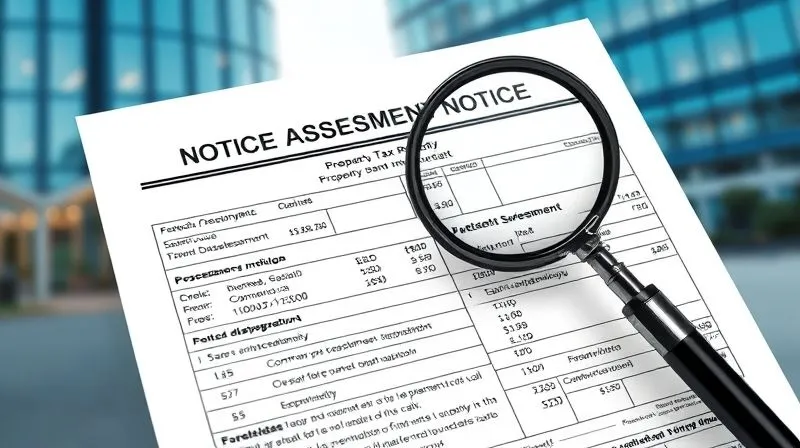
The Role of Market Value vs. Assessed Value
At the heart of any property tax dispute lies the distinction between market value and assessed value. Market value is what a willing buyer would pay a willing seller for a property in an open, competitive market. It's the 'true' value. Assessed value, on the other hand, is the value assigned to your property by the local tax assessor for the purpose of levying taxes. Ideally, the assessed value should closely reflect the market value, but this isn't always the case.
Jurisdictions vary in how closely assessed value tracks market value. Some states mandate assessment at 100% of market value, while others use a fractional assessment ratio (e.g., 30% or 50% of market value). The key is to understand your local jurisdiction's specific rules. Your goal in disputing an assessment is to demonstrate that the assessor's stated market value (or the basis for their assessed value) is higher than the actual market value of your property on the assessment date. This discrepancy forms the bedrock of your appeal.
Step 1: Gather Your Documentation – The Foundation of Your Appeal
When it comes to challenging a tax assessment, thorough documentation is your most powerful weapon. I've seen countless appeals fail not because the property owner didn't have a valid case, but because they lacked the concrete evidence to support it. Think of this as building your legal brief: every claim you make must be substantiated by verifiable facts and figures. Start assembling your file as soon as you receive the assessment notice.
- Property Records: Collect your deed, survey, blueprints, and any permits for recent construction or renovations. These establish the physical characteristics and legal boundaries of your property.
- Financial Statements: Gather income and expense statements for the past 2-3 years, especially if your property is income-generating (e.g., office buildings, retail centers). This data is critical for the income approach to valuation.
- Lease Agreements: Copies of all current leases, detailing rental rates, lease terms, and tenant improvements, are essential for demonstrating actual income potential.
- Sales Data: Research recent sales of comparable commercial properties in your area. This is the cornerstone of the sales comparison approach.
- Appraisals: If you've had a recent independent appraisal of your property, this is invaluable evidence.
- Photographic Evidence: Document any physical deficiencies, deferred maintenance, or environmental issues that negatively impact your property's value.
| Document Type | Importance for Appeal |
|---|---|
| Description | Key Use |
| Deed & Survey | Confirms property details & legal boundaries |
| Income/Expense Statements | Supports income approach valuation |
| Lease Agreements | Verifies actual rental income & terms |
| Recent Appraisals | Independent expert valuation |
| Comparable Sales Data | Establishes market value benchmarks |
| Photographic Evidence | Visual proof of adverse conditions |
Key Documents You'll Need
Beyond the primary list, consider these additional documents. Your property's specific characteristics will dictate which are most relevant:
- Rent Rolls: Detailed lists of tenants, unit sizes, lease expiration dates, and current rents.
- Operating Budgets: Future projections of income and expenses.
- Environmental Reports: If your property has known environmental issues, these reports can significantly impact value.
- Zoning Regulations: Current zoning and any potential changes that affect the highest and best use of your property.
- Cost to Cure Estimates: Professional estimates for deferred maintenance or necessary repairs.
Having a well-organized folder, whether physical or digital, with all these documents readily accessible will streamline your appeal process and bolster your credibility with assessors and review boards. It shows you've done your homework.
Step 2: Analyze the Assessment – Finding the Flaws
Identifying Common Assessment Errors
Once you have your documentation, the real detective work begins. Your goal is to pinpoint specific errors or oversights in the assessor's valuation. In my experience, these errors often fall into a few common categories:
- Factual Errors: Incorrect square footage, wrong number of units, misclassification of property type (e.g., industrial instead of office), or incorrect lot size. These are often the easiest to prove.
- Valuation Errors: The most common and often complex. This is where the assessor's market value estimate is simply too high compared to actual market conditions.
- Equity Errors: Your property is assessed at a higher percentage of market value than comparable properties in your area. This is about fairness and uniformity.
- Outdated Data: The assessment is based on market conditions or property characteristics that are no longer accurate, failing to account for a recent downturn, vacancies, or physical deterioration.
Expert Insight: "Never assume the assessor's data is flawless. A single incorrect data point can skew an entire valuation. Your meticulous review of their records against your own is where appeals are often won or lost."
Comparative Market Analysis (CMA) for Commercial Properties
A robust Comparative Market Analysis (CMA) is indispensable. This isn't just for real estate agents; it's a critical tool for your tax appeal. You need to identify recently sold commercial properties that are truly comparable to yours in terms of:
- Location: Proximity to your property, similar economic drivers.
- Size & Type: Similar square footage, land area, building class, and use.
- Condition: Similar age, condition, and level of upkeep.
- Amenities: Comparable parking, accessibility, and features.
- Time of Sale: Sales within the last 6-12 months prior to the assessment date are most relevant.
Once you've identified 3-5 strong comparables, you'll need to make adjustments for any significant differences (e.g., if a comparable has superior access, you'd adjust its sale price downwards when comparing it to yours). This process allows you to arrive at an adjusted market value range for your property, which you can then contrast with the assessor's valuation. The stronger your comps and the more logical your adjustments, the more compelling your argument will be.

Step 3: Informal Review – Your First Line of Defense
Before launching into a formal appeal, I always advise property owners to pursue an informal review. This often overlooked step can save you significant time, money, and stress. Many jurisdictions offer a window for property owners to meet directly with an assessor or a representative to discuss their concerns. This is your opportunity to present your compiled evidence in a less adversarial setting and potentially resolve the issue without further action.
Preparing for Your Meeting with the Assessor
Preparation is key. Don't go in empty-handed or unprepared. Bring all your supporting documentation, including your CMA, income/expense statements, photos, and any other evidence you've gathered. Organize it clearly and concisely. Have a clear, well-articulated argument ready, focusing on specific factual errors or discrepancies in valuation. Practice explaining your case succinctly. Remember, the assessor is a professional doing their job; approach them with respect, but also with firm data.
What to Expect and How to Negotiate
During the informal review, expect the assessor to listen to your arguments and review your documentation. They may ask clarifying questions or present their own supporting data. Be prepared to discuss the valuation methodologies (income, cost, sales comparison) and how they apply to your property. Your goal is to persuade them that their initial assessment is flawed and to propose a more accurate, lower value based on your evidence. Be open to compromise, but don't undervalue your property simply to avoid a formal appeal. A successful informal review can result in a revised assessment without the need for a more complex formal process.
Step 4: Formal Appeal – Navigating the Review Board
If the informal review doesn't yield a satisfactory outcome, the next step is typically a formal appeal to a Board of Review, Assessment Appeals Board, or similar body. This is a more structured and often quasi-judicial process, requiring adherence to strict deadlines and procedures.
Filing Your Formal Appeal: Deadlines and Procedures
This is where precision is paramount. Every jurisdiction has specific deadlines for filing a formal appeal, which are often very short (e.g., 30-60 days from the assessment notice date). Missing these deadlines means forfeiting your right to appeal for the current tax year. Research your local assessor's office or county government website for the exact forms, filing fees, and submission requirements. Pay close attention to how evidence must be submitted and if there are specific formats. Understanding your local tax authority's procedures is non-negotiable.
Presenting Your Case Effectively
At the formal hearing, you'll present your case to a panel, which may include local officials, real estate professionals, or citizens. Treat this like a mini-trial. You'll typically have an opportunity to make an opening statement, present your evidence (documentation, photos, expert testimony if applicable), and respond to questions. The assessor's office will also present their case. Focus on clarity, conciseness, and the strength of your evidence. Avoid emotional arguments; stick to the facts and figures. Highlight the specific factual errors or valuation discrepancies you've identified.
Expert Insight: "A well-structured presentation, even for a layperson, can be incredibly persuasive. Rehearse your arguments, organize your exhibits logically, and be prepared to articulate your proposed market value and why it's more accurate."
Case Study: How Apex Logistics Slashed Their Property Tax Bill
The Challenge and the Strategy
Let me share a real-world (though anonymized) example. Apex Logistics, a mid-sized warehousing and distribution company, owned a 150,000 sq ft industrial facility in a rapidly developing suburban area. Their property tax assessment jumped by 35% in a single year, far exceeding market growth. The assessor had primarily used recent sales of newly constructed, state-of-the-art facilities in the adjacent industrial park as comparables.
When Apex Logistics approached me, their initial reaction was frustration. We immediately embarked on a detailed analysis. We discovered that while the assessor's comparables were geographically close, they were vastly superior in terms of ceiling height, loading dock configurations, energy efficiency, and overall building age. Apex's facility, while functional, was 25 years old, had lower clear heights, and required significant capital expenditure for modernization.
Our strategy involved:
- Identifying True Comparables: We found older, similarly configured industrial properties that had sold within the last 18 months, even if they were slightly further afield.
- Quantifying Functional Obsolescence: We obtained quotes for upgrading Apex's facility to match the newer comparables' features (e.g., new roof, LED lighting, dock leveler upgrades). These 'cost to cure' figures directly demonstrated the functional depreciation.
- Income Approach Validation: We presented detailed income and expense statements showing the actual net operating income (NOI), which was lower than what the assessor's implied valuation would suggest based on market capitalization rates.
The Outcome and Lessons Learned
During the informal review, we presented our meticulously prepared package. The assessor initially pushed back, citing the strong market. However, when confronted with the detailed cost-to-cure estimates and the carefully selected, truly comparable sales, they acknowledged the significant functional obsolescence. They also recognized that the income approach, based on Apex's actual financials, painted a different picture.
The result? The assessor agreed to reduce the assessment by 22%, saving Apex Logistics over $75,000 annually in property taxes. This case perfectly illustrates the power of meticulous research, understanding valuation methodologies, and presenting a fact-based, compelling argument. It wasn't about arguing the market; it was about arguing how the market applied to *their specific property*.
Step 5: Expert Assistance – When to Bring in the Professionals
While I encourage property owners to be actively involved in their appeal, there are times when bringing in professionals is not just beneficial, but essential. The complexities of commercial property valuation and tax law can be daunting, and an expert's involvement can significantly increase your chances of success, especially for larger or more complex properties.
The Value of a Property Tax Consultant
Property tax consultants specialize in this niche. They possess in-depth knowledge of local tax laws, assessment methodologies, and appeal procedures. They often have access to proprietary databases of comparable sales and assessment data that aren't readily available to the public. A good consultant can:
- Conduct a comprehensive assessment review to identify potential errors.
- Prepare a robust valuation argument using various appraisal techniques.
- Represent you at informal and formal hearings, acting as your advocate.
- Negotiate directly with assessors and review boards on your behalf.
Their fees are often performance-based (a percentage of the tax savings), making their services a low-risk investment for property owners. Consulting with tax strategy experts can provide significant strategic advantages.
Legal Counsel: A Strategic Partnership
For particularly contentious appeals, high-value properties, or situations where legal interpretations are critical, engaging a real estate attorney specializing in property tax appeals is a wise decision. An attorney can:
- Provide legal advice on complex tax laws and precedents.
- Represent you in higher court if the appeal process goes beyond the administrative board.
- Ensure all procedural requirements are strictly met, avoiding technical dismissals.
- Navigate intricate legal arguments that may arise during the appeal.
While more costly, the expertise of legal counsel can be invaluable in safeguarding your interests and maximizing your chances of a favorable outcome. Expert legal insights on commercial property tax appeals are readily available through specialized firms.
Step 6: Understanding Valuation Methodologies in Commercial Real Estate
To effectively challenge an assessment, you need to speak the language of valuation. Assessors primarily use three approaches to determine a property's value, and understanding them is crucial for dissecting their assessment and building your own counter-argument.
Income Approach: A Deep Dive
The Income Approach is often the most relevant for income-producing commercial properties. It estimates value based on the property's ability to generate income. The core principle is that a property's value is the present worth of its future income stream. It typically involves:
- Estimating Potential Gross Income (PGI): The total income the property could generate if fully occupied at market rents.
- Subtracting Vacancy & Collection Losses (VCL): Accounting for unoccupied units and uncollected rent.
- Calculating Effective Gross Income (EGI): PGI minus VCL.
- Subtracting Operating Expenses (OE): Costs like property management, utilities, maintenance, insurance, and property taxes (excluding debt service).
- Arriving at Net Operating Income (NOI): EGI minus OE. This is the property's income before debt service and income taxes.
- Applying a Capitalization Rate (Cap Rate): NOI divided by the market-derived Cap Rate (Cap Rate = NOI / Value) gives you the property's estimated value.
Errors here can stem from using incorrect market rents, unrealistic vacancy rates, or miscalculated operating expenses. Your financial statements are key to countering these assumptions. As marketing guru Seth Godin often says, "The market always wins." If your actual income doesn't support their valuation, you have a strong case.

Cost Approach and Sales Comparison Approach
The Cost Approach estimates value by calculating the cost to replace the building new, then subtracting depreciation (physical deterioration, functional obsolescence, external obsolescence), and finally adding the land value. This is often used for newer or special-purpose properties where comparable sales or income data is scarce. Errors can occur in estimating replacement costs or, more commonly, underestimating depreciation.
The Sales Comparison Approach, which we discussed earlier for the CMA, is based on the principle of substitution: a prudent buyer will pay no more for a property than the cost of acquiring an equally desirable substitute. This involves comparing your property to similar properties that have recently sold and making adjustments for differences. This is generally the most reliable approach when sufficient comparable sales data exists. Assessors might use poor comparables, or fail to make appropriate adjustments for differences in size, age, condition, or location.
Step 7: Post-Appeal Actions and Long-Term Strategies
Even after a successful appeal, your work isn't entirely done. It's crucial to understand the outcome and implement strategies to prevent future over-assessments. Property taxes are an ongoing expense, and a proactive approach can save you significant money over the long term.
Understanding the Decision and Next Steps
Once the review board or assessor renders a decision, carefully review it. Understand the new assessed value and how it was determined. If you are satisfied, ensure the change is officially recorded and reflected in your next tax bill. If you are not satisfied with the formal appeal outcome, you typically have further avenues, such as appealing to a state-level board or even a court of law. This is where legal counsel becomes particularly important. Understand the deadlines for these further appeals, as they are usually very strict.
Proactive Measures to Prevent Future Over-Assessments
Prevention is always better than cure. Here are some proactive steps I recommend to all my clients:
- Regular Property Reviews: Annually review your property's characteristics as recorded by the assessor. Report any changes, positive or negative, that might impact value.
- Maintain Detailed Records: Continuously update your income/expense statements, lease agreements, and capital expenditure records. This makes future appeals much easier.
- Monitor Market Conditions: Stay informed about commercial real estate trends in your specific market. Be aware of new comparable sales.
- Engage a Consultant Proactively: Consider having a property tax consultant review your assessment annually, even if you don't appeal every year. Their ongoing monitoring can catch issues early.
- Understand Assessment Cycles: Know when your property is typically reassessed. This allows you to prepare well in advance.
By staying vigilant and prepared, you can significantly reduce the likelihood of facing another excessive assessment down the line. Adhering to industry valuation standards and staying informed is a continuous process.
Frequently Asked Questions (FAQ)
Q: What is the typical timeframe for a commercial property tax appeal process? The timeframe varies significantly by jurisdiction, but generally, the entire process from receiving the assessment to a final decision from an appeal board can take anywhere from 3 to 12 months, sometimes longer if it proceeds to higher courts. Informal reviews are quicker, often resolved within weeks. Formal appeals involve strict deadlines for filing and hearings, so prompt action is essential.
Q: Can appealing my property taxes lead to an increase in my assessment? While rare, it is theoretically possible. Assessors are obligated to assess property at its fair market value. If your appeal uncovers significant undervaluation of your property, the assessor could potentially increase your assessment. However, in my experience, if you've done your homework and are appealing based on an over-assessment, this risk is minimal. Stick to factual discrepancies and strong comparables to mitigate this.
Q: What kind of evidence is most compelling in a commercial property tax appeal? The most compelling evidence typically includes a recent, independent appraisal of your property, detailed income and expense statements (for income-producing properties), and a well-researched comparative market analysis (CMA) with truly comparable sales. Photographic evidence of deterioration or unique adverse conditions also carries significant weight.
Q: Is there a minimum threshold for an over-assessment before it's worth appealing? This depends on the value of your property and your tolerance for the appeal process. For smaller commercial properties, a minor over-assessment might not justify the time and potential cost of an appeal. However, for larger properties, even a small percentage reduction can translate into substantial annual savings. Many property tax consultants will advise on the viability of an appeal based on potential savings vs. costs.
Q: How often can I dispute my commercial property tax assessment? You can generally dispute your property tax assessment every year, or whenever a new assessment notice is issued. Most jurisdictions have an annual appeal period. Even if you've successfully appealed in the past, market conditions change, and a new assessment might warrant another review and potential appeal.
Key Takeaways and Final Thoughts
Navigating the complexities of commercial property tax assessments can feel like a daunting task, but with the right knowledge and a structured approach, you can effectively challenge an excessive valuation and secure significant financial relief. Remember, property taxes are often one of the largest operating expenses for a commercial property, making diligent management of this area crucial for your bottom line.
- Be Proactive: Don't wait until the last minute. Start gathering documentation and analyzing your assessment as soon as you receive the notice.
- Documentation is King: Your appeal lives and dies by the quality and comprehensiveness of your evidence.
- Understand Valuation: Grasping the income, sales comparison, and cost approaches will empower your arguments.
- Leverage Experts: Don't hesitate to engage property tax consultants or legal counsel for complex cases.
- Follow Procedures: Adhere strictly to all deadlines and filing requirements in your jurisdiction.
I've seen firsthand how a well-executed appeal can transform a property's profitability. By following these expert-backed steps on how to dispute an excessive commercial property tax assessment, you're not just fighting a tax bill; you're safeguarding your investment, optimizing your financial performance, and ensuring your commercial property is valued fairly. Take control, empower yourself with knowledge, and pursue the savings you deserve.
Recommended Reading
- 7 Ethical Debt Collection Strategies: Avoid Consumer Rights Violations
- 7 Proactive Steps to Avoid IRS Audit Triggers for Small Business Taxes
- Unlock Financial Freedom: How to Build a Monthly Budget for Variable Income
- Unlock Financial Freedom: Your Ultimate Guide to a Sustainable Student Budget
- W2 Box 1 vs. Payroll: 7 Expert Steps to Reconcile Year-End Discrepancies





Comments
Leave a comment below. Your email will not be published. Required fields marked with *