


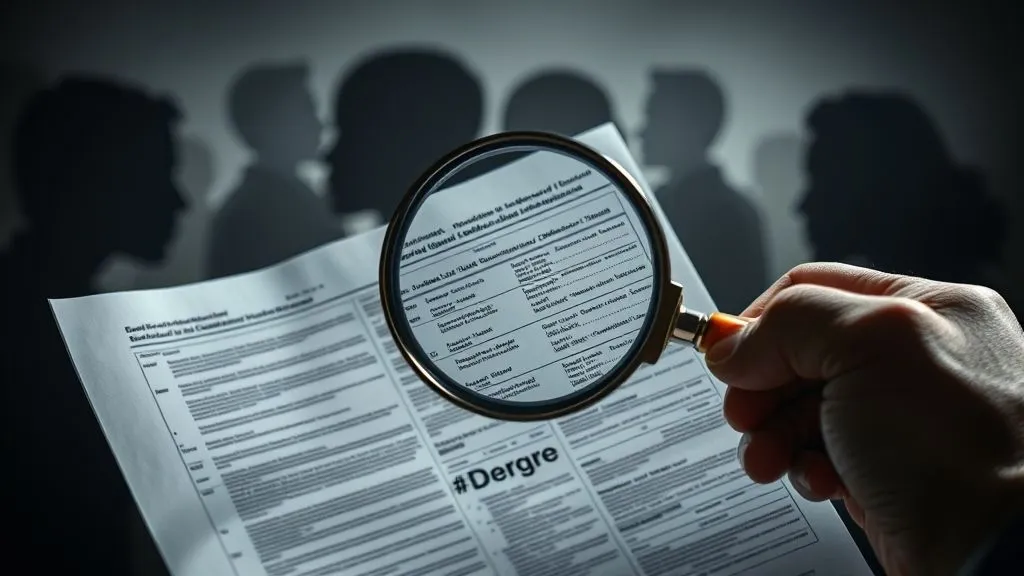
How to Detect Human Rights Washing in Investment Portfolios?
For over 15 years in the ethical investing space, I've witnessed a concerning trend: companies increasingly cloaking questionable human rights practices behind a veneer of virtue. It's a sophisticated form of deception, often subtle, yet profoundly damaging to both people and genuine ethical investment principles. My journey has been one of constant vigilance, learning to peer beyond the polished annual reports and glossy sustainability brochures.
The investor's dilemma is real: you want your capital to do good, to align with your values, but the information asymmetry makes it incredibly challenging. Many well-intentioned investors find themselves inadvertently supporting companies that, despite their public pronouncements, contribute to labor exploitation, environmental injustice, or other human rights abuses within their vast supply chains or operations. This isn't just about financial risk; it's about the erosion of trust and the undermining of truly responsible capitalism.
This article isn't about fear-mongering; it's about empowerment. I'm going to equip you with the frameworks, actionable steps, and expert insights I've developed over years of navigating this complex landscape. By the end, you'll have a robust methodology for how to detect human rights washing in investment portfolios, ensuring your money truly reflects the change you wish to see in the world.
Understanding the Nuances: What is Human Rights Washing?
Before we can detect it, we must first understand what human rights washing truly entails. At its core, human rights washing is the practice of a company presenting itself as a champion of human rights, often through public relations campaigns, sustainability reports, or philanthropic gestures, while simultaneously engaging in or profiting from activities that violate human rights. It's a strategic misalignment between stated values and actual corporate conduct.
While often conflated with "greenwashing" (environmental deception) or "social washing" (broader social issues), human rights washing specifically targets the "S" in ESG (Environmental, Social, Governance) relating to fundamental human dignity and rights. It's more insidious because it leverages universal moral principles, making the deception particularly egregious. Think of it as a company wearing a humanitarian mask to obscure its true, less ethical face.
The motivation is clear: to enhance brand reputation, attract ethical investors, comply superficially with emerging regulations, and ultimately, to gain a competitive advantage without incurring the costs or making the fundamental operational changes required for genuine human rights respect. As investors, our role is to see through this facade, not just for financial integrity, but for the moral imperative it represents.
The Red Flags: Initial Indicators of Potential Washing
Spotting human rights washing isn't always about uncovering blatant fraud; often, it begins with recognizing subtle inconsistencies and warning signs. Over my career, I've developed a keen eye for these "red flags" that suggest a company's human rights commitments might be more performative than substantive.
- Vague Commitments & Lack of Measurable Goals: A company might declare a "commitment to human rights" but offer no specific targets, timelines, or metrics for achieving those goals. Genuine commitment involves clear, quantifiable objectives.
- Heavy Reliance on PR & Marketing Over Substance: If a company's human rights messaging is primarily found in flashy ad campaigns or glossy brochures, rather than in detailed operational reports or third-party audits, be wary. Substance should always outweigh style.
- Absence of Independent Audits or Verification: Self-reported data, without external validation from credible, independent bodies, offers limited assurance. True transparency often involves external scrutiny.
- Opaque Supply Chains: Many human rights abuses occur deep within complex supply chains. Companies that cannot or will not provide transparency regarding their suppliers, particularly in high-risk sectors (e.g., garments, electronics, mining), are major red flags.
- Discrepancies Between Public Statements & Internal Reports: Sometimes, a company’s public-facing statements contradict what’s found in their internal risk assessments, employee surveys, or even whistleblower accounts. These inconsistencies are critical to identify.
- Lack of Grievance Mechanisms: Does the company have accessible and effective channels for affected individuals (e.g., workers, communities) to report human rights concerns without fear of retaliation? The absence of such mechanisms is a significant warning sign.
"Always remember: a company's true values are revealed not by what they say on their website, but by what they do when no one is watching, especially in their most vulnerable operational areas."
These initial indicators are not definitive proof of human rights washing, but they should trigger deeper investigation. They are the first cracks in the facade, signaling that further due diligence is absolutely necessary to truly understand how to detect human rights washing in investment portfolios.

Beyond the Surface: Deep Dive into Due Diligence Frameworks
Once initial red flags appear, or simply as a standard practice for ethical investing, a systematic due diligence framework becomes indispensable. You can't rely on gut feelings; you need a structured approach to scrutinize a company's human rights performance comprehensively. I've found that integrating elements of the UN Guiding Principles on Business and Human Rights (UNGPs) into an investment screening process offers the most robust path forward.
My preferred approach involves what I call the "Three-Pillar Scrutiny Model," designed to uncover whether a company's human rights commitments are truly embedded in its operations or merely superficial.
The Three-Pillar Scrutiny Model
-
Pillar 1: Policy & Governance Review
This pillar examines the foundational elements of a company's human rights commitment. It's about understanding if human rights are integrated into the core decision-making structure.
- Board Oversight: Does the board of directors have a committee or designated member responsible for human rights? Are human rights risks regularly reported to and discussed at the highest levels?
- Internal Policies & Codes of Conduct: Review the company's human rights policy. Is it comprehensive, publicly available, and explicitly endorsed by senior leadership? Does it cover all relevant international standards (e.g., ILO conventions, UNGPs)?
- Risk Management Integration: Are human rights risks integrated into the company's enterprise-wide risk management framework? How are these risks identified, assessed, and mitigated across all business units and geographies?
- Training & Capacity Building: Does the company provide regular, mandatory human rights training for employees, especially those in high-risk roles (e.g., procurement, security, HR)?
-
Pillar 2: Operations & Supply Chain Assessment
This is where the rubber meets the road. It's not enough to have policies; the policies must be implemented effectively throughout global operations and complex supply chains.
- Due Diligence Processes: How does the company conduct human rights due diligence for new projects, acquisitions, or supplier onboarding? Are these processes robust and ongoing?
- Supply Chain Mapping & Transparency: Can the company map its supply chain beyond Tier 1 suppliers? What mechanisms are in place to assess human rights risks in lower tiers? Look for evidence of supplier audits, risk assessments, and corrective action plans.
- Worker Conditions & Rights: Investigate labor practices, including fair wages, working hours, health and safety, freedom of association, and non-discrimination. Look for data on labor disputes, grievances, and union engagement.
- Community Engagement & Impact: For companies with a physical footprint (e.g., mining, manufacturing), how do they engage with local communities? Are Free, Prior, and Informed Consent (FPIC) principles respected for Indigenous communities? What are the environmental and social impact assessments like?
-
Pillar 3: Remediation & Grievance Mechanisms
Even the best companies can face human rights challenges. The true test of commitment is how they respond when harm occurs.
- Accessible Grievance Mechanisms: Does the company provide effective, legitimate, accessible, predictable, equitable, transparent, rights-compatible, and continuously improving grievance mechanisms for affected stakeholders?
- Remedy & Compensation: When harm is identified, what steps does the company take to provide effective remedy, including compensation, restitution, rehabilitation, and guarantees of non-repetition?
- Lessons Learned & Systemic Change: Does the company analyze grievances to identify systemic issues and implement changes to prevent future harm?
By systematically evaluating a company against these three pillars, you can move beyond superficial claims and gain a much clearer picture of their genuine commitment to human rights. This structured approach is fundamental for how to detect human rights washing in investment portfolios effectively.
| Company | Policy & Governance Score | Operations & Supply Chain Score | Remediation & Grievance Score | Overall Risk |
|---|---|---|---|---|
| EthiCorp | A+ | A | A+ | Low |
| GreenWash Inc. | B | C- | D | High |
| Sustainable Solutions | A- | B+ | B+ | Medium |
| ValueVest Co. | C | D+ | C- | Very High |
Leveraging Data and Analytics for Transparency
In today's digital age, relying solely on self-reported corporate data is like trying to navigate a dense fog with only a flashlight. To truly understand how to detect human rights washing in investment portfolios, we must leverage a broader spectrum of data and analytical tools. This means looking beyond annual reports and ESG disclosures to alternative data sources that can provide an unvarnished view of a company's practices.
Alternative Data Sources:
- NGO Reports & Investigative Journalism: Organizations like Amnesty International, Human Rights Watch, and the Business & Human Rights Resource Centre often publish detailed, well-researched reports on corporate human rights impacts. These are invaluable for identifying specific issues.
- News Archives & Social Media Sentiment: Advanced analytics can scour vast news databases and social media platforms for mentions of labor disputes, community protests, environmental harms linked to operations, or whistleblower allegations. Negative sentiment spikes or recurring issues can indicate underlying problems.
- Satellite Imagery & Geospatial Data: For certain industries (e.g., mining, agriculture, manufacturing), satellite imagery can reveal environmental degradation, patterns of deforestation, or even construction of facilities in disputed territories, which often correlate with human rights abuses.
- Worker Surveys & Whistleblower Platforms: While harder to access directly, aggregated data from platforms that allow workers to anonymously report conditions can offer a ground-level view that official reports often miss.
- Legal Filings & Regulatory Breaches: Scrutinize court documents, regulatory fines, and legal actions related to labor laws, environmental protection, or human rights violations. These are concrete indicators of past or ongoing issues.
Furthermore, don't just accept ESG ratings at face value. While useful, many ESG rating agencies rely heavily on self-reported data and may not conduct deep human rights due diligence. Always cross-reference their findings with your own research using the alternative data sources mentioned above. The goal is to triangulate information from multiple, independent sources to build a more accurate picture.
Case Study: Uncovering Hidden Labor Practices at 'GloboTech'
Consider the fictional case of 'GloboTech,' a publicly traded electronics manufacturer. Their sustainability report boasted robust worker protections and fair labor practices, earning them high marks from several ESG rating agencies. However, an astute ethical investor, using a combination of alternative data, began to see cracks.
First, an obscure report from a local NGO in Southeast Asia detailed recurring complaints about excessive overtime and suppressed unionization efforts at a key GloboTech supplier factory. This report was almost invisible in mainstream media. Next, using social media analytics, the investor noticed a consistent pattern of negative sentiment among anonymous accounts claiming to be former employees of the same supplier, discussing 'inhumane quotas' and 'punitive measures.' Finally, a deep dive into legal filings revealed a minor but recurring series of labor dispute settlements in the region involving 'unnamed third-party contractors' – a common tactic to obscure direct responsibility.
By connecting these disparate data points, the investor built a compelling case that GloboTech's "fair labor" claims were a form of human rights washing, masking exploitative practices deep within its supply chain. This allowed them to engage with GloboTech's management with concrete evidence, pushing for genuine reform rather than accepting superficial assurances.
Engaging with Companies: Shareholder Activism and Dialogue
Detecting human rights washing is only the first step; the next is to act. As an ethical investor, you wield significant power, not just through divestment, but through proactive engagement and shareholder activism. I've found that a well-executed engagement strategy can be far more impactful than simply selling shares, as it drives real, systemic change within companies.
Your toolkit for engagement includes:
- Direct Dialogue with Management: Start by reaching out. Present your findings, articulate your concerns, and propose concrete solutions. Many companies, when faced with well-researched evidence from investors, are open to dialogue, especially if they genuinely wish to avoid reputational damage and attract responsible capital.
- Shareholder Resolutions: If direct dialogue proves insufficient, consider filing or co-filing shareholder resolutions. These proposals, put to a vote at annual general meetings, can compel companies to disclose more, adopt new policies, or conduct independent audits related to human rights. Even if a resolution doesn't pass, it raises awareness and puts pressure on the board.
- Proxy Voting: Utilize your proxy voting rights to support board members who demonstrate a strong commitment to ESG and human rights, and to vote against those who don't. Scrutinize proxy statements for how human rights are integrated into executive compensation and board responsibilities.
- Collaborative Initiatives: Join investor coalitions focused on human rights. Organizations like the Interfaith Center on Corporate Responsibility (ICCR) or Principles for Responsible Investment (PRI) often coordinate collective investor action, amplifying your voice and influence significantly.
- Media & Public Pressure: In some cases, bringing your concerns to the attention of financial media or broader public can create additional pressure on a company to address human rights washing. This should be a last resort, but it can be effective.
The key is sustained, informed engagement. Divestment can be a powerful signal, but it removes your ability to influence. Engagement, particularly when backed by compelling evidence of human rights washing, keeps you at the table, pushing for tangible improvements. It's a long game, but one that yields profound ethical dividends.
The Role of Third-Party Verifiers and Certifications
In the quest to detect human rights washing, third-party verifiers and certifications often appear as beacons of trustworthiness. And indeed, they can be. Independent verification adds a layer of credibility that self-reported data simply cannot match. However, it's crucial to approach these with a discerning eye, as not all certifications are created equal, and some can even become tools for washing themselves.
Advantages of Reputable Third-Party Verification:
- Independent Assessment: A truly independent body provides an unbiased evaluation of a company's claims and practices.
- Specialized Expertise: These organizations often possess deep knowledge of specific human rights issues, industry contexts, and auditing methodologies.
- Standardization & Benchmarking: Certifications can provide a consistent standard against which companies can be measured, allowing for easier comparison.
- Enhanced Transparency: Many reputable verifiers require public disclosure of audit findings or corrective action plans.
Cautions and "Audit Washing":
The term "audit washing" describes situations where companies use audits merely to create an impression of compliance, rather than genuinely improving practices. This can happen when:
- Audits are Superficial or "Tick-Box": Some audits focus on documentation rather than actual on-the-ground practices, missing systemic issues.
- Lack of Independence: The auditor might have conflicts of interest or be overly reliant on the company for business, compromising their objectivity.
- Narrow Scope: An audit might only cover a small part of a company's operations or supply chain, ignoring high-risk areas.
- No Follow-up or Remediation: Audits identify problems, but if there's no commitment to corrective action or transparent follow-up, their value is minimal.
How to Evaluate Verifiers and Certifications:
When assessing a company's reliance on third-party verification, ask these critical questions:
- Accreditation & Governance: Is the certifying body itself accredited by a recognized authority? Is its governance structure independent and transparent?
- Methodology & Standards: What standards do they use? Are they aligned with international best practices (e.g., UNGPs, ILO)? Is their methodology robust, involving on-site visits, worker interviews, and stakeholder consultations?
- Transparency of Findings: Do they publish detailed audit reports, including non-compliance issues and corrective actions? A company only publicizing its "passed" certifications without context is a red flag.
- Stakeholder Engagement: Do they engage with affected communities, workers, and NGOs in their assessment process?
- Remediation Focus: Does the certification scheme have a strong emphasis on continuous improvement and effective remediation processes, rather than just a pass/fail grade?
Examples of generally well-regarded certifications in specific niches include Fair Trade (for certain agricultural products), the Responsible Business Alliance (RBA) for electronics, and in some contexts, B Corp certification for overall social and environmental performance, though even these require scrutiny for large, complex corporations. For how to detect human rights washing in investment portfolios, these tools are valuable, but they are not a substitute for your own critical assessment.
Building a Resilient, Human Rights-Aligned Portfolio
Ultimately, the goal isn't just to avoid bad actors; it's to intentionally build a portfolio that actively supports human rights and sustainable practices. This requires a proactive, integrated approach that goes beyond mere screening and becomes a core part of your investment thesis. I've found that a resilient, human rights-aligned portfolio is not only ethically sound but often financially robust in the long term, as it avoids the risks associated with poor governance and reputational damage.
Here are key strategies for how to build such a portfolio:
- Integrate Human Rights into Your Investment Thesis: Don't treat human rights as a separate "ethical overlay." Instead, view strong human rights performance as an indicator of robust governance, effective risk management, and long-term value creation.
- Focus on "Best-in-Class" Performers: Actively seek out companies that are genuine leaders in human rights, not just those that avoid the worst abuses. Look for firms with transparent supply chains, strong worker protections, and proactive community engagement.
- Diversify Across Sectors & Geographies: While some sectors (e.g., extractives, manufacturing) inherently carry higher human rights risks, diversification helps mitigate concentration risk. Apply your due diligence framework consistently across all investments.
- Allocate to Impact Investments: Consider direct investments in companies or funds specifically designed to generate positive, measurable social and environmental impact alongside a financial return. These often have human rights at their core.
- Continuous Monitoring & Reassessment: The human rights landscape is dynamic. What was acceptable yesterday may not be tomorrow. Regularly review your portfolio companies against evolving standards and new information.
- Advocate for Systemic Change: Beyond your individual portfolio, support policy changes that promote corporate accountability for human rights. Your voice as an investor can contribute to a more just economic system.
Building such a portfolio is a journey, not a destination. It requires diligence, patience, and a steadfast commitment to your values. But the rewards—both ethical and, often, financial—are profoundly worthwhile.
Frequently Asked Questions (FAQ)
Question: Is human rights washing just greenwashing for people? While similar in deceptive intent, human rights washing specifically focuses on misrepresenting a company's commitment to fundamental human dignity and rights, such as labor rights, community rights, and freedom from exploitation. Greenwashing focuses on environmental claims. They often overlap, as environmental harms can directly impact human rights, but the emphasis in human rights washing is distinctly on the 'social' aspect of ESG, often involving direct human impact and vulnerability.
Question: How do small investors conduct due diligence without extensive resources? Small investors can leverage accessible resources. Start by focusing on reputable ESG funds or ETFs that explicitly state their human rights screening methodology. Utilize free online resources from NGOs like the Business & Human Rights Resource Centre, which tracks company performance. Read news from multiple sources, not just corporate press releases. Engage with investor advocacy groups. While you may not have the budget for proprietary data, collective action and diligent research can still be highly effective.
Question: What if a company improves its human rights practices after being caught washing? Should I reinvest? This is a nuanced situation. Genuine improvement, demonstrated through transparent corrective actions, independent verification, and sustained commitment, should be acknowledged. Look for evidence of systemic changes, not just one-off fixes. If the company actively engages with stakeholders, implements robust grievance mechanisms, and shows a clear shift in culture, it could become a strong ethical investment. However, always proceed with caution and continuous monitoring, as trust, once broken, takes significant effort to rebuild.
Question: Are there specific industries more prone to human rights washing? Yes, industries with complex, global supply chains and those operating in regions with weak governance or high levels of poverty are often more susceptible. This includes sectors like fast fashion, electronics manufacturing, extractive industries (mining, oil & gas), agriculture, and construction. These industries face inherent human rights risks, making their claims of ethical conduct particularly important to scrutinize for signs of washing.
Question: How do I balance financial returns with ethical considerations when detecting human rights washing? This is a common concern. My experience suggests that genuine human rights performance is increasingly linked to long-term financial resilience. Companies with strong human rights records often have better risk management, stronger community relations, and a more engaged workforce, which can translate into more stable returns and lower reputational risk. While short-term market fluctuations occur, a long-term view often shows that ethical considerations are not merely a cost but an investment in sustainable value. Avoiding human rights washing can protect your portfolio from unforeseen liabilities and reputational crises.
Key Takeaways and Final Thoughts
Navigating the complex world of ethical investing, especially when confronted with human rights washing, requires more than just good intentions; it demands an expert's eye, rigorous methodology, and unwavering commitment. As I've outlined, the journey to truly align your investments with your values is a continuous process of learning, scrutinizing, and engaging.
- Be a Skeptical Scrutinizer: Don't take corporate claims at face value. Look for inconsistencies and red flags.
- Apply a Robust Framework: Utilize systematic due diligence, like the Three-Pillar Scrutiny Model, to assess policy, operations, and remediation.
- Leverage Diverse Data: Go beyond self-reported data. Incorporate NGO reports, news analytics, and other alternative sources.
- Engage Actively: Use your power as an investor through dialogue, shareholder resolutions, and proxy voting to drive change.
- Evaluate Third-Party Verifiers Critically: Understand the limitations of certifications and assess their independence and methodology.
- Build Proactively: Construct a portfolio that prioritizes genuine human rights leaders, integrating these values into your core investment strategy.
Remember, your capital is a powerful tool. By diligently learning how to detect human rights washing in investment portfolios, you're not just protecting your financial interests; you're actively contributing to a more just and equitable global economy. It's a challenging but deeply rewarding endeavor, and one that I believe is essential for the future of responsible finance. Stay vigilant, stay informed, and let your investments speak volumes about the world you want to create.
Recommended Reading
- 5 Steps to Adjust Property Valuations for Rapid Rate Hikes
- Safeguarding Mobile Banking: 7 AML Risk Management Strategies
- 7 Ways Inflation Reshapes CRE Valuation: Strategies for 2024
- Keep Your Money Safe: How to Protect Your Bank Account Online
- 7 Proven Strategies: How to Detect Greenwashing in CSR Reports





Comments
Leave a comment below. Your email will not be published. Required fields marked with *