



How to Appeal IRS Penalties for a Misclassified Independent Contractor?
For over two decades in the intricate world of tax law and business finance, I've witnessed the devastating impact of worker misclassification on countless businesses. It’s a mistake that can happen to anyone, often unintentionally, but the IRS views it with serious scrutiny, leading to substantial penalties that can cripple even a thriving enterprise.
The fear of an IRS audit, especially one uncovering misclassified independent contractors, is palpable. Many business owners I've advised feel trapped, unsure how to respond to the daunting stack of penalty notices and the seemingly insurmountable challenge of rectifying the situation.
But here's the crucial insight: an IRS penalty notice isn't the final word. There’s a structured, albeit challenging, path to appeal these penalties. In this comprehensive guide, I'll walk you through the expert strategies, legal avenues, and practical steps you need to understand and successfully appeal IRS penalties for misclassified independent contractors, giving you a fighting chance to protect your business.
Understanding the IRS Stance on Worker Classification
Before diving into appeals, it's vital to grasp why the IRS cares so much about worker classification. It boils down to employment taxes. When you classify a worker as an independent contractor, you don't withhold income tax, Social Security, or Medicare taxes (FICA) from their pay, nor do you pay federal unemployment tax (FUTA). If that worker should have been an employee, the IRS loses out on significant tax revenue.
The 3 Key Factors: Behavioral, Financial, and Type of Relationship
The IRS uses a 'common law' test, examining three main categories to determine if a worker is an employee or an independent contractor. I've seen businesses trip up by focusing on just one factor, when it's the totality of the circumstances that matters.
- Behavioral Control: Does the company control or have the right to control what the worker does and how the worker does their job? This includes instructions, training, and evaluation systems.
- Financial Control: Does the company control the business aspects of the worker’s job? This includes how the worker is paid, whether expenses are reimbursed, and who provides tools and supplies.
- Type of Relationship: Are there written contracts or employee-type benefits (e.g., pension plan, insurance, vacation pay)? Is the relationship expected to continue, and is the work a key aspect of the business?
Expert Insight: "The line between an independent contractor and an employee is often blurry, and the IRS often interprets it in their favor. Proactive self-assessment using these three factors is your first defense against future audits."
A single misstep in applying these factors can lead to an IRS reclassification, triggering back taxes and penalties. It's a complex area, and understanding these nuances is the bedrock of any successful appeal.
The High Stakes of Misclassification Penalties
When the IRS determines a worker was misclassified, the penalties can be substantial. They typically involve a combination of unpaid employment taxes and various penalties for failing to file, pay, and deposit taxes.
Here’s what you’re generally looking at:
- Unpaid FICA Taxes: You'll owe the employer's share of Social Security and Medicare taxes, plus the employee's share that you failed to withhold.
- Unpaid FUTA Taxes: Federal Unemployment Tax Act (FUTA) taxes will be assessed.
- Income Tax Withholding: If you failed to withhold income tax, you might be liable for that as well, though sometimes this can be mitigated if the worker paid their own taxes.
- Failure to File Information Returns (Form 1099): Penalties for not filing Form 1099-NEC for contractors.
- Failure to File Tax Returns (Form 941, 940): Penalties for not filing the required employment tax forms.
- Failure to Pay Taxes: Penalties for underpayment or non-payment of taxes.
- Failure to Deposit Taxes: Penalties for not making timely payroll tax deposits.
- Accuracy-Related Penalties: These can be up to 20% of the underpayment if the IRS determines there was negligence or substantial understatement of tax.
According to the IRS, these penalties can accumulate quickly, making the initial tax liability significantly higher. For more detailed information on worker classification, I always recommend consulting official IRS guidance directly. You can find comprehensive information on independent contractor vs. employee status here on the IRS website.
| Penalty Type | IRC Section | Description |
|---|---|---|
| Failure to File | 6651(a)(1) | 5% of the unpaid tax for each month or part of a month that a return is late, capped at 25%. |
| Failure to Pay | 6651(a)(2) | 0.5% of the unpaid tax for each month or part of a month that tax remains unpaid, capped at 25%. |
| Failure to Deposit | 6656 | Ranges from 2% to 15% depending on how late the deposit is. |
| Accuracy-Related | 6662 | 20% of the underpayment due to negligence or substantial understatement of tax. |
Section 530 Relief: Your First Line of Defense
One of the most powerful tools available to businesses facing worker misclassification penalties is Section 530 of the Revenue Act of 1978. I've seen this provision save businesses from financial ruin, but it's often misunderstood or overlooked. It offers a 'safe harbor' that can protect you from employment tax liabilities if you meet specific criteria.
Essentially, if you can demonstrate that you had a 'reasonable basis' for treating workers as independent contractors, you may be relieved of the obligation to pay employment taxes for those workers, even if they were technically misclassified. This relief applies to income tax withholding, FICA, and FUTA taxes.
The Three Requirements for Section 530 Relief
To qualify for Section 530 relief, you must satisfy all three of the following conditions:
- Reasonable Basis: You must have a reasonable basis for not treating the individual as an employee. This is the cornerstone of the relief and can be established in several ways:
- Prior Audit: You were previously audited by the IRS, and the audit did not result in an assessment attributable to the treatment of individuals holding substantially similar positions as independent contractors.
- Judicial Precedent or Published Rulings: You relied on a court case or IRS ruling that supported your classification.
- Long-standing Recognized Practice: You relied on a long-standing practice in your industry of treating substantially similar workers as independent contractors.
- Advice of a Professional: You relied on the advice of an attorney or CPA who was knowledgeable in tax law.
- Substantive Consistency: You (and any predecessor) must have consistently treated all individuals holding substantially similar positions as independent contractors. You can't treat some as employees and others as contractors for the same type of work.
- Reporting Consistency: You must have consistently filed all required federal tax returns (e.g., Form 1099-NEC) for the workers, treating them as independent contractors. This means you can't claim Section 530 relief if you failed to issue 1099s.
Expert Insight: "Section 530 is a critical defense, but it requires meticulous documentation and a clear demonstration of consistent, good-faith efforts. Don't assume you don't qualify; explore every angle with a tax professional."
The burden of proof for Section 530 relief initially rests with the taxpayer. However, if you provide evidence that establishes a prima facie case (meaning, on the face of it, you meet the conditions), the burden shifts to the IRS. This shift can be a significant advantage in an appeal.
Navigating the IRS Appeals Process: A Step-by-Step Guide
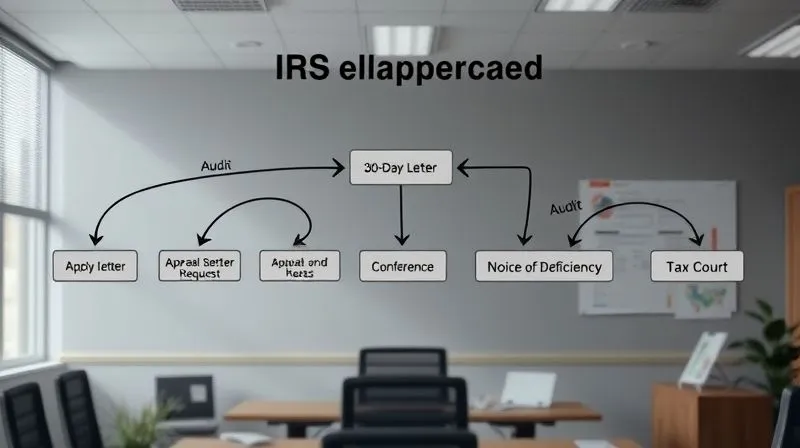
If you're facing an IRS determination that your workers were misclassified, and you haven't been able to resolve it with the examining agent, the next crucial step is the IRS Office of Appeals. This is where you have the opportunity to present your case to an independent arbiter within the IRS, often leading to a more favorable outcome than with the original auditor. Here’s how I advise clients to navigate this process:
-
Step 1: Respond to the Initial Audit Findings (30-Day Letter)
After an audit, if the IRS proposes changes you disagree with, they will send you a '30-day letter.' This letter explains your appeal rights and gives you 30 days to respond. Your options are to agree with the findings, disagree and request an appeal, or do nothing (which leads to a Notice of Deficiency).
My advice is almost always to appeal if you have a reasonable basis for disagreement. This is your formal opportunity to challenge the IRS's conclusions.
-
Step 2: Request an Appeals Conference (Form 12203)
To initiate the appeals process, you'll typically file Form 12203, Request for Appeals Review. This form is straightforward, but it's the accompanying 'protest letter' that truly matters. You'll send this to the address provided in your 30-day letter.
-
Step 3: Prepare Your Appeals Protest Letter
This is a critical document. It's not just a letter stating disagreement; it's a detailed argument outlining why the IRS's findings are incorrect and why your classification was appropriate, or why you qualify for penalty relief. Based on my experience, a strong protest letter includes:
- Your name, address, taxpayer identification number.
- A statement that you want to appeal the findings.
- The tax periods involved.
- A list of the unagreed issues and the adjustments you disagree with.
- Your explanation of the facts supporting your position.
- The law or authority, such as Section 530, on which you rely.
- A statement signed under penalty of perjury, confirming the facts are true.
This is where you clearly articulate your Section 530 arguments and any 'reasonable cause' defenses for penalty abatement.
-
Step 4: Present Your Case to an Appeals Officer
An Appeals Officer is different from the original auditor. They are independent and have the authority to settle cases based on the 'hazards of litigation' – meaning, they will consider the likelihood of the IRS winning if the case went to court. This provides a window for negotiation.
Be prepared to discuss your protest letter, provide additional documentation if requested, and articulate your position clearly. This is often where a skilled tax professional can make a significant difference.
-
Step 5: Consider Tax Court if Appeals Fails
If you don't reach an agreement with the Appeals Office, the IRS will issue a Notice of Deficiency. At this point, you have 90 days to petition the U.S. Tax Court. This is a formal legal proceeding and generally requires representation by a tax attorney. It's a more costly and time-consuming route, but sometimes necessary to achieve a just outcome.
Crafting a Compelling Argument: Reasonable Cause and Other Defenses
Beyond Section 530 relief, demonstrating 'reasonable cause' is your primary avenue for abating penalties. The IRS generally won't impose penalties if you can show that you acted with ordinary business care and prudence, and despite that, you were unable to comply with tax laws.
Demonstrating Reasonable Cause
When I help clients argue for reasonable cause, we focus on several key areas:
- Reliance on Professional Advice: If you relied on the advice of a competent tax professional (CPA, attorney, enrolled agent) who had all the necessary information, this can be a strong defense.
- Ignorance of the Law (in limited circumstances): While generally not an excuse, if the law is complex or new, or you made a good-faith effort to understand it, this can sometimes be considered.
- Illness, Death, or Unavoidable Absence: Personal hardships that prevented timely compliance.
- Fire, Casualty, or Natural Disaster: Events beyond your control that destroyed records or prevented compliance.
- Other Undue Hardship: Any other reason that shows you exercised ordinary business care and prudence but were still unable to comply.
The key here is 'ordinary business care and prudence.' This means you did everything a reasonable person would do to fulfill their tax obligations. Simply saying 'I didn't know' often isn't enough; you need to show you tried to know and comply.
The Importance of Documentation
Your appeal's success hinges on robust documentation. I cannot stress this enough. The IRS operates on facts and evidence. For misclassification cases, this includes:
- Copies of all contracts with independent contractors.
- Detailed invoices and payment records.
- Records of services performed.
- Communications (emails, letters) regarding the nature of the work.
- Evidence of industry practice (e.g., surveys, expert testimony).
- Any advice received from tax professionals.
- Records of Form 1099-NEC filings.
Case Study: How TechStart Inc. Secured Penalty Abatement
TechStart Inc., a rapidly growing software startup, faced significant IRS penalties for misclassifying several developers as independent contractors. Their primary defense was that they had relied on advice from their initial business attorney, who had drafted their contractor agreements, and that they had consistently issued Form 1099-NECs. When the IRS audited them, they were assessed over $150,000 in back taxes and penalties.
Working with a specialized tax attorney, TechStart appealed. They presented a detailed protest letter highlighting their good-faith reliance on professional advice and their consistent reporting. They also demonstrated that industry practice for startups often involved initial reliance on contractors for specific project work. During the Appeals conference, the Appeals Officer acknowledged the complexity of startup classifications and the clear documentation of reliance on advice. Ultimately, TechStart Inc. was granted Section 530 relief, abating all employment tax liabilities and related penalties. This saved the company from a potentially crippling financial setback and allowed them to continue their growth trajectory.
This case underscores the power of a well-documented appeal and the importance of both Section 530 and reasonable cause arguments. For further details on penalty relief, the IRS provides specific guidance. You can learn more about penalty relief due to reasonable cause directly from the IRS.
The Role of Expert Advice: When to Bring in a Professional
While this guide provides a solid framework, the complexity of IRS appeals, especially concerning worker classification, often warrants professional assistance. I've seen too many businesses try to navigate this alone, only to make critical errors that jeopardize their appeal.
A qualified tax professional – whether a Certified Public Accountant (CPA), an Enrolled Agent (EA), or a tax attorney – brings specialized knowledge and experience to the table:
- Understanding the Law: They have an in-depth understanding of IRS regulations, court precedents, and the nuances of Section 530 and reasonable cause arguments.
- Strategic Planning: They can help you develop the strongest possible appeal strategy, identifying your best defenses.
- Preparation of Documents: They can assist in drafting the protest letter and organizing all necessary documentation, ensuring it meets IRS requirements.
- Representation: They can represent you during discussions with the IRS auditor and Appeals Officer, acting as a buffer and advocate for your business.
- Negotiation Skills: An experienced professional knows how to negotiate with the IRS, often leading to more favorable settlements or penalty abatements.
Expert Insight: "Hiring a tax professional for an IRS appeal isn't an expense; it's an investment. The potential savings in penalties and the peace of mind are often invaluable, especially when facing such a specialized and high-stakes challenge."
Don't wait until you're overwhelmed. If you receive an audit notice or a 30-day letter, consult with a tax expert immediately. Their early involvement can significantly improve your chances of a successful outcome.

Proactive Measures: Preventing Future Misclassification Issues
The best defense against IRS penalties is prevention. After going through the appeals process, you'll want to ensure you never face this situation again. Here are proactive steps I recommend to all my clients:
- Regularly Review Worker Classifications: Don't assume your initial classification is permanently correct. Business needs and job duties can evolve. Conduct annual reviews using the IRS's three-factor test.
- Utilize IRS Form SS-8: If you're unsure about a worker's status, you can file Form SS-8, Determination of Worker Status for Purposes of Federal Employment Taxes and Income Tax Withholding. The IRS will make a determination, providing certainty.
- Draft Clear, Comprehensive Contracts: Ensure your independent contractor agreements explicitly state the independent nature of the relationship, detailing deliverables, payment terms, and lack of control over how work is performed.
- Educate Your Managers: Ensure that those who manage contractors understand the IRS rules to avoid inadvertently treating contractors like employees (e.g., dictating work hours, providing extensive training).
- Stay Updated on Tax Law Changes: Worker classification rules can be complex and sometimes evolve. Subscribe to tax news and consult with your tax advisor regularly.
- Avoid Providing Employee-Type Benefits: Do not offer health insurance, paid time off, or other benefits typically reserved for employees to independent contractors.
Implementing these practices can significantly reduce your risk. For more insights on best practices in worker classification, sources like the Department of Labor often provide valuable guidelines in conjunction with IRS rules. The U.S. Department of Labor offers information on worker misclassification and its implications.
Frequently Asked Questions (FAQ)
Q: Can I appeal if I already agreed to the audit findings? A: Generally, once you've signed an agreement (e.g., Form 870 or Form 4549) with the IRS, it becomes much harder to appeal. However, in certain limited circumstances, such as fraud or material misrepresentation, it might be possible to reopen the case. It's best to consult a tax professional immediately if you're in this situation, as the window for action is very narrow.
Q: What is the difference between Section 530 relief and Reasonable Cause? A: Section 530 relief is a specific statutory provision that can abate employment taxes and penalties if you meet its three strict criteria (reasonable basis, substantive consistency, reporting consistency). Reasonable cause, on the other hand, is a broader defense used to abate penalties (but not the underlying tax liability) by demonstrating you acted with ordinary business care and prudence despite failing to comply with tax laws. You can argue both simultaneously.
Q: How long does the IRS appeals process typically take? A: The appeals process can vary significantly depending on the complexity of your case, the volume of cases at the Appeals Office, and how quickly both parties respond. It can range from a few months to over a year. Patience and persistent follow-up are key, often managed best by a professional representative.
Q: What if I can't afford to pay the penalties even after appeal? A: If your appeal is unsuccessful or only partially successful, and you still face a tax liability you cannot pay, you may be able to explore options like an Offer in Compromise (OIC), an Installment Agreement, or a Temporary Delay in Collection with the IRS. These are separate processes from the appeal itself but can provide relief for payment.
Q: Can past audits affect my current appeal? A: Yes, absolutely. If you've been audited before and the classification of similar workers was not challenged, this can actually strengthen your 'reasonable basis' argument for Section 530 relief. Conversely, if a previous audit resulted in a reclassification and you continued the same practice, it could weaken your case unless you've made significant changes. Consistency is key.
Key Takeaways and Final Thoughts
Facing IRS penalties for misclassified independent contractors is undoubtedly a daunting challenge, but it is far from an insurmountable one. As I've guided countless businesses through these troubled waters, I've seen firsthand that knowledge, meticulous preparation, and strategic advocacy can make all the difference.
- Understand the IRS's three-factor test for worker classification to identify potential vulnerabilities.
- Actively explore Section 530 relief as your primary defense for employment tax abatement.
- Prepare a robust protest letter and gather comprehensive documentation to support your appeal.
- Leverage 'reasonable cause' arguments to abate penalties by demonstrating good faith and diligence.
- Do not hesitate to engage a qualified tax professional; their expertise is invaluable in navigating this complex landscape.
- Implement proactive measures to prevent future misclassification issues, safeguarding your business for the long term.
Remember, the IRS appeals process is designed to offer a fair hearing. Approach it with confidence, armed with the right information and, if possible, the right professional by your side. Your business's financial health depends on it, and with these strategies, you're well-equipped to fight for a favorable outcome.
Recommended Reading
- 7 Advanced Strategies to Conquer Sequence Risk in Early Retirement
- Mastering Institutional Crypto: 7 Steps to Robust Key Management
- 5 Ways Geopolitical Risk Realigns International Capital Allocation
- 7 Steps: Prioritize Bills After Medical Event When Emergency Fund is Gone
- What Happens to Your Pension If You Move Abroad? The Ultimate Guide!





Comments
Leave a comment below. Your email will not be published. Required fields marked with *