



How Financial Advisors Minimize Taxes on Client Social Security?
For over two decades in the financial planning trenches, I’ve witnessed a common surprise turn into a significant financial drain for countless retirees: the unexpected taxation of their Social Security benefits. It's a moment of clarity that often comes too late, diminishing their hard-earned retirement income.
The reality is, a substantial portion of retirees find their Social Security benefits subject to federal — and sometimes state — income taxes. This isn't just a minor deduction; it can significantly impact your overall retirement budget, turning what you thought was a guaranteed income stream into a complex tax puzzle.
This article isn't just about understanding the rules; it's about mastering them. I'll share the actionable frameworks, real-world case studies, and expert insights that financial advisors leverage to proactively minimize taxes on client Social Security benefits, ensuring you keep more of what you've earned.
Demystifying the Provisional Income Formula: The Foundation of Social Security Taxation
The first step in minimizing Social Security taxes is to understand *why* they become taxable. It all hinges on what the IRS calls your 'provisional income'. This isn't your Adjusted Gross Income (AGI), but a specific calculation that includes half of your Social Security benefits, plus your tax-exempt interest (like from municipal bonds), and your other adjusted gross income.
I often tell my clients: think of provisional income as the gatekeeper. If your income crosses certain thresholds, a portion of your Social Security benefits becomes taxable. It's a common misconception that Social Security is completely tax-free; for many, that's simply not the case.
Calculating Your Provisional Income and the Tiers of Taxation
Here's how the calculation works and what those critical thresholds are:
- Provisional Income = Modified Adjusted Gross Income (MAGI) + Tax-Exempt Interest + 50% of Your Social Security Benefits.
- Your MAGI includes all other income, such as wages, dividends, interest, and capital gains.
Once you have this number, you compare it to the IRS thresholds:
| Filing Status | Provisional Income Range | Benefits Taxable |
|---|---|---|
| Single, Head of Household, or Qualifying Widow(er) | $25,000 - $34,000 | Up to 50% |
| Single, Head of Household, or Qualifying Widow(er) | Above $34,000 | Up to 85% |
| Married Filing Jointly | $32,000 - $44,000 | Up to 50% |
| Married Filing Jointly | Above $44,000 | Up to 85% |
| Married Filing Separately (lived with spouse) | Any amount | Up to 85% |
| Married Filing Separately (did not live with spouse) | Same as single filer | Up to 50% or 85% |
As you can see, even relatively modest provisional incomes can trigger taxation. Understanding these thresholds is the cornerstone of any effective tax minimization strategy for Social Security.
The Strategic Use of Tax-Advantaged Accounts for Income Control
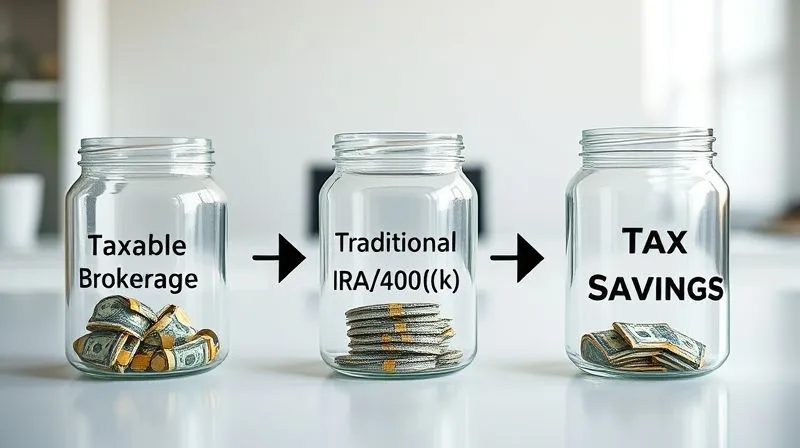
One of the most powerful tools in a financial advisor's arsenal for managing Social Security taxation is the strategic use of different retirement accounts. The type of account you withdraw from directly impacts your provisional income.
Withdrawals from traditional IRAs, 401(k)s, and other pre-tax retirement accounts are generally counted as taxable income, directly increasing your provisional income. Conversely, withdrawals from Roth IRAs and Roth 401(k)s are tax-free in retirement, and therefore, do not count towards your provisional income calculation.
Optimizing Your Withdrawal Sequence
In my experience, a well-thought-out withdrawal sequence can make all the difference. Instead of simply drawing from whatever account is easiest, we plan a sequence that minimizes taxable income:
- Tap Taxable Accounts First: Consider drawing from your regular brokerage accounts, which often have capital gains that can be managed with tax-loss harvesting.
- Strategically Use Roth Accounts: When your provisional income is nearing a Social Security tax threshold, strategically pulling funds from your Roth IRA can keep you below that threshold, saving you significant tax dollars.
- Manage Traditional Account Withdrawals: Coordinate withdrawals from traditional IRAs or 401(k)s to fill your lower tax brackets without pushing you into higher Social Security taxation tiers.
This isn't a one-size-fits-all approach; it requires careful annual planning and projection. A skilled advisor can model various scenarios to find the optimal path for your specific situation.
Proactive Roth Conversions: A Long-Term Tax Shield
Perhaps one of the most impactful strategies I recommend for clients who are years away from claiming Social Security, or even in the early years of retirement, is the Roth conversion. This involves moving money from a traditional IRA or 401(k) into a Roth IRA.
While you pay income tax on the converted amount in the year of conversion, the beauty is that all future qualified withdrawals from the Roth account are tax-free. This is critical for Social Security taxation because those tax-free withdrawals do not contribute to your provisional income.
When and How to Execute Roth Conversions Effectively
The key to successful Roth conversions is timing and a 'fill the tax bracket' strategy:
- Identify Low-Income Years: Periods when you might have lower taxable income (e.g., early retirement before RMDs, a year with a large tax deduction, or a sabbatical) are ideal for conversions.
- Convert to Fill Tax Brackets: Instead of converting a massive sum at once, advisors often recommend converting just enough each year to fill your current income tax bracket, without pushing you into a significantly higher bracket. This minimizes the immediate tax hit.
- Project Future Income: A comprehensive financial plan will project your income streams throughout retirement, including RMDs and Social Security. This allows for strategic conversions that proactively reduce future provisional income.
"Roth conversions are not about avoiding taxes; they're about controlling when you pay them, often at a lower rate today to save significantly more tomorrow, especially on Social Security."
This strategy requires foresight and a deep understanding of future tax liabilities, making it a prime example of how financial advisors minimize taxes on client Social Security through proactive planning.
Qualified Charitable Distributions (QCDs) and Other Income Management Tactics
Beyond managing your retirement accounts, there are other powerful strategies to reduce your provisional income, particularly for those with a philanthropic inclination or other significant income sources.
Leveraging Qualified Charitable Distributions (QCDs)
For individuals aged 70½ or older, a Qualified Charitable Distribution (QCD) is an incredibly effective way to reduce taxable income. A QCD allows you to directly transfer up to $105,000 (for 2024) per year from your IRA to an eligible charity.
The significant advantage? The amount transferred is excluded from your gross income. This means it doesn't count towards your AGI, and crucially, it doesn't count towards your provisional income. If you're charitably inclined, this can be a dual win: supporting a cause you care about while potentially lowering the taxable portion of your Social Security benefits.
Managing Other Income Streams
Financial advisors also look at other income sources that contribute to provisional income:
- Tax-Exempt Interest: While interest from municipal bonds is tax-exempt at the federal level, it *does* count towards provisional income. An advisor might recommend balancing your bond portfolio to include some taxable bonds if the overall tax picture is more favorable.
- Capital Gains: Strategic tax-loss harvesting can offset capital gains, reducing your AGI and thus your provisional income. This requires careful tracking and execution throughout the year.
- Pension Income: While less flexible, understanding how pension income interacts with provisional income allows for better planning of other controllable income sources.

Optimizing Required Minimum Distributions (RMDs)
Once you reach age 73 (or 75 for those born in 1960 or later), you are generally required to start taking Required Minimum Distributions (RMDs) from your traditional IRAs and 401(k)s. These distributions are fully taxable and, therefore, directly increase your provisional income, often pushing more of your Social Security benefits into the taxable realm.
This is where proactive planning becomes paramount. An advisor focuses on strategies to mitigate the impact of RMDs on your provisional income.
Strategies for RMD Management
- Roth Conversions (Pre-RMD Age): As discussed, converting traditional IRA assets to Roth *before* RMDs kick in is a primary strategy. This reduces the balance of your traditional IRA, thereby reducing future RMD amounts and subsequent provisional income.
- Qualified Charitable Distributions (QCDs) (Post-RMD Age): For those 70½ and older, QCDs can satisfy your RMD requirement, up to the annual limit, while also reducing your taxable income. This is a powerful tool to manage the RMD impact directly.
- Delaying Social Security (if applicable): While not directly RMD-related, delaying Social Security benefits can provide a period where RMDs might be your primary taxable income, allowing you to manage conversions or other income strategies more effectively before Social Security begins.
According to the IRS, failing to take an RMD can result in a significant penalty, so managing these distributions strategically is not just about tax efficiency, but also compliance. The IRS provides detailed guidance on RMDs, which is essential reading for anyone approaching this stage of retirement.
The Medicare Premium Connection: IRMAA and Provisional Income
It's not just federal income tax that’s impacted by your provisional income; your Medicare Part B and Part D premiums can also be affected. This is through the Income-Related Monthly Adjustment Amount (IRMAA).
IRMAA surcharges mean that if your modified adjusted gross income (which is very similar to provisional income, though with slight differences for IRMAA calculation) exceeds certain thresholds, you'll pay higher monthly premiums for your Medicare Part B and Part D coverage. This adds another layer of complexity to managing your retirement income.
Navigating IRMAA with Strategic Planning
An experienced financial advisor understands that planning for Social Security taxation cannot be done in a vacuum. It must be integrated with Medicare premium planning:
- Two-Year Lookback: IRMAA is based on your income from two years prior. So, your 2024 Medicare premiums are determined by your 2022 income. This lag requires proactive planning.
- Income Smoothing: Advisors work to 'smooth out' taxable income spikes. For instance, a large Roth conversion in one year might push you into an IRMAA bracket two years later. Careful planning can spread conversions over several years to avoid this.
- Life-Changing Events: Certain life events, like marriage, divorce, or work stoppage, can reduce your income and allow you to appeal an IRMAA decision. Advisors help clients navigate these appeals.
"Minimizing taxes on Social Security is a multi-faceted challenge. It's not just about federal income tax; it's about optimizing your entire financial picture, including Medicare premiums, for a truly secure retirement."
This holistic view is a hallmark of how financial advisors minimize taxes on client Social Security and ensure overall financial well-being.
Beyond the Basics: Advanced Strategies and Case Studies
While the core strategies outlined above are fundamental, experienced financial advisors employ more advanced tactics and integrate them into a comprehensive plan to further minimize taxes on client Social Security benefits.
Tax-Efficient Investments and Distribution Planning
An advisor will also consider the tax efficiency of your investment portfolio. For example:
- Location of Assets: Placing income-producing assets (like bonds) in tax-deferred accounts and growth assets (like stocks with low dividends) in taxable accounts can be more tax-efficient.
- Capital Gains Management: Actively managing capital gains and losses through tax-loss harvesting in taxable accounts can reduce your overall AGI, thereby lowering provisional income.
Case Study: The Johnson Family's Tax Triumph
The Johnsons, a retired couple, came to me at age 65, planning to claim Social Security at 67. They had substantial traditional IRA balances and were concerned about future taxes. Their provisional income projections showed 85% of their Social Security benefits would be taxable due to RMDs and other income.
| Strategy Implemented | Impact on Provisional Income | Projected Tax Savings (over 10 years) |
|---|---|---|
| Pre-Social Security Roth Conversions | Reduced future taxable withdrawals | $15,000 |
| Strategic Withdrawal Sequencing | Optimized use of Roth funds to stay below thresholds | $8,000 |
| Qualified Charitable Distributions (QCDs) | Reduced taxable RMDs and AGI | $10,000 |
By implementing a multi-year Roth conversion strategy before RMDs began, strategically sequencing their withdrawals from various accounts, and utilizing QCDs for their charitable giving once they turned 70½, we managed to keep their provisional income below the 85% taxation threshold for most of their retirement. This resulted in significant savings on federal income taxes and also helped them avoid higher IRMAA surcharges for Medicare premiums. This holistic approach is how financial advisors minimize taxes on client Social Security effectively.
You can read more about comprehensive retirement income planning from reputable sources like Forbes Advisor on Social Security Taxation.
The Indispensable Value of a Proactive Financial Advisor
Navigating the intricacies of Social Security taxation is far from a DIY project. The rules are complex, interconnected, and constantly subject to change. What works for one person may be detrimental for another. This is precisely why the expertise of a financial advisor specializing in retirement planning is invaluable.
I've seen countless situations where individuals, armed with good intentions but incomplete information, made decisions that inadvertently increased their tax burden. A professional advisor brings:
- Personalized Strategy: Your financial situation is unique. An advisor crafts a tailored plan that considers all your income sources, assets, and goals.
- Up-to-Date Knowledge: Tax laws, Social Security regulations, and Medicare rules evolve. Advisors stay current, ensuring your plan remains optimal. Official Social Security Administration factsheets are a good starting point, but an advisor interprets them for your specific case.
- Holistic Planning: Beyond just Social Security, an advisor looks at your entire financial picture – investments, estate planning, healthcare costs, and long-term care – to create a truly integrated strategy.
- Proactive Adjustments: Retirement is dynamic. An advisor helps you adapt your plan as your life changes, or as economic conditions shift, ensuring you remain on track.
The investment in expert guidance often pays for itself many times over in tax savings and peace of mind. It’s about more than just minimizing taxes; it’s about maximizing your retirement security and ensuring your hard-earned benefits serve you fully.
Frequently Asked Questions (FAQ)
Question? Is my Social Security always taxable in retirement?
Answer: Not always, but potentially. Whether your Social Security benefits are taxable depends on your 'provisional income,' which includes half of your Social Security benefits, plus your tax-exempt interest, and your other adjusted gross income. If this total exceeds certain thresholds ($25,000 for single filers, $32,000 for married filing jointly), a portion (up to 50% or 85%) of your benefits will be subject to federal income tax.
Question? Can I avoid Social Security taxes entirely?
Answer: For most retirees with diverse income streams, completely avoiding Social Security taxes is challenging but not impossible. It would require your provisional income to remain below the IRS thresholds, which means carefully managing all other sources of taxable income, including withdrawals from traditional retirement accounts and tax-exempt interest. Strategies like Roth conversions and Qualified Charitable Distributions (QCDs) are designed to help keep income below these thresholds.
Question? How do Roth conversions impact my Social Security taxation in retirement?
Answer: Roth conversions can significantly reduce your Social Security taxation in retirement. While you pay tax on the converted amount in the year of conversion, all qualified withdrawals from your Roth IRA in retirement are tax-free. Crucially, these tax-free withdrawals do not count towards your provisional income calculation, which can help keep you below the thresholds where Social Security benefits become taxable. This is a powerful long-term strategy for income control.
Question? What's the biggest mistake people make regarding Social Security taxes?
Answer: The biggest mistake I've observed is a lack of proactive planning. Many retirees don't realize their Social Security benefits can be taxed until they file their first tax return in retirement. They often fail to coordinate their withdrawal strategies from various retirement accounts or utilize tools like Roth conversions early enough. This reactive approach often means missed opportunities for significant tax savings.
Question? When should I start planning for Social Security tax minimization?
Answer: Ideally, planning for Social Security tax minimization should begin years before you claim benefits, even in your 50s or early 60s. This allows ample time for strategies like Roth conversions to mature and for your financial advisor to model various income scenarios. Even if you're already in retirement, it's never too late to implement strategies, though earlier planning offers more flexibility and potentially greater savings.
Key Takeaways and Final Thoughts
- Provisional Income is Key: Understand how your income streams contribute to your provisional income, which determines Social Security taxation.
- Strategic Withdrawals Matter: Coordinate withdrawals from taxable, tax-deferred, and tax-free accounts to control your annual taxable income.
- Roth Conversions are Powerful: Consider pre-retirement Roth conversions to reduce future taxable income and keep more Social Security benefits tax-free.
- Utilize QCDs: For those 70½+, Qualified Charitable Distributions can reduce taxable income and satisfy RMDs.
- Beware of IRMAA: Remember that higher provisional income can also lead to increased Medicare Part B and D premiums.
- Expert Guidance is Invaluable: A skilled financial advisor provides the personalized, holistic, and proactive planning essential for maximizing your Social Security benefits and minimizing taxes.
Navigating the complex landscape of Social Security taxation doesn't have to be a source of stress. By understanding the rules and proactively implementing intelligent strategies, you can significantly reduce your tax burden and ensure your retirement income stretches further. Remember, your financial future is too important to leave to chance. Seek out an experienced financial advisor who can help you craft a plan that truly works for you, allowing you to enjoy the retirement you've worked so hard to achieve.
Recommended Reading
- Digital Savings AML: 5 Steps to Seamless, Compliant Onboarding
- 7 Steps: How to Protect Business Assets During Personal Debt Crisis?
- Ethical Fund CSR Scandal? 5 Investor Steps to Rebuild Trust & Portfolio.
- Prototype to Funding: 7 Strategies for Seed Capital Without Customers?
- 7 Pro Steps: How to Quickly Pay Off Maxed-Out Credit Cards




Comments
Leave a comment below. Your email will not be published. Required fields marked with *