



Ethical Consumerism: Navigating Impactful Choices in a Complex World
For over 15 years in the ethical investing and sustainable finance landscape, I've witnessed a profound shift in consumer consciousness. What once felt like a niche concern has blossomed into a global movement, with more individuals genuinely wanting their purchasing power to reflect their values. It's inspiring, yet I've also seen the frustration and confusion that often accompany this journey.
Many of us want to do good, to support brands that align with our principles, and to minimize our negative impact on the planet and society. However, the sheer volume of products, the conflicting claims, and the pervasive issue of 'greenwashing' can make finding truly ethical options feel like navigating a dense, fog-laden forest. The pain point is real: how do you make genuinely impactful choices without sacrificing your budget or your sanity?
In this definitive guide, I will share the expert frameworks and insights I've developed over years of advising on ethical finance. We'll cut through the noise, providing you with actionable strategies, real-world analogies, and a clear roadmap to becoming a more informed and effective ethical consumer. My goal isn't just to educate, but to empower you to make choices that truly resonate and create positive change.
The Greenwashing Trap: Separating Fact from Fiction
One of the biggest hurdles in the path of ethical consumerism is the insidious practice of greenwashing. It’s when companies spend more time and money marketing themselves as environmentally friendly or socially responsible than actually implementing sustainable practices. I've seen countless well-intentioned consumers fall prey to clever marketing slogans and imagery that promise ecological virtue but deliver very little substance.
The problem isn't just deception; it erodes trust and makes it harder for genuinely ethical brands to stand out. Identifying greenwashing requires a discerning eye and a commitment to looking beyond surface-level claims. It’s about asking the right questions and demanding transparency.
Here are some actionable steps I recommend to identify and avoid greenwashing:
- Scrutinize Vague Language: Be wary of buzzwords like 'natural,' 'eco-friendly,' 'sustainable,' or 'green' without specific details or certifications to back them up. What does 'natural' even mean in a manufacturing context?
- Look for Proof and Certifications: Genuine ethical brands often invest in third-party certifications (e.g., B Corp, Fair Trade, LEED, USDA Organic). Research these certifications to understand their standards and credibility. Are they meaningful, or just another marketing ploy?
- Check for Irrelevant Claims: Sometimes companies highlight an environmentally friendly attribute that is legally required or otherwise irrelevant. For instance, a product might boast 'CFC-free' when CFCs have been banned for decades.
- Investigate Hidden Trade-offs: A product might claim to be 'eco-friendly' because it uses less plastic, but its manufacturing process might be highly polluting, or its supply chain rife with labor abuses. Always consider the full lifecycle.
- Research the Company's History: Does the company have a track record of environmental violations or social controversies? A quick search can often reveal inconsistencies between their stated values and their past actions.
“In the realm of ethical consumerism, skepticism is not cynicism; it is a necessary tool for discernment. Always question, always verify.”
By adopting these practices, you transform from a passive recipient of marketing messages into an active, informed investigator, ensuring your ethical dollar goes where it truly matters.

Beyond the Label: Deep Diving into Supply Chains
Understanding a product’s supply chain is, in my view, the bedrock of true ethical consumerism. A label might tell you a product is 'organic,' but it won't tell you if the workers who harvested those ingredients were paid a living wage, or if the factory where it was processed uses renewable energy. The supply chain is often a complex, opaque web, but increasing transparency is becoming a hallmark of genuinely responsible businesses.
When I talk about supply chains, I'm referring to every step a product takes from raw material extraction to your hands: sourcing, manufacturing, transportation, and distribution. Each of these stages presents opportunities for both positive and negative impact, from carbon emissions to labor exploitation.
Case Study: How 'Evergreen Apparel Co.' Transformed Transparency
Evergreen Apparel Co., a mid-sized clothing brand, faced growing scrutiny over its manufacturing practices. Despite using organic cotton, their customers started asking tough questions about factory conditions in Southeast Asia. Initially, their supply chain was a black box beyond the first-tier suppliers. By implementing a rigorous supplier audit program, partnering with local NGOs to conduct unannounced visits, and investing in blockchain technology to track materials from farm to finished garment, they achieved unprecedented transparency. This resulted in a 25% increase in customer loyalty and a 15% boost in sales, proving that transparency isn't just ethical, it's good business. Their commitment to fair labor practices and environmental stewardship throughout their supply chain became a core part of their brand identity, attracting a new wave of conscious consumers.
To truly understand a brand's commitment, look for companies that openly share details about their suppliers, factory locations, labor policies, and environmental impact assessments. Many progressive companies now publish annual sustainability reports or feature interactive maps of their supply chains on their websites. This level of openness is a strong indicator of genuine ethical intent.
For more insights into what constitutes fair labor practices in global supply chains, I often direct clients to resources from organizations like Fair Trade America, which provides clear standards and advocacy for ethical sourcing.
Your Financial Footprint: Aligning Investments with Values
While consumer purchasing decisions are vital, I've always emphasized that true ethical consumerism extends beyond your shopping cart to your investment portfolio. Your money, even in a savings account or retirement fund, is actively supporting companies. By aligning your investments with your values, you amplify your impact significantly.
This is where the concept of ESG (Environmental, Social, and Governance) investing comes into play. Instead of just looking at financial returns, ESG investing considers a company's performance on critical non-financial factors:
- Environmental: Climate change policies, carbon footprint, resource depletion, pollution, waste management.
- Social: Labor standards, employee relations, diversity, human rights, community engagement, product safety.
- Governance: Board diversity, executive compensation, shareholder rights, transparency, anti-corruption policies.
Many financial institutions now offer ESG-focused funds, ETFs, and even individual stocks that are screened based on these criteria. It's a powerful way to ensure your capital isn't inadvertently supporting industries or practices you oppose.
Ethical Banking and Lending
Beyond direct investments, consider where you bank. Traditional banks often invest in fossil fuels, weapons manufacturing, or other controversial industries. Ethical banks, credit unions, and community development financial institutions (CDFIs), on the other hand, prioritize lending to local businesses, affordable housing projects, and renewable energy initiatives. Your choice of bank can have a direct, tangible impact on local communities and sustainable development.
| Criteria | Traditional Investing | Ethical/ESG Investing |
|---|---|---|
| Investment Focus | Maximize financial return, often short-term | Financial return + positive environmental & social impact |
| Risk Assessment | Primarily financial metrics | Financial metrics + ESG factors (e.g., climate risk, labor disputes) |
| Company Screening | Profitability, market share | Excludes controversial industries (tobacco, weapons) and includes high-ESG performers |
| Impact Measurement | ROI, P/E ratio | ROI, P/E ratio + carbon footprint, diversity metrics, community benefits |
For those looking to delve deeper into the world of sustainable and responsible investing, I highly recommend exploring resources from organizations like the Principles for Responsible Investment (PRI), which provides a global framework for integrating ESG considerations into investment decisions.
The Power of Collective Action: Advocacy and Community
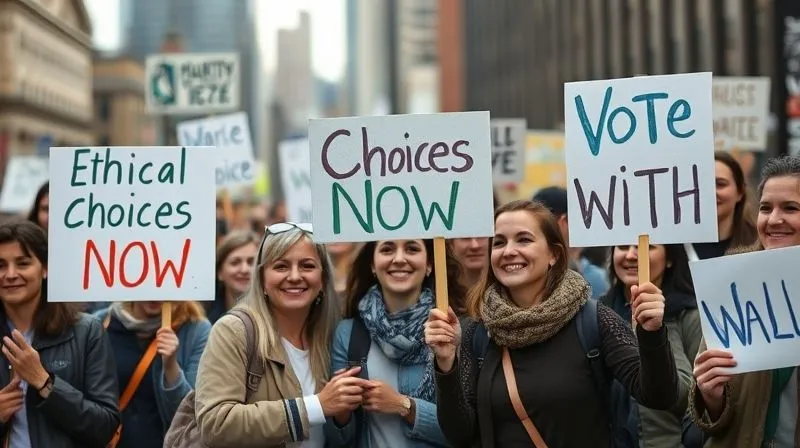
While individual choices in ethical consumerism are vital, I've always maintained that true systemic change often stems from collective action. Your decision to buy an ethical product sends a signal to the market, but when thousands or millions of consumers make that same decision, or actively advocate for change, the signal becomes a roar that cannot be ignored.
Think about the historical shifts driven by consumer boycotts, public pressure campaigns, and grassroots movements. From the civil rights movement's bus boycotts to modern campaigns against fast fashion's labor practices, collective action has proven its power to reshape industries and influence policy.
Engaging in collective action doesn't always mean joining a protest, although that is certainly an option. It can take many forms:
- Supporting Advocacy Groups: Donate to, volunteer for, or simply follow organizations that are fighting for ethical labor, environmental protection, or corporate accountability.
- Participating in Boycotts: When a company's practices are egregious, a targeted boycott can hit their bottom line and force them to reconsider. Ensure you understand the goals and impact of such actions.
- Signing Petitions: Online and offline petitions can demonstrate widespread public concern about specific issues, pressuring companies or governments to act.
- Engaging with Shareholder Activism: If you own stocks in companies, even through mutual funds, you can participate in shareholder resolutions that push for more ethical practices.
- Spreading Awareness: Share information about ethical brands and greenwashing with your friends, family, and social networks. Education is a powerful catalyst for change.
- Community Initiatives: Join local groups focused on sustainable living, fair trade, or ethical consumption. These communities provide support, share resources, and amplify impact.
As marketing guru Seth Godin often says, a 'tribe' of engaged individuals can achieve far more than isolated efforts. Your voice, combined with others, creates a force that demands attention and drives meaningful progress.
Measuring Your Impact: Tools and Metrics for Ethical Choices
One of the most common questions I get is, 'How do I know if my ethical choices are actually making a difference?' While it's hard to quantify every single impact, there are excellent tools and metrics available to help you assess and track your contribution to ethical consumerism.
Certifications are a key starting point. They act as independent verification that a product, service, or company meets specific social and environmental standards. However, not all certifications are created equal, so understanding their rigor is important.
Here are some of the most respected certifications and what they generally signify:
| Certification | Significance |
|---|---|
| B Corp | Meets high standards of verified social and environmental performance, public transparency, and legal accountability to balance profit and purpose. |
| Fair Trade Certified | Ensures fair wages, safe working conditions, community development, and sustainable farming practices for producers in developing countries. |
| USDA Organic | Products grown and processed according to federal guidelines addressing soil quality, animal raising practices, pest and weed control, and additive use. |
| LEED Certified (Leadership in Energy and Environmental Design) | Globally recognized symbol of sustainability achievement for buildings, ensuring design, construction, operations, and maintenance are environmentally responsible. |
| Energy Star | Identifies energy-efficient products and homes, helping consumers save money on utility bills and reduce greenhouse gas emissions. |
| Forest Stewardship Council (FSC) | Certifies forests are managed in an environmentally appropriate, socially beneficial, and economically viable manner. Found on wood and paper products. |
Beyond certifications, several apps and online platforms can help you research brands, understand their ethical standing, and even track your spending habits against your values. These tools often aggregate data from various sources, making it easier to make informed decisions on the go.
For a deeper dive into what it means for a company to be truly purpose-driven and certified, I often recommend exploring the criteria and community behind B Corp Certification, which offers a holistic view of corporate responsibility.
Embracing Imperfection: A Sustainable Journey, Not a Destination
As an expert in this field, I want to impart a crucial piece of wisdom: ethical consumerism is a journey, not a destination. It's about progress, not perfection. I've seen too many individuals become overwhelmed by the sheer scale of the problems and the seemingly endless list of things they 'should' be doing, leading to burnout or giving up entirely.
The truth is, no one is perfectly ethical, and no company is perfectly sustainable. The global economy is incredibly complex, and even the most well-intentioned choices can have unforeseen consequences. The goal isn't to achieve an impossible ideal, but to continuously strive for better, making conscious improvements over time.
Start small. Pick one area of your life – perhaps your coffee, your clothing, or your banking – and commit to making more ethical choices there. Once that feels comfortable, expand to another area. These small, consistent steps accumulate into significant impact over time.
“Don't let the pursuit of perfection become the enemy of good. Every conscious choice, no matter how small, sends a ripple through the system.”
Celebrate your progress, learn from your challenges, and remember that your participation, in any capacity, is valuable. This sustainable journey is about continuous learning, adapting, and finding joy in making choices that align with the world you want to see.

Frequently Asked Questions (FAQ)
Is ethical consumerism always more expensive? Not necessarily. While some ethically produced goods might have a higher upfront cost due to fair wages or sustainable production methods, they often offer better quality and durability, leading to long-term savings. Moreover, ethical choices can involve reducing consumption, buying second-hand, or opting for minimalist living, which can significantly save money. It's about shifting priorities and understanding value beyond just price.
How can I trust certifications? Are they all legitimate? No, not all certifications are created equal. It's crucial to research the certifying body. Look for independent, third-party organizations with transparent standards, rigorous auditing processes, and clear public reporting. The ones mentioned in this article (B Corp, Fair Trade, USDA Organic, FSC, LEED, Energy Star) are generally well-respected. Always be wary of company-created 'certifications' or vague labels without external verification.
What if I can't afford to buy all ethical products? Does my effort still matter? Absolutely! Your effort profoundly matters. Ethical consumerism isn't an all-or-nothing proposition. Focus on areas where you can make the most impact or where your budget allows. Even one ethical purchase can send a signal to the market. Remember, reducing consumption, repairing items, or buying second-hand are also highly ethical and often budget-friendly choices. Every conscious decision contributes to the collective shift.
Does my individual choice really make a difference in such a big world? Yes, your individual choices contribute to a larger movement. While one person's choice might seem small, aggregated across millions of consumers, it creates significant market demand for ethical products and puts pressure on companies to adopt more responsible practices. Furthermore, your choices can influence those around you, creating a ripple effect. Never underestimate the power of leading by example.
How do I get started with ethical consumerism without feeling overwhelmed? My best advice is to start small and focus on one or two areas you're passionate about or where you feel you can make the biggest change. For example, begin by researching the ethical practices of your favorite coffee brand, or commit to buying only second-hand clothing for a year. As you build confidence and knowledge, gradually expand your ethical choices. It's a continuous learning process, and every step forward is a victory.
Key Takeaways and Final Thoughts
Navigating the complex world of ethical consumerism can feel daunting, but with the right knowledge and approach, you can transform your purchasing power into a force for positive change. Remember these critical takeaways:
- Be a Skeptical Investigator: Always question claims, especially vague ones, and seek out genuine third-party certifications to avoid greenwashing.
- Look Beyond the Label: Understand that true impact often lies in the transparency and ethics of a company's entire supply chain, from sourcing to labor practices.
- Align Your Whole Financial Footprint: Extend your ethical choices from what you buy to where you bank and invest, amplifying your impact through ESG considerations.
- Embrace Collective Action: Recognize the power of your voice when combined with others, supporting advocacy, participating in boycotts, and spreading awareness.
- Prioritize Progress Over Perfection: Start small, celebrate every conscious choice, and view ethical consumerism as a continuous journey of learning and improvement.
Your journey in ethical consumerism is a powerful one, a testament to your values and your commitment to a better world. By making informed, conscious decisions, you're not just buying products; you're investing in the future you wish to see. Keep learning, keep questioning, and keep making those impactful choices – your efforts truly do make a difference.
Recommended Reading
- Borrow More with Debt? A Professional's 7-Step Responsible Plan
- Consumer Chargeback Crisis? Urgent Steps for Swift Resolution
- Unlock Budget Travel: How to Create a Financial Plan That Works
- Employer's Guide: 9 Strategies to Help Employees Escape Predatory Payday Loan Debt
- Mastering Institutional Crypto: 7 Steps to Robust Key Management




Comments
Leave a comment below. Your email will not be published. Required fields marked with *